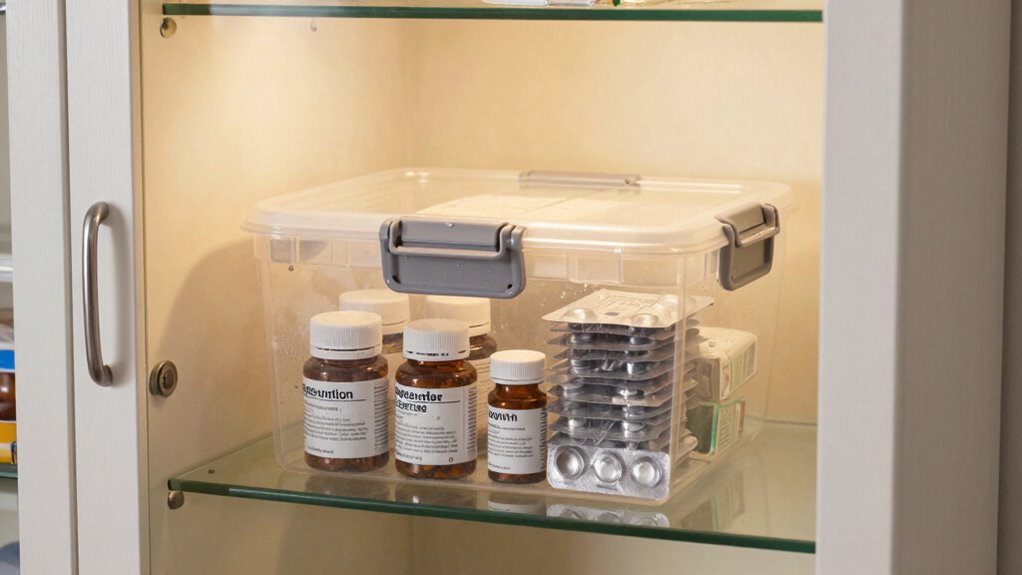

During severe weather, store your medications in a cool, dry, and secure spot inside your home, away from windows, heat sources, and moisture. Avoid basements or garages due to temperature fluctuations and water risks. Keep an emergency kit with essential medicines, prescriptions, and first-aid supplies organized for quick access. Proper storage and planning help make certain your medications stay safe and effective during storms. Continue exploring to learn more about safeguarding your health during emergencies.

Get garden gear delivered free — and shop member deals
- Fast, free delivery on millions of items
- Access to Prime Big Deal Days deals on October 6–7
- Prime Video, Amazon Music and more included
Key Takeaways
- Store medications in a cool, dry, and secure central location away from sunlight, heat, and moisture.
- Keep refrigerated medicines in a portable cooler with ice packs during power outages.
- Prepare an organized emergency medication kit with prescriptions, over-the-counter remedies, and first-aid supplies.
- Regularly check and replace expired medications to ensure safety and effectiveness.
- Maintain an updated medication list and plan for potential delays in pharmacy access during severe weather.

Severe weather events, such as hurricanes, winter storms, or floods, can disrupt your access to essential medications. During these times, it’s vital to prioritize medication safety and guarantee you’re prepared for emergencies. Proper storage isn’t just about keeping your medicines organized; it’s about maintaining their effectiveness and accessibility when you need them most.
First, consider where you store your medications. A cool, dry, and secure location is ideal, away from windows, direct sunlight, and sources of heat or moisture. Extreme temperatures can degrade medications, making them less effective or unsafe to use. A basement or garage might seem convenient, but these areas often experience temperature fluctuations and potential water damage during severe weather. Instead, opt for a central spot inside your home, like a closet or a cabinet, where conditions are more stable. If you take medications that require refrigeration, such as insulin, plan ahead by having a portable cooler with ice packs ready to keep these medicines cold if power outages occur.
It’s also wise to keep an emergency medication kit. This kit should include essential prescriptions, over-the-counter remedies, a first-aid kit, and copies of your prescriptions. Having these items together ensures that you can access what you need quickly, especially if your regular supply becomes inaccessible or if you need to evacuate. Remember, always check expiration dates and replace expired medications; during a crisis, you won’t want to deal with the added stress of expired supplies. Additionally, understanding how temperature and environmental factors affect medication storage can help you better preserve your medicines during unforeseen events. Being aware of how medication stability is impacted by environmental conditions can make a significant difference in maintaining their efficacy. Knowing how to properly store medications during emergencies also minimizes waste and ensures you’re prepared for unexpected delays. Proper storage also involves understanding how environmental factors influence medication integrity, which can help extend their usability during emergencies. Moreover, consulting medication guidelines can provide specific recommendations for different types of medicines, enhancing your preparedness.
Preparing for emergencies also involves understanding your medication schedule. Keep a list of your medications, dosages, and prescribing doctors. This information is invaluable if you need to seek medical care elsewhere or if someone else needs to administer your medicines. If you’re preparing for a storm or flood, consider filling prescriptions in advance, so you’re not caught without necessary doses if pharmacies close unexpectedly.
Finally, stay informed about weather alerts and follow guidance from local authorities. During severe weather, your ability to maintain medication safety depends on your preparedness. By organizing your medications thoughtfully and having a clear emergency plan, you guarantee your health remains protected—even when nature throws a storm your way. Proper storage and readiness help minimize risks, allowing you to focus on safety and recovery, no matter what the weather brings.
portable medication cooler with ice packs
As an affiliate, we earn on qualifying purchases.
As an affiliate, we earn on qualifying purchases.
Frequently Asked Questions
Can Medications Be Stored in a Vehicle During a Storm?
You shouldn’t store medications in a vehicle during a storm. Extreme temperatures and humidity can ruin medication labeling and compromise their effectiveness. Instead, keep your emergency kit organized at home in a cool, dry place, ensuring easy access. Properly stored medications stay safe and effective. Always check expiration dates and consider keeping a small supply in your emergency kit, but avoid storing any medications in your car during severe weather.
How Long Can Medications Withstand Power Outages?
Ironically, your medications might outlast the power outage, but their effectiveness can fade quickly. Usually, medications can withstand a power outage for a few hours to a day if stored properly, but exposure to heat or cold can accelerate expiration. Follow strict storage guidelines—keep medicines in a cool, dark place—and check expiration dates regularly. After that, their potency diminishes, risking your health more than the storm itself.
Are There Special Storage Tips for Liquid Medications?
For liquid medications, you should pay attention to medication labeling and store them in appropriate, tightly sealed storage containers. Keep them in a cool, dark place away from direct sunlight and heat, which can alter their effectiveness. Always check the label for specific storage instructions and expiration dates. Proper storage guarantees your liquid medications stay safe and effective, especially during severe weather when conditions can change quickly.
Should Medications Be Stored in a Waterproof Container?
Did you know that nearly 60% of medication-related emergencies involve improper storage? Yes, storing medications in a waterproof container is vital for storage safety, especially during severe weather. Waterproof containers protect your medicines from water damage, which can compromise their effectiveness. Always check medication labeling for specific storage instructions, and keep medications in a secure, dry place. Proper storage guarantees your medications remain safe and effective when you need them most.
How Do Temperature Fluctuations Affect Medication Stability?
Temperature fluctuations can considerably impact medication stability, especially if they’re temperature sensitive. When temperatures vary widely, it accelerates medication degradation, reducing their effectiveness over time. Sudden heat or cold can cause chemical changes, making medicines less potent or even unsafe. To maintain their efficacy, keep your medications in a consistent, controlled environment, avoiding places with frequent temperature swings during severe weather events.
Conclusion
By keeping your medications safe and secure during severe weather, you’re like a sturdy lighthouse guiding your health through stormy seas. When you store them properly—away from water, heat, and chaos—you guarantee your health stays steady, no matter how fierce the weather gets. Think of your medications as precious treasures, shining brightly in your emergency kit. With a little preparation, you’ll weather any storm with confidence, your health’s lighthouse illuminating the path forward.
Halloween Picks
halloween
As an affiliate, we earn on qualifying purchases.