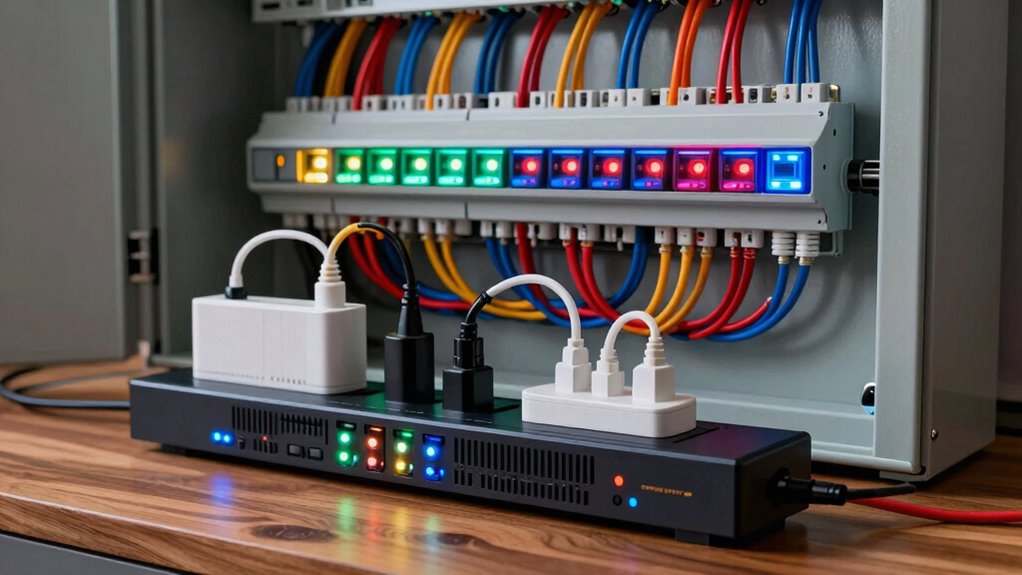

While installing a whole-house surge protector is crucial for initial defense, it’s only part of the solution. To keep your devices fully protected, you also need regular maintenance, proper grounding, and additional point-of-use surge protectors for sensitive electronics. These steps help prevent damage from surges and extend the lifespan of your equipment. If you want to learn the other essential safety measures to guarantee thorough protection, keep exploring the details below.

Get garden gear delivered free — and shop member deals
- Fast, free delivery on millions of items
- Access to Prime Big Deal Days deals on October 6–7
- Prime Video, Amazon Music and more included
Key Takeaways
- Use point-of-use surge protectors for sensitive electronics to complement main panel protection.
- Regularly inspect and replace surge protectors to maintain effective defense.
- Proper grounding enhances overall surge protection and safety.
- Install additional protective devices for specific appliances or circuits.
- Layering protection methods ensures comprehensive safety against power surges.

In today’s world, where electronic devices are vital to daily life, protecting your home from power surges is more important than ever. Whole-house surge protection offers a strong first line of defense, but relying on it alone isn’t enough. Many homeowners fall for surge protection myths that can leave their electronics vulnerable. For example, some believe that installing a single surge protector at the main panel will safeguard all devices, but in reality, it’s only part of the solution. To truly shield your electronics, you need to understand the installation guidelines and complement them with additional protections, especially for sensitive gadgets.
Surge protection myths often lead people to underestimate the significance of proper setup. Some think that once a surge protector is installed, it works forever without maintenance or replacement. That’s false. Surge protectors degrade over time, especially after absorbing multiple power hits. You should regularly check your surge protection devices and replace them when necessary. Others assume that all surge protectors are created equal. In fact, not all devices provide the same level of protection, and some might not be suitable for whole-house setups. Proper installation guidelines stress choosing a surge protector rated for your home’s electrical load and ensuring it’s installed correctly to maximize safety and effectiveness.
Getting the installation right is vital. You should have a qualified electrician evaluate your home’s electrical system and install a surge protection device (SPD) at the main breaker panel. This placement ensures that power surges are intercepted before they reach your wiring, reducing the risk of damage. Additionally, understanding the importance of home electrical systems and their capacity can help ensure the surge protection setup is effective and safe. It’s also essential to consider the degradation of surge protectors, which impacts how often they need inspection or replacement to maintain optimal protection. Regular maintenance and understanding the lifecycle of surge protectors can greatly extend their effectiveness. Moreover, being aware of the electrical system capacity can prevent overloads that may compromise your surge protection. To enhance your overall safety, it’s also wise to implement proper grounding techniques, which play a crucial role in surge suppression. For extra safety, it’s wise to add point-of-use surge protectors on individual outlets, especially where sensitive electronics like computers, home theater systems, or medical devices are plugged in. This layered approach offers all-around protection, covering both the main electrical supply and the devices themselves.
As an affiliate, we earn on qualifying purchases.
Frequently Asked Questions
How Often Should Surge Protectors Be Inspected or Replaced?
You should inspect your surge protectors annually and replace them every 3 to 5 years or sooner if they show signs of wear. During inspections, check installation procedures to guarantee proper grounding and connections. Consider cost when replacing, as newer models offer better protection and durability. Regular maintenance helps guarantee your surge protection remains effective, reducing the risk of damage during power surges and saving you money in the long run.
Can Surge Protection Prevent Damage From Lightning Strikes?
Imagine you’re in a sci-fi flick—lightning strikes, and your surge protectors might save the day, but they’re not foolproof against a direct hit. Lightning safety is essential, yet surge protection limitations mean they can’t fully prevent damage from a powerful strike. While they help with power surges, a direct lightning hit can still cause harm, so consider additional safeguards like lightning rods for all-encompassing protection.
Is Whole-House Surge Protection Compatible With All Electrical Systems?
Whole-house surge protection is generally compatible with most electrical systems, but you should check electrical compatibility before installation. Your system’s voltage and wiring type influence compatibility, so consulting an electrician is essential. Installation requirements vary, and professional installation ensures the device works effectively and safely. Always verify that the surge protector matches your electrical specifications to prevent issues and maximize protection for your home’s electronics.
What Are Signs That Surge Protection Is Failing?
Oh, the thrill of electrical surges sneaking past your protective devices—what a delight! If your surge protector’s lights flicker or stay off despite storms, or your devices suddenly shut down or get damaged without warning, it’s a clear sign that your protective devices are failing. Over time, electrical surges can overwhelm even the best systems, so keep an eye out for these red flags to guarantee your protection stays strong.
How Does Surge Protection Impact Home Insurance Policies?
Surge protection can positively impact your home insurance policies by reducing the risk of damages that lead to insurance claims. When you have proper surge protection in place, your insurer might see your home as less vulnerable, potentially lowering premiums or increasing policy coverage. However, if surge protection fails and causes damage, it could lead to rejected insurance claims or limited coverage, so maintaining your surge devices is essential.
Conclusion
Think of whole-house surge protection as the sturdy fence around your yard—essential, but not enough if your gates are left wide open. I once saw a homeowner lose expensive electronics after a lightning strike, despite having the main surge protector. It’s like trying to keep out rain with a roof alone—you need proper drainage too. Protect your entire home, including the other half—your appliances and wiring—and you’ll truly be shielded from unexpected surges.
Halloween Picks
halloween
As an affiliate, we earn on qualifying purchases.