For a versatile evergreen screen, I rank Perfect Plants Thuja Green Giant Arborvitae, 3 Gallon as the best overall pick, while the 18-pack Green Giant liners suit longer planting runs and Emerald Green Arborvitae fits narrower spaces. Privets and podocarpus offer a different balance of formal curb appeal, pruning needs, and screening pace, while willow cuttings may appeal to buyers seeking a deciduous option. The main tradeoffs are mature width, time to form a solid screen, climate fit, and how much trimming you are willing to do. Read on for how all 13 options compare and which planting format best matches your yard.

Get garden gear delivered free with Prime
- Fast, free delivery on millions of items
- Prime Video, Amazon Music and more included
- Member-only deals all year
Complete the kit



Key Takeaways
- The lineup’s clearest choice for a general-purpose evergreen screen is the 3-gallon Green Giant arborvitae; its larger listed plant size may give buyers a more substantial starting point than liners or small pots.
- Green Giant liners and 10-count plant bundles prioritize planting coverage, but their smaller starting size can mean a longer wait for privacy than buying fewer, larger plants.
- Emerald Green Arborvitae stands apart as the listed option for tighter planting areas, while Green Giant is better suited to buyers with room for a broader screen.
- The privet choices offer several plant sizes and bundle formats, so buyers can favor a more established individual shrub or a larger quantity for a longer hedge run; they should still plan for regular shaping.
- Podocarpus and willow broaden the choices beyond arborvitae and privet, but they call for closer checks of local climate, evergreen expectations, and desired maintenance before purchase.
| Perfect Plants Thuja Green Giant Arborvitae, 3 Gallon |  | Best Overall for a Single Large Hedge Plant | Plant type: Tree | Container size: 3 gallon | Growth rate: Up to 3 feet per year | VIEW ON AMAZON | See Our Full Breakdown |
| Perfect Plants Thuja Green Giant Arborvitae Liners, 18-Pack |  | Best for Planting a Long Privacy Screen | Quantity: 18 individual liners | Plant type: Thuja Green Giant (Thuja standishii × plicata) | Mature size: Up to 60 feet tall × 20 feet wide | VIEW ON AMAZON | See Our Full Breakdown |
| Ligustrum Recurvifolium Evergreen Shrub, 2.25 Gallon |  | Best for a Flowering, Prunable Hedge | Plant type: Evergreen shrub | Container size: 2.25 gallons | Flower color: White | VIEW ON AMAZON | See Our Full Breakdown |
| Podocarpus Japanese Yew Live Plants, 10-Pack |  | Best for a Neat, Lower-Maintenance Screen | Quantity: 10 plants | Scientific name: Podocarpus macrophyllus | Plant type: Evergreen shrub | VIEW ON AMAZON | See Our Full Breakdown |
| Green Wall Willow Privacy Tree Cuttings, 10 Count |  | Best for a Flexible, Natural Border | Plant type: Willow | Quantity: 10 cuttings | Recommended spacing: 2–3 feet apart | VIEW ON AMAZON | See Our Full Breakdown |
| Thuja Green Giant Live Plants, 10 Count | 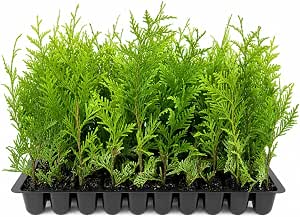 | Best for Fast, Broad Privacy Coverage | Plant type: Evergreen shrub and hedge | Quantity: 10 plants | Botanical name: Thuja standishii × plicata | VIEW ON AMAZON | See Our Full Breakdown |
| Curled Leaf Privet (Ligustrum japonicum ‘Recurvifolium’) – 3 Live Plants – Evergreen Privacy Hedge |  | Best for Seasonal Curb Appeal | Botanical name: Ligustrum japonicum ‘Recurvifolium’ | Quantity: 3 plants | Plant type: Evergreen shrub | VIEW ON AMAZON | See Our Full Breakdown |
| Podocarpus Maki Live Plant, 1 Gallon (Japanese Yew) |  | Best Compact, Low-Pruning Pick | Common name: Podocarpus Maki, Japanese Yew, Buddhist Pine | Scientific name: Podocarpus macrophyllus | Plant size: 1 gallon | VIEW ON AMAZON | See Our Full Breakdown |
| Japanese Yew (Podocarpus macrophyllus), 10 Live Plants |  | Best for Shaped, Multi-Purpose Hedges | Common names: Japanese yew, Buddhist pine, yew podocarpus | Scientific name: Podocarpus macrophyllus | Quantity: 10 live plants | VIEW ON AMAZON | See Our Full Breakdown |
| Curled Leaf Privet, 10 Live Quart-Size Plants |  | Best Value for a Decorative Hedge Run | Plant type: Shrub and hedge | Quantity: 10 plants | Plant size: Quart size | VIEW ON AMAZON | See Our Full Breakdown |
| Waxleaf Privet Live Plants, 10 Count, 2-Inch Pots |  | Best for Filling a Long Hedge on a Budget | Plant count: 10 | Pot size: 2 inches | Mature height: 8–10 feet | VIEW ON AMAZON | See Our Full Breakdown |
| Perfect Plants Emerald Green Arborvitae, 1 Gallon |  | Best for Year-Round Evergreen Privacy | Plant type: Tree | Container size: 1 gallon | Count: 1 | VIEW ON AMAZON | See Our Full Breakdown |
| Ligustrum Recurvifolium Privet Shrub, 2.25 Gallon |  | Best for a Larger Single Privet Starter | Plant type: Evergreen shrub | Container size: 2.25 gallons | Unit count: 1 | VIEW ON AMAZON | See Our Full Breakdown |
| garden hedge plants for privacy and curb appeal | Plant type | Sunlight exposure | Quantity |
|---|---|---|---|
| Perfect Plants Thuja Green Gia | Tree | Full sun | — |
| Perfect Plants Thuja Green Gia | Thuja Green Giant (Thuja standishii × plicata) | — | 18 individual liners |
| Ligustrum Recurvifolium Evergr | Evergreen shrub | Full sun | — |
| Podocarpus Japanese Yew Live P | Evergreen shrub | Full sun or partial shade | 10 plants |
| Green Wall Willow Privacy Tree | Willow | Full sun | 10 cuttings |
| Thuja Green Giant Live Plants | Evergreen shrub and hedge | Full sun | 10 plants |
| Curled Leaf Privet | Evergreen shrub | Full sun | 3 plants |
| Podocarpus Maki Live Plant | — | — | — |
| Japanese Yew | Evergreen shrub or small tree | Partial shade to full sun | 10 live plants |
| Curled Leaf Privet | Shrub and hedge | Full sun | 10 plants |
| Waxleaf Privet Live Plants | — | — | — |
| Perfect Plants Emerald Green A | Tree | — | — |
| Ligustrum Recurvifolium Privet | Evergreen shrub | Full sun | — |
More Details on Our Top Picks
Perfect Plants Thuja Green Giant Arborvitae, 3 Gallon
I’d choose this 3-gallon Green Giant when the priority is a substantial evergreen screen that can grow quickly without starting with a large multi-plant order. Its growth rate of up to 3 feet per year can shorten the wait for privacy, while deer resistance and drought tolerance after establishment suit buyers who want a resilient hedge. Compared with the 18-Pack Green Giant Liners, this is a more manageable single-plant purchase, but it won’t create a continuous screen on its own. Its potential size—up to 40 feet tall and 20 feet wide—also calls for ample planting room and future pruning. I’d skip it for tight yards, and note that it cannot ship to California or Arizona.
Pros:- Evergreen foliage and growth up to 3 feet per year support a faster privacy screen.
- Deer-resistant foliage can reduce browsing concerns.
- Drought-tolerant once established.
- Suitable for USDA zones 5–9.
Cons:- Needs regular watering and mulching during its first year.
- Mature size demands substantial space and may call for pruning.
- Cannot ship to California or Arizona.
Best for: Homeowners in zones 5–9 who want to add a fast-growing evergreen screen plant and have room for a large mature tree.
Not ideal for: Gardeners with narrow lots, small containers, or addresses in California or Arizona; its mature spread can overwhelm confined spaces, and shipping is restricted in those states.
- Plant type:Tree
- Container size:3 gallon
- Growth rate:Up to 3 feet per year
- Mature size:Up to 40 feet tall and 20 feet wide
- USDA hardiness zones:5–9
- Sunlight exposure:Full sun
- Soil:Well-drained
- Foliage:Evergreen
- Shipping restriction:Cannot ship to California or Arizona
Our verdict“Choose this single Green Giant for fast, year-round screening where there is room for a large tree and first-year watering is manageable.”
Perfect Plants Thuja Green Giant Arborvitae Liners, 18-Pack
For buyers who need to cover a long boundary, this 18-pack of potted liners offers a more direct route to a continuous hedge than buying one 3-gallon Green Giant at a time. The plants are described as growing 3–5 feet per year, and a planting guide is included to help plan the row. That growth can build privacy quickly, but the listed mature size—up to 60 feet tall and 20 feet wide—means this is not a set-and-forget choice for a small yard. I’d favor it over the single plant when coverage is the goal, while budgeting space for eventual pruning. It suits full-sun sites in zones 5–9, but cannot ship to California or Arizona.
Pros:- Eighteen individual plants make it practical to start a longer screen or windbreak.
- Fast stated growth of 3–5 feet per year can help establish coverage.
- Ships in nursery pots and includes a planting guide.
- Evergreen foliage and deer resistance support year-round screening.
Cons:- Potential mature size of up to 60 feet tall and 20 feet wide requires planning and may require pruning.
- A full row needs significant planting space and ongoing care as it grows.
- Cannot ship to California or Arizona.
Best for: Owners of long, sunny property lines in zones 5–9 who want a multi-plant evergreen screen or windbreak and can accommodate large trees.
Not ideal for: People with small yards, limited planting space, or addresses in California or Arizona; the plants can become very large and the seller restricts shipping to those states.
- Quantity:18 individual liners
- Plant type:Thuja Green Giant (Thuja standishii × plicata)
- Mature size:Up to 60 feet tall × 20 feet wide
- Growth rate:3–5 feet per year
- Hardiness zones:5–9
- Sunlight:Full sun
- Shipping form:Potted in nursery pots
- Special features:Deer-resistant; drought-tolerant
- Shipping restriction:Cannot ship to California or Arizona
Our verdict“Pick the 18-pack over a single Green Giant when you need a long, fast-growing screen and have room to manage large mature trees.”
Ligustrum Recurvifolium Evergreen Shrub, 2.25 Gallon
This Ligustrum Recurvifolium brings a different kind of curb appeal from the towering Green Giants: waxy green foliage gives the hedge a leafy look, and fragrant white spring flowers add seasonal interest. It reaches a listed 96 inches tall and 6 feet wide, making it a more shrub-scale option than the 18-pack of Green Giant liners, whose trees can grow much larger. The privet also tolerates heavy pruning, so it can suit gardeners who want a shaped border rather than a tall windbreak. Its range is narrower, though: it is listed for zones 7–11 and full sun, and it needs regular watering until established. I’d choose it for a maintained flowering hedge, not a low-care screen in a cooler zone.
Pros:- Fragrant white flowers add spring interest beyond evergreen screening.
- Tolerates heavy pruning for a more controlled hedge shape.
- Fast-growing foliage can help form a screen.
- Adapts to a variety of soils.
Cons:- Its listed hardiness range is limited to USDA zones 7–11.
- Needs regular watering until established.
- Full sun is listed for its expected growing conditions.
Best for: Gardeners in zones 7–11 seeking a full-sun evergreen hedge that can be shaped and offers fragrant spring blooms.
Not ideal for: Buyers in colder zones or those unable to water new plantings regularly; it is listed for zones 7–11 and needs watering while establishing.
- Plant type:Evergreen shrub
- Container size:2.25 gallons
- Flower color:White
- Bloom season:Spring
- Sunlight exposure:Full sun
- USDA hardiness zones:7–11
- Expected height:96 inches
- Expected width:6 feet
- Soil type:Sandy soil
Our verdict“Choose this privet over a Green Giant when you want a prunable, flowering hedge in a warm, sunny garden.”
Podocarpus Japanese Yew Live Plants, 10-Pack
The 10-pack of Podocarpus is the more restrained choice for buyers who value dense, dark green foliage and shaping flexibility over rapid height. It works in full sun or partial shade, tolerates varied soil types and urban pollution, and is described as needing minimal pruning. That makes it a better fit for a refined urban hedge than the fast-growing 18-Pack Green Giant Liners, which are aimed at broad, tall screens and windbreaks. The tradeoff is pace: Podocarpus grows slowly to moderately, so it may take longer to provide substantial privacy. The listed expected plant height of 2 inches is unusually small and worth checking before ordering, since it may affect how soon the row looks established.
Pros:- Dense evergreen foliage provides year-round visual coverage.
- Tolerates full sun, partial shade, and varied soil types.
- Described as needing minimal pruning.
- Tolerance of urban pollution suits city and roadside gardens.
Cons:- Slow-to-moderate growth may delay meaningful privacy.
- Listed expected plant height is only 2 inches, so arrival size needs attention.
- Product data gives limited guidance on mature hedge dimensions.
Best for: Urban gardeners who want a dark-green, shapeable hedge in sun or partial shade and can wait for slower growth.
Not ideal for: Anyone needing quick privacy or relying on substantial plants on arrival; growth is slow to moderate and the listed expected height is only 2 inches.
- Quantity:10 plants
- Scientific name:Podocarpus macrophyllus
- Plant type:Evergreen shrub
- Sunlight exposure:Full sun or partial shade
- Expected blooming period:Winter
- Expected plant height:2 inches
- Color:Green
- Care:Water
- Special suitability:Tolerates varied soil types and urban pollution
Our verdict“Choose this Podocarpus pack for a flexible, polished evergreen hedge if slower growth and the listed small plant height are acceptable.”
Green Wall Willow Privacy Tree Cuttings, 10 Count
These 10 willow cuttings suit buyers who want to plant a natural-looking row rather than purchase established potted shrubs. They are intended for use as a privacy screen, windbreak, or border, with 2–3 feet spacing recommended and full sun preferred. Compared with the potted Podocarpus 10-Pack, the cuttings are a more bare-bones route to a planted boundary, but the product information offers less detail about mature size, hardiness, and growth rate. That makes planning the finished screen harder. The cuttings are described as quick to root and low maintenance once established, yet success still depends on correct spacing and establishment. I’d choose them for a flexible row, not when detailed sizing or immediate coverage is the priority.
Pros:- Can serve as a privacy screen, windbreak, or natural border.
- Designed to root directly in soil.
- Recommended spacing gives a practical starting point for laying out a row.
- Described as low maintenance once established.
Cons:- Requires row planting and 2–3 feet spacing to create coverage.
- Product information does not specify mature size or hardiness zones.
- Cuttings need time to root and grow before providing a substantial screen.
Best for: Gardeners creating a sunny, informal border or windbreak who are comfortable planting cuttings in rows and allowing them to establish.
Not ideal for: Buyers needing immediate screening or clear guidance on mature size and climate suitability; the listing supplies cuttings and limited growing specifications.
- Plant type:Willow
- Quantity:10 cuttings
- Recommended spacing:2–3 feet apart
- Sunlight exposure:Full sun
- Usage:Outdoor
- Color:Green
- Material feature:GMO free
- Brand:CZ Grain
Our verdict“Choose these willow cuttings for a sunny, natural boundary if you can plan the row and wait for it to establish.”
Thuja Green Giant Live Plants, 10 Count
Ten evergreen plants make this Thuja Green Giant a practical choice for buyers planning a long hedge, windbreak, or broad boundary screen. Its foliage keeps the planting green through the year, while tolerance for full sun, partial shade, and varied soil types gives it more siting flexibility than the sun-preferring Curled Leaf Privet, 10 Live Quart-Size Plants. The tradeoff is scale: Green Giants can become impressively tall, so this is a better fit for open yards than tight borders where height and width are hard to manage. The young plants also need frequent, consistent watering during their first month, which asks more of the gardener up front than established, drought-tolerant Podocarpus Maki. Choose this pack when coverage and evergreen screening matter more than a compact footprint.
Pros:- Pack of 10 plants suits longer hedge or windbreak projects
- Evergreen foliage provides year-round screening
- Can grow in full sun or partial shade
- Adaptable to a variety of soil types
Cons:- Potentially impressive mature height can demand substantial space and maintenance
- Needs frequent, consistent irrigation during the first month after planting
Best for: Homeowners establishing a long evergreen screen or windbreak who have room for large plants and can water consistently after planting
Not ideal for: Gardeners with narrow borders, strict height limits, or no capacity to keep new plants regularly watered during establishment
- Plant type:Evergreen shrub and hedge
- Quantity:10 plants
- Botanical name:Thuja standishii × plicata
- Color:Green
- Sunlight exposure:Full sun
- Planting period:Year-round
- Watering needs:Regular watering; frequent, consistent irrigation during the first month after planting
- Use:Outdoor
Our verdict“Choose this ten-plant pack for a roomy site where an adaptable, year-round screen is worth the initial watering and later size management.”
Curled Leaf Privet (Ligustrum japonicum ‘Recurvifolium’) – 3 Live Plants – Evergreen Privacy Hedge
This three-plant privet stands apart from plain green screening with wavy, dark green leaves, white spring flowers, and black berries. That seasonal detail makes it a stronger curb-appeal pick than the Thuja Green Giant Live Plants, 10 Count, which are aimed more at broad, functional coverage. It can serve as a foundation hedge or a container specimen, and its heat and drought tolerance may suit warmer gardens once plants are established. There is a maintenance tradeoff: regular pruning is needed to keep the shrub tidy, while the first growing season calls for consistent watering. The three-plant quantity also makes this a smaller project starter than the ten-plant Curled Leaf Privet, 10 Live Quart-Size Plants. I’d choose it for a focused entryway or foundation planting, not for quickly filling a long property line.
Pros:- Distinctive curled foliage adds texture to the landscape
- White spring flowers and black berries provide seasonal interest
- Heat- and drought-tolerant once established
- Suitable for foundation hedges, screens, and containers
Cons:- Regular pruning is needed to maintain a tidy shape
- Three plants may not cover a long hedge run
- Needs well-drained soil and consistent watering during its first growing season
Best for: Gardeners seeking a small foundation hedge or container grouping with evergreen foliage, flowers, and berries
Not ideal for: Buyers screening a long boundary with minimal pruning or those unable to provide consistent water during the first growing season
- Botanical name:Ligustrum japonicum ‘Recurvifolium’
- Quantity:3 plants
- Plant type:Evergreen shrub
- Use:Outdoor
- Expected blooming period:Spring
- Sunlight exposure:Full sun
- Expected planting period:Fall
- Color:Green
Our verdict“Pick this privet for a smaller, decorative evergreen screen where its flowers and berries justify regular shaping.”
Podocarpus Maki Live Plant, 1 Gallon (Japanese Yew)
Podocarpus Maki has a narrow, upright habit that suits a hedge where width is limited but evergreen screening is still wanted. At a listed mature width of 3–4 feet, it is more space-conscious than the Japanese Yew (Podocarpus macrophyllus), 10 Live Plants, which can reach 20 feet tall and is sold as a broader-use planting. The single one-gallon plant is better suited to filling a gap or beginning a small, deliberate row than covering a boundary right away. Once established, it is drought-tolerant and needs minimal pruning, making it a lower-maintenance alternative to the regularly shaped Curled Leaf Privet. Its limits are regional and site-specific: it is listed for USDA zones 7–11, needs well-draining soil, and does not ship to California or Arizona.
Pros:- Narrow 3–4-foot mature width fits tighter planting areas
- Glossy evergreen foliage keeps the planting green year-round
- Drought-tolerant once established with minimal pruning needs
- Listed as resistant to deer, rabbits, and pests
Cons:- One-gallon plant is a small starting point for a full hedge
- Requires well-draining soil
- Shipping is unavailable to California and Arizona
Best for: Gardeners in USDA zones 7–11 who need a narrow evergreen specimen or are building a small hedge gradually
Not ideal for: Buyers seeking an immediate long screen, those with poorly draining soil, or customers in California or Arizona
- Common name:Podocarpus Maki, Japanese Yew, Buddhist Pine
- Scientific name:Podocarpus macrophyllus
- Plant size:1 gallon
- Mature height:8–10 feet
- Mature width:3–4 feet
- USDA hardiness zones:7–11
- Sunlight:Full sun to partial shade
- Soil:Well-draining loam
- Watering:Moderate; drought-tolerant once established
Our verdict“Choose this Podocarpus for a narrow, low-pruning evergreen planting if your location and soil meet its requirements.”
Japanese Yew (Podocarpus macrophyllus), 10 Live Plants
This ten-plant Japanese yew pack suits gardeners who want one evergreen planting to serve as a screen, formal hedge, topiary, or container accent. Its upright, dense foliage offers a more sculptable look than the taller, large-scale Thuja Green Giant Live Plants, 10 Count, while tolerating partial shade to full sun. The listed height of up to 20 feet gives it potential for substantial screening, but it is slow-growing, so buyers should not expect a quick privacy wall. Regular watering is needed while it establishes and during droughts, and pruning or shearing helps maintain the chosen shape. Compared with the single-plant Podocarpus Maki, this pack gives a much larger planting quantity, though it does not list the same 8–10-foot mature-height range. Check the zone range before planting, especially where winter protection may be needed.
Pros:- Ten plants support a larger hedge or screen project
- Dense evergreen foliage provides year-round coverage
- Can be used for hedges, topiary, containers, screens, or accents
- Tolerates partial shade to full sun
Cons:- Slow growth makes it a poor fit for buyers needing fast screening
- Needs regular watering while establishing and during droughts
- May need winter protection outside its hardiness range
Best for: Gardeners planning a versatile ten-plant evergreen hedge or screen who are willing to wait for slow growth and shape it as needed
Not ideal for: Homeowners who need quick privacy, cannot water during establishment, or garden outside the listed hardiness range without winter protection
- Common names:Japanese yew, Buddhist pine, yew podocarpus
- Scientific name:Podocarpus macrophyllus
- Quantity:10 live plants
- Plant type:Evergreen shrub or small tree
- Expected height:Up to 20 feet
- Sunlight exposure:Partial shade to full sun
- USDA hardiness zones:7–10
- Growth habit:Upright, dense foliage
- Uses:Hedge, screen, topiary, container, or accent plant
Our verdict“Choose this pack for a flexible, shapeable evergreen hedge if you can wait for coverage and support the plants while they establish.”
Curled Leaf Privet, 10 Live Quart-Size Plants
For a longer privet planting, this pack’s 10 quart-size plants offer more coverage to work with than the three-plant Curled Leaf Privet, though the listing does not specify mature dimensions or spacing. The curled green leaves give a hedge more texture than the straightforward evergreen mass of Thuja Green Giant Live Plants, 10 Count, and the shrub can also serve as a border or standalone specimen. It is presented as low-maintenance and water-wise, but its preferred conditions narrow the fit: full sun and sandy soil are specified. The product data does not describe flowering or fruiting, so buyers seeking the white flowers and black berries noted for the three-plant Recurvifolium privet should favor that listing instead. This pick makes most sense for a sunny site with compatible soil and room to establish a row.
Pros:- Ten quart-size plants provide a starting quantity for a hedge run
- Curled green leaves add texture to an evergreen planting
- Can be used as a hedge, border, or specimen shrub
- Described as low-maintenance and water-wise
Cons:- Full sun is the listed preferred exposure
- Sandy soil is specified, limiting fit for some garden sites
- Product details do not provide mature size or spacing guidance
Best for: Gardeners creating a longer, textured privet border in a sunny area with sandy soil
Not ideal for: Buyers with shaded planting sites, heavy or poorly suited soil, or a need for documented mature sizing and flowering details
- Plant type:Shrub and hedge
- Quantity:10 plants
- Plant size:Quart size
- Scientific name:Ligustrum japonicum recurvifolium
- Blooming period:Year round
- Sunlight exposure:Full sun
- Soil type:Sandy soil
- Color:Green
Our verdict“Choose this ten-plant privet pack for a sunny, sandy-soil hedge where foliage texture matters more than listed bloom details.”
Waxleaf Privet Live Plants, 10 Count, 2-Inch Pots
For a buyer who wants to plant a row rather than start with one larger shrub, this 10-plant pack offers a practical route to a privacy screen. Waxleaf privet can reach 8–10 feet, and its glossy foliage responds well to pruning, so it can be shaped into a dense boundary. Compared with the single-container Ligustrum Recurvifolium Privet Shrub, this pack gives you more plants for covering a stretch, but the 2-inch pots mean each starts small and needs attentive care as it establishes. Summer flowers add fragrance and curb appeal, though they are not the main reason to choose it. Plan on regular watering at first and several pruning sessions a year; this is a hands-on hedge, not a low-maintenance screen.
Pros:- Ten plants provide a starting point for a continuous hedge
- Can grow 8–10 feet tall for substantial screening
- Glossy foliage and fragrant creamy-white summer flowers add curb appeal
- Responds well to pruning for hedge or topiary shapes
Cons:- Small 2-inch pots mean the plants need time to create a substantial screen
- Requires regular watering while roots establish
- Needs pruning several times a year to maintain a tidy shape
Best for: Gardeners planting a longer hedge who prefer multiple young shrubs and can water and prune regularly while they fill in.
Not ideal for: Buyers who need immediate screening or want minimal upkeep, since the plants arrive in 2-inch pots and require establishment watering and repeated shaping.
- Plant count:10
- Pot size:2 inches
- Mature height:8–10 feet
- Foliage:Glossy green
- Bloom period:Summer
- Flower color:Creamy white
- Sun exposure:Full sun
- Watering:Regular watering
Our verdict“Choose this pack for a longer, customizable privet hedge if you can provide steady establishment care and ongoing pruning.”
Perfect Plants Emerald Green Arborvitae, 1 Gallon
This single arborvitae is the lineup’s year-round foliage pick: its dense emerald-green leaves stay on the plant, unlike a seasonal screen, and its listed mature size of up to 14 feet tall and 4 feet wide suits a narrow privacy planting. Compared with the 10-count Waxleaf Privet, it offers a more consistently evergreen look but arrives as just one plant, so it is a slower start for buyers who need a long hedge. Its cold-hardiness claims make it a candidate for colder gardens, though the listing gives two different zone ranges—2–7 and 3–8—so check local suitability before choosing it. It is described as low maintenance once established, but consistent watering during establishment remains part of the deal.
Pros:- Dense emerald foliage stays green year-round
- Listed mature height of up to 14 feet supports privacy screening
- Mature width of up to 4 feet suits a relatively narrow planting area
- Described as cold hardy and drought tolerant once established
Cons:- Sold as one plant, so a hedge requires multiple purchases and time to fill in
- Needs consistent watering while establishing
- Product information gives conflicting USDA hardiness ranges
Best for: Homeowners in a suitable hardiness zone who want an upright, narrow evergreen screen and are building it gradually from individual plants.
Not ideal for: Gardeners who need to cover a long boundary quickly, want fragrant flowers, or need unambiguous hardiness-zone guidance from the listing.
- Plant type:Tree
- Container size:1 gallon
- Count:1
- Mature height:Up to 14 feet
- Mature width:Up to 4 feet
- USDA hardiness zones:Listing states 2–7 and 3–8
- Sun exposure:Full sun
- Foliage color:Emerald green
Our verdict“Pick this arborvitae for a narrow, evergreen screen in a verified suitable zone, but not for quick coverage from a single plant.”
Ligustrum Recurvifolium Privet Shrub, 2.25 Gallon
This 2.25-gallon shrub suits buyers who would rather begin with one larger privet than plant a row of tiny starts. Its waxy evergreen foliage, stated 8-foot height, and tolerance for heavy pruning make it adaptable as a shaped screen or formal hedge. Compared with the 10-count Waxleaf Privet, it gives you one more established-sized specimen rather than multiple small plants for covering a boundary; compared with the Perfect Plants Emerald Green Arborvitae, it brings spring flowers and tolerates heavy shaping, but it is listed for the warmer zones 7–11 and full sun. Deer resistance is a useful bonus, not a substitute for checking site conditions. It still needs thorough watering until established, and one plant alone will not create a privacy hedge.
Pros:- 2.25-gallon container provides a larger starting plant than small-pot privet packs
- Evergreen foliage and listed height of 96 inches support screening
- Tolerates heavy pruning for shaped hedges
- Fragrant spring flowers and stated deer resistance add ornamental and practical appeal
Cons:- Listed for USDA hardiness zones 7–11, limiting use in colder regions
- Requires full sun according to the product details
- One plant is not enough to form a continuous hedge and needs regular establishment watering
Best for: Gardeners in USDA zones 7–11 seeking a larger single privet to shape as a focal hedge plant or add to an existing screen.
Not ideal for: Buyers in colder zones, shaded yards, or anyone needing several plants to form a continuous privacy barrier right away.
- Plant type:Evergreen shrub
- Container size:2.25 gallons
- Unit count:1
- USDA hardiness zones:7–11
- Expected height:96 inches
- Width:6 feet
- Bloom period:Spring
- Flower color:White
- Sunlight exposure:Full sun
Our verdict“Choose this larger-start privet for a sunny, warm-zone garden where you want one prune-tolerant shrub, not instant full-length coverage.”

How We Picked
I ranked these 13 listings around the two jobs in the title: creating privacy and improving curb appeal. I compared plant type, listed size and quantity, likely use in a hedge, and the practical implications of buying an individual plant versus a multi-plant pack. I also weighed how clearly each option suits a distinct yard need, such as a broad screen, a tighter planting footprint, or a more formal-looking hedge.
The ranking favors options with a clear fit and useful planting format, not a claim that one species suits every region. A larger listed plant can be a more immediate starting point, while a bundle may cover more ground but require patience as it fills in. I treated maintenance, mature spacing, and regional suitability as meaningful tradeoffs; product listings do not establish site-specific performance, so buyers should confirm local growing conditions before ordering.
| garden hedge plants for privacy and curb appeal | Sunlight exposure |
|---|---|
| Perfect Plants Thuja Green Gia | Full sun |
| Perfect Plants Thuja Green Gia | — |
| Ligustrum Recurvifolium Evergr | Full sun |
| Podocarpus Japanese Yew Live P | Full sun or partial shade |
| Green Wall Willow Privacy Tree | Full sun |
| Thuja Green Giant Live Plants | Full sun |
| Curled Leaf Privet | Full sun |
| Podocarpus Maki Live Plant | — |
| Japanese Yew | Partial shade to full sun |
| Curled Leaf Privet | Full sun |
| Waxleaf Privet Live Plants | — |
| Perfect Plants Emerald Green A | — |
| Ligustrum Recurvifolium Privet | Full sun |
Factors to Consider When Choosing 13 Best Garden Hedge Plants For Privacy And Curb Appeal
Before choosing from this lineup, match the plant to the space and the kind of privacy you expect. A hedge is a long-term planting, and the right pick depends as much on mature dimensions and site conditions as on the plant’s appearance in a listing.
Choose for Mature Width, Not Just the Gap Today
Measure the planting strip and check the plant’s mature width before deciding how close to a fence, path, or property line to plant. A fast-growing or broad hedge can crowd walkways and neighboring plants if spaced to look full on day one. Buying a narrower cultivar does not remove the need to leave room for its eventual spread. If the available strip is tight, favor a naturally more compact option and accept that it may create a different screening effect. Lay out the full hedge line with spacing markers before buying so a bundle count does not tempt you to plant too densely.
Set a Realistic Privacy Timeline
Plant size at purchase and mature height are separate questions: a small starter plant can eventually grow tall but still leave gaps for several seasons. For quicker visual coverage, compare larger listed plants with liner or small-pot bundles, while remembering that establishment and growing conditions affect progress. If privacy is urgent, a young hedge may not meet the need on its own; consider a temporary screen while plants establish. Do not crowd plants to force faster coverage, since competition can leave a hedge uneven. Think about the view you need to block and its height, not just the length of the property line.
Check Climate and Site Conditions Before Ordering
Evergreen labels do not mean a plant will thrive in every climate or exposure. Check hardiness guidance for your location and compare it with the planting site’s sun, wind, drainage, and soil conditions. A sheltered yard and an exposed, wet corner can produce very different results for the same species. Ask a local nursery or extension service about regional performance when the listing leaves climate details unclear. This step can matter more than choosing between two similar-looking plant bundles.
Budget for Pruning and Hedge Style
A clipped, formal hedge usually needs more regular shaping than a looser screen allowed to grow naturally. Privet may suit buyers who want a shaped appearance and are willing to keep up with trimming; a less formal planting can reduce that recurring work. Consider how much space you can give the hedge between pruning sessions, since vigorous growth can spill into paths or neighboring areas. Before planting, check local rules and guidance on potentially invasive plants, especially for hedging species that spread readily in some regions. Choose a look you can maintain, rather than one that depends on frequent pruning you may not want to do.
Compare Quantity With Planting Scale
Multi-plant packs can simplify buying for a long run, but the count alone does not tell you whether the plants will fill your space. Compare pot or liner size, intended spacing, and the length of hedge you plan to establish. A single larger shrub may make more sense for a short screen or a focal point, while a bundle is more practical for an extended boundary. Avoid ordering by pack size before calculating spacing; too few plants can leave persistent gaps, and too many can create crowding. Sketch the planting line and estimate the number of plants using the supplier’s spacing recommendations.
Decide Whether Evergreen Coverage Is a Must
Many shoppers choose a hedge specifically to block views through winter, so confirm that the plant’s foliage habits match that expectation. A deciduous screen can provide seasonal greenery and still leave sightlines exposed during colder months. Even among evergreen choices, local conditions can affect how dense and attractive foliage remains. If year-round privacy is non-negotiable, treat evergreen behavior and regional suitability as filters before comparing appearance or bundle size. If winter screening is less important, a broader range of hedge styles may fit your yard.
Frequently Asked Questions
Should I buy Green Giant liners or fewer larger arborvitae plants?
Choose liners when you need to plant a longer boundary and can wait for smaller starters to grow into a screen. A larger listed plant is a better fit when you want a more substantial start in a short run or a focal spot. Compare the total number of plants with the supplier’s spacing guidance rather than assuming more plants automatically create a better hedge. Also factor in the work of establishing many young plants, including watering and early care. If privacy is needed right away, neither format should be treated as an instant fence.
Can I mix arborvitae, privet, and podocarpus in one hedge?
You can mix species, but a uniform hedge is harder to maintain when plants grow at different rates, reach different sizes, or respond differently to pruning. A mixed screen can add visual variety, yet it may develop uneven height and gaps if the plants do not share similar site needs. Check that every species suits your climate, sun exposure, and soil before combining them. For a neat boundary, using one species or grouping plants in clear sections is often easier to manage. Avoid mixing just to use leftover plants from different bundles.
Which option makes the most sense for a narrow yard?
The Emerald Green Arborvitae listing is the lineup’s clearest starting point for buyers seeking a more compact arborvitae profile. Still, check its mature width and recommended spacing; a plant described as narrower can outgrow a small strip. Privet or podocarpus may also suit some narrow planting plans, depending on local climate and how often you are prepared to prune. Measure the space from the property boundary to paths and structures before ordering. If the available width is very limited, a hedge may not be the best screening form for that location.
Will a hedge made from these young plants give privacy in its first season?
Do not count on young plants to block views immediately, particularly when starting with liners, small pots, or cuttings. The first season is often about establishment, and growth varies with climate, watering, soil, and plant condition. Larger listed plants may provide more immediate presence, but individual plants can still leave gaps until they grow together. If you need screening now, pair the planting with a temporary barrier or another short-term privacy measure. Keep spacing appropriate for mature growth rather than planting too close to chase fast coverage.
How do I decide between privet and podocarpus for a formal-looking screen?
Start by checking which plant suits your local climate and whether you want to commit to regular pruning. The privet listings offer several quantities and sizes for buyers planning a shaped hedge, but a clipped look takes ongoing attention. Podocarpus is another evergreen option in this lineup, though its fit depends on regional conditions and the form you want to maintain. Compare mature dimensions and care guidance from the seller or a local horticultural source before choosing. If low maintenance matters more than a crisp outline, consider a looser planting style instead of a tightly clipped hedge.
Conclusion
For most buyers seeking a flexible evergreen screen, I recommend Perfect Plants Thuja Green Giant Arborvitae, 3 Gallon as the best overall starting point. The 18-pack Green Giant liners are my best value-style choice for a longer planting run when you have time to wait, while Emerald Green Arborvitae is the better fit for a narrower space. Beginners may prefer starting with a smaller, manageable number of clearly sized plants rather than committing to a large bundle before confirming spacing and site conditions. Choose privet if a shaped hedge and regular pruning suit your plans, or investigate podocarpus for a distinct evergreen alternative after checking regional fit. The willow cuttings are best reserved for buyers open to a different, deciduous screening approach; verify local suitability and seasonal privacy expectations first.
Fall Picks
fall essentials
As an affiliate, we earn on qualifying purchases.