The best fruit trees and bushes depend on your climate, available space, and how soon you want a harvest. I’d put the Chicago Hardy Fig Tree first for its useful balance of container potential and cold tolerance, while the Live Blueberry Plant Collection stands out for gardeners who want several bushes and a chance at better pollination. For a broader backyard harvest, the 8 Bare-Root Fruit Plants bundle combines four kinds of fruit, though it asks you to manage different plant needs. The main tradeoffs are mature size, climate fit, time to fruit, and whether you’re buying established plants or seeds. Read on for how the 14 options compare and which type of gardener each suits.

Get garden gear delivered free with Prime
- Fast, free delivery on millions of items
- Prime Video, Amazon Music and more included
- Member-only deals all year
Complete the kit


Key Takeaways
- The Chicago Hardy Fig Tree is the best overall pick for gardeners seeking a fruiting plant that can also suit container growing, though local winter protection still matters.
- Berry collections offer variety sooner than seed packs: the blueberry and mixed berry bundles start with live plants, while seed listings add uncertainty about germination, maturity, and fruit traits.
- Peach trees are not interchangeable. The Contender, Flordaking, and Belle of Georgia should be matched to local chill-hour and frost conditions rather than chosen by name alone.
- More plants do not automatically mean an easier garden. The eight-plant bare-root bundle mixes four fruit types, which can mean different pruning, spacing, and care routines.
- Compact listings still need a space plan. Dwarf pomegranate and bonsai seed options may suit small gardens, but container size, mature growth, and growing conditions shape the eventual result.
| 2 Pack American Persimmon Tree Live Plant (12-24 Inch Potted Fruit Tree) |  | Best Native, Wildlife-Friendly Pair | Quantity: 2 trees | Plant height: 12–24 inches | Expected mature height: 15 feet | VIEW LATEST PRICE | See Our Full Breakdown |
| Contender Peach Tree Live Plant, 1–2 Feet Tall |  | Best Self-Pollinating Peach Starter | Plant type: Contender peach tree | Height when shipped: 1–2 feet | Expected height: 10 feet | VIEW LATEST PRICE | See Our Full Breakdown |
| Perfect Plants Chicago Hardy Fig Tree, 1 Gallon Live Plant |  | Best for Patio Flexibility | Container size: 1 gallon | Pollination: Self-pollinating | Mature height: 15–30 feet | VIEW LATEST PRICE | See Our Full Breakdown |
| Dwarf Pomegranate Live Plant, 10–14 Inches Tall | 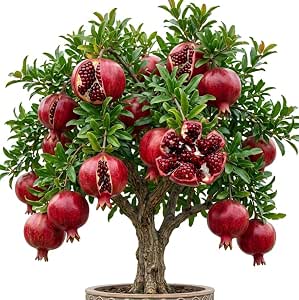 | Best Warm-Climate Ornamental Fruit Plant | Height on arrival: 10–14 inches | Expected plant height: 10 feet | USDA hardiness zones: 9–11 | VIEW LATEST PRICE | See Our Full Breakdown |
| Live Blueberry Plant Collection, 4 Assorted Starter Bushes |  | Best Multi-Plant Harvest Project | Plant count: 4 starter plants | Varieties: Assorted; varies by season and availability | Expected plant height: Up to 6 feet | VIEW LATEST PRICE | See Our Full Breakdown |
| Perfect Plants Flordahome Pear Tree, 4-5 ft, Live Plant |  | Best for a Single-Tree Pear Harvest | Shipped plant size: 4–5 ft | Mature height: Up to 20 ft | USDA hardiness zones: 6–10 | VIEW LATEST PRICE | See Our Full Breakdown |
| Perfect Plants Flordaking Peach Tree, 4-5 ft, Live Plant |  | Best for Warm-Climate Yards | Botanical name: Prunus persica ‘Flordaking’ | Shipped plant size: 4–5 ft | Mature height: 12–15 ft | VIEW LATEST PRICE | See Our Full Breakdown |
| 8 Bare-Root Fruit Plants: 2 Each of Apple, Blueberry, Raspberry, and Blackberry |  | Best for a Mixed Fruit Patch | Plant types: Apple, blueberry, raspberry, and blackberry | Quantity: 8 plants; 2 of each type | Plant condition: Dormant bare root | VIEW LATEST PRICE | See Our Full Breakdown |
| Perfect Plants Russian Pomegranate Tree, 1 Gallon |  | Best for a Shrub-to-Tree Pomegranate | Plant type: Live pomegranate plant | Container size: 1 gallon | Mature height: 10 ft | VIEW LATEST PRICE | See Our Full Breakdown |
| Mixrug Dwarf Bonsai Fruit Tree Seeds, 5 Varieties |  | Best for Experimental Container Growing | Seed varieties: Apple, lemon, orange, blueberry, and cherry | Seed quantity: 180+ total | Variety quantities: 40+ each apple, lemon, orange, and cherry; 20+ blueberry | VIEW LATEST PRICE | See Our Full Breakdown |
| Mix Fruit Seeds Pack for Planting, 160 pcs Lemon Orange Apple Blueberry Cherry – Non-GMO Heirloom Sweet Edible Fruits |  | Best for Variety-Minded Gardeners | Brand: Mixrug | Seed count: 160 seeds | Fruit varieties: Lemon, orange, apple, blueberry, and cherry | VIEW LATEST PRICE | See Our Full Breakdown |
| Perfect Plants Tifblue Rabbiteye Blueberry Bush, 1 Gallon Live Plant |  | Best for Warm-Climate Blueberry Growers | Brand: Perfect Plants | Variety: Tifblue Rabbiteye | Container size: 1 gallon | VIEW LATEST PRICE | See Our Full Breakdown |
| Belle of Georgia Peach Tree, 1-Gallon Nursery Pot |  | Best Self-Pollinating Peach Tree | Botanical name: Prunus persica | Container size and shipped height: 1-gallon pot; 1–2 feet tall | Mature height: 15–20 feet | VIEW LATEST PRICE | See Our Full Breakdown |
| Live Berry Plant Bundle: 2 Blueberry, 2 Raspberry, and 2 Blackberry Bushes |  | Best Mixed Berry Starter Bundle | Plant varieties: Blueberry, raspberry, and blackberry | Quantity: 6 plants: 2 of each variety | Growth stage at shipping: Dormant, bare root | VIEW LATEST PRICE | See Our Full Breakdown |
| fruit trees and bushe | Sunlight |
|---|---|
| 2 Pack American Persimmon Tree | Full sun |
| Contender Peach Tree Live Plan | — |
| Perfect Plants Chicago Hardy F | Full sun |
| Dwarf Pomegranate Live Plant | Full sun |
| Live Blueberry Plant Collectio | Full sun |
| Perfect Plants Flordahome Pear | Full sun |
| Perfect Plants Flordaking Peac | Full sun |
| 8 Bare-Root Fruit Plants: 2 Ea | — |
| Perfect Plants Russian Pomegra | Full sun; partial shade listed |
| Mixrug Dwarf Bonsai Fruit Tree | — |
| Mix Fruit Seeds Pack for Plant | Full sun |
| Perfect Plants Tifblue Rabbite | — |
| Belle of Georgia Peach Tree | — |
| Live Berry Plant Bundle: 2 Blu | Partial shade |
More Details on Our Top Picks
2 Pack American Persimmon Tree Live Plant (12-24 Inch Potted Fruit Tree)
For a buyer who wants fruit trees that also fit a native-plant landscape, this two-tree American persimmon set has a clear advantage over the more conventional Contender Peach Tree. The trees arrive potted at 12–24 inches and are listed for USDA zones 4–9, giving them a broad climate range. Their sweet fruit can be eaten fresh or used in baking, while the seasonal foliage and native status add value beyond the harvest. The tradeoff is patience: the listing notes that several years of growth may pass before fruiting, so this is a longer-term planting rather than a quick crop. Both trees also need full sun and well-draining loam, and their deciduous leaves drop seasonally. Choose this pair for a native-focused garden, not for immediate fruit.
Pros:- Includes two potted trees, giving the planting a head start as a small orchard.
- Native species can support local wildlife and naturalized landscapes.
- Produces sweet fruit suited to fresh eating and baking.
- Hardy across USDA zones 4–9.
Cons:- May take several years of growth before producing fruit.
- Needs full sun and well-draining loam for best growth.
- Deciduous foliage drops seasonally.
Best for: Homeowners in zones 4–9 who want to establish native fruit trees and can wait several years for a harvest.
Not ideal for: Gardeners seeking fruit soon or anyone without a sunny planting site and space for trees listed to reach about 15 feet.
- Quantity:2 trees
- Plant height:12–24 inches
- Expected mature height:15 feet
- USDA hardiness zones:4–9
- Sunlight:Full sun
- Soil:Loam
- Watering:Moderate
- Planting period:Spring to fall
Our verdict“Pick this pair if native character and long-term fruit production matter more than a fast harvest.”
Contender Peach Tree Live Plant, 1–2 Feet Tall
This Contender peach is the most straightforward choice here for a buyer set on a classic orchard fruit: it is self-pollinating, arrives in a gallon pot, and is intended for planting directly in the ground. That makes it simpler to plan than the four assorted Blueberry starter bushes, whose varieties vary by availability and whose soil needs are unusually acidic. The tree is listed for full sun and regular watering, with a mature height around 10 feet. Its main limitation is flexibility: the seller specifies that it should not be moved into another container, so patio growers who need a pot-friendly tree should look at the Chicago Hardy Fig instead. It is also a young plant at 1–2 feet, so buyers should expect to establish it before it becomes a substantial fruit producer.
Pros:- Self-pollinating, so a second peach tree is not required for pollination.
- Ships in a gallon pot ready for planting in the ground.
- Attracts pollinators during its spring bloom.
- Includes planting instructions and a 30-day successful transplant guarantee when instructions are followed.
Cons:- Must be planted in the ground rather than transferred to another container.
- Needs full sun and regular watering.
- Arrives only 1–2 feet tall, so it requires time to establish.
Best for: Gardeners with a sunny in-ground planting spot who want one self-pollinating peach tree and can provide regular watering.
Not ideal for: Container gardeners or buyers who need a mature, large tree on arrival; this plant is shipped 1–2 feet tall and is specified for in-ground planting.
- Plant type:Contender peach tree
- Height when shipped:1–2 feet
- Expected height:10 feet
- Container:Gallon pot
- USDA hardiness zones:4–8
- Sun exposure:Full sun
- Pollination:Self-pollinating
- Soil moisture:Regular watering
- Planting:In the ground; do not transplant to another container
Our verdict“Choose this peach for a sunny garden bed when self-pollination matters more than container flexibility.”
Perfect Plants Chicago Hardy Fig Tree, 1 Gallon Live Plant
The Chicago Hardy Fig stands apart from the Contender Peach Tree because it can be grown in a patio container or in the ground, giving gardeners more control over placement and winter protection. It is self-pollinating and produces deep purple fruit, while the included fig food and care guide offer a useful starting point for a less familiar crop. Its stated cold tolerance below freezing and zone range of 5–10 also make it a broader option than the warm-climate Dwarf Pomegranate. That flexibility has limits: the listed mature size reaches 15–30 feet tall and 15–35 feet wide, so a container can help manage placement but does not make this a tiny plant. It also needs full sun, and shipping is unavailable to Arizona and California.
Pros:- Can be planted in the ground or grown in a patio container.
- Self-pollinating, with deep purple fruit listed as an annual crop.
- Tolerates below-freezing temperatures and is listed for zones 5–10.
- Includes fig food and a care guide.
Cons:- Mature dimensions can be substantial at 15–30 feet tall and 15–35 feet wide.
- Requires full sun and moderate watering.
- Does not ship to Arizona or California.
Best for: Gardeners in zones 5–10 who want a self-pollinating fig and the choice to grow it in a patio container or in the ground.
Not ideal for: Buyers with very limited space, less than full-sun conditions, or shipping addresses in Arizona or California.
- Container size:1 gallon
- Pollination:Self-pollinating
- Mature height:15–30 feet
- Mature width:15–35 feet
- Fruit:Deep purple with maroon tones
- Growing zones:5–10
- Sunlight:Full sun
- Included:Fig food and care guide
- Shipping restriction:Does not ship to Arizona or California
Our verdict“Choose this fig over the in-ground-only Contender Peach if container growing and placement flexibility are priorities.”
Dwarf Pomegranate Live Plant, 10–14 Inches Tall
This dwarf pomegranate is the lineup’s strongest fit for a warm-climate patio where a plant needs to look ornamental as well as bear fruit. At 10–14 inches on arrival, it is easier to place than the Chicago Hardy Fig, whose listed mature spread can reach 35 feet, and it can grow in a container or garden bed. The distinction is climate: this plant is listed only for USDA zones 9–11, while the fig and American persimmon cover colder regions. Full sun, regular watering, and well-drained soil are part of the routine; keeping the soil moist without letting it become waterlogged calls for attention. Although described as dwarf, its listed expected height is 10 feet, so buyers should not mistake the small shipping size for a permanently tiny shrub.
Pros:- Combines ornamental appeal with fruit-bearing use.
- Can be grown in containers, patios, or garden beds.
- Small 10–14-inch size on arrival is manageable for planting.
- Suitable for well-drained sandy loam or potting mix.
Cons:- Listed for warm climates only, USDA zones 9–11.
- Needs full sun and regular watering.
- Expected height is listed as 10 feet despite the dwarf description.
Best for: Gardeners in zones 9–11 who want a fruit-bearing ornamental for a sunny patio, container, or garden bed.
Not ideal for: Gardeners in colder zones or anyone seeking a reliably compact plant without room for growth toward 10 feet.
- Height on arrival:10–14 inches
- Expected plant height:10 feet
- USDA hardiness zones:9–11
- Sunlight:Full sun
- Soil:Well-draining sandy loam or potting mix
- Watering:Regular; keep moist but well-drained
- Growing location:Outdoor; container or garden bed
- Planting period:Spring to summer
Our verdict“Choose this pomegranate for a sunny warm-climate patio, but not for cold zones or a permanently miniature planting.”
Live Blueberry Plant Collection, 4 Assorted Starter Bushes
For gardeners who want several bushes rather than a single tree, this four-plant blueberry collection offers more scope for staggered harvests than the one-gallon Tifblue Rabbiteye Blueberry Bush listed elsewhere in the roundup. The assortment may include varieties with different ripening windows, and multiple varieties can support cross-pollination; however, the exact plants are not guaranteed. These starter bushes can go in garden beds or containers and are listed for zones 5–9, but blueberries demand more soil preparation than the American Persimmon. The specified pH range is about 4.0–5.2, and the soil must stay evenly moist without becoming poorly drained. That makes this a rewarding choice for growers ready to manage acidic soil, not a low-effort pick for ordinary garden soil. Plants may reach up to 6 feet.
Pros:- Four starter plants provide a larger planting than a single blueberry bush.
- Multiple varieties may support cross-pollination and spread harvest timing.
- Suitable for garden beds and containers.
- Listed for USDA zones 5–9 and full-sun growing.
Cons:- Specific varieties depend on season and availability.
- Requires acidic soil with a pH of approximately 4.0–5.2.
- Needs regular watering to keep soil evenly moist.
Best for: Gardeners who want several blueberry bushes, can provide acidic soil, and are willing to manage moisture and variety uncertainty.
Not ideal for: Buyers who need named varieties, want fruit with minimal soil preparation, or cannot maintain soil near pH 4.0–5.2.
- Plant count:4 starter plants
- Varieties:Assorted; varies by season and availability
- Expected plant height:Up to 6 feet
- Hardiness zones:5–9
- Sunlight:Full sun
- Soil pH:Approximately 4.0–5.2
- Soil type:Peat soil
- Watering:Regular; keep evenly moist
- Growing location:Outdoor; garden beds or containers
Our verdict“Choose this collection over a single Tifblue bush if you want a multi-plant blueberry patch and can meet its acidic-soil needs.”
Perfect Plants Flordahome Pear Tree, 4-5 ft, Live Plant
Semi-self-fertile pollination gives this pear tree an advantage for gardeners who have room for only one pear, though the product description does not promise the same independence as the self-fertile Flordaking Peach Tree. It arrives 4–5 feet tall and rooted in soil, so it starts ahead of seed-grown options such as the Mixrug bonsai seed collection. Fruit may arrive within 2–3 years, and the sweet pears suit fresh eating or preserves. The tradeoff is space: a mature tree can reach 20 feet, making it a poor match for compact yards. It also needs regular watering and full sun, and shipping excludes California, Arizona, Alaska, and Hawaii. I’d rank it for buyers prioritizing an established pear tree over a small-space or low-effort pick.
Pros:- Ships rooted in soil at 4–5 feet, ready for outdoor planting.
- Semi-self-fertile, so it can produce fruit without a second pear tree.
- May begin producing fruit within 2–3 years.
- Sweet pears can be eaten fresh or used for preserves.
Cons:- Can grow to 20 feet, requiring substantial space.
- Needs full sun and regular watering.
- Cannot ship to California, Arizona, Alaska, or Hawaii.
Best for: Gardeners with a sunny, spacious yard who want an established pear tree and may be planting only one.
Not ideal for: Small-yard growers or buyers in California, Arizona, Alaska, or Hawaii; its mature size and shipping exclusions are limiting.
- Shipped plant size:4–5 ft
- Mature height:Up to 20 ft
- USDA hardiness zones:6–10
- Sunlight:Full sun
- Bloom period:Spring
- Soil type:Loam
- Watering needs:Regular watering
- Expected fruit production:2–3 years
Our verdict“Choose this established pear tree if you have room for a large, sunny planting and want fruit sooner than a seed-grown tree can offer.”
Perfect Plants Flordaking Peach Tree, 4-5 ft, Live Plant
The 350-hour chill requirement makes Flordaking a more suitable peach choice for mild-winter areas than a variety that needs a longer cold period. It is also self-fertile, so unlike the semi-self-fertile Flordahome Pear Tree, it does not depend on another fruit tree for pollination. At 12–15 feet tall and wide, it is a more manageable fit than that pear, though it still needs room to spread. Pink flowers add spring interest, and the red-skinned fruit is described as sweet. This is not a hands-off choice: it needs full sun, consistent watering, and fertilization for good fruit set. I’d favor it over the Flordahome for a warm-climate peach harvest, but not for shaded or very cold sites.
Pros:- Needs only 350 chill hours, suiting areas with milder winters.
- Self-fertile, so a second peach tree is not needed for pollination.
- Matures at a more manageable 12–15 feet tall and wide than the Flordahome Pear Tree.
- Light-pink flowers provide ornamental spring color.
Cons:- Requires full sun and consistent watering.
- Needs fertilization for strong fruit set.
- May struggle outside its listed growing zones of 5–9.
Best for: Gardeners in suitable mild-winter regions who want a self-fertile peach tree with a relatively compact spread.
Not ideal for: Buyers with shaded planting sites, limited watering capacity, or gardens outside zones 5–9.
- Botanical name:Prunus persica ‘Flordaking’
- Shipped plant size:4–5 ft
- Mature height:12–15 ft
- Mature width:12–15 ft
- Growing zones:5–9
- Chill hours required:350
- Sunlight:Full sun
- Expected bloom period:February
- Soil type:Loam
Our verdict“Pick Flordaking for a sunny, warm-winter garden where a self-fertile peach is a better fit than a taller pear.”
8 Bare-Root Fruit Plants: 2 Each of Apple, Blueberry, Raspberry, and Blackberry
This bundle is the lineup’s broadest route to a mixed fruit planting: it includes two each of apple, blueberry, raspberry, and blackberry. That variety makes it more flexible for a home edible garden than buying a single Flordaking Peach Tree, but it also means managing several kinds of plants rather than focusing on one crop. The plants arrive dormant and bare-root, not established in pots like the Flordahome Pear Tree, so planting and steady watering during establishment matter. The listing gives no cultivar names, mature sizes, or fruiting timelines, which makes it harder to plan spacing and predict harvests. I’d choose this bundle for gardeners who value crop variety and can prepare a sunny, well-drained site; skip it if you want a clearly specified, ready-grown tree.
Pros:- Includes four fruit types for a varied edible garden.
- Provides two plants of each listed type.
- Dormant bare-root plants can be planted directly outdoors.
- Can suit gardens, orchards, and edible landscapes.
Cons:- Requires regular watering while plants establish.
- Needs full sun and well-drained soil.
- No cultivar names, mature dimensions, or fruiting timeline are provided.
Best for: Home gardeners with a sunny, well-drained plot who want to start several kinds of fruit at once.
Not ideal for: Buyers who need named cultivars, predictable mature sizes, or plants already established in containers.
- Plant types:Apple, blueberry, raspberry, and blackberry
- Quantity:8 plants; 2 of each type
- Plant condition:Dormant bare root
- Recommended use:Outdoor
- Sunlight and soil:Full sun; well-drained soil
- Watering:Regular watering during establishment
- Item weight:2 pounds
- Dimensions:14 × 2 × 3 inches (D × W × H)
Our verdict“Choose this bundle when variety matters more than cultivar detail and you can establish eight bare-root plants in a suitable outdoor site.”
Perfect Plants Russian Pomegranate Tree, 1 Gallon
Self-pollination makes this pomegranate a simpler single-plant choice than the mixed bare-root bundle, which offers variety but does not specify pollination details for its plants. Its bushy growth habit can be trained as a small tree, giving gardeners some flexibility in how it fits an edible landscape. Orange-red spring flowers add ornamental value alongside the edible fruit, which is expected about two years after establishment. At roughly 10 feet tall and wide, it still needs outdoor space; this is not a houseplant or a compact container pick. The listing calls for full sun for best growth, even though partial shade is listed as possible, and provides little detail about watering beyond low moisture needs. I’d place it ahead of seed packs for buyers wanting a live, self-pollinating pomegranate, subject to its shipping limits.
Pros:- Self-pollinating, so a second pomegranate is not required.
- Produces edible fruit and orange-red spring flowers.
- Can be kept bushy or trained into a small tree.
- Listed as suitable for USDA zones 6–9.
Cons:- Can reach about 10 feet tall and wide, taking substantial space.
- Not suitable as a houseplant and performs best in full sun.
- Does not ship to California, Arizona, or Hawaii.
Best for: Gardeners in zones 6–9 who want a live, self-pollinating pomegranate that can grow as a shrub or be trained as a small tree.
Not ideal for: Indoor gardeners, owners of small patios without planting space, or buyers in California, Arizona, or Hawaii.
- Plant type:Live pomegranate plant
- Container size:1 gallon
- Mature height:10 ft
- Mature width:10 ft
- USDA hardiness zones:6–9
- Pollination:Self-pollinating
- Sunlight:Full sun; partial shade listed
- Bloom season and color:Spring; orange-red flowers
- Expected fruiting:Approximately two years after establishment
Our verdict“Choose this live pomegranate over a seed pack if you have outdoor space and want a single plant with edible fruit and showy flowers.”
Mixrug Dwarf Bonsai Fruit Tree Seeds, 5 Varieties
For gardeners drawn to container-grown fruit, this seed collection offers five varieties—apple, lemon, orange, blueberry, and cherry—rather than a single established tree such as the Russian Pomegranate. The listed quantity is 180+ seeds total, but seeds require germination and ongoing care before they can become fruiting plants; the listing gives no timetable or mature dimensions. “Dwarf bonsai” describes the intended growing style, not a guarantee of quick or reliable fruit harvests. The species also have different needs: blueberries typically call for acidic soil, while citrus needs abundant light, so the listed general soil and watering details may not suit every variety. I’d rank this below live plants for buyers seeking a dependable near-term harvest, but it suits patient growers who value variety and experimentation in small spaces.
Pros:- Includes seeds for five fruit varieties in separate packs.
- Lists 180+ seeds across the collection.
- Dwarf growing intent suits container gardening and limited space.
- Can be grown indoors or outdoors, subject to each species’ needs.
Cons:- Seeds take time and care to establish, with no fruiting timeline provided.
- The five species have different light and soil needs, complicating care.
- The blueberry pack has fewer seeds than the other listed varieties.
Best for: Patient container gardeners who want to experiment with several fruit species indoors or outdoors and accept varied growing needs.
Not ideal for: Gardeners seeking an established tree or a predictable harvest timeline; these seeds need germination and species-specific care.
- Seed varieties:Apple, lemon, orange, blueberry, and cherry
- Seed quantity:180+ total
- Variety quantities:40+ each apple, lemon, orange, and cherry; 20+ blueberry
- Growing type:Dwarf bonsai fruit trees
- Growing locations:Indoor and outdoor
- Sunlight exposure:Full sun
- Soil type listed:Clay soil
- Soil moisture:Regular watering
- USDA hardiness zone listed:8
Our verdict“Choose this seed set for a patient, experimental container project, not when you need a live plant or a near-term fruit harvest.”
Mix Fruit Seeds Pack for Planting, 160 pcs Lemon Orange Apple Blueberry Cherry – Non-GMO Heirloom Sweet Edible Fruits
Five fruit types in one seed pack make this the broadest experiment here: lemon, orange, apple, blueberry, and cherry seeds give gardeners more variety than the Live Berry Plant Bundle, which focuses on three berry crops. The dwarf-planting pitch suits patios and containers, but seeds require patience and growing conditions suited to each variety; a mixed pack is less predictable than buying an established plant such as the Belle of Georgia Peach Tree. These seeds need full sun, and fruiting can take several years, so they are a poor fit for anyone hoping for a quick harvest. I’d choose this pack for the range and the chance to grow from seed, not for reliable timing or a uniform crop.
Pros:- Includes seeds for five different fruit types.
- Dwarf varieties are presented as suitable for containers and small gardens.
- Non-GMO and heirloom seed features are specified.
- Offers an inexpensive-in-effort way to try several fruit crops from seed.
Cons:- Seed-grown plants may take several years to produce fruit.
- Full-sun requirements rule out shaded growing areas.
- A mixed seed pack offers less certainty about establishment and harvest timing than live plants.
Best for: Gardeners with a sunny patio or small plot who enjoy starting several fruit types from seed and can wait for plants to mature.
Not ideal for: Buyers seeking a near-term harvest, dependable cultivar details, or fruit plants suited to shaded locations.
- Brand:Mixrug
- Seed count:160 seeds
- Fruit varieties:Lemon, orange, apple, blueberry, and cherry
- Growing use:Indoor and outdoor
- Sunlight:Full sun
- Planting period:Spring to fall
- Listed hardiness zones:USDA Zones 3–8
- Seed features:Non-GMO and heirloom
Our verdict“Choose this pack if you value trying five fruit types from seed more than a quick or predictable harvest.”
Perfect Plants Tifblue Rabbiteye Blueberry Bush, 1 Gallon Live Plant
Tifblue is a live, fruit-focused choice for gardeners in its listed warm-climate range, unlike the Mixrug seed pack, which offers blueberry only as one of five crops and requires growing from seed. The bush is described as a heavy producer, with sweet berries ripening from June to July; its included blueberry food is a useful addition for a first planting. The catch is pollination: this plant needs another blueberry variety, so it cannot be treated as a stand-alone fruit bush. Its mature size may also reach 15 feet tall, making pruning or a generous planting site part of the plan. I’d favor it over the mixed berry bundle for a dedicated blueberry planting, but only where space, climate, and a pollination partner line up.
Pros:- Live plant gives growers a more direct start than growing blueberries from seed.
- Described as a heavy producer of sweet berries.
- Fruit season is listed as June to July.
- Blueberry food is included with the plant.
Cons:- Requires another blueberry variety for cross-pollination.
- Mature height can reach 15 feet, calling for room or ongoing pruning.
- The listing gives conflicting hardiness information, and shipment is restricted in California, Arizona, and Washington.
Best for: Gardeners in USDA Zones 7–9 who have room for a large blueberry bush and can plant a second compatible variety nearby.
Not ideal for: Small-space growers seeking a single self-sufficient bush, or buyers outside the listed climate and shipping availability.
- Brand:Perfect Plants
- Variety:Tifblue Rabbiteye
- Container size:1 gallon
- Mature dimensions:3–15 feet tall and 3–10 feet wide
- Listed hardiness:Description states USDA Zones 7–9; specs also list Zone 3
- Sunlight and water:Full sun; moderate watering
- Fruit season:June to July
- Pollination:Requires another variety for cross-pollination
Our verdict“Pick Tifblue for a warm-climate blueberry planting if you can provide a pollination partner and space for a large bush.”
Belle of Georgia Peach Tree, 1-Gallon Nursery Pot
Self-pollination is Belle of Georgia’s clearest advantage: unlike the Tifblue blueberry, this peach tree does not need a second variety nearby to set fruit. It suits growers who want one substantial fruit tree rather than a collection of bushes, with sweet, white-fleshed peaches ripening in late summer. The tradeoff is scale and climate: it can reach 15–20 feet, needs full sun and regular watering, and its 850 chill-hour requirement narrows where it is likely to perform well. Compared with the Contender Peach Tree elsewhere in this roundup, the supplied details here make the chill requirement and self-pollinating habit especially clear, but do not establish a smaller or easier-growing alternative. Choose it for a sunny site with suitable winter chill, not a compact patio.
Pros:- Self-pollinating, so a second peach tree is not required.
- Produces sweet peaches with white flesh and a red blush.
- Listed for USDA Zones 5–8.
- Late-summer ripening extends harvest into the season.
Cons:- Requires 850 chill hours, limiting suitability in warmer-winter locations.
- Mature height of 15–20 feet makes it unsuitable for many small gardens.
- Needs full sun and regular watering.
Best for: Home orchard growers in USDA Zones 5–8 with a sunny planting site, enough space for a full-size tree, and winters that meet the chill requirement.
Not ideal for: Container gardeners, growers with limited room, or people in mild-winter areas unlikely to provide 850 chill hours.
- Botanical name:Prunus persica
- Container size and shipped height:1-gallon pot; 1–2 feet tall
- Mature height:15–20 feet
- Hardiness zones:USDA Zones 5–8
- Chill requirement:850 hours
- Pollination:Self-pollinating
- Fruit:Medium-sized peaches with sweet white flesh and a red blush
- Ripening period:Late summer
- Growing needs:Full sun; regular watering
Our verdict“Choose Belle of Georgia if you have room and adequate winter chill for a single self-pollinating peach tree.”
Live Berry Plant Bundle: 2 Blueberry, 2 Raspberry, and 2 Blackberry Bushes
Six live plants across three berry types make this bundle the most direct route to a varied berry patch in this group. It offers more immediate planting than the Mixrug five-fruit seed pack, while its two plants of each type provide a more balanced start than buying a single Tifblue blueberry. The plants ship dormant and bare root, so leafless arrivals are expected rather than evidence of failure; the listing says sprouting may take two to four weeks. That format also means patience and careful transplanting are part of the deal. The partial-shade listing may suit sites that cannot offer full sun, but the product data gives no variety names or hardiness zones, making local climate fit harder to judge. This is a variety-first bundle, not a precise cultivar choice.
Pros:- Includes six live plants: two each of blueberry, raspberry, and blackberry.
- Provides three berry types in one bundle.
- Can be planted in containers or in the ground.
- Dormant bare-root plants are supplied for transplanting and root establishment.
Cons:- Dormant plants may arrive without leaves or fruit and can take two to four weeks to sprout.
- Variety names and hardiness zones are not provided in the supplied product details.
- The listing specifies partial shade, which may not suit every berry-growing site.
Best for: Gardeners who want to establish a mixed outdoor berry patch with several plant types and are comfortable planting dormant bare-root stock.
Not ideal for: Buyers who need named cultivars, hardiness-zone guidance, or visible foliage and fruit immediately after delivery.
- Plant varieties:Blueberry, raspberry, and blackberry
- Quantity:6 plants: 2 of each variety
- Growth stage at shipping:Dormant, bare root
- Growing use:Outdoor
- Sunlight:Partial shade
- Soil type:Loam
- Planting options:Containers or in-ground planting
- Special features:Pet friendly; heirloom
Our verdict“Choose this bundle if variety matters more than named cultivars and you are ready to establish bare-root plants.”

How We Picked
I ranked these options by how clearly they suit a home fruit garden, weighing the kind of plant offered, starting format, likely space demands, and the range of buyers it can serve. Established live plants and practical multi-plant collections generally rank ahead of seed packs because they give buyers a more direct starting point, though neither format guarantees fruiting or success.
I also looked at how much uncertainty each listing leaves for the gardener. Climate suitability, pollination needs, time to fruit, mature size, and care differences matter as much as the fruit type. The Chicago Hardy Fig leads for its combination of flexibility and a distinctive fruit crop; berry collections follow for variety and multiple plants. Single-variety trees rank well when they offer a clear fit, while seed assortments rank lower because plant outcomes and timing are less predictable. Since local growing zones and cultivar details can change the choice, I treat those as checks buyers should make before ordering.
| fruit trees and bushe | Sunlight |
|---|---|
| 2 Pack American Persimmon Tree | Full sun |
| Contender Peach Tree Live Plan | — |
| Perfect Plants Chicago Hardy F | Full sun |
| Dwarf Pomegranate Live Plant | Full sun |
| Live Blueberry Plant Collectio | Full sun |
| Perfect Plants Flordahome Pear | Full sun |
| Perfect Plants Flordaking Peac | Full sun |
| 8 Bare-Root Fruit Plants: 2 Ea | — |
| Perfect Plants Russian Pomegra | Full sun; partial shade listed |
| Mixrug Dwarf Bonsai Fruit Tree | — |
| Mix Fruit Seeds Pack for Plant | Full sun |
| Perfect Plants Tifblue Rabbite | — |
| Belle of Georgia Peach Tree | — |
| Live Berry Plant Bundle: 2 Blu | Partial shade |
Factors to Consider When Choosing Best Fruit Trees And Bushes
Choosing fruit plants is less about picking the most appealing fruit and more about matching the plant to your conditions and patience. I’d settle the climate and space questions before comparing varieties, then decide whether an established plant or a seed-growing project better fits your goals.
Match Climate and Chill Needs Before Choosing a Tree
Fruit trees need more than a broadly suitable growing zone: many varieties also depend on a certain amount of winter chill to flower and set fruit. Peach listings are a good reminder to check the variety’s chill requirement against local conditions, especially where winters are mild or spring frosts arrive late. A tree that survives winter may still crop poorly if its flowering schedule clashes with local weather. Ask the seller for cultivar-specific guidance rather than assuming that a familiar fruit name predicts performance. Also check whether the plant is suited to your region’s summer heat and humidity. If those details are missing, favor a locally recommended cultivar over a hopeful guess.
Plan for Mature Size, Not the Shipping Pot
A young plant’s current height tells you little about the room it will need after several seasons. Before buying a tree, find its expected mature height and width, then account for paths, fences, overhead wires, and access for pruning and harvest. Containers can help manage some figs and pomegranates, but they bring regular watering, feeding, and eventual repotting. Bushes also need room for airflow and picking, and a tight planting can make pruning and disease checks harder. Avoid placing a plant based only on its small shipping size. If space is limited, confirm that the variety and rootstock are genuinely suited to compact growing.
Check Pollination Requirements Across the Whole Planting
Some fruit varieties can set crops on their own, while others benefit from a compatible pollinator flowering nearby. A multi-plant collection does not automatically solve pollination: the plants may be different varieties, or they may not flower at the same time. Before ordering, check whether each variety is self-fertile and whether it needs a partner of a compatible type. This matters especially when you have room for only one tree or a small group of bushes. Nearby gardens can sometimes provide pollen, but that is not a dependable plan unless you know what is growing there. Treat pollination as a cultivar-specific question, not a general promise attached to the fruit species.
Choose Live Plants or Seeds Based on Your Timeline
Live nursery plants usually give you a more direct start, but they still need establishment time before producing a useful crop. Bare-root plants can be a convenient way to plant several types, though timing and prompt planting after arrival matter. Seeds make sense when the growing process is part of the goal, not when you need a predictable variety or a near-term harvest. Seed-grown fruit plants can vary from the parent type and may take years to mature. Read listings carefully to distinguish fruit seeds from a named, established cultivar. If you want a known variety, choose a correctly labeled live plant and confirm its size and growing form.
Compare the Care Load, Not Just the Number of Plants
A bundle with several fruit types can make a garden feel more varied, but it also creates a mixed care schedule. Blueberries, raspberries, blackberries, and fruit trees can differ in soil preferences, pruning, watering, and support needs. Before buying a bundle, decide whether you can give each plant a suitable spot rather than forcing everything into one bed. Check soil pH before planting blueberries; trying to correct unsuitable soil after planting can become an ongoing task. Consider how much pruning and harvesting you can manage during the busiest part of the season. A smaller collection matched to your garden may produce more dependable results than a larger assortment with mismatched needs.
Weigh Earlier Harvest Potential Against Long-Term Growing
Established plants can shorten the wait compared with seeds, but a larger plant is not a guarantee of fruit in its first year. Transplanting can shift a plant’s energy toward root establishment, and shipping or weather stress can delay growth. Trees generally ask for a longer commitment and more space than many berry bushes, while bushes can still need several seasons to reach useful production. Think about whether you value a long-lived tree, a faster-to-fill berry bed, or the variety of a mixed planting. Ask how old the plant is, whether it is grafted when relevant, and what size to expect at delivery. Make your choice around the harvest timeline you can accept, not an assumed first-season crop.
Frequently Asked Questions
Should I buy a named fruit tree or a mixed fruit seed pack?
Choose a named live tree if you want a particular cultivar and clearer information about its growth and climate fit. A seed pack is better treated as a growing experiment: germination, plant sex or type where relevant, mature fruit traits, and time to harvest can be less predictable. Seed-grown trees may not produce fruit identical to the fruit associated with the seed listing. If you have limited space or want a specific peach, pear, or fig, a labeled nursery plant is the more direct choice. If the process of raising seedlings matters more than a predictable crop, seeds may suit you.
Can I grow these fruit trees and bushes in containers?
Some options are more container-friendly than others, but a small plant at arrival does not mean it will stay compact. Figs and dwarf pomegranates can be candidates for pots when their eventual size and care needs fit the space. Many fruit trees need large containers, steady watering, suitable feeding, and winter protection, while berries also vary in their tolerance of restricted roots. Check the cultivar’s mature size and container guidance before buying, and make sure the pot has adequate drainage. A container can save ground space, but it usually increases hands-on care.
Is a bundle of different fruit plants a good choice for a first garden?
A bundle can be a good way to begin if you have enough space and are comfortable learning several care routines. The mixed berry and bare-root collections offer more than one kind of fruit, but their plants may differ in soil, pruning, support, and watering needs. For a first garden, a smaller group with similar requirements can be easier to manage than the largest assortment. Check what varieties are included and whether they suit your climate before ordering. If the bundle’s plant identities or care needs are unclear, a smaller, clearly labeled selection may be the safer start.
Do I need more than one plant to get fruit?
That depends on the species and the specific variety, so there is no reliable one-size-fits-all answer. Some plants can fruit on their own, while others need pollen from a compatible variety that flowers at the same time. A collection of several plants may help, but only if it includes suitable pollinators. Check each cultivar’s pollination requirements before deciding that one plant is enough. When space allows, choosing compatible varieties can reduce the risk of a disappointing crop.
How should I choose between a bare-root plant and a potted plant?
Bare-root plants can be an efficient way to establish several plants, but they usually need to be planted during the appropriate dormant-season window and should not sit unplanted after arrival. Potted plants offer a visible root ball and can provide more flexibility around planting time, subject to local weather and seller instructions. Neither format guarantees faster fruiting or better long-term growth. Consider your planting schedule, ability to prepare the site promptly, and the condition and size promised in the listing. Follow the grower’s handling guidance because bare-root and potted plants have different immediate needs.
Conclusion
For the broadest mix of flexibility and fruit appeal, I’d choose the Chicago Hardy Fig Tree as best overall, provided its climate and winter-care needs fit your garden. The Live Blueberry Plant Collection is my best value pick for buyers who want several live bushes rather than a seed-growing project, while the larger established fruit trees are the best premium-style choice for gardeners ready to plan around a permanent planting. Beginners should start with a clearly labeled live plant or a small berry group, not the bonsai or mixed fruit seed packs if a predictable harvest is the goal. For a range of berries, choose a live berry bundle; for a single distinctive tree, compare the figs, persimmons, pears, and peaches against your local growing conditions. My final filter would be simple: confirm climate fit, mature size, pollination, and care needs before choosing the fruit you most want to grow.
Black Friday Picks

Bose QuietComfort Headphones (2nd Gen), Wireless Over-Ear Noise-Cancelling Headphones, Black
As an affiliate, we earn on qualifying purchases.