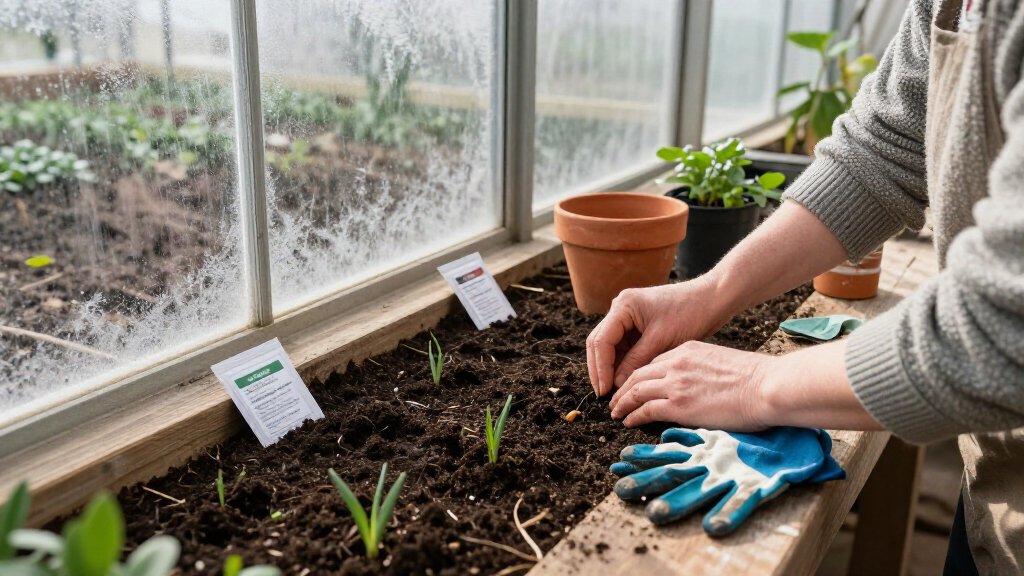

The best winter flower seeds depend on whether you want blooms through cold weather, flowers to start indoors, or plants that return in later seasons. My best overall pick is the Sow Right Seeds Frost-Hardy Flower Seed Collection for its range of cold-season options; the Hiemalis Winter Mix Pansy is a focused choice for classic winter color, while Iceland poppies suit gardeners seeking a different flower form. The main tradeoffs are variety versus a single dependable flower type, seed quantity versus a manageable planting, and winter hardiness versus the climate and care your garden can provide. Seed names alone do not guarantee blooms in every region, so match the packet’s growing directions to your local conditions. Read on for the full comparison and guidance on choosing seeds for your space.

Get garden gear delivered free with Prime
- Fast, free delivery on millions of items
- Prime Video, Amazon Music and more included
- Member-only deals all year
Complete the kit


Key Takeaways
- The Sow Right Seeds Frost-Hardy Flower Seed Collection earns the overall lead for gardeners who want several cold-season options rather than a large quantity of one flower.
- Pansies dominate this lineup, with several mixes and pack sizes; compare the specific winter designation and seed count instead of treating them as interchangeable.
- Large counts are not automatically better value: 4,000 Iceland poppy seeds or 5,000 Sweet William seeds make most sense when you have room and a plan for sowing or storing leftovers.
- Perennial and shrub seeds ask for a longer commitment than annual-style seasonal color, so New England aster, mixed perennial, and camellia options suit different timelines and growing conditions.
- Special-purpose seeds fill distinct gaps: cineraria targets indoor pots and shade, while cool-season collections offer variety but call for more attention to each variety’s growing needs.
| HOME GROWN Swiss Giants Mix Pansy Seeds, 1,500 Seeds |  | Best for High-Volume Pansy Planting | Seed quantity: 1,500 | Plant: Swiss Giants pansy (Viola × wittrockiana) | Seed treatment: Untreated | VIEW LATEST PRICE | See Our Full Breakdown |
| 20+ Mixed Camellia Seeds – Cold Hardy, Non-GMO Heirloom Evergreen Flowering Shrub Seeds for Garden & Outdoor |  | Best for Winter Shrub Blooms | Seed quantity: 20+ mixed seeds | Plant type: Camellia flowering shrub | Bloom period: Winter to spring | VIEW LATEST PRICE | See Our Full Breakdown |
| 1000 Cineraria Flower Seeds for Indoor Pots and Shade Gardens |  | Best for Indoor and Part-Shade Sowing | Seed count: 1,000 | Plant: Cineraria | Germination time: 10–20 days | VIEW LATEST PRICE | See Our Full Breakdown |
| Pansy Hiemalis Winter Mix – 50+ Viola wittrockiana Seeds (Cold-Hardy) |  | Best for Compact Cold-Season Color | Seed quantity: 50+ | Plant: Viola wittrockiana | Bloom period: Late winter–early spring and fall–early winter | VIEW LATEST PRICE | See Our Full Breakdown |
| Sow Right Seeds Frost-Hardy Flower Seed Collection |  | Best for Variety in One Collection | Seed packets: 5 | Flowers: Pansy, violet, calendula, snapdragon, sweet pea | Growing season: Spring to fall | VIEW LATEST PRICE | See Our Full Breakdown |
| Mixrug New England Aster Flower Seeds, 1,000+ Mixed Perennial Seeds |  | Best for Late-Season Pollinator Color | Seed count: 1,000+ | Plant type: Perennial asters | Flower colors: Purple, pink, white, and lavender | VIEW LATEST PRICE | See Our Full Breakdown |
| 4,000 Iceland Poppy Heirloom Flower Seeds, Papaver nudicaule |  | Best for Cold-Hardy Cut Flowers | Seed count: 4,000 | Plant type: Perennial flower | Scientific name: Papaver nudicaule | VIEW LATEST PRICE | See Our Full Breakdown |
| Gardeners Basics Perennial Flower Seeds, 5 Varieties |  | Best for Building a Mixed Perennial Border | Number of varieties: 5 | Included flowers: Russell strain lupine, blue columbine, purple coneflower, Black-Eyed Susan, Alaska Shasta daisy | Packet weights: Lupine 1 g; columbine 300 mg; coneflower 800 mg; Black-Eyed Susan 500 mg; Shasta daisy 500 mg | VIEW LATEST PRICE | See Our Full Breakdown |
| Swiss Giants Mix Pansy Seeds, 1,000+ Non-GMO Heirloom Seeds |  | Best for Colorful Containers and Flower Boxes | Seed quantity: 1,000+ | Seed type: Non-GMO heirloom | Plant type and height: Hardy annual; 4–10 inches | VIEW LATEST PRICE | See Our Full Breakdown |
| Cool Season Flower Seeds, 10 Heirloom Varieties |  | Best for Broad Cool-Season Variety | Number of varieties: 10 | Included examples: Alyssum, calendula, pansy, snapdragon, ornamental kale, sweet pea | Seed type: Heirloom, open-pollinated, non-GMO | VIEW LATEST PRICE | See Our Full Breakdown |
| CarpetC199 Pansy Seed Mix, 199 Seeds |  | Best for Frost-Tolerant Containers | Seed count: 199 | Plant type: Annual | Color: Violet | VIEW LATEST PRICE | See Our Full Breakdown |
| Outsidepride Sweet William Dianthus Seeds, 5,000 Count |  | Best for Large, Hardy Plantings | Plant: Sweet William (Dianthus barbatus) | Seed quantity: 5,000 | USDA hardiness zones: 3–9 | VIEW LATEST PRICE | See Our Full Breakdown |
| 200+ Giant Mixed Perennial Pansy Seeds |  | Best for Oversized, Fragrant Blooms | Seed quantity: 200+ per packet | Flower size: Up to 4 inches across | Flower colors: Purples, yellows, oranges, and bicolors | VIEW LATEST PRICE | See Our Full Breakdown |
| Kings Seeds Winter-Flowering Mixed Pansy Seeds, 100 Count |  | Best for a Timed Winter Sowing | Seed count: 100 | Plant type: Pansy | Blooming season: Winter and spring | VIEW LATEST PRICE | See Our Full Breakdown |
More Details on Our Top Picks
HOME GROWN Swiss Giants Mix Pansy Seeds, 1,500 Seeds
I’d choose this mix when the goal is to fill several beds or containers with classic large-flowered pansies. Its 1,500 untreated seeds offer far more sowing capacity than the 50+ seeds in the Pansy Hiemalis Winter Mix, making it a better fit for broad coverage than a small seasonal display. The Swiss Giants mix spans colors such as purple, blue, mahogany, yellow, orange, and white, though the listing does not state how those colors are distributed. At 6 inches tall, the plants suit low borders and pots, and the included online guide may help newer growers plan sowing. The tradeoff for winter-flower shoppers is that its stated bloom season is spring to fall, not specifically winter; it also calls for full sun and regular watering.
Pros:- Large 1,500-seed supply suits planting across multiple spaces.
- Color mix includes several named shades.
- Compact 6-inch height works for containers and border edges.
- Online growing guide is included.
Cons:- Listed bloom period is spring to fall rather than winter.
- Color proportions are not specified.
- Requires full sun and regular watering.
Best for: Gardeners sowing multiple beds, borders, or containers who want a large supply of mixed-color pansies.
Not ideal for: Buyers seeking a clearly specified winter-blooming variety or a small, tightly controlled color selection.
- Seed quantity:1,500
- Plant:Swiss Giants pansy (Viola × wittrockiana)
- Seed treatment:Untreated
- Expected bloom period:Spring to fall
- Expected planting period:Spring and fall
- Expected plant height:6 inches
- USDA hardiness zones:2–11
- Sunlight:Full sun
- Included:Online grow guide
Our verdict“Choose this for abundant, compact pansy plantings, but pick the Hiemalis Winter Mix if explicit cold-season timing matters more than seed quantity.”
20+ Mixed Camellia Seeds – Cold Hardy, Non-GMO Heirloom Evergreen Flowering Shrub Seeds for Garden & Outdoor
For a winter-flower roundup, this is the most distinct choice: instead of low annual-style bedding flowers, it offers evergreen camellia shrubs with blooms listed for winter to spring. The packet contains 20+ mixed seeds, with varied flower colors and forms, and the mature plants can reach 4–12 feet. That scale suits a garden structure or roomy border, not a quick window-box display like the Pansy Hiemalis Winter Mix. The stated hardiness range is USDA zones 7–10, so its cold tolerance is regional rather than universal; gardeners outside those zones should not assume it will overwinter reliably. This is also a longer-term, less predictable route to winter color than buying compact pansy seed. The listing gives no germination timeline, making patience and space part of the commitment.
Pros:- Winter-to-spring bloom period directly suits the roundup focus.
- Evergreen foliage adds garden presence beyond the flowering season.
- Mixed seeds offer variation in flower colors and forms.
- Suitable for borders, landscape structure, or large containers.
Cons:- USDA zones 7–10 limit its stated cold-hardiness range.
- Mature height of 4–12 feet requires substantial space.
- No germination timeline is provided, so establishment expectations are unclear.
Best for: Gardeners in USDA zones 7–10 with room for a long-lived evergreen shrub and interest in winter-to-spring flowers.
Not ideal for: Small-space growers, gardeners in colder zones, or anyone seeking fast, compact seasonal color.
- Seed quantity:20+ mixed seeds
- Plant type:Camellia flowering shrub
- Bloom period:Winter to spring
- USDA hardiness zones:7–10
- Mature height:4–12 feet
- Sunlight:Full sun
- Soil type:Sandy
- Watering:Regular watering
- Seed type:Non-GMO heirloom
Our verdict“Pick these camellias for a spacious zone 7–10 garden seeking winter shrub flowers, not for a small or quick-blooming planting.”
1000 Cineraria Flower Seeds for Indoor Pots and Shade Gardens
This Cineraria packet is the lineup’s indoor-leaning option: it is described for containers and outdoor gardens, with light needs ranging from partial shade to full sun. That gives it a different planting niche from the full-sun Sow Right Seeds Frost-Hardy Flower Seed Collection, especially for growers with a bright but not sun-drenched spot. A stated 10–20 day germination window also gives more planning information than the camellia listing, though it does not promise when flowers will appear. The main reservation is fit for a winter-flower guide: the product details conflict about bloom and planting seasons, so I would not rely on it for a particular winter display date. The 1,000-seed count is generous, but buyers should verify growing and seasonal guidance before committing a large sowing.
Pros:- 1,000 seeds provide capacity for repeated or broad sowing.
- Suitable for indoor containers and outdoor gardens.
- Partial-shade tolerance offers more placement flexibility than full-sun-only choices.
- Germination is listed at 10–20 days.
Cons:- Bloom and planting-season details conflict in the product information.
- No mature size or specific bloom timing is provided.
- Winter performance is not clearly established by the listed details.
Best for: Growers wanting a large seed supply for indoor pots or a partially shaded garden and willing to confirm seasonal instructions.
Not ideal for: Gardeners who need dependable winter bloom timing or clear, consistent season-specific growing directions.
- Seed count:1,000
- Plant:Cineraria
- Germination time:10–20 days
- Planting options:Indoor containers and outdoor gardens
- Light exposure:Partial shade to full sun
- USDA hardiness zone:3–9
- Item weight:13.61 g
Our verdict“Consider this for flexible indoor or part-shade sowing, but choose a clearly seasonal pansy option when winter bloom timing is the priority.”
Pansy Hiemalis Winter Mix – 50+ Viola wittrockiana Seeds (Cold-Hardy)
This is the most directly targeted pick for gardeners who want pansies timed around cold seasons. The Hiemalis mix is listed for late winter to early spring and fall to early winter, and its frost tolerance makes it a more season-specific choice than HOME GROWN Swiss Giants, whose stated bloom period runs from spring to fall. Its 6-inch compact habit also suits window boxes, containers, and edging without the space demands of the 4–12-foot camellias. The smaller packet—50+ seeds—means less coverage than either large pansy mix, and successful sowing calls for a dark germination environment plus consistently moist, well-drained soil. Its described bloom window is relatively short, so I’d treat it as a focused seasonal display rather than a source of extended color.
Pros:- Bloom periods are explicitly tied to cool-season windows.
- Frost-tolerant plants suit seasonal cold-weather displays.
- Compact 6-inch growth fits containers and border edging.
- Multicolor mix is listed as pollinator-attracting.
Cons:- 50+ seeds provide less coverage than the 1,500-seed HOME GROWN pansy mix.
- Germination requires darkness and consistent moisture.
- Listed bloom period is relatively short.
Best for: Container and window-box gardeners who want compact pansies specifically listed for fall, early winter, and late-winter flowering.
Not ideal for: Anyone planting a large area, seeking a long bloom season, or unable to manage consistent moisture and dark germination conditions.
- Seed quantity:50+
- Plant:Viola wittrockiana
- Bloom period:Late winter–early spring and fall–early winter
- Expected planting period:Late summer for fall or late winter for spring
- USDA hardiness zones:4–9
- Expected plant height:6 inches
- Sunlight:Full sun to partial shade
- Soil:Rich, organic, well-draining garden soil
- Seed features:Untreated, GMO-free, open-pollinated
Our verdict“Choose this for a small, deliberately timed cool-season pansy display; select HOME GROWN Swiss Giants for much broader sowing.”
Sow Right Seeds Frost-Hardy Flower Seed Collection
I’d pick this collection for gardeners who would rather sow several kinds of flowers than commit a whole bed to pansies. The five packets cover pansy, violet, calendula, snapdragon, and sweet pea, giving more variety than the single-species HOME GROWN Swiss Giants mix. It is described as frost-hardy and offers growing instructions in each packet, which can help when managing flowers with different needs. The tradeoff is less control over any one variety: the listing gives no seed count per packet or specific winter bloom dates, and the overall growing season is stated as spring to fall. Full sun and regular watering are listed across the collection, so it is not the strongest match for shaded winter beds. Treat it as a mixed cool-season growing kit, not a guarantee of flowers through winter.
Pros:- Includes five distinct flower types in one collection.
- Non-GMO heirloom seed selection.
- Growing instructions are included with each packet.
- Suitable for indoor and outdoor planting.
Cons:- No seed count per packet is provided.
- Listed growing season is spring to fall, not a defined winter bloom period.
- Full-sun and regular-watering needs may not fit every garden.
Best for: Home gardeners who want several flower types in one purchase and plan a mixed spring-to-fall planting in a sunny spot.
Not ideal for: Buyers seeking a known quantity of a single winter-blooming flower or planting instructions tailored to shade.
- Seed packets:5
- Flowers:Pansy, violet, calendula, snapdragon, sweet pea
- Growing season:Spring to fall
- Sunlight:Full sun
- Watering:Regular
- Usage:Indoor and outdoor
- Seed type:Non-GMO heirloom
- Growing instructions:Included with each packet
Our verdict“Choose this collection for broad flower variety and packet-by-packet guidance, but opt for the Hiemalis mix for more explicit winter timing.”
Mixrug New England Aster Flower Seeds, 1,000+ Mixed Perennial Seeds
I’d choose these asters when the winter-garden plan is really about supporting a perennial planting that carries color into fall. The packet offers 1,000+ seeds in purple, pink, white, and lavender, and the plants are described as attracting bees and butterflies. Compared with the 4,000 Iceland Poppy Heirloom Flower Seeds, this mix is the stronger fit for late-summer-to-fall blooms, while the poppies have a clearer cold-tolerance claim and earlier seasonal appeal. Asters are listed as cold hardy in zones 3–8, but the product information also lists zone 11, so I would verify local suitability before relying on either range. They need full sun and regular watering, and they are not a direct source of winter flowers; their value is as a perennial planting that extends the garden season.
Pros:- More than 1,000 seeds support a broad planting
- Purple, pink, white, and lavender flowers add color variety
- Perennial asters are described as cold hardy
- Late-summer-to-fall bloom timing can extend seasonal color and attract pollinators
Cons:- Hardiness zones conflict between the description and product information
- Blooming is described for late summer through fall, not winter
- Full sun and regular watering may not suit low-maintenance or shady sites
Best for: Gardeners in a suitable climate who want a large sowing of mixed-color perennial asters for fall blooms and pollinators
Not ideal for: Buyers seeking flowers that bloom through winter or anyone who needs dependable zone guidance without checking the conflicting hardiness information
- Seed count:1,000+
- Plant type:Perennial asters
- Flower colors:Purple, pink, white, and lavender
- Bloom season:Late summer through fall
- Sunlight:Full sun
- Soil and moisture:Sandy soil; regular watering
- Hardiness zones:3–8 in description; 11 in product information
Our verdict“Choose this mix for abundant fall aster color and pollinator interest, but verify the hardiness range and do not expect winter blooms.”
4,000 Iceland Poppy Heirloom Flower Seeds, Papaver nudicaule
Among these five choices, I’d give this Iceland poppy packet the clearest cold-weather credentials: it is described as tolerating temperatures down to -20°F and growing across zones 1–12. That makes it a more direct fit for frost-prone gardens than the Mixrug New England Aster Flower Seeds, whose listed hardiness zones conflict. The 4,000 seeds offer plenty for garden drifts or cut-flower planting, with white, orange, and yellow blooms reaching up to 18 inches. The tradeoff is timing: flowers are listed for summer to fall, so this is a cold-tolerant plant, not a winter-blooming one. Seeds also need light to germinate, which means surface sowing rather than covering them with soil. I’d favor this option for growers willing to follow that step and wanting frost-hardy color with pollinator appeal.
Pros:- Described as cold hardy to -20°F
- Large 4,000-seed quantity suits broad plantings
- White, orange, and yellow flowers can serve beds and bouquets
- Surface sowing avoids a stratification requirement
Cons:- Summer-to-fall bloom timing does not provide winter flowers
- Seeds need light to germinate and should not be buried
- Full sun is required for the stated growing conditions
Best for: Cold-climate gardeners and cut-flower growers who want a large quantity of frost-hardy, mixed-color poppies
Not ideal for: Gardeners who want flowers blooming in winter or prefer to cover seeds during sowing rather than surface sowing
- Seed count:4,000
- Plant type:Perennial flower
- Scientific name:Papaver nudicaule
- Plant height:Up to 18 inches
- Cold hardiness:To -20°F; zones 1–12 listed
- Bloom colors and period:White, orange, and yellow; summer to fall
- Sowing and germination:Surface sow; no stratification; germination in 10–14 days
- Sunlight:Full sun
Our verdict“Pick these poppies for cold tolerance and abundant mixed-color blooms, provided you can surface-sow and accept summer-to-fall flowering.”
Gardeners Basics Perennial Flower Seeds, 5 Varieties
I’d choose this set for breadth rather than dependable winter color. Its five labeled varieties—lupine, columbine, purple coneflower, Black-Eyed Susan, and Shasta daisy—give a gardener more ways to plan a perennial border than the single-species Mixrug New England Aster Flower Seeds. The range is also useful for a cottage or pollinator garden, with listed hardiness zones 3–11 and an expected spring-to-fall bloom period. But those five varieties do not share one simple sowing plan: the packet instructions matter, and germination, bloom timing, and winter survival will depend on each plant and the site. Compared with the Cool Season Flower Seeds, 10 Heirloom Varieties, this set is focused on perennials rather than a broader mix of cool-season ornamentals. I’d buy it for variety over predictability, not as a guaranteed winter-flowering collection.
Pros:- Five individually labeled perennial flower varieties
- Mix supports border, cottage-garden, and pollinator-planting plans
- Heirloom and non-GMO seed collection
- Listed for hardiness zones 3–11
Cons:- Sowing and germination requirements vary across the five varieties
- Flowering and winter survival depend on local conditions and care
- Spring-to-fall bloom expectations do not promise winter flowers
Best for: Gardeners planning a varied perennial border or pollinator planting who are comfortable following different instructions for each flower
Not ideal for: Beginners seeking one straightforward sowing method or buyers who need a collection specifically confirmed to flower during winter
- Number of varieties:5
- Included flowers:Russell strain lupine, blue columbine, purple coneflower, Black-Eyed Susan, Alaska Shasta daisy
- Packet weights:Lupine 1 g; columbine 300 mg; coneflower 800 mg; Black-Eyed Susan 500 mg; Shasta daisy 500 mg
- Expected blooming period:Spring to fall
- Expected planting period:Spring to summer
- Hardiness zones:3–11
- Sunlight and moisture:Full sun; regular watering
- Seed attributes:Heirloom and GMO-free
Our verdict“Choose this set to create a varied perennial border, not for a uniform planting schedule or assured winter blooms.”
Swiss Giants Mix Pansy Seeds, 1,000+ Non-GMO Heirloom Seeds
For a winter-flower roundup, this pansy mix makes the most sense for gardeners who want compact color in beds, containers, or flower boxes—not for anyone expecting easy germination. The 1,000+ seeds include yellow, red, blue, purple, and white blooms, and plants grow just 4–10 inches tall. That low profile gives them a useful advantage over taller options such as the 4,000 Iceland Poppy Heirloom Flower Seeds when space is limited. The tradeoff is a more exacting start: sow about 1/8 inch deep, keep the seeds in cool, dark conditions at 60–65°F, and control moisture carefully. Seedlings take about 20 days to emerge. This is a hardy annual that can bloom in its first year when planted early, but its winter suitability still depends on timing and local conditions.
Pros:- More than 1,000 seeds provide scope for repeated or larger plantings
- Five bloom colors add variety to beds and containers
- Compact 4–10-inch plants suit flower boxes and smaller spaces
- Can bloom in the first year when planted early
Cons:- Germination can be difficult and requires cool, dark conditions
- Seeds need careful moisture control to avoid waterlogging
- About 20 days to germinate is slower than the stated 10–14 days for Iceland poppies
Best for: Gardeners with containers, window boxes, or small beds who can provide cool, dark germination conditions
Not ideal for: Growers who want quick, low-effort germination or cannot manage careful moisture and sowing depth
- Seed quantity:1,000+
- Seed type:Non-GMO heirloom
- Plant type and height:Hardy annual; 4–10 inches
- Bloom colors:Yellow, red, blue, purple, and white
- Flower size:2–3 inches
- Germination conditions:60–65°F; cool and dark; about 20 days
- Planting depth:About 1/8 inch
- Light and soil:Full sun to partial shade; well-drained soil
Our verdict“Choose these pansies for compact, multicolor container displays if you are prepared for a careful germination process.”
Cool Season Flower Seeds, 10 Heirloom Varieties
I’d pick this collection when variety across a whole cool-season bed matters more than one standout flower. Ten types—including alyssum, calendula, pansy, snapdragon, ornamental kale, and sweet pea—offer more planting possibilities than the five-variety Gardeners Basics Perennial Flower Seeds, which is centered on perennials. Here, variety-specific instructions help match each seed to its needs, but ten different plants also mean more planning than a single packet. The collection is listed for spring-to-fall color and zones 3–9, so it suits cool-season displays rather than guaranteed winter flowering. It also calls for full sun and moderate watering, which may limit placement in shaded or dry gardens. I’d choose it for layered beds, borders, or pots where a mix of forms and flowering periods is the goal.
Pros:- Ten varieties offer broader color and texture options than single-species packets
- Includes both flowers and ornamental kale
- Variety-specific growing instructions support different sowing needs
- Untreated, open-pollinated, non-GMO heirloom seeds
Cons:- Different varieties require more planning than a single-flower packet
- Full-sun exposure and moderate watering are specified
- Spring-to-fall timing does not guarantee flowers during winter
Best for: Gardeners planning a varied outdoor cool-season display across beds, borders, containers, or pots
Not ideal for: Gardeners with shaded planting areas, limited time to follow different variety instructions, or a need for confirmed winter blooms
- Number of varieties:10
- Included examples:Alyssum, calendula, pansy, snapdragon, ornamental kale, sweet pea
- Seed type:Heirloom, open-pollinated, non-GMO
- Seed treatment:Untreated
- Expected blooming period:Spring to fall
- Expected planting period:Spring to fall
- Hardiness zones:3–9
- Growing conditions:Full sun; loam soil; moderate watering
- Pack count and listed height:10 packs; expected plant height 18 inches
Our verdict“Choose this collection for a varied cool-season garden display, but skip it if you need shade-tolerant or confirmed winter-blooming seeds.”
CarpetC199 Pansy Seed Mix, 199 Seeds
I’d choose this mix for a container or border that needs color through cool spells, rather than for a large-scale sowing. Its 199 seeds offer a manageable amount, and the pansies are described as cold-tolerant enough to bloom in light frost. The distinctive, face-like flowers also give it more visual character than the varied but less specifically described blooms of Kings Seeds Winter-Flowering Mixed Pansy Seeds. This mix suits both indoor and outdoor growing, with full sun to partial shade—a useful range for changing seasonal light. The tradeoff is ongoing care: the plants need regular moisture in well-drained soil, and deadheading helps keep flowers coming. Choose it for flexible placement and recognizable pansy blooms, not a hands-off planting or a guarantee of heavy flowering through severe winter conditions.
Pros:- Cold-tolerant plants can bloom during light frosts
- Large flowers have distinctive face-like patterns
- Suitable for borders, containers, and indoor or outdoor growing
- Full sun to partial shade gives more placement flexibility than the full-sun Sweet William option
Cons:- Needs regular watering and well-drained soil
- Deadheading helps encourage repeat blooms
- Spring or fall planting guidance does not specify a dedicated winter-flowering sowing schedule
Best for: Container gardeners who want cold-tolerant pansy color in a small-to-medium planting and can water and deadhead regularly
Not ideal for: Gardeners seeking a low-watering, no-deadheading planting or dependable blooms through severe winter conditions
- Seed count:199
- Plant type:Annual
- Color:Violet
- Sun exposure:Full sun to partial shade
- Planting period:Spring or fall
- Soil type:Loam
- Watering:Moderate
- USDA hardiness zone:3
- Growing location:Indoor or outdoor
Our verdict“Pick this mix for flexible, frost-tolerant pansy color in containers or borders if regular watering and deadheading fit your routine.”
Outsidepride Sweet William Dianthus Seeds, 5,000 Count
For a broad border, meadow, or pollinator bed, the standout here is scale: 5,000 seeds make this a much larger sowing option than either pansy packet in this group. Sweet William is listed as perennial in USDA Zones 3–9, giving it a different role from CarpetC199’s annual pansies, which are better suited to seasonal color and containers. The red, pink, white, and purple flower clusters add variety, while the stated 18–24-inch height helps it hold its own in a border. This is not the best pick for shaded sites or gardeners hoping for flowers throughout winter: it needs full sun, is planted in spring, and its bloom period is late spring to early summer. I’d choose it for a large, hardy planting, not for immediate winter flowers.
Pros:- 5,000 seeds suit large beds better than the smaller pansy packets
- Perennial listing and Zones 3–9 suitability support repeat seasons in a suitable site
- Red, pink, white, and purple blooms provide varied color
- 18–24-inch plants suit borders, meadows, and pollinator gardens
Cons:- Late-spring to early-summer bloom timing does not provide winter flowers
- Requires full sun
- Spring planting means less direct winter color than the winter-and-spring Kings Seeds pansies
Best for: Gardeners establishing a large sunny border, meadow, or pollinator planting in USDA Zones 3–9 who can wait for late-spring blooms
Not ideal for: Buyers whose main goal is winter color, or gardeners with shaded beds who need flowers in the coldest months
- Plant:Sweet William (Dianthus barbatus)
- Seed quantity:5,000
- USDA hardiness zones:3–9
- Expected height:18–24 inches
- Sun exposure:Full sun
- Planting period:Spring
- Bloom colors:Red, pink, white, and purple
- Bloom period:Late spring to early summer
- Plant spacing:8–12 inches
Our verdict“Choose this for a large sunny, cold-hardy perennial planting, but skip it if winter blooms are your immediate priority.”
200+ Giant Mixed Perennial Pansy Seeds
If flower size matters more than broad climate coverage, this packet has the clearest point of difference: blooms up to 4 inches across, with fragrance and a mix of purples, yellows, oranges, and bicolors. It is described as blooming through fall, winter, and spring, making it a more direct match for cool-season color than Outsidepride Sweet William, whose listed bloom period is late spring to early summer. The important limit is climate: the pansies are suited to USDA Zones 6–9 and described as frost tolerant for mild climates, so the winter claim should not be read as a promise of performance in harsh conditions. Compared with the 199-seed CarpetC199 mix, this packet offers a similar seed count but a specified giant bloom size and fragrance. I’d favor it for mild-winter gardens, not colder sites.
Pros:- Flowers can reach up to 4 inches across
- Fragrant blooms offer an added sensory feature
- Mixed purples, yellows, oranges, and bicolors create varied displays
- Listed cool-season flowering spans fall, winter, and spring
Cons:- Winter performance is described for mild climates
- Stated climate suitability is limited to USDA Zones 6–9
- Cool-weather focus may not suit gardeners seeking a long warm-season display
Best for: Gardeners in USDA Zones 6–9 who want fragrant, oversized pansy blooms during mild fall, winter, and spring weather
Not ideal for: Gardeners in regions with severe winter conditions or anyone needing a pansy mix with wider stated climate suitability
- Seed quantity:200+ per packet
- Flower size:Up to 4 inches across
- Flower colors:Purples, yellows, oranges, and bicolors
- Blooming season:Fall, winter, and spring
- Climate suitability:USDA Zones 6–9
- Cold tolerance:Frost tolerant in mild climates
- Flower fragrance:Sweetly scented
Our verdict“Choose these for large, fragrant cool-season pansies in a mild-winter Zone 6–9 garden, not for severe winter exposure.”
Kings Seeds Winter-Flowering Mixed Pansy Seeds, 100 Count
This is the most clearly scheduled winter-color option in the group: the packet recommends sowing in July for winter and spring blooms. That guidance gives it a practical advantage over CarpetC199, which lists spring or fall planting but does not name a specific winter-flowering sowing window. The 100-seed count is modest, so it suits a targeted bed or a few containers better than the large-area planting possible with Outsidepride Sweet William. Plants grow about 15–20 cm tall, and the mix produces flowers in a range of colors. The tradeoffs are a narrower timing window and limited growing detail: the listed site is full sun, with sandy soil and moderate watering, and buyers need to follow the July sowing schedule. I’d pick it for a small, planned winter display rather than a flexible sowing.
Pros:- Specifically selected for winter and spring flowering
- July sowing guidance gives buyers a clear planting schedule
- Mixed colors provide variety in a compact planting
- Included growing instructions support gardeners following the packet schedule
Cons:- Recommended July sowing leaves less timing flexibility than spring-or-fall guidance
- 100 seeds are less suited to large borders than the 199-seed CarpetC199 mix
- Full-sun guidance may not suit partly shaded planting sites
Best for: Gardeners who can sow in July and want a small, planned display of mixed-color pansies for winter and spring
Not ideal for: Gardeners who missed the recommended sowing window or need a large quantity for broad beds
- Seed count:100
- Plant type:Pansy
- Blooming season:Winter and spring
- Sowing period:July
- Expected height:15–20 cm
- Sun exposure:Full sun
- Soil type:Sandy soil
- Watering needs:Moderate
- Growing location:Indoor or outdoor
Our verdict“Choose this compact packet if you can sow in July and want a clearly timed winter-and-spring pansy display.”

How We Picked
I ranked these seeds by how clearly their stated purpose matches winter flower gardening, then weighed usability, range, and planting scale. Cold-hardy descriptions and winter-specific naming counted in favor of options aimed directly at cool-season color. I also compared whether a packet offers a focused flower choice or a broader collection, since gardeners seeking a simple plan have different needs from those who want to experiment.
Pack size and plant habit informed the order, but a high seed count did not earn a higher rank by itself: it can mean more sowing work, not more useful garden coverage. I placed versatile cold-season options above seeds with narrower indoor, shade, perennial, or shrub uses, while keeping those specialized picks for buyers whose conditions fit. Product titles do not supply enough information to promise germination rates or performance in every climate, so buyers should check the packet instructions and local planting guidance before sowing.
Factors to Consider When Choosing Best Winter Flower Seeds
Winter-flower seed shopping is less about choosing the biggest packet and more about matching bloom timing, site, and planting effort. These checks help separate a genuinely suitable cold-season choice from a seed that may need a different season or setup.
Match cold hardiness to your actual winter
“Cold-hardy” describes a useful trait, not a guarantee that flowers will bloom outdoors through every winter. Frost frequency, soil drainage, wind exposure, and the length of your cold season all affect what survives and when it flowers. Check regional sowing guidance and the packet’s temperature instructions before choosing seeds. In a mild climate, cool-season annuals may give color for months; in a harsher region, protection or spring sowing may be more realistic. A common mistake is to equate frost tolerance with tolerance of frozen, waterlogged ground. If conditions vary sharply across your yard, start with a small sowing in the most sheltered spot.
Choose a flower type before comparing seed counts
Pansies are the clearest choice in this lineup for familiar, low-growing seasonal color, while Iceland poppies, asters, and Sweet William bring different forms and longer-term garden roles. A shrub seed such as camellia is a very different commitment from a bedding flower packet, even if both are described as flowering seeds. Decide whether you want a border display, pots, cut flowers, or a plant that becomes part of a perennial bed. Then compare packets that meet that purpose rather than comparing counts across unlike plants. Bigger packets can be wasteful when seeds have limited storage life or seedlings need more room than you can provide. Check mature size and planting depth before sowing densely.
Plan for the site: sun, shade, pots, and drainage
Winter light can be weaker than summer light, and a spot that receives sun in July may sit in deep shade later in the year. Use the site description on each packet as a filter, especially for seeds presented for shade gardens or indoor pots. Containers offer control over soil and shelter, but they dry and cool differently from garden beds; drainage holes and suitable potting mix matter. Avoid assuming that “indoor” means a seed will thrive in any room, since light and temperature still shape growth. If you are unsure about a bed, test a few seeds in pots before committing the whole packet. This approach costs space and attention but limits losses from a poorly matched location.
Read the sowing timeline, not just the flower name
Some winter-color plants are sown ahead of the cold season, while others may be started indoors or planted for later flowering. The word “winter” on a product title does not tell you the right sowing month for your region. Check whether the directions call for surface sowing, darkness, chilling, or transplanting, and make sure you can provide those steps. Starting too late can leave seedlings too small to cope with cold, while starting too early can create leggy plants that outgrow their space. If the packet lacks clear instructions, look for reliable regional guidance for that species before planting. A seed-starting calendar is more useful than planting every packet on the same weekend.
Buy a practical quantity and store leftovers well
Seed counts range widely here, from a small pansy packet to thousands of seeds, so select a quantity that matches your bed area and sowing confidence. Fine seeds can be difficult to distribute evenly, making a high count less convenient for a compact garden. For a first attempt, a smaller packet or a mix can reduce the pressure to fill a large area at once. If you buy in bulk, keep unused seeds dry, cool, and clearly labeled, and check the seller’s storage and date information. Do not assume every seed in a packet will become a mature plant; germination and transplant losses are part of gardening. Buying more is sensible when you plan successive sowings or have a large site, not merely because the number looks generous.
Decide how much variety and upkeep you want
A mixed collection can broaden color and flower forms, but it may include plants with different sowing dates, spacing, or care requirements. Single-type packets are easier to plan when you want a uniform border or need to track which conditions suit a particular flower. Perennial and shrub seeds can reward patience, yet they may take longer to establish than seasonal displays. If you are new to seed growing, prioritize clear instructions and a manageable planting area over the widest assortment. Experienced gardeners may prefer mixed collections for trialing several varieties in one season. Choose variety only when you have a way to label seedlings and keep their care needs straight.
Frequently Asked Questions
Can I sow winter flower seeds directly outdoors?
Some can be sown outdoors, but the right timing depends on the species and your local climate. Check whether the packet calls for fall sowing, spring sowing, or starting indoors, and follow its depth and temperature directions. Wet, compacted soil can be as damaging as cold, so choose a well-drained spot rather than sowing wherever space is open. If you are unsure how a variety will perform, sow a small test batch in a sheltered bed or container first. Direct sowing saves transplant work, but it leaves seedlings more exposed to weather and pests.
Are pansy seeds a better winter choice than a mixed flower collection?
Pansy seeds are a sensible fit when you want a familiar flower type and a focused display, especially if the packet specifically identifies a winter or cold-hardy mix. A collection can suit gardeners who value variety and are willing to manage different plants and instructions. The choice is not simply about which packet contains more seeds; it is about the look, planting area, and care routine you want. If you have limited space or are new to seed starting, one clearly labeled type may be easier to manage. For a larger garden or a trial bed, a mixed collection can spread the risk across several options.
Should I choose a large seed-count packet for better value?
Only if the count matches the area you can sow and the number of plants you want. Packets such as the 4,000-count Iceland poppies and 5,000-count Sweet William are aimed at gardeners with room for substantial sowings or plans to plant in stages. Tiny seeds can be hard to space, and crowded seedlings may need thinning or transplanting. Unused seeds also need proper storage, and their future performance depends on freshness and storage conditions. For a small bed or a first attempt, a more modest packet can be easier to handle and less likely to go unused.
Are perennial and camellia seeds a good choice for flowers this winter?
They may not be the best fit if your main goal is a quick display during the coming winter. Perennial seeds and shrub seeds involve longer establishment and may flower on a timeline different from seasonal bedding flowers. Their appeal is a longer-term planting plan, not an immediate substitute for winter pansies. Check the species’ climate suitability, mature size, and expected time to flowering before buying. If near-term color matters most, choose a packet explicitly aimed at cold-season flowering and treat perennials or shrubs as a separate project.
Can I grow winter flowers in pots if my garden soil freezes?
Pots can make winter growing more manageable because you can choose the soil mix and move containers to a sheltered location. They also expose roots to temperature swings more quickly than garden beds, so container size, drainage, and protection from harsh wind matter. Choose seeds whose light and temperature needs match the spot where the pot will sit; a sheltered porch and a dim indoor room are not equivalent. Water carefully, since cold, soggy compost can harm seedlings. If your winters are severe, use local growing guidance to decide whether the pot needs extra insulation or a more protected position.
Conclusion
For most gardeners seeking a flexible starting point, I recommend the Sow Right Seeds Frost-Hardy Flower Seed Collection as the best overall pick because it offers a broader cold-season approach than a single-flower packet. For best value, compare the Swiss Giants pansy options by count and planting area rather than choosing the largest packet automatically. For a more specialized or premium-style choice, the Kings Seeds Winter-Flowering Mixed Pansy Seeds suit buyers who want a winter-focused pansy selection and prefer a smaller, directed packet. Beginners are likely to find a clearly labeled pansy mix or frost-hardy collection easier to plan than bulk poppy or Sweet William seeds. Choose cineraria for the listed indoor or shade use, Iceland poppies for a large-scale sowing, and perennial or camellia seeds only if you are prepared for a longer growing timeline. Match the packet to your climate, space, and patience, and the right choice becomes much clearer.
Fall yard work Picks
leaf blowers
As an affiliate, we earn on qualifying purchases.