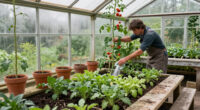
The best dahlia gardening tools make planting tubers at a consistent depth and trimming stems easier, without leaving you with gear that does only one job. My best overall pick is the Garden Guru Steel Dibber for its simple, direct approach to making planting holes; the Toresano Bulb Planter stands out for depth guidance and soil release, while the Fiskars Bypass Pruning Shears suit gardeners who also need a dedicated cutting tool. The main tradeoff is between a compact dibber that gives you control and a larger planter that can remove more soil per hole. Handle comfort, soil conditions, and whether you need planting or pruning tools most should guide your choice. Read on for the full comparison and advice on matching each tool to your dahlia routine.

Get garden gear delivered free with Prime
- Fast, free delivery on millions of items
- Prime Video, Amazon Music and more included
- Member-only deals all year
Complete the kit


Key Takeaways
- Dibbers and bulb planters solve different planting problems: dibbers make narrow holes with less fuss, while planters remove a plug of soil and can be easier for larger tubers or repeated planting.
- Depth markings appear across several picks, but they are not a substitute for checking your planting instructions: tuber size and local growing conditions can change the depth you need.
- The Toresano’s automatic soil release is a distinct convenience: it may reduce effort when making repeated holes, while simpler planters have fewer moving parts to manage.
- There are two clear pruning routes: the DECERK shears offer an 8.5-inch bypass format, while the Fiskars model specifies a 5/8-inch cut capacity; choose around stem thickness and hand fit.
- Several products overlap closely: Garden Guru, FLORA GUARD, Berry&Bird, and other dibber or planter options differ more by handle, markings, and construction than by the basic job they perform.
| DECERK 8.5-Inch Professional Bypass Pruning Shears |  | Best for Dahlia Stem Pruning | Blade material: SK5 steel with titanium coating | Blade type: Bypass, straight edge | Blade length: 7.5 cm (2.95 in) | VIEW LATEST PRICE | See Our Full Breakdown |
| Garden Guru Steel Dibber Planter with Wood Handle |  | Best for Simple, Focused Planting | Material: High-carbon steel | Finish: Galvanized | Handle: Carved wood | VIEW LATEST PRICE | See Our Full Breakdown |
| DEROFIT Long-Handle Bulb Planter and Garden Sod Plugger |  | Best for Standing Planting | Material: Alloy steel | Finish: Powder coated | Handle height: 33.5 inches | VIEW LATEST PRICE | See Our Full Breakdown |
| Garden Guru Eco Bulb Planter with Depth Markers |  | Best for Consistent Planting Depth | Material: 100% recycled stainless steel | Handle: FSC-certified carved wood | Features: Depth markers | VIEW LATEST PRICE | See Our Full Breakdown |
| Toresano Bulb Planter with Depth Scale and Automatic Soil Release |  | Best for Faster Soil Removal | Construction: Reinforced steel | Depth guide: Marked depth scale | Soil release: Automatic | VIEW LATEST PRICE | See Our Full Breakdown |
| Garden Bulb Planter and Transplanting Tool Set |  | Best for Consistent Planting Depth | Material: Rust-resistant steel | Tip: Serrated cone | Depth markings: Up to 7 inches | VIEW LATEST PRICE | See Our Full Breakdown |
| FLORA GUARD Garden Dibber with Steel Tip and Wood Handle |  | Best for Seedlings and Small Plantings | Tip material: Stainless steel | Handle material: Wood | Handle style: Ergonomic T-handle | VIEW LATEST PRICE | See Our Full Breakdown |
| XVBITOR Bulb Planter Tool with Depth Markers |  | Best for Tough Soil | Material: Reinforced steel | Dimensions: 9 × 4 × 2.5 inches | Weight: 8 ounces | VIEW LATEST PRICE | See Our Full Breakdown |
| 2-Pack Stainless Steel Gardening Shears and Pruning Snips |  | Best Two-Tool Pruning Set | Set includes: Pruning shears and pruning snips | Blade material: Stainless steel; snip blade has titanium coating | Blade type: Bypass | VIEW LATEST PRICE | See Our Full Breakdown |
| GARDMATE Stainless Steel Hand Dibber with Depth Markings and T-Handle |  | Best Multi-Task Dibber | Material: Stainless steel | Handle: Polished T-handle | Depth markings: Laser-engraved; range not specified | VIEW LATEST PRICE | See Our Full Breakdown |
| FLORA GUARD Bulb Planter with Depth Markers |  | Best for Quick, Repetitive Planting | Brand: FLORA GUARD | Material: Alloy steel | Handle material: Plastic | VIEW LATEST PRICE | See Our Full Breakdown |
| Berry&Bird 12-Inch Bulb Planter Tool with Wooden Handle |  | Best for Firm Soil and Simple Planting | Length: 12 inches | Material: Stainless steel and FSC-certified ash wood | Weight: 6.3 ounces | VIEW LATEST PRICE | See Our Full Breakdown |
| Edward Tools Bulb Planter with Depth Marker |  | Best for Consistent Planting Depth | Material: Reinforced steel | Features: Automatic soil release mechanism and depth marker | Dimensions: 9.5 x 4.5 x 3 inches | VIEW LATEST PRICE | See Our Full Breakdown |
| Berry&Bird Stainless Steel Hand Dibber with Ash Wood Handle |  | Best for Small Planting Holes | Tool type: Hand dibber | Tip material: Stainless steel | Handle material: Ash wood | VIEW LATEST PRICE | See Our Full Breakdown |
| Fiskars Bypass Pruning Shears, 5/8-Inch Cut Capacity |  | Best for Deadheading and Stem Care | Cut capacity: 5/8 inch | Blade material: Precision-ground steel | Blade features: Low-friction coating, sap groove, and rust resistance | VIEW LATEST PRICE | See Our Full Breakdown |
| dahlia gardening tool | Dimensions | Weight | Material |
|---|---|---|---|
| DECERK 8.5-Inch Professional B | — | 0.25 kg | — |
| Garden Guru Steel Dibber Plant | 3.5 x 2 x 7 inches | 1 pound | High-carbon steel |
| DEROFIT Long-Handle Bulb Plant | — | 2.18 kg | Alloy steel |
| Garden Guru Eco Bulb Planter w | 7 x 4 x 3 inches | 11.3 ounces | 100% recycled stainless steel |
| Toresano Bulb Planter with Dep | Not provided | Not provided | — |
| Garden Bulb Planter and Transp | — | — | Rust-resistant steel |
| FLORA GUARD Garden Dibber with | 10.62 × 4.3 × 0.71 inches | 5 ounces | — |
| XVBITOR Bulb Planter Tool with | 9 × 4 × 2.5 inches | 8 ounces | Reinforced steel |
| 2-Pack Stainless Steel Gardeni | 7 in L × 7 in W | — | — |
| GARDMATE Stainless Steel Hand | 9.92 × 4.88 × 0.94 inches | — | Stainless steel |
| FLORA GUARD Bulb Planter with | 9.3 x 4.8 x 3.3 inches | 11.68 ounces | Alloy steel |
| Berry&Bird 12-Inch Bulb Plante | 2 x 2 x 11.79 inches | 6.3 ounces | Stainless steel and FSC-certified ash wood |
| Edward Tools Bulb Planter with | 9.5 x 4.5 x 3 inches | 12.2 ounces | Reinforced steel |
| Berry&Bird Stainless Steel Han | 11.22 x 4.52 x 0.39 inches | — | — |
| Fiskars Bypass Pruning Shears | — | — | — |
More Details on Our Top Picks
DECERK 8.5-Inch Professional Bypass Pruning Shears
For clean cuts on dahlia stems and light woody growth, these bypass shears offer a more substantial stated cutting capacity than the Fiskars Bypass Pruning Shears, which are listed for cuts up to 5/8 inch. The SK5 steel blade, lever-action design, and rubber-grip handles suit gardeners who want hand pruners for trimming stems and tidying plants without moving to a larger lopper. A one-hand safety lock and included spare spring add practical value for regular garden work. The tradeoff is upkeep: the blade needs wiping and occasional oiling, and the listed 7.5 cm blade length may be confusing beside the 8.5-inch overall size. This is a pruning tool, not a planting tool, so it earns its place as a useful complement to bulb planters rather than a replacement for them.
Pros:- Stated capacity of up to 3/4 inch suits light branch and stem pruning
- Lever-action design and non-slip rubber grips support controlled cutting
- One-hand safety lock helps keep the blades closed during storage
- Includes a spare spring for maintenance
Cons:- Blade needs wiping and occasional oiling to maintain it
- The 7.5 cm blade length and 8.5-inch overall size may be easy to confuse
- Does not help with bulb planting or soil preparation
Best for: Dahlia growers who need bypass pruners for trimming stems and cutting light branches up to the stated 3/4-inch capacity.
Not ideal for: Gardeners shopping specifically for planting holes or a low-maintenance tool that can be stored without blade cleaning and oiling.
- Blade material:SK5 steel with titanium coating
- Blade type:Bypass, straight edge
- Blade length:7.5 cm (2.95 in)
- Maximum branch cutting capacity:3/4 in
- Overall size:8.5 in
- Weight:0.25 kg
- Handle material:Aluminum and rubber
- Included accessory:Spare spring
Our verdict“Choose these if pruning dahlia stems and light branches is your priority; pick a dibber or bulb planter for planting work.”
Garden Guru Steel Dibber Planter with Wood Handle
This dibber is the straightforward choice for making individual planting holes around a dahlia bed, especially when you want a compact hand tool rather than a standing planter. Its high-carbon steel spike is designed to make deep holes, while the carved wood handle supports the push, twist, and lift motion used to open a spot in the soil. Compared with the Garden Guru Eco Bulb Planter, this model is a focused dibber rather than a bulb planter with depth markers, so it makes more sense for hole-making than for repeatable measured planting. The galvanized finish is intended to resist rust, but the tool’s narrow purpose limits its usefulness for broader digging or soil moving. It is a simple planting aid, not a substitute for a trowel or a larger planter.
Pros:- Steel spike is designed to make deep planting holes
- Galvanized finish is intended to resist rust
- Carved wood handle supports a push-and-twist grip
- Lifetime warranty and 90-day satisfaction guarantee are specified
Cons:- Limited to making planting holes rather than broader digging tasks
- No depth markers are listed for consistent measured planting
- At 1 pound, it is heavier than the Garden Guru Eco Bulb Planter
Best for: Dahlia gardeners who want a compact hand dibber for making individual holes in prepared beds.
Not ideal for: Buyers who need measured planting depth, a tool for removing larger soil plugs, or one implement for general digging.
- Material:High-carbon steel
- Finish:Galvanized
- Handle:Carved wood
- Dimensions:3.5 x 2 x 7 inches
- Weight:1 pound
- Model:DIBBER
- Warranty:Lifetime warranty
- Satisfaction guarantee:90 days
Our verdict“Pick this dibber for simple, individual planting holes, but choose a depth-marked planter if planting consistency matters more.”
DEROFIT Long-Handle Bulb Planter and Garden Sod Plugger
The DEROFIT is the stand-up option in this group: its 33.5-inch handle lets gardeners make planting holes without repeatedly kneeling, unlike the hand tools such as the Garden Guru Eco Bulb Planter. It offers three hole depths—2, 4, or 6 inches—and a side opening that releases soil plugs, which can make repeated planting or lawn transplanting less fiddly. Its padded handle and broader uses, including weeding, distinguish it from compact bulb planters that focus only on planting. The tradeoff is that it weighs 2.18 kg and may feel like more tool than a small dahlia bed needs. Soil condition matters, too: moist soil makes operation easier, so hard, dry ground may slow the work. Choose it for repeated standing tasks, not precision hand planting in tight spaces.
Pros:- 33.5-inch padded handle supports standing use
- Offers hole depths of 2, 4, or 6 inches
- Side opening releases soil plugs during repeated work
- Can also be used for lawn transplanting and weeding
Cons:- Requires more storage space than hand bulb planters such as the Garden Guru Eco Bulb Planter
- At 2.18 kg, it is relatively heavy for a garden hand tool
- Works more easily when soil is moistened first
Best for: Gardeners planting many bulbs or making repeated holes who prefer to work standing rather than kneeling.
Not ideal for: People with a small number of planting spots, limited storage, or hard, dry soil they cannot moisten before use.
- Material:Alloy steel
- Finish:Powder coated
- Handle height:33.5 inches
- Item dimensions:8 x 0.8 x 36.5 inches
- Weight:2.18 kg
- Hole depths:2, 4, or 6 inches
- Warranty:12 months
- Intended use:Outdoor
Our verdict“Choose the DEROFIT for repeated planting while standing; a compact hand planter is a better fit for occasional holes or tight beds.”
Garden Guru Eco Bulb Planter with Depth Markers
Depth markers make this the clearest pick for repeatable hand planting among the compact options. The stainless steel body and carved FSC-certified wood handle give it a different emphasis from the Garden Guru Steel Dibber: the dibber focuses on making holes, while this planter is designed to remove soil as you push, twist, and lift. That distinction matters when planting several dahlia tubers or flowers at a consistent depth. Its recycled stainless steel construction is specified as rust-resistant, and the lighter 11.3-ounce weight is easier to handle than the 1-pound steel dibber. The limitation is equally clear: it is designed for bulbs and flowers, not general digging, and it does not offer the standing operation of the DEROFIT Long-Handle Bulb Planter. Choose it for measured, close-up planting, not larger-scale soil work.
Pros:- Depth markers help keep planting holes consistent
- Recycled stainless steel body is described as rust-resistant
- FSC-certified carved wood handle provides a shaped grip
- At 11.3 ounces, it is lighter than the Garden Guru Steel Dibber
Cons:- Designed specifically for planting bulbs and flowers
- Handheld format requires bending or kneeling for ground-level planting
- Not suited to broad digging or removing large soil plugs
Best for: Dahlia growers planting several tubers by hand who want depth markers and a lightweight tool for consistent holes.
Not ideal for: Gardeners who need a long-handled tool for standing work or a multipurpose implement for general digging.
- Material:100% recycled stainless steel
- Handle:FSC-certified carved wood
- Features:Depth markers
- Dimensions:7 x 4 x 3 inches
- Weight:11.3 ounces
- Warranty:Lifetime warranty
- Satisfaction guarantee:90 days
Our verdict“Pick this planter for lightweight, depth-guided planting by hand; choose the DEROFIT if standing operation matters more.”
Toresano Bulb Planter with Depth Scale and Automatic Soil Release
Automatic soil release is the main reason to choose this planter: it is designed to speed up removing soil between holes, a useful distinction for gardeners planting multiple dahlias. Its marked depth scale also supports consistent planting, much like the Garden Guru Eco Bulb Planter, while the reinforced steel construction is intended to resist bending in heavier soil. Compared with the DEROFIT Long-Handle Bulb Planter, this is described as lightweight and portable, but no handle dimensions or standing-use details are provided, so buyers should not assume it offers the same posture benefits. The listing also omits weight and dimensions, which makes it harder to judge fit and handling before purchase. This is the more task-focused choice for quick soil clearing; pick a model with specified dimensions if size and reach guide your decision.
Pros:- Automatic soil release is designed to speed soil removal
- Marked depth scale helps keep planting depth consistent
- Reinforced steel construction is intended to resist bending
- Listed as suitable for dahlia, daffodil, and lily bulbs
Cons:- No dimensions or weight are provided
- Handle length and standing-use suitability are not specified
- Material finish and warranty details are not provided
Best for: Dahlia and bulb gardeners who want a depth-marked planter with automatic soil release for repeated planting holes.
Not ideal for: Buyers who need confirmed dimensions, weight, handle reach, or detailed information about fit before choosing a tool.
- Construction:Reinforced steel
- Depth guide:Marked depth scale
- Soil release:Automatic
- Suitable for:Daffodil, lily, and dahlia bulbs
- Dimensions:Not provided
- Weight:Not provided
Our verdict“Choose the Toresano if automatic soil release is your priority, but favor a product with published dimensions if fit or reach matters.”
Garden Bulb Planter and Transplanting Tool Set
For dahlia growers planting tubers or moving small plants, this set combines depth markings up to 7 inches with a serrated cone that cuts into soil. The marked depth helps keep planting more consistent across a bed, while the button-operated soil release is designed to empty the tool without manually clearing the core. Compared with the XVBITOR Bulb Planter Tool, it spells out a maximum depth and offers two tool sizes, giving buyers more choice for different planting jobs. The tradeoff is that the compact tool is shorter and lighter, so it may offer less reach and leverage. It is a practical pick for repeated planting, but buyers wanting a simple pointed dibber may prefer the FLORA GUARD Garden Dibber.
Pros:- Depth markings extend up to 7 inches for more consistent planting.
- Button-operated release is designed to clear soil quickly.
- Lightweight metal construction may help limit fatigue during repeated use.
- Two sizes suit both bulb planting and smaller transplanting tasks.
Cons:- The compact tool has less length and weight for reach and leverage.
- A serrated cone may remove more soil than a narrow dibber when making planting holes.
Best for: Dahlia gardeners planting multiple tubers or transplanting small plants who want marked depth and a soil-release mechanism.
Not ideal for: Gardeners who prefer a basic dibber for narrow planting holes or need a longer tool for working without bending.
- Material:Rust-resistant steel
- Tip:Serrated cone
- Depth markings:Up to 7 inches
- Soil release:Button-operated
- Large tool dimensions:10.6 inches long; handle 4.72 inches wide
- Large tool weight:8.1 oz (230 g)
- Compact tool dimensions:9.44 inches long
- Compact tool weight:4.5 oz (130 g)
Our verdict“Choose this set for repeat dahlia planting when marked depth and easier soil release matter more than a narrow dibber profile.”
FLORA GUARD Garden Dibber with Steel Tip and Wood Handle
This dibber suits dahlia gardeners who need a straightforward way to make planting holes for seedlings, seeds, or smaller bulbs. Its stainless steel tip is designed to resist bending and rust, while the T-handle gives the hand leverage when pressing into soil. Unlike the Garden Bulb Planter and Transplanting Tool Set, it has no soil-release mechanism or stated depth range; that simpler shape favors making individual holes rather than lifting and emptying soil cores. Depth markings still help with repeatable placement, though the missing range makes it harder to know the full scale from the provided details. I would choose it over a cone planter for light, precise planting, but skip it if you want a clearly specified depth or faster bulk planting.
Pros:- Stainless steel tip is designed to resist bending and rust.
- T-handle provides leverage when pressing into soil.
- Depth markings support more consistent planting.
- Suitable for seeds, bulbs, and seedlings.
Cons:- No planting depth range is specified.
- Lacks a soil-release feature for clearing removed soil.
- The wood handle may need more care than an all-metal construction.
Best for: Dahlia growers setting seedlings or making individual planting holes who value a simple dibber and leverage from a T-handle.
Not ideal for: Gardeners planting many tubers at once or anyone who needs a stated depth range and soil-release feature.
- Tip material:Stainless steel
- Handle material:Wood
- Handle style:Ergonomic T-handle
- Dimensions:10.62 × 4.3 × 0.71 inches
- Weight:5 ounces
- Model:Dibber-1
- Depth markings:Yes; range not specified
Our verdict“Pick this dibber for individual seedling and small-bulb holes, but choose a marked-depth planter with soil release for larger planting sessions.”
XVBITOR Bulb Planter Tool with Depth Markers
The XVBITOR is aimed at gardeners who want a compact bulb planter with a sturdier build for firmer ground. Its reinforced steel is described as resistant to bending, and the depth scale helps make holes more uniform for dahlia tubers and other bulbs. A soil-release design helps clear the tool after use, though the product details do not specify a button-operated mechanism like the one on the Garden Bulb Planter and Transplanting Tool Set. At 8 ounces, it stays relatively light, but manual operation still takes effort, especially in compacted soil or across many planting holes. Compared with the FLORA GUARD dibber, this is better suited to removing a plug of soil; buyers who only need narrow holes may find a dibber simpler.
Pros:- Reinforced steel is designed to resist bending in tougher soil.
- Depth scale supports more consistent planting holes.
- Soil-release design helps clear soil after use.
- Lightweight build is suited to planting several bulb types.
Cons:- Manual operation requires physical effort.
- No specific depth range is provided.
- The soil-release mechanism is less clearly described than the button-operated release on the Garden Bulb Planter and Transplanting Tool Set.
Best for: Dahlia growers working in firmer soil who want a lightweight steel bulb planter with depth markers and a soil-clearing design.
Not ideal for: Gardeners who want effortless planting in compacted ground or only need narrow holes for seeds and seedlings.
- Material:Reinforced steel
- Dimensions:9 × 4 × 2.5 inches
- Weight:8 ounces
- Depth scale:Yes; range not specified
- Soil release:Soil-release design
- Manufacturer:XVBITOR
- Model:YIMQ
Our verdict“Choose this planter for a compact steel tool intended for firmer soil, provided you are comfortable supplying the force for manual operation.”
2-Pack Stainless Steel Gardening Shears and Pruning Snips
Dahlia care calls for both flower-stem cuts and finer trimming, and this set pairs bypass pruning shears with pruning snips for those different jobs. The non-slip grips and safety locks give it a practical edge for routine deadheading and cleanup, while the ambidextrous design suits left- and right-handed gardeners. Unlike the single-tool DECERK 8.5-Inch Professional Bypass Pruning Shears, this set gives buyers a smaller snip alongside the larger shears, so they can switch tools rather than use one blade for every cut. The tradeoff is limited cutting guidance: no maximum branch diameter is listed, and the stated 7-inch cutting width does not clarify what stems the tools can handle. I would treat these as general flower-care tools, not a solution for thick, woody growth.
Pros:- Includes both pruning shears and smaller pruning snips.
- Non-slip handles support a secure grip during trimming.
- Safety locks are included on both tools.
- Ambidextrous design works for either hand.
Cons:- No maximum branch or stem diameter is specified.
- The listed 7-inch cutting width does not clarify practical cutting capacity.
- Two tools require more storage and upkeep than a single pair of shears.
Best for: Dahlia growers who want separate tools for deadheading and finer trimming, with safety locks and grips suited to regular garden use.
Not ideal for: Gardeners who need a clearly stated capacity for thick or woody stems, or who want one compact pruning tool.
- Set includes:Pruning shears and pruning snips
- Blade material:Stainless steel; snip blade has titanium coating
- Blade type:Bypass
- Blade edge:Serrated, straight
- Hand orientation:Ambidextrous
- Handle:Green, non-slip grip
- Dimensions:7 in L × 7 in W
- Item weight:0.17 kg
- Safety locks:Included on both tools
Our verdict“Choose this set for varied dahlia trimming and deadheading, but look elsewhere if you need a confirmed capacity for woody stems.”
GARDMATE Stainless Steel Hand Dibber with Depth Markings and T-Handle
The GARDMATE is the most versatile dibber in this group for gardeners who want one hand tool to do more than make dahlia planting holes. Its laser-engraved depth markings support repeatable planting, while the polished T-handle adds leverage for bulbs, seeds, and seedlings. The description also lists soil aeration and installing stakes or lights, giving it broader garden utility than the FLORA GUARD Garden Dibber, which is presented mainly for making planting holes. The tradeoff is that no marked depth range is provided, so buyers cannot confirm how deep it measures from the specs. Its listed weight is 7.8 ounces, despite a separate description calling it 0.5 pounds; I would rely on the item-weight figure. Choose it for varied tasks, not for a known planting-depth limit.
Pros:- Stainless steel construction is described as rust-resistant.
- Laser-engraved markings help maintain consistent planting depth.
- Polished T-handle provides grip and leverage.
- Designed for planting, aerating soil, and installing stakes or lights.
Cons:- No specific planting depth range is provided.
- At 7.8 ounces, it is heavier than the 5-ounce FLORA GUARD Garden Dibber.
- The description’s 0.5-pound weight claim differs from the listed 7.8-ounce item weight.
Best for: Dahlia gardeners who want a stainless steel dibber for planting plus occasional soil aeration and garden-stake installation.
Not ideal for: Buyers who need a confirmed maximum planting depth or the lightest dibber for extended hand work.
- Material:Stainless steel
- Handle:Polished T-handle
- Depth markings:Laser-engraved; range not specified
- Dimensions:9.92 × 4.88 × 0.94 inches
- Listed item weight:7.8 ounces
- Manufacturer:GARDMATE
- Model:G10153-SDBZQ-GT-TP-US
Our verdict“Choose the GARDMATE for a marked stainless steel dibber with extra garden uses, but select another tool if you need a stated depth limit or lower weight.”
FLORA GUARD Bulb Planter with Depth Markers
The automatic soil release makes this a practical pick when planting a run of dahlias or smaller bulbs: squeeze the spring-loaded handles and the plug of soil ejects, cutting down on repeated clearing by hand. At 11.68 ounces, it is easy to carry around a bed, while the toothed alloy-steel base is designed to bite into soil. Compared with the Berry&Bird 12-Inch Bulb Planter, this model prioritizes speed and soil ejection over a simple manual tool for firm ground. Its dimensions also limit the job: the planting opening is no wider than 3.2 inches, and maximum depth is 4 inches. That may not suit deeper planting needs or larger tubers. I’d choose it for shallow, repeated holes, not as a substitute for a long-handled planter.
Pros:- Automatic soil release reduces manual clearing between holes
- Spring-loaded handles support repeated squeezing
- Lightweight alloy-steel construction is portable
- Suitable for bulbs, seedlings, and small plants
Cons:- Maximum depth of 4 inches may be too shallow for some planting needs
- Maximum diameter of 3.2 inches limits the size of the hole
- Handle material is plastic rather than wood or metal
Best for: Gardeners planting many small bulbs or seedlings in beds where shallow, repeatable holes and quick soil clearing matter.
Not ideal for: Dahlia growers planting large tubers or needing holes deeper than 4 inches, since its diameter and depth are limited.
- Brand:FLORA GUARD
- Material:Alloy steel
- Handle material:Plastic
- Maximum diameter:3.2 inches
- Maximum depth:4 inches
- Dimensions:9.3 x 4.8 x 3.3 inches
- Weight:11.68 ounces
- Warranty:Lifetime
Our verdict“Choose this for efficient shallow planting in quantity, but pick a larger or deeper planter for substantial dahlia tubers.”
Berry&Bird 12-Inch Bulb Planter Tool with Wooden Handle
This manual stainless-steel planter suits gardeners who want a straightforward tool for bulb planting and perennial transplanting, especially in firm soil. Its 12-inch length gives it more reach than the FLORA GUARD bulb planter, though it does not offer that model’s automatic soil release. The FSC-certified ash handle and light 6.3-ounce weight make it easy to carry between planting spots; the tradeoff is that each hole takes hands-on effort. Unlike the Edward Tools Bulb Planter, it has no listed depth marker or ejector, so it is less suited to fast, uniform batches of holes. I’d favor it when control and a simple, lightweight build matter more than speed, and skip it for extensive planting sessions or especially tough ground that demands leverage.
Pros:- Stainless-steel tool is designed for bulb planting and perennial transplanting
- 12-inch length offers more reach than compact bulb planters
- Lightweight at 6.3 ounces for carrying around the garden
- FSC-certified ash wood handle
Cons:- Manual digging requires effort and repeated handling
- No automatic soil-release mechanism is specified
- No depth marker is specified for keeping holes consistent
Best for: Gardeners planting a modest number of bulbs or transplanting perennials in firm soil who prefer a lightweight manual tool with a wooden handle.
Not ideal for: Growers making many holes in one session or seeking a depth marker and automatic soil ejection to speed up planting.
- Length:12 inches
- Material:Stainless steel and FSC-certified ash wood
- Weight:6.3 ounces
- Dimensions:2 x 2 x 11.79 inches
- Manufacturer:Berry&Bird
- Model:015
- Warranty:2 years
Our verdict“Pick this for controlled, occasional planting in firm soil; choose an ejecting, depth-marked planter for faster batch work.”
Edward Tools Bulb Planter with Depth Marker
For gardeners who want each bulb hole to reach a similar depth, the depth marker gives this reinforced-steel planter a clear advantage over the Berry&Bird 12-Inch Bulb Planter, which has no listed marker. The automatic soil release also helps move through repeated planting without manually pulling every soil plug free. Reinforced steel is intended to resist bending in heavier soil, making it a more suitable choice for firm beds than a light dibber such as the Berry&Bird Stainless Steel Hand Dibber. The compromise is a compact, hand-operated format: its listed dimensions are under 10 inches long, and the product data does not specify a maximum planting depth or opening diameter. I’d choose it for repeated bulb planting where uniformity matters, but not for large tubers or deep holes without checking fit first.
Pros:- Depth marker helps keep planting holes consistent
- Automatic soil release supports faster repeated planting
- Reinforced steel is designed to resist bending
- Suitable for several bulb types, including dahlias
Cons:- Maximum planting depth is not specified
- Maximum hole diameter is not specified
- Compact hand-operated design may be less suitable for extensive planting than a long-handled planter
Best for: Gardeners planting multiple bulbs who want a depth reference, automatic soil release, and a tool intended for heavier soil.
Not ideal for: Dahlia growers needing a known wide opening or deep planting capacity, since maximum diameter and depth are not specified.
- Material:Reinforced steel
- Features:Automatic soil release mechanism and depth marker
- Dimensions:9.5 x 4.5 x 3 inches
- Weight:12.2 ounces
- Model:RMG1000
- Suitable plants:Tulips, daffodils, lilies, and dahlias
Our verdict“Choose it for depth-guided, repeated bulb planting in firm soil, but verify its dimensions suit your tubers before buying.”
Berry&Bird Stainless Steel Hand Dibber with Ash Wood Handle
This hand dibber is the focused choice for making holes for seeds, seedlings, and smaller bulbs rather than lifting and ejecting soil plugs. Its stainless-steel tip and T-shaped ash handle offer a different kind of control from the Edward Tools Bulb Planter: the Edward Tools model is better for repeated, depth-marked bulb holes, while this dibber is simpler for placing individual plants. FSC-certified ash wood adds a natural handle material, and the 2-year warranty provides a defined coverage period. The limitation is its narrow purpose. It is not a multipurpose digging tool, and the product data gives neither tip dimensions nor a planting-depth guide. I’d keep it for precision planting in established beds, but choose a bulb planter for larger holes or faster work across a long row.
Pros:- Stainless-steel tip is designed for making planting holes
- Ergonomic T-handle offers a crossbar grip
- Suitable for seeds, seedlings, and bulbs
- FSC-certified ash wood handle
Cons:- Limited to making planting holes rather than broader digging tasks
- Tip dimensions and planting depth are not specified
- At 12 ounces, it is heavier than the Berry&Bird bulb planter listed here
Best for: Gardeners who plant seeds, seedlings, or small bulbs individually and want a dedicated hole-making tool with a T-handle.
Not ideal for: Dahlia growers planting large tubers or long rows of bulbs, since it has no specified depth guide or soil-ejection feature.
- Tool type:Hand dibber
- Tip material:Stainless steel
- Handle material:Ash wood
- Handle design:Ergonomic T-handle
- Dimensions:11.22 x 4.52 x 0.39 inches
- Item weight:12 ounces
- Warranty:2 years
Our verdict“Choose this for individual, small-scale planting holes; use a depth-marked bulb planter for larger or repeated dahlia planting.”
Fiskars Bypass Pruning Shears, 5/8-Inch Cut Capacity
Planting tools handle the start of a dahlia season; these bypass pruning shears are the lineup’s pick for maintaining live stems and removing spent blooms. The cutting capacity reaches 5/8 inch, with precision-ground steel blades, a low-friction coating, and a sap groove intended to keep cuts moving cleanly and limit sticking. Compared with the DECERK 8.5-Inch Professional Bypass Pruning Shears listed elsewhere in this roundup, the Fiskars has a clearly stated cut capacity and an easy-open blade lock, making its use and storage limits easier to judge from the supplied details. It is not a bulb planter or a tool for thick, woody growth: the 5/8-inch ceiling narrows its role. I’d add it for routine dahlia stem care, not as a planting-tool substitute.
Pros:- Bypass blades are suited to clean cuts on live growth
- Precision-ground steel blades are designed to stay sharp
- Low-friction coating and sap groove help reduce sticking and sap buildup
- Non-slip grip and blade lock support controlled handling and storage
Cons:- Cut capacity is limited to 5/8 inch
- Does not help with planting, digging, or tuber handling
Best for: Dahlia growers who need dedicated shears for deadheading and trimming live stems up to 5/8 inch thick.
Not ideal for: Gardeners looking for a planting tool or needing to cut stems and branches thicker than 5/8 inch.
- Cut capacity:5/8 inch
- Blade material:Precision-ground steel
- Blade features:Low-friction coating, sap groove, and rust resistance
- Handle:Ergonomic non-slip grip
- Safety feature:Easy-open blade lock
- Warranty:Lifetime
Our verdict“Choose these for routine dahlia deadheading and stem trimming, but pair them with a separate tool for planting and thicker growth.”

How We Picked
I ranked these tools by how directly they serve common dahlia tasks: opening planting holes, setting depth, handling soil, and making clean cuts on stems. I gave more weight to practical details that affect daily use, including handle design, depth markings, soil-release features, stated cutting capacity, and whether a tool has a clear advantage over simpler alternatives. I also considered how easy each style is to maintain and how useful it may be beyond a single dahlia task.
The order reflects role and differentiation, not a claim that one tool suits every garden. A straightforward dibber can rank ahead of a more elaborate planter for gardeners who value control and minimal fuss; a planter with soil release may be a better fit for repeated planting. Pruning shears are ranked for cutting utility rather than planting value, and tools with similar purposes are distinguished by the features stated for each model. Product details supplied for this roundup do not establish long-term durability or performance in every soil type, so I avoid treating unverified claims as test results.
Factors to Consider When Choosing Best Dahlia Gardening Tools
Choosing dahlia tools is less about owning a complete kit and more about matching tool shape to the work you do most. These broader points can help you avoid buying overlapping tools or choosing a design that struggles in your garden.
Choose a Dibber or a Bulb Planter for Your Soil and Tubers
A dibber makes a narrow hole by pushing soil aside, while a bulb planter removes a plug that can make room for a larger planting. In loose, well-prepared beds, a dibber may be enough and can leave less soil to return around each tuber. In compacted or grassy ground, a planter can make a more defined opening, but removing plugs takes effort and may be awkward around roots or stones. Match the tool to the tuber’s size rather than assuming a larger opening is always better. A common mistake is buying a long-handled sod plugger for a small raised bed where control matters more than reach. If your beds vary, one compact dibber plus a hand planter may be more useful than two nearly identical planters.
Treat Depth Markings as a Guide, Not a Universal Setting
Depth scales can help repeat planting depth across a bed, especially when you are setting many tubers at once. They cannot account for every variety, soil texture, climate, or planting recommendation, so check guidance for the tubers you have. A scale is most helpful when its markings are easy to read and remain visible as the tool enters the soil. If the garden has uneven ground, measure from the surrounding soil surface rather than from the bottom of a depression. Avoid pressing a tuber into a hole that is too narrow just to match a mark. Consistency is useful, but fit and sound planting conditions matter more than following a marking mechanically.
Prioritize Handle Fit Before Reach or Extra Features
Handle shape affects leverage, grip, and wrist position, so it matters more during a long planting session than a short demonstration suggests. T-handles can make it easier to apply downward pressure, while a longer shaft may reduce bending but can feel cumbersome in a small bed. Wooden handles offer a different grip feel from metal or composite designs, yet their upkeep and weather exposure deserve attention. Try to picture the tool in the posture you will use: kneeling between plants, standing over a border, or working from a path. Avoid choosing a long-handled model solely to save your back if it cannot fit between established plants. A comfortable, manageable tool is more likely to be used carefully throughout the season.
Match Pruning Shears to Stem Thickness and Hand Control
Bypass shears are intended for clean cuts on living stems, but listed cut capacity is only one part of the decision. Dahlia stems vary in thickness, and cutting near the tool’s limit can take more force and reduce control. Compare a stated capacity, such as the Fiskars model’s 5/8-inch figure, with the kinds of stems you actually trim rather than treating it as a guarantee for every plant. Blade access, grip comfort, and a secure locking mechanism also affect how safely you can work among foliage. Snips can complement larger shears for fine trimming, but a set is not automatically better if the handles do not suit you. Keep cutting tools clean and sharp; dull blades can crush stems and make pruning less precise.
Buy for Your Planting Pattern, Not the Number of Tools in a Set
A gardener planting a few tubers may need one dibber and a reliable pair of shears, while a large bed planted in batches can benefit from a faster hole-making tool. Sets can reduce the need to source separate pieces, but they may include tools that duplicate what you already own. Before buying, list the tasks you repeat: planting, transplanting, dividing, cutting flowers, or clearing spent growth. Then check whether each tool adds a different capability instead of another version of the same one. If you garden in containers, compact hand tools often offer better control than long-handled planters. For a large plot, reach and planting speed may justify a larger tool, provided it suits your soil and storage space.
Weigh Convenience Features Against Cleaning and Storage
Automatic soil-release mechanisms and depth scales can save time, but they add surfaces or moving parts that may collect damp soil. A plain steel dibber is simpler to wipe down and store, though it requires you to shape the hole yourself. After use, remove soil before it dries, let tools dry fully, and store them out of prolonged moisture. Check whether the tool can be cleaned without trapping soil around a release mechanism or handle joint. Long tools also need more storage space and can be awkward to keep near a small garden bed. Pay for added features when they address a repeated task, not just because they sound convenient.
Frequently Asked Questions
Should I choose a dibber or a bulb planter for planting dahlia tubers?
Choose a dibber if your soil is workable and you want to make narrow holes with direct control. A bulb planter makes more sense when you prefer a wider, defined opening or need to repeat the same hole-making motion across a larger bed. A planter that releases soil automatically may save steps, but it also has more parts to clean. For a few tubers in a prepared bed, a simple dibber may be all you need. If your soil is compacted or the tubers are large, test the tool in a small area before committing to the same method across the whole plot.
Do depth-marked tools make planting dahlia tubers more reliable?
They can help you keep holes at a consistent depth, particularly when planting a row or several beds. The markings do not determine the right depth for every tuber or garden, so follow the guidance suited to your plants and local conditions. Check that the scale is readable while the tool is in use and that you can judge the surrounding soil level. In uneven beds, a mark can mislead if you measure from a low spot. Use depth markings as a repeatability aid, not as a replacement for sound planting judgment.
Is a long-handle bulb planter a good choice for a small garden?
It can reduce bending, but its reach may be unnecessary in a compact bed, container garden, or tightly planted border. A long tool can be harder to position precisely around existing plants and may take more room to store. For small spaces, a hand dibber or short planter often gives better control over hole placement. Consider how many tubers you plant in one session and whether you can work from a standing position without crowding nearby plants. If bending is a concern, compare handle length with the actual space available rather than assuming longer is always easier.
Which pruning shear detail matters most for cutting dahlia stems?
Start with the thickness of the stems you regularly cut, then compare it with the tool’s stated capacity. A shear’s capacity does not guarantee an effortless cut at that limit, so avoid routinely forcing thick stems through a small tool. Handle comfort and control matter too, particularly when cutting among foliage or using shears for several plants in a row. Bypass designs are suited to clean cuts on living growth, while small snips may be more manageable for fine work. Keep blades clean and sharp to reduce crushing and improve cut quality.
Is it better to buy a gardening tool set or separate dahlia tools?
A set can be convenient if its pieces cover different jobs you perform, such as planting and pruning. Separate tools make more sense when you already own one part of the set or when the included pieces repeat the same function. Make a short task list before choosing: how many tubers you plant, whether you transplant or divide, and how often you cut stems. Also check storage needs and whether every tool suits your hand and garden layout. The best choice is the one that fills real gaps, not the one with the most pieces.
Conclusion
For a versatile starting point, I’d choose the Garden Guru Steel Dibber as the best overall option for straightforward hole-making, while gardeners who want a planting aid with added soil-release convenience should look at the Toresano Bulb Planter. For best value, compare the simpler dibbers and planters by handle style and depth markings rather than paying for overlapping features. The best premium fit is the Berry&Bird Stainless Steel Hand Dibber with Ash Wood Handle for buyers drawn to its specified materials and hand-tool format, though material preference does not replace checking fit and maintenance. Beginners may find depth-marked options such as the Garden Guru Eco Bulb Planter easier to use consistently. For pruning-specific needs, choose Fiskars when its stated cutting capacity matches your stems, or compare the DECERK shears if you prefer a longer bypass-shear format. Match the tool to your bed size, soil, and most frequent task, and skip features you will rarely use.
Fall yard work Picks
leaf blowers
As an affiliate, we earn on qualifying purchases.