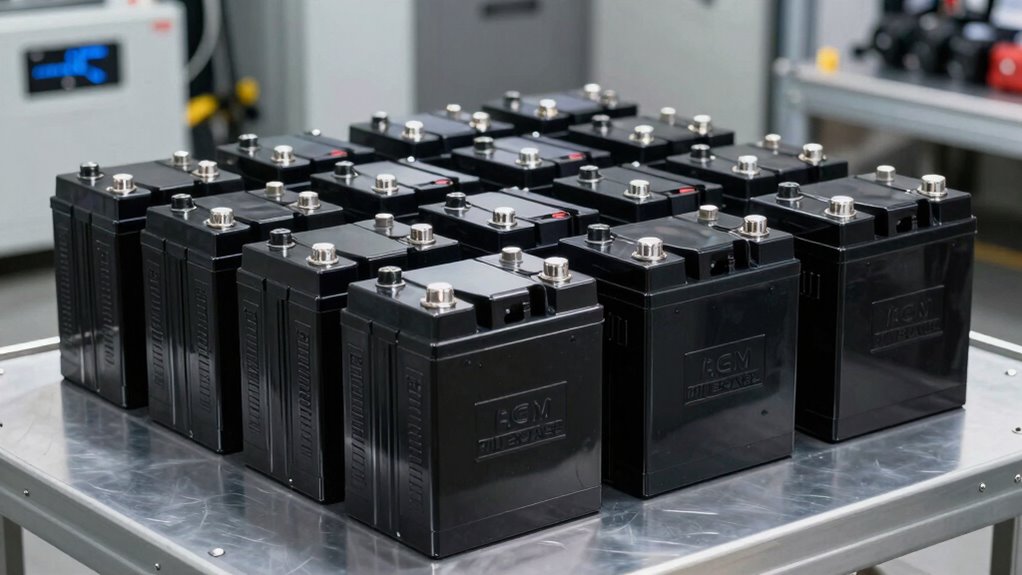

A deep cycle AGM battery bank is the backbone of any reliable off-grid, RV, or solar setup, and the right choice depends mostly on how much stored energy you need and whether you want 12-volt simplicity or a series-wired 24V or 48V configuration. For a complete, ready-to-scale bank, the VMAX Qty 4 XTR6-235 6V bank (6.48kWh) stands out as my best overall pick thanks to its massive 500-minute reserve capacity per battery and industrial-grade construction. If you’re building on a budget, the Weize 12V 100Ah delivers dependable capacity at an entry-level price, while the Renogy 12V 200Ah suits buyers who want maximum storage in a single 12-volt footprint. The main tradeoff in this category is upfront cost versus cycle life and depth of discharge: cheap 100Ah units are easy to start with but strain under daily deep cycling, while 6V golf-cart style batteries wired in series cost more per kilowatt-hour yet tolerate deeper, repeated discharges far better. Read on for the full breakdown, including dual-purpose marine options and pre-configured multi-battery banks.

Get garden gear delivered free — and shop member deals
- Fast, free delivery on millions of items
- Access to Prime Big Deal Days deals on October 6–7
- Prime Video, Amazon Music and more included
Complete the kit



Key Takeaways
- 6V batteries wired in series (VMAX XTR6-235 and V6-225) delivered the highest usable energy per dollar at scale, with 6.2–6.48kWh total capacity and the thickest plates in the lineup for deep-cycle longevity.
- The generic 12V 100Ah AGM category (Weize, Renogy 100Ah, Mighty Max, and the unbranded 100Ah unit) is crowded with near-identical specs — warranty support, terminal type, and brand responsiveness are what actually separate them.
- Dual-purpose marine batteries like the Mighty Max MM-G27M and Weize 27M can start an engine AND run accessories, but they sacrifice roughly 30–40% of deep-cycle capacity compared to dedicated deep-cycle units of the same physical size.
- Renogy‘s 2000A max discharge claim on its 100Ah 2-pack makes it the safest pick for running home appliances with high surge draws, something the cheaper 100Ah options handle less gracefully.
- A 2x 6V 235Ah GC2 setup (VMAX XTR6-235 pair) is the sweet spot for RV owners who want big bank capacity without committing to a four-battery rack.
| VMAX XTR6-235 6V 235Ah AGM Deep Cycle Batteries (Qty 2) |  | Best Premium Bank | Voltage: 6V per battery (pair wired in series for 12V) | Capacity: 235Ah each | Energy: 1.62kWh per battery | VIEW ON AMAZON | See Our Full Breakdown |
| Weize 12V 100Ah Deep Cycle AGM Battery |  | Best Value Pick | Voltage: 12V | Capacity: 100Ah | Max Discharge Current: 1100A (5 seconds) | VIEW ON AMAZON | See Our Full Breakdown |
| Renogy 12V 200Ah Deep Cycle AGM Battery |  | Best High-Capacity Single Unit | Voltage: 12V | Capacity: 200Ah (C20); 152.9Ah (C3) | Max Discharge Current: 2000A | VIEW ON AMAZON | See Our Full Breakdown |
| Interstate Batteries 12V 110Ah AGM Deep Cycle (DCM0100) |  | Best Brand-Backed Workhorse | Voltage: 12V | Capacity: 110Ah | Terminal Type: Insert with bolt (replaces flag type) | VIEW ON AMAZON | See Our Full Breakdown |
| Weize BCI Group 27M Dual Purpose AGM Battery, 12V 92Ah |  | Best Dual-Purpose Marine Pick | Voltage: 12V | Capacity: 92Ah | Cold Cranking Amps: 580 CCA | VIEW ON AMAZON | See Our Full Breakdown |
| Mighty Max Battery MM-G24M 12V 90Ah Group 24M Deep-Cycle Marine AGM |  | Best Dual-Purpose Marine Pick | Voltage: 12V | Capacity: 90Ah | Group Size: 24M | VIEW ON AMAZON | See Our Full Breakdown |
| 12V 100Ah Deep Cycle AGM Battery for Camping, Marine, Cabin, RV and Off-Grid Systems |  | Best Budget 100Ah Starter Unit | Voltage: 12V | Capacity: 100Ah | Chemistry: Sealed AGM (SLA) | VIEW ON AMAZON | See Our Full Breakdown |
| Qty 4 XTR6-235 6V 235Ah VMAX Xtreme Series AGM Solar Battery Bank (6.48kWh) |  | Best Premium Whole-Home Bank | Configuration: 4 x 6V 235Ah batteries | Total Energy: 6.48kWh (1.62kWh per battery) | Voltage per Battery: 6V | VIEW ON AMAZON | See Our Full Breakdown |
| Renogy Deep Cycle AGM Battery 2-Pack, 12 Volt 100Ah |  | Best Value Bank for RV Owners | Configuration: 2 x 12V 100Ah batteries | Total Capacity: 200Ah at 12V | Self-Discharge Rate: 3% per month | VIEW ON AMAZON | See Our Full Breakdown |
| Qty 4 VMAX V6-225: 6.2kWh 24V AGM Solar Battery Bank |  | Best 24V System Bank | Configuration: 4 x 6V 225Ah in series (24V) | Total Energy: 6.2kWh (1.55kWh per battery) | Bank Voltage: 24V | VIEW ON AMAZON | See Our Full Breakdown |
| Mighty Max Battery MM-G27M, 12V 100Ah Group 27M Deep-Cycle Marine AGM |  | Best Dual-Purpose Marine Pick | Voltage: 12V | Capacity: 100Ah | Group Size: 27M | VIEW ON AMAZON | See Our Full Breakdown |
| Renogy 12 Volt 100Ah Deep Cycle AGM Battery |  | Best for Solar Bank Builders | Voltage: 12V | Capacity: 100Ah | Chemistry: Sealed AGM (Lead Acid) | VIEW ON AMAZON | See Our Full Breakdown |
| deep cycle agm battery bank | Capacity | Voltage | Warranty |
|---|---|---|---|
| VMAX XTR6-235 6V 235Ah AGM Dee | 235Ah each | 6V per battery (pair wired in series for 12V) | — |
| Weize 12V 100Ah Deep Cycle AGM | 100Ah | 12V | 1 year |
| Renogy 12V 200Ah Deep Cycle AG | 200Ah (C20); 152.9Ah (C3) | 12V | — |
| Interstate Batteries 12V 110Ah | 110Ah | 12V | — |
| Weize BCI Group 27M Dual Purpo | 92Ah | 12V | 2 years |
| Mighty Max Battery MM-G24M 12V | 90Ah | 12V | — |
| 12V 100Ah Deep Cycle AGM Batte | 100Ah | 12V | 1 year |
| Qty 4 XTR6-235 6V 235Ah VMAX X | — | — | 12 months |
| Renogy Deep Cycle AGM Battery | — | — | 2 years material and workmanship |
| Qty 4 VMAX V6-225: 6.2kWh 24V | 225Ah | — | 12 months |
| Mighty Max Battery MM-G27M | 100Ah | 12V | — |
| Renogy 12 Volt 100Ah Deep Cycl | 100Ah | 12V | — |
More Details on Our Top Picks
VMAX XTR6-235 6V 235Ah AGM Deep Cycle Batteries (Qty 2)
This twin 6V 235Ah setup is the closest thing to a purpose-built deep cycle AGM battery bank in this lineup. Wired in series for 12V, the pair delivers roughly 1.62kWh each, with a 500-minute reserve capacity per battery that dwarfs what a single 12V 100Ah option like the Weize can offer. The GC2 golf-cart form factor exists for exactly this job: sustained, repeated deep discharges in solar, RV, and off-grid banks rather than occasional cycling. The tradeoff is real, though. You are committing to a series wiring configuration, more total weight, and a heavier spend than building a bank from the Weize or Renogy 12V units. Compared with the Renogy 200Ah, the VMAX pair gives you more usable amp-hours per dollar of cycle life, but the Renogy is simpler for anyone who wants a drop-in single-battery solution.
Pros:- 500-minute reserve capacity per battery, exceptional for sustained loads
- GC2 form factor engineered specifically for repeated deep cycling
- 1.62kWh per unit lets you scale a bank without adding many batteries
- VMAX Xtreme construction targets longer service life than generic AGM lines
Cons:- Requires series wiring of two 6V batteries to reach 12V
- Premium cost per kilowatt-hour compared with 12V budget options
Best for: Off-grid builders and solar homeowners who want maximum bank capacity and cycle longevity from a matched 6V pair
Not ideal for: Beginners or anyone wanting a single drop-in 12V battery — this requires series wiring and a bigger budget
- Voltage:6V per battery (pair wired in series for 12V)
- Capacity:235Ah each
- Energy:1.62kWh per battery
- Reserve Capacity:500 minutes each
- Battery Type:AGM deep cycle
- Group Size:GC2
- Quantity:2 batteries
Our verdict“This is the pick for a buyer building a serious, long-lived AGM bank who accepts wiring complexity in exchange for capacity and durability.”
Weize 12V 100Ah Deep Cycle AGM Battery
The Weize 100Ah is where most first-time bank builders should start. It covers the fundamentals — sealed AGM construction, a 1-3% monthly self-discharge rate, and a maintenance-free design — at a price point well below the VMAX XTR6-235 pair or even the Renogy 200Ah. What makes it attractive as a bank building block is flexibility: buy one for a small camper setup, or parallel several for an off-grid array, and each unit stays manageable to lift and position. The compromises are honest ones. Compared with the Interstate DCM0100, the Weize offers similar capacity with less brand pedigree behind it, and its cycle life under heavy daily discharge will trail the 6V VMAX GC2 design. The 1-year warranty is also shorter than what Weize itself gives its dual-purpose Group 27M marine model.
Pros:- Very low 1-3% monthly self-discharge for long idle storage
- True maintenance-free sealed AGM with no acid leakage risk
- Standard Group 30-size footprint fits most RV and solar trays
- Wide operating range from 5°F to 122°F for discharge
Cons:- Shorter 1-year warranty coverage
- Cycle life trails premium deep-cycle designs when discharged deeply each day
Best for: Budget-conscious RV owners and small solar users who want dependable AGM capacity without paying for premium branding
Not ideal for: Anyone building a daily-cycled whole-home bank — cheaper plates won’t survive the same depth-of-discharge abuse as 6V GC2 units
- Voltage:12V
- Capacity:100Ah
- Max Discharge Current:1100A (5 seconds)
- Self-Discharge Rate:1-3% per month
- Dimensions:12.99 x 6.73 x 8.43 inches
- Battery Type:Sealed AGM deep cycle
- Warranty:1 year
Our verdict“The smart entry point for a modest AGM bank where upfront cost matters more than maximum cycle count.”
Renogy 12V 200Ah Deep Cycle AGM Battery
If the VMAX pair is a bank you assemble, the Renogy 200Ah is a bank in one box. Doubling capacity in a single chassis means one set of terminals, no series wiring, and simpler monitoring — a genuine convenience over the two-battery VMAX XTR6-235 approach. Renogy’s engineering shows in the details: quinary alloy plate grids with low internal resistance, a 2000A max discharge current, and an electrolyte formula tuned to hold capacity below 32°F, which matters for winter cabins and unheated RV bays. The catch is physical. At 127.9 pounds, this is a two-person lift, and mounting options narrow compared with pairing two lighter 100Ah Renogy or Weize units. The honest capacity figures also matter: at a C3 discharge rate you get about 153Ah, not 200, so high-draw users should size accordingly.
Pros:- 200Ah at C20 in a single unit, no wiring between batteries needed
- Excellent 2000A max discharge for surge-heavy appliances
- Cold-weather electrolyte formula sustains capacity below freezing
- Low 3% monthly self-discharge rated at 77°F
Cons:- 128-pound weight makes installation and replacement awkward
- Usable capacity drops to roughly 153Ah at fast C3 discharge rates
Best for: Cabin and home-backup owners who want maximum storage in one battery and can handle the weight
Not ideal for: Boaters and van lifers with tight, hard-to-reach compartments — the 128-pound bulk makes swaps and installation painful
- Voltage:12V
- Capacity:200Ah (C20); 152.9Ah (C3)
- Max Discharge Current:2000A
- Self-Discharge Rate:Below 3% per month at 77°F
- Dimensions:20.5 x 9.4 x 8.8 inches
- Weight:127.9 pounds
- Battery Type:Lead-acid AGM, valve regulated
Our verdict“The one-battery bank for stationary off-grid use where capacity per footprint beats portability.”
Interstate Batteries 12V 110Ah AGM Deep Cycle (DCM0100)
The Interstate DCM0100 leans on something the budget entries can’t match: decades of reputation and distribution in professional deep-cycle applications. Its 110Ah rating edges out the Weize 100Ah, and its AGM/VRLA construction is explicitly rated for long deep-discharge service in mobility, medical, wind, and solar roles — a broader proven track record than newer brands can claim. The insert terminals with bolt connections also give a more secure, corrosion-resistant bank connection than standard posts when you’re paralleling units. Where it falls short of the Renogy 200Ah is sheer capacity and discharge muscle; and unlike the Weize 100Ah, you pay a premium for the Interstate name. One clear limitation: Interstate states outright this is not a golf cart battery, so VMAX 6V GC2 units remain the better choice for that duty.
Pros:- 110Ah capacity slightly above competing 100Ah AGM units
- Professional-grade pedigree in mobility, medical, and renewable applications
- Insert terminals with bolt connections for secure bank wiring
- Maintenance-free, spill-proof AGM/VRLA design
Cons:- Costs more per amp-hour than the Weize 100Ah alternative
- Explicitly not rated for golf cart use, limiting versatility
Best for: Buyers who prioritize an established brand, service network, and dependable deep-cycle performance over lowest cost
Not ideal for: Golf cart owners or maximum-capacity bank builders — Interstate itself excludes cart duty, and single-unit capacity trails the Renogy 200Ah
- Voltage:12V
- Capacity:110Ah
- Terminal Type:Insert with bolt (replaces flag type)
- Dimensions:12.99 x 6.81 x 8.35 inches
- Battery Type:SLA/AGM deep cycle, VRLA
- Maintenance:Maintenance-free and spill-proof
- Primary Applications:Solar, wind, RV, mobility, medical equipment
Our verdict“A dependable mid-capacity bank module for buyers willing to pay extra for a trusted name and rugged terminals.”
Weize BCI Group 27M Dual Purpose AGM Battery, 12V 92Ah
The Weize Group 27M solves a different problem than the pure deep-cycle units here: it starts engines and cycles accessories from the same battery. With 580CCA, 175 minutes of reserve capacity, and roughly double the cycle life of a flooded marine battery, it suits boaters and RV owners who don’t want to maintain separate house and starting banks. Its vibration resistance rating of 20x flooded batteries also matters more on a hull than in a static solar install. The honest tradeoff is capacity: at 92Ah, it stores less than the Weize 100Ah deep-cycle or Interstate DCM0100, and a dual-purpose plate design will never cycle as deep or as often as the VMAX XTR6-235. The 2-year warranty is genuinely generous for the category, though. If your rig needs cranking amps, this is the play; if it doesn’t, buy a dedicated deep-cycle unit instead.
Pros:- 580CCA starting power plus deep-cycle capability in one case
- 2x the cycle life and 20x the vibration resistance of flooded marine batteries
- 2-year warranty, longer than most AGM competitors here
- Supports quick charging at up to 5x standard rate
Cons:- Only 92Ah capacity, less than dedicated deep-cycle rivals
- Dual-purpose plates compromise maximum cycle depth versus pure deep-cycle designs
Best for: Boaters and RV owners who want one battery to crank the engine and run house loads between trips
Not ideal for: Pure off-grid solar banks with no engine to start — dedicated deep-cycle options store more and cycle deeper
- Voltage:12V
- Capacity:92Ah
- Cold Cranking Amps:580 CCA
- Reserve Capacity:175 minutes
- Group Size:BCI Group 27M
- Weight:59.5 pounds
- Terminals:DT, SAE/M8 stud, SAE/M8 threaded post
- Warranty:2 years
Our verdict“The right choice when your bank has to start an engine too — otherwise, spend the same money on a dedicated deep-cycle unit.”
Mighty Max Battery MM-G24M 12V 90Ah Group 24M Deep-Cycle Marine AGM
This option stands out for boaters who want one battery to do two jobs — cranking an outboard in the morning and running electronics all afternoon. The 550 CCA / 700 MCA rating gives it a clear starting advantage over pure storage batteries like the Renogy 100Ah AGM, which has no cranking spec at all. Compared with the larger Mighty Max MM-G27M, you give up capacity (90Ah versus 100Ah) and reserve minutes, but the Group 24 footprint fits tighter battery trays where a 27M simply will not. The tradeoff is real: at roughly 700 cycles to 50% depth of discharge, this is a compromise battery, not a dedicated bank workhorse.
Pros:- Dual-purpose design combines 550 CCA starting power with 90Ah deep-cycle capacity
- Spill-proof, vibration-resistant AGM construction suited to marine and off-road abuse
- Compact Group 24M size fits trays that can’t accept Group 27 batteries
- Two-year limited warranty, longer than many AGM competitors’ coverage
- Rugged ABS casing resists impacts and heat
Cons:- 90Ah capacity limits runtime compared with 100Ah+ dedicated deep-cycle options
- Dual-purpose chemistry means shorter cycle life than a pure storage battery
- Heavier usable capacity per dollar than single-purpose alternatives
Best for: Boaters and RV owners with limited battery tray space who need engine starting and moderate deep-cycle power from a single unit
Not ideal for: Anyone building a pure solar storage bank — dedicated deep-cycle units store more energy per dollar and per pound
- Voltage:12V
- Capacity:90Ah
- Group Size:24M
- Cold Cranking Amps:550 CCA
- Marine Cranking Amps:700 MCA
- Reserve Capacity:145 minutes
- Cycle Life:Up to 700 cycles at 50% DoD
- Dimensions:10.25 x 6.63 x 8.63 in (9.38 in total height)
- Weight:52.2 lbs
Our verdict“Buy this if you need one compact battery that starts an engine and powers accessories; skip it if your only job is energy storage.”
12V 100Ah Deep Cycle AGM Battery for Camping, Marine, Cabin, RV and Off-Grid Systems
For a first battery bank on a tight budget, this 100Ah AGM covers the fundamentals: sealed maintenance-free chemistry, a vibration-resistant ABS case, and a low 1–3% monthly self-discharge that keeps it usable after months in storage. Compared with the Weize 100Ah AGM, the spec sheets are nearly interchangeable — the same 1150A max discharge claim, the same capacity — so the decision comes down to warranty and support, where this unit’s one-year coverage falls short of the Renogy 2-pack’s two-year guarantee. The 1150A max discharge figure is also a five-second burst rating, not sustained output, so don’t plan on running big inverters off a single unit. This pick makes the most sense for modest loads: lights, a fridge, a CPAP, a trolling motor.
Pros:- Full 100Ah capacity at an accessible price point for entry-level banks
- Very low 1–3% monthly self-discharge for long storage periods
- Sealed, leak-proof, vibration-resistant build safe for indoor cabin use
- Works across RV, marine, solar, and UPS backup applications
Cons:- Only a one-year warranty versus two years from Renogy and Mighty Max
- 1150A max discharge is a burst rating, limiting sustained high-current use
- Generic branding means less established track record than name-brand rivals
Best for: First-time off-gridders and campers building a small, low-cost 12V system for lights, fans, and small appliances
Not ideal for: Whole-house or high-inverter setups — a single 100Ah AGM can’t sustain heavy AC loads without paralleling several units
- Voltage:12V
- Capacity:100Ah
- Chemistry:Sealed AGM (SLA)
- Max Discharge Current:1150A (burst)
- Self-Discharge Rate:1–3% per month
- Casing:Vibration-resistant ABS
- Warranty:1 year
Our verdict“A sensible low-risk entry into AGM battery banking for light loads, as long as you accept shorter warranty coverage.”
Qty 4 XTR6-235 6V 235Ah VMAX Xtreme Series AGM Solar Battery Bank (6.48kWh)
This is the heavyweight of the lineup: four 6V 235Ah VMAX Xtreme batteries wired in series-parallel for a 6.48kWh, 12V bank built for daily cycling. Unlike stacking commodity 12V units like the Renogy 100Ah 2-pack, the tall-format 6V golf-cart style cells are engineered for deep, repeated discharge — the exact duty cycle that kills generic AGMs early. The 500-minute reserve capacity per battery in the related XTR6-235 spec sheet dwarfs the 145 minutes of the Mighty Max MM-G24M, which tells you where the money goes: endurance, not cranking. The tradeoffs are weight, cost, and wiring complexity — you’re handling four batteries, series-parallel cabling, and roughly 500+ pounds of gear, with only a 12-month warranty on a premium purchase.
Pros:- 6.48kWh total capacity — several times the storage of 12V 100Ah single units
- 6V deep-cycle architecture built for repeated deep discharge
- VMAX Xtreme series plates designed for long service life in cyclic solar use
- Scalable format — add batteries in matched strings for more capacity
Cons:- Highest cost in the roundup by a wide margin
- Requires series-parallel wiring knowledge and proper cabling
- 12-month warranty is short for a premium investment
- Very heavy four-battery bank that demands a dedicated, ventilated space
Best for: Off-grid cabins and home solar owners who cycle their bank daily and need multi-kilowatt-hour storage
Not ideal for: RV owners worried about tongue weight or portable setups — four 6V batteries are heavy and permanently installed
- Configuration:4 x 6V 235Ah batteries
- Total Energy:6.48kWh (1.62kWh per battery)
- Voltage per Battery:6V
- Capacity per Battery:235Ah
- Chemistry:AGM deep cycle, sealed and maintenance-free
- Series:VMAX Xtreme
- Warranty:12 months
Our verdict“The right choice for a serious whole-home or cabin bank where daily deep cycling rules out cheaper 12V options.”
Renogy Deep Cycle AGM Battery 2-Pack, 12 Volt 100Ah
This two-battery, 200Ah kit hits the sweet spot for RV and van builders: name-brand support, a two-year material and workmanship warranty, and an upgraded electrolyte formula that holds discharge performance from -4°F to 140°F — a range where budget AGMs like the generic 100Ah unit fade noticeably in winter. Compared with buying two Weize 100Ah batteries separately, the value here is consistency: matched batteries wired as a pair age more evenly than mismatched singles. The 2000A max discharge figure supports surge-heavy appliances, though AGM depth-of-discharge limits still cap usable energy at roughly 100Ah from the pair. That’s the honest tradeoff against the VMAX XTR6-235 bank: half the usable energy, but a fraction of the weight, cost, and complexity.
Pros:- Matched pair from a widely distributed brand with strong track record
- Two-year material and workmanship warranty — among the best here
- Upgraded electrolyte performs well from -4°F to 140°F
- Sealed, stable chemistry with no internal troubleshooting required
Cons:- Usable capacity is roughly half the 200Ah rating due to AGM depth-of-discharge limits
- Heavier per usable kWh than lithium alternatives
- Two batteries still only deliver about 1.2kWh of practical daily energy
Best for: RV and van owners who want 200Ah of matched, warranty-backed storage without lithium prices or wiring complexity
Not ideal for: Off-grid homes needing multi-kWh daily cycling — AGM depth-of-discharge limits waste half the rated capacity
- Configuration:2 x 12V 100Ah batteries
- Total Capacity:200Ah at 12V
- Self-Discharge Rate:3% per month
- Max Discharge Current:2000A (burst)
- Operating Temperature:-4°F to 140°F (-20°C to 60°C)
- Chemistry:Sealed AGM deep cycle
- Warranty:2 years material and workmanship
Our verdict“The most balanced buy for mobile off-gridders who want reliable, matched capacity with real warranty backing.”
Qty 4 VMAX V6-225: 6.2kWh 24V AGM Solar Battery Bank
The V6-225 four-pack is the roundabout pick for anyone running a 24V inverter system, since four 6V batteries in series land you at exactly 24V with 225Ah — a configuration the 12V-focused options like the Renogy 2-pack can’t match without parallel strings. VMAX’s military-grade plates and 8–10 year float service life position this as a set-and-forget bank, and the included battery calculator on the manufacturer’s site helps you size the array correctly before buying. Compared with the Xtreme XTR6-235 bundle, you trade about 0.3kWh of capacity and some cycle-toughness for a lower cost of entry. Note the wiring commitment: a 24V series string means a single weak cell drags the whole bank, and the 12-month warranty offers little cushion on a four-figure purchase.
Pros:- Native 24V configuration from four 6V batteries in series
- Military-grade plates rated for 8–10 year float service life
- Sealed and maintenance-free, safe for indoor installation
- Manufacturer provides sizing calculator and detailed charging guidance
Cons:- 24V series string means one weak battery compromises the entire bank
- Only 12-month warranty despite premium positioning
- Four large batteries (9.5 x 7.3 x 11 in each) require significant installed space
Best for: Home backup and industrial users running 24V inverters who want long float life and minimal maintenance
Not ideal for: 12V RV and van builders — the series-only 24V arrangement doesn’t fit standard RV electrical systems without redesign
- Configuration:4 x 6V 225Ah in series (24V)
- Total Energy:6.2kWh (1.55kWh per battery)
- Bank Voltage:24V
- Capacity:225Ah
- Dimensions per Battery:9.5 x 7.3 x 11 in
- Plate Construction:Military-grade custom plates
- Float Service Life:8–10 years
- Warranty:12 months
Our verdict“A strong fit for 24V home or industrial backup where float longevity matters more than maximum cycle capacity.”
Mighty Max Battery MM-G27M, 12V 100Ah Group 27M Deep-Cycle Marine AGM
Most batteries in this roundup are pure deep-cycle storage, which means they’re terrible at cranking an engine. The Mighty Max MM-G27M splits the difference: 100Ah of house-bank capacity alongside 850 MCA and 800 CCA of starting power, so a boater can run one battery where others need two. Compared with the Weize Group 27M, a similar dual-purpose unit, this model offers a slight capacity edge (100Ah vs. 92Ah) and a longer warranty at two years. The tradeoff is honest: 700 cycles at 50% depth of discharge is respectable, but a dedicated deep-cycle option like the Renogy 100Ah will handle daily cycling better over years of solar use. Its 61.7 lb weight and taller 9.25-inch total height with terminals also demand checking your battery box dimensions before buying.
Pros:- True dual-purpose design: 850 MCA starting power plus 100Ah deep-cycle capacity
- Rugged ABS case absorbs vibration and resists heat and impact in marine conditions
- Spill-proof, maintenance-free AGM construction safe for any mounting orientation
- Two-year limited warranty, longer than many competing marine AGMs
- 700 cycles at 50% depth of discharge outperforms typical marine AGM batteries
Cons:- Dual-purpose chemistry sacrifices cycle life versus dedicated deep-cycle AGMs
- At 61.7 lbs with a 9.25-inch total height, it may not fit standard Group 24 trays or boxes
Best for: Boaters and RV owners who want one battery to start an engine and power house loads without wiring separate banks
Not ideal for: Off-grid solar users focused on daily deep cycling — dedicated deep-cycle models will outlast it in that role
- Voltage:12V
- Capacity:100Ah
- Group Size:27M
- Cold Cranking Amps:800 CCA
- Marine Cranking Amps:850 MCA
- Reserve Capacity:170 minutes
- Cycle Life:Up to 700 cycles at 50% DoD
- Dimensions:12.06 x 6.62 x 8.25 in (9.25 in total height)
- Weight:61.70 lbs
Our verdict“Buy this if you want marine cranking power and house-bank endurance in a single battery; skip it if your system never starts an engine.”
Renogy 12 Volt 100Ah Deep Cycle AGM Battery
Where the Mighty Max MM-G27M is built around cranking amps, the Renogy 100Ah AGM is built around storage and bank scalability. It supports series connections without limits and parallels up to four batteries, which makes it a natural building block when you want to grow a 400Ah bank over time — something the VMAX 6V golf-cart setups can’t match for wiring flexibility at 12V. The upgraded electrolyte formula keeps discharge performance usable from -4 to 140°F, a real advantage for cabin and RV systems that sit through winter. A 3% monthly self-discharge rate means it can sit shelved for months without attention. The compromises: it has zero cranking ability, AGM weight means 100Ah costs you roughly 60 lbs, and at 50% DoD you only extract about 50 usable Ah per charge.
Pros:- Unlimited series and up to 4-parallel connections for flexible bank expansion
- Wide operating range of -4 to 140°F with stable discharge performance
- Low 3% monthly self-discharge for long idle storage
- 1100A (5-second) max discharge handles fridge, microwave, and CPAP loads
Cons:- Deep-cycle only — no cranking amps for starting engines
- At ~60 lbs per 100Ah with 50% usable depth, it’s heavy and less energy-dense than lithium alternatives
Best for: Off-grid cabin and RV owners assembling or expanding a 12V solar battery bank in stages
Not ideal for: Anyone needing engine starting power, or weight-sensitive applications like boat transoms or van conversions where lithium’s lightness pays off
- Voltage:12V
- Capacity:100Ah
- Chemistry:Sealed AGM (Lead Acid)
- Max Discharge Current:1100A (5 seconds)
- Operating Temperature:-4 to 140°F / -20 to 60°C
- Self-Discharge Rate:Below 3% per month at 77°F
- Series Connection:No limitation
- Parallel Connection:Up to 4 batteries
Our verdict“This is the pick for buyers whose priority is a scalable, low-maintenance solar storage bank rather than engine starting performance.”

How We Picked
My ranking starts with usable energy and cycle life, because a battery bank lives or dies on how many deep discharge cycles it survives — plate thickness, reserve capacity, and rated depth of discharge mattered more than raw amp-hour marketing numbers. I then weighed bank configuration flexibility: pre-matched 6V sets wired for 24V systems earned higher placement for serious solar installations, while single 12V units scored better for beginners and drop-in RV replacements. Build quality indicators — spill-proof AGM sealing, vibration resistance, self-discharge rates, and terminal hardware — separated the premium VMAX and Renogy options from the budget tier.
Finally, I evaluated fit for purpose: a dual-purpose marine battery that starts an engine is a feature, not a flaw, but only if that’s what the buyer actually needs, so those models were ranked within their niche rather than head-to-head against dedicated deep-cycle banks. Value was judged on cost per usable kilowatt-hour over the battery’s expected lifespan, not sticker price alone, which is why the larger pre-configured banks rank highly despite bigger upfront investment.
Factors to Consider When Choosing Deep Cycle Agm Battery Bank
Choosing a deep cycle AGM battery bank involves more than picking the biggest amp-hour number you can afford. These are the factors that actually determine whether your bank performs for years or dies prematurely.Size Your Bank Around Usable Energy, Not Sticker Amp-Hours
AGM batteries shouldn’t regularly be discharged below 50% if you want a long service life, which means a 100Ah battery only gives you about 50Ah of daily usable capacity. The most common mistake I see buyers make is sizing the bank to their total load without accounting for this reserve, then wondering why their batteries fade after a year. Calculate your daily watt-hour consumption first, double it for the 50% rule, then add 20–25% headroom for inefficiencies and cold-weather performance. A 6.2–6.48kWh bank like the four-battery VMAX sets comfortably runs a modest off-grid cabin, while a single 100Ah unit realistically covers a weekend of RV lighting, a fridge, and device charging. When in doubt, buy more capacity than you need — under-sizing is the number one killer of AGM banks.
6V Series vs. 12V Parallel: Which Architecture Fits You
Two 6V batteries wired in series generally outlast two 12V batteries wired in parallel for the same total energy, because 6V golf-cart format cells have thicker plates and fewer internal connections that resist deep-cycle wear. The tradeoff is fragility at the system level: if one 6V battery in a series string fails, the whole bank goes down, and you must replace batteries in matched sets. Parallel 12V configurations are more forgiving — one failed battery just reduces capacity until you replace it — and simpler to wire for beginners. If you’re planning a 24V or 48V inverter system, series-wired 6V sets are almost mandatory. For a basic 12V RV setup, quality 12V batteries in parallel keep things simple and serviceable.
Reserve Capacity and Plate Thickness Predict Real Lifespan
Reserve capacity (RC) — how many minutes a battery can deliver 25 amps — is a better longevity indicator than amp-hour ratings, because it reflects actual sustained discharge performance rather than optimistic lab conditions. The VMAX XTR6-235’s 500-minute RC is in a different league from typical 100Ah 12V batteries, which usually post 180–230 minutes, and that gap translates directly to more usable runtime and better recovery from deep discharges. Thicker plates mean more lead mass resisting sulfation, which is what actually ends most AGM battery lives. When two batteries have similar amp-hour ratings but very different reserve capacity figures, the higher RC unit will almost always outlast its rival. This is also why premium 6V batteries cost more despite similar headline capacity.
Match the Battery to Your Discharge Profile
Deep-cycle, dual-purpose, and starting batteries are built differently even when the amp-hour numbers look similar. A dual-purpose marine battery like the Group 27M options trades deep-cycle plate mass for cold cranking amps, making it a compromise choice for boats that need one battery to start an engine and run a trolling motor or electronics. If your bank will never start an engine, dedicated deep-cycle units give you more storage in the same footprint. High-surge loads — microwave ovens, power tools, inverters running compressors — demand batteries with high max discharge ratings, which is where Renogy’s 2000A spec matters. Mismatching discharge profile to battery type is a silent budget killer: starting batteries used for deep cycling can die within months.
Charging System Compatibility Is Part of the Purchase
AGM batteries need higher charging voltages than flooded lead-acid — typically 14.4–14.7V absorption — and charging them with an unadjusted flooded battery profile will chronically undercharge them, causing sulfation and early capacity loss. Before buying, verify your solar charge controller, converter, or inverter-charger has an AGM-specific setting. Budget for a quality charger if your existing equipment can’t be configured; it’s cheaper than replacing a bank two years early. Also remember that self-discharge rates (Renogy and Weize advertise around 3%) matter for seasonal storage — a bank left unattended all winter should be fully charged and disconnected, or topped up monthly. Bank-level charging balance matters too: mismatched batteries in one bank will drag each other down to the weakest cell’s level.
Weight, Space, and Total Cost of Ownership
AGM batteries are heavy — a 100Ah unit weighs 55–65 pounds, and a four-battery 6V bank approaches 500 pounds plus rack and cabling. Measure your battery compartment against group size dimensions (GC2, Group 24, Group 27) before ordering, because returns on batteries are expensive and often restricted. Consider total cost of ownership rather than upfront price: a premium bank that lasts 6–8 years of regular cycling beats replacing a budget bank twice in the same period. Floor loading matters in RVs and boats, so distribute weight thoughtfully. And factor in accessories — proper cables, terminal lugs, a vented (even though AGM is spill-proof) enclosure, and a battery monitor will add real cost to any bank build.
Frequently Asked Questions
Can I mix old and new AGM batteries in the same bank?
It’s strongly discouraged. AGM batteries in a shared bank charge and discharge as a single unit, and an older battery with reduced capacity forces the newer batteries to work around it — the old battery chronically undercharges while the new ones over-discharge. This imbalance accelerates wear on the entire bank, and you’ll often lose more total performance than the old battery contributes. If one battery in a series or parallel string fails, the practical rule is to replace the whole matched set, or at minimum replace the failed unit with one of the same model, age, and chemistry. This is a key reason the pre-matched VMAX multi-battery kits are appealing for bank builders: they arrive as a tested, uniform set. Budget for replacement in pairs or quads from day one.
Is a 6V battery bank really better than 12V batteries for solar?
For serious, regularly cycled solar installations, yes — usually. Six-volt golf-cart format batteries like the VMAX XTR6-235 have thicker plates and simpler internal construction, which lets them survive deeper and more frequent discharge cycles than comparable 12V units. Wired in series, two 6V batteries make one large 12V battery with the same capacity but more durable internals. The catch is that series strings are all-or-nothing: one weak battery compromises the string, and you need matched sets. Parallel 12V banks remain the better choice for beginners, small systems, and anyone who wants simpler wiring or the ability to swap a single failed battery. Choose 6V when cycle life and daily deep cycling matter most; choose 12V when simplicity and modularity matter more.
How long will a 100Ah AGM battery run my RV or off-grid setup?
With the 50% depth-of-discharge rule for AGM longevity, a 100Ah battery gives you about 50Ah of usable capacity, or roughly 600 watt-hours. A typical RV fridge drawing 40–60 watts would run 10–15 hours on that alone; LED lights, a water pump, and phone charging might add modest loads. Realistically, a single 100Ah battery supports one night to one weekend of light use, depending heavily on your fridge type and inverter loads. Inverters introduce their own losses of 10–15%, so 12V DC loads stretch your capacity further than AC appliances. If your calculations show you’ll regularly hit that 50% floor, buy two batteries now rather than adding a mismatched one later — banks perform best when built as matched sets from the start.
Do AGM battery banks need ventilation or maintenance like flooded batteries?
No — that’s one of AGM’s biggest advantages. The electrolyte is absorbed in glass mat separators, so the batteries are sealed, spill-proof, and can be mounted in any orientation without watering or acid checks. They recombine the tiny amounts of gas produced during normal charging, so no dedicated venting is required for typical installations, though some RV and marine installers still prefer ventilated compartments as cheap insurance. What AGM batteries DO need is correct charging: an AGM-profile charger or solar controller set to roughly 14.4–14.7V absorption. They also shouldn’t be left fully discharged for long periods, and should be topped up every few months during storage. Maintenance-free doesn’t mean neglect-free — charging discipline is what actually determines their lifespan.
Are dual-purpose marine AGM batteries a good choice for a battery bank?
Only if your application genuinely needs engine starting. Dual-purpose models like the Mighty Max MM-G27M and Weize 27M split their internal design between starting power (cold cranking amps) and deep-cycle capacity, which means they do both jobs adequately but neither one exceptionally. Compared to a same-size dedicated deep-cycle battery, you give up meaningful reserve capacity and cycle life. Where they shine is on boats or vehicles where space allows just one battery and it must crank an engine while also powering house loads. For a pure solar, RV house, or off-grid bank that never starts an engine, dedicated deep-cycle batteries — especially the 6V format — will store more energy and last longer for the same money.
Conclusion
For a complete, long-lasting system, the VMAX Qty 4 XTR6-235 6.48kWh bank is my best overall pick — its reserve capacity, plate construction, and pre-matched configuration make it the strongest foundation for home solar or industrial use. The best value belongs to the Weize 12V 100Ah, which delivers dependable deep-cycle performance for weekend RVers and small solar setups without a premium price tag. For the premium buyer who wants big single-unit capacity, the Renogy 12V 200Ah offers serious storage in one footprint, and the Renogy 100Ah 2-pack adds the high-discharge headroom needed for appliances. Beginners should start with the Renogy or Weize 12V 100Ah single battery — simple wiring, easy expansion, and forgiving parallel configurations make the learning curve gentle. For specific needs: the VMAX Qty 2 XTR6-235 suits RV owners wanting maximum capacity in a two-battery format, the VMAX V6-225 four-battery kit covers 24V solar systems, and the Mighty Max MM-G27M is the pick where one battery must start an engine and run house loads. Match the bank to your actual daily energy needs, charge it with a proper AGM profile, and size up front — the battery bank you don’t have to replace early is always the best deal.
Fall yard work Picks
leaf blowers
As an affiliate, we earn on qualifying purchases.