This checklist is for gardeners protecting vegetables, flowers, and other outdoor plants from common pests. It covers physical barriers, a plant spray, traps, and a slug-control slot with advice instead of a product pick. Match the method to the pest and the plants you want to protect.

Get garden gear delivered free with Prime
- Fast, free delivery on millions of items
- Prime Video, Amazon Music and more included
- Member-only deals all year
The sections are organized by protection type: fine insect netting, row cover fabric, bird netting, slug barriers, horticultural soap, and garden traps. Each product pick is identified by its supplied name, with practical considerations for choosing and using that kind of item. Check the product details before buying, especially dimensions and included components.
Use the checklist by first identifying the pest and the area to cover, then comparing the product’s size and setup with your garden. Consider access for watering, harvesting, and ventilation, as well as whether plants need room to grow. Plan the fit before placing a barrier or trap so it works with your garden layout.
Insect Netting
Fine netting can create a physical barrier between plants and insects while allowing gardeners to cover a growing area. The pick here is SWANGSA Garden Netting 10 x 50 FT (3 Pack) – Ultra-Fine Mesh Plant Cov. Its name gives a 10-by-50-foot size and a three-pack count; compare those dimensions with the beds or plants you intend to cover. Measure the growing area first, allowing for overlap and a way to secure the edges. A common mistake is choosing mesh by name alone and assuming it suits every pest or plant. Check the product description for mesh details and intended use, since the product name does not specify the opening size. Also plan how plants will be reached for watering and harvesting. A cover that is difficult to lift or secure can become awkward during routine care. Keep access in mind when deciding how to drape or fasten the netting. Before buying, consider whether the pieces can cover your beds in a practical configuration and whether plants have enough clearance beneath the net. Avoid letting the fabric press tightly on delicate growth, and make sure the edges can be held in place. Confirm coverage and clearance against the actual bed layout.What to look for:
- Compare the stated 10-by-50-foot dimensions with the area to cover.
- Check the listing for mesh opening details and intended pest use.
- Confirm what the three-pack includes and how pieces are sized.
- Plan edge securing and overlap for the bed layout.
- Allow room for plant growth and access for watering and harvesting.
SWANGSA Garden Netting 10 x 50 FT (3 Pack) – Ultra-Fine Mesh Plant Cover for Gar

This set includes three 10 x 50 ft ultra-fine mesh garden nets (0.04 x 0.04 inch openings) that protect vegetables, fruits, flowers, and trees from birds, insects, deer, and other small animals. The transparent, lightweight fabric lets sunlight, air, and moisture through, so you can water plants and monitor growth without removing the cover.
Pros:
- Ultra-fine 0.04-inch mesh blocks small animals like birds, cicadas, chipmunks, and deer while letting in sunlight, air, and moisture
- Transparent design allows watering and plant monitoring without removing the cover
- Easy to cut to any size and simple to install
- Versatile for vegetables, fruits, flowers, and trees across many settings and seasons
Cons:
- Requires separate securing materials such as stones, soil, or stakes, which are not included
- Lightweight mesh may offer limited resistance to larger or persistent animals
Best for: Gardeners covering several beds or sections
Not ideal for: Small spaces that need only a little netting
Bottom line: Measure your beds and verify the mesh details before choosing this three-pack.
Row Cover Fabric
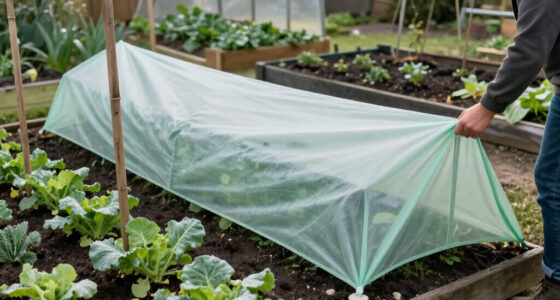
Row cover fabric can shield a planting row while leaving space for plants underneath, so fit and support matter as much as the fabric itself. The pick is 10 ft x 30 ft Frost Cloth Kit with 6 Garden Hoops. The name specifies fabric dimensions and six hoops, which can help you compare the kit with the length and shape of your row. Match the span to the area you plan to cover. A frequent buying mistake is assuming that a stated fabric size guarantees a particular finished tunnel height or width. The six hoops and the way they are spaced affect the supported shape, so review the listing for hoop dimensions and assembly details. Leave sufficient headroom for the plants, and consider whether the row is straight or has irregular sections. Check the supported profile before ordering. Think through how you will lift or open the cover for watering, inspection, and harvesting. A setup that is cumbersome to access can complicate routine care. Also check how the fabric is meant to attach to the hoops and how the edges will be held down. Plan maintenance access alongside coverage, especially if you need to reach plants often.What to look for:
- Compare the stated 10-by-30-foot fabric dimensions with your row.
- Check hoop dimensions and the supported height and width.
- Confirm how the fabric attaches to the six hoops.
- Plan access for watering, inspection, and harvesting.
- Check how the edges can be secured against your garden layout.
10 ft x 30 ft Frost Cloth Kit with 6 Garden Hoops

This 10 ft by 30 ft frost cloth kit includes support hoops and connectors to create a raised tunnel structure for garden protection. Made from thickened, breathable fabric, it shields plants from cold, frost, wind, and pests across multiple seasons.
Pros:
- Provides sturdy support with included hoops
- Thickened fabric offers better durability and coverage
- Multi-season protection for various garden needs
Cons:
- Assembly may require some effort
- Large size may be cumbersome to handle alone
- Not suitable for heavy snow conditions
Best for: Gardeners setting up a covered planting row
Not ideal for: Beds whose shape does not suit the hoop layout
Bottom line: Check the hoop profile and access plan as well as the fabric dimensions.
Bird Protection Netting
Bird netting is a physical covering intended to keep birds away from the area it encloses, so coverage and secure placement are key. The pick is AlpineReach Heavy-Duty Garden Netting, 7.5 x 65 ft. Its listed dimensions provide a starting point for comparing it with a row, bed, or other garden area. Measure the full span you want to protect, including room to secure the edges. A common mistake is buying a long piece without checking whether its width suits the planting area or support structure. Review the listing for details about the netting and how it is intended to be installed. Consider how the material will be supported so it does not rest directly on plants, and plan a method for lifting it when you need access. Check the width and setup against your garden before buying. Installation should account for edge gaps and routine access. An unsecured corner or an awkward opening can undermine the usefulness of a cover. Think about nearby structures, the shape of the bed, and where you will enter to harvest or inspect plants. Secure the perimeter while keeping a practical route to the protected area.What to look for:
- Compare the stated 7.5-by-65-foot dimensions with your coverage area.
- Check listing details about netting construction and intended installation.
- Plan supports that keep netting clear of plants.
- Identify how edges and corners will be secured.
- Leave a practical opening for inspection and harvesting.
AlpineReach Heavy-Duty Garden Netting, 7.5 x 65 ft

This lightweight, weather-resistant mesh helps protect garden beds, fruit trees, and shrubs from birds and other animals. It can be cut to size, secured with the included zip ties, and reused for a range of outdoor garden applications.
Pros:
- Large coverage area and can be cut to size
- Lightweight and easy to install
- Weather-resistant and reusable
- Includes zip ties
Cons:
- May need to be layered for a thicker barrier
Best for: Gardeners covering a long, narrow area
Not ideal for: Wide beds that exceed the listed width
Bottom line: Confirm the width fits your bed and plan supports and access points.
Slug Barriers
A slug barrier is only useful when it suits the bed and can be maintained, so choose an approach based on where slugs are appearing and how plants are arranged. No product is specified for this slot. Instead, use the checklist to compare barrier options available to you and check the directions for the particular material you are considering. Start with the affected area rather than buying a barrier by name alone. One common mistake is applying a barrier without checking whether it creates a continuous boundary around the plants or bed. Gaps, overgrown foliage, and objects bridging the edge can make a boundary less effective. Consider the bed’s shape and how you will keep the perimeter clear. Plan a complete boundary and make sure it remains easy to inspect. Fit and compatibility depend on the barrier material and the garden. Read its label for placement, maintenance, and any precautions for use around plants, pets, or other animals. If the bed is large or irregular, consider how much material is needed and how often the edge will need attention. Follow the product directions and choose an approach that fits your routine.What to look for:
- Choose a barrier type suited to the bed and the affected area.
- Check directions for placement and maintenance.
- Plan a continuous boundary with minimal gaps.
- Keep foliage and objects from bridging the perimeter.
- Review label precautions for use around plants and animals.
Horticultural Soap
A plant spray can be useful when you want to treat plants directly, but the product label should guide how and where it is used. The pick supplied for this slot is Big Leaf Energy Organic Neem Oil Spray for Plants, 16oz. Since the name identifies neem oil spray and a 16-ounce size, check the listing and label for its instructions and intended plants before purchasing. Read the label first to understand application and precautions. A common mistake is treating the words “organic” or “for plants” as a substitute for checking directions. Product labels provide the specific guidance for application, repeat use, and plant compatibility. Review those details for the plants you have and follow any precautions about timing or conditions. Confirm plant compatibility before spraying an entire bed. Consider whether the 16-ounce container suits the area you plan to treat and how the spray is meant to be applied. Keep the container and use instructions available, and avoid assuming the product treats every pest or plant issue. Use the stated directions and treat only the plants and situations covered by its label.What to look for:
- Check the label for intended plants and application directions.
- Review precautions and any stated timing guidance.
- Confirm the product is appropriate for the pest or issue at hand.
- Consider whether the 16-ounce size suits the area to treat.
- Follow label directions for plant compatibility and use.
Big Leaf Energy Organic Neem Oil Spray for Plants, 16oz

This organic neem oil spray is designed for indoor and outdoor plants, promoting healthier, more resilient leaves and soils. It features a botanical blend with up to 3X more azadirachtin, providing effective pest and disease control while being safe for plants, pets, and people.
Pros:
- Contains a powerful essential oil blend for plant health
- Safe for plants, pets, and people when used as directed
- Biodegradable and cruelty-free formulation
Cons:
- Requires shaking before use to re-combine oils
- Avoid direct sun for 6 hours after application
- May need frequent reapplication for persistent issues
Best for: Gardeners seeking a labeled plant spray option
Not ideal for: Anyone needing a product for an issue outside its label
Bottom line: Verify the label covers your plants and intended use before spraying.
Garden Traps
Traps can be part of a garden pest plan, but placement and the target pest should guide the choice. The pick is Qualirey Giant Yellow Flypaper Traps, 15 Rolls. The name identifies yellow flypaper traps and a 15-roll count. Check the listing for trap dimensions and intended use so you can determine whether they fit the space and pest you are addressing. Confirm the target pest before adding traps. A common mistake is assuming that a trap’s color or format makes it suitable for every flying pest. Review the product details for its intended use, placement guidance, and whether hanging or mounting supplies are included. Consider proximity to plants and routine garden activity, and position traps where they can be checked and replaced as needed. Plan placement and upkeep before opening the rolls. The 15-roll quantity may suit a gardener who wants multiple traps or replacements, but the right amount depends on the area and the product’s directions. Check how traps are dispensed and whether they can be positioned securely in your setup. Match quantity to coverage and follow the manufacturer’s placement instructions.What to look for:
- Check the listing for trap dimensions and intended pest use.
- Confirm whether hanging or mounting supplies are included.
- Choose placement that is easy to inspect and maintain.
- Consider how many traps suit the area and directions.
- Review guidance for positioning around plants and garden activity.
Qualirey Giant Yellow Flypaper Traps, 15 Rolls

This set includes 15 rolls of yellow sticky flypaper, each 30 feet long and 10 inches wide, with a total of 3,600 square inches of catching surface. The non-toxic, odorless traps use thick glue on waterproof paper and can be hung indoors or outdoors to catch flies and other flying insects.
Pros:
- Non-toxic and odorless
- Waterproof paper
- Can be hung indoors or outdoors
- Catches flies, gnats, mosquitoes, moths, and other flying insects
Cons:
- Sticky traps need to be removed and discarded when covered with insects
Best for: Gardeners needing multiple yellow flypaper traps
Not ideal for: Those targeting pests not covered by the product directions
Bottom line: Confirm the target pest and placement details before using the 15-roll pack.
If you are buying in stages, start with the pest you have identified and the area that needs protection. Measure beds and rows before choosing a barrier, then check labels and product details for sprays or traps. Buy for the problem at hand and choose a setup you can maintain.
Small adjustments to coverage, access, and upkeep can make a garden protection plan easier to use. Recheck barriers and placements as plants grow, and follow each product’s directions. Take it one step at a time, and build a checklist that fits your garden.