
To incubate and hatch poultry eggs at home, you need to maintain steady temperature around 99.5°F and humidity between 50-55%, adjusting higher near hatch day. Turn eggs 3-5 times daily and candle around days 7 and 14 to monitor development. Keep your incubator clean, guarantee proper airflow, and avoid unnecessary opening late in incubation. Mastering these steps boosts your hatch success—continue exploring for detailed tips to optimize your process.
Key Takeaways
- Maintain a stable incubator temperature of about 99.5°F and humidity of 50-55% for optimal development.
- Turn eggs 3-5 times daily until day 18 to prevent embryo sticking and promote healthy growth.
- Candle eggs around days 7 and 14 to monitor embryo progress and remove non-viable eggs early.
- Keep the incubator clean, well-ventilated, and regularly check temperature and humidity levels.
- Increase humidity to 65-70% near hatch day to facilitate easier hatching and reduce chick stress.
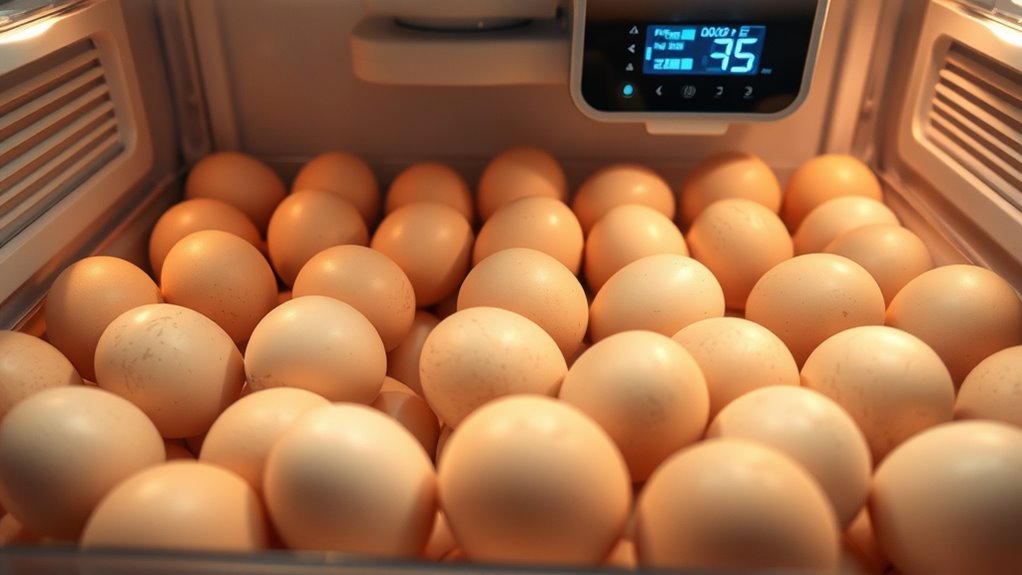
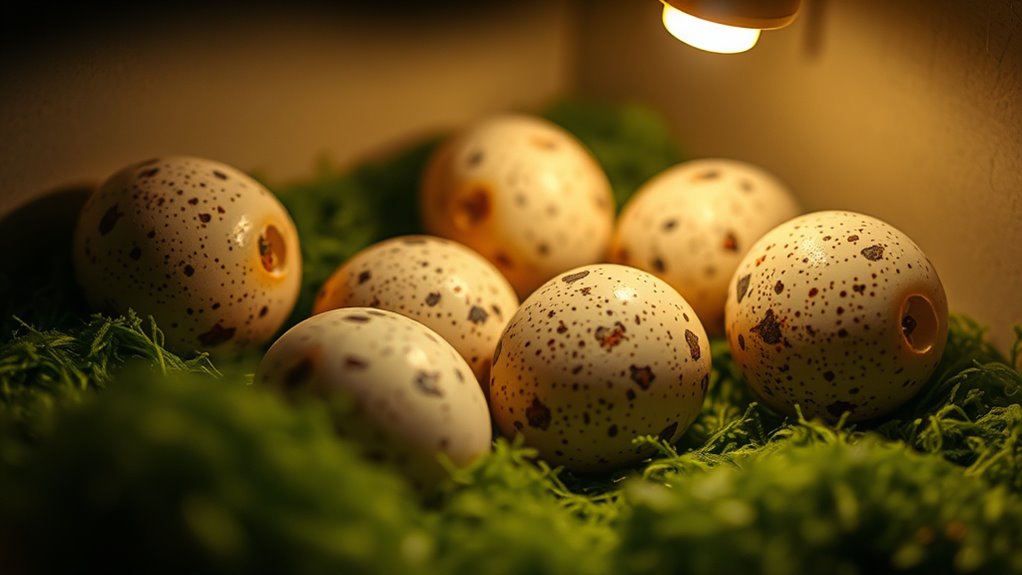
Incubating and hatching poultry eggs is a rewarding process that requires careful attention to detail. As you begin, you’ll want to familiarize yourself with essential steps to maximize your hatch rate. One of the most critical practices is egg candling, which allows you to monitor embryo development inside the eggs. Using a bright light source in a dark room, you hold each egg up to the candle or flashlight. This helps you identify healthy development, such as visible blood vessels and movement, and weed out non-viable eggs early on. Regular candling sessions, typically around days 7 and 14 of incubation, give you insight into which eggs are developing properly and which ones might need to be removed to prevent contamination or mold from affecting others.
Egg candling helps monitor embryo development and identify non-viable eggs early in incubation.
Maintaining your incubator is crucial for successful hatching. Consistent temperature and humidity levels are key, so you need to check and adjust your incubator’s settings regularly. Most poultry eggs hatch best at around 99.5°F (37.5°C) with humidity levels between 50-55% for the first 18 days. As hatch day approaches, you’ll want to increase humidity to about 65-70% to help the chicks hatch comfortably. Proper incubator maintenance also involves keeping it clean to prevent bacterial growth that could harm developing embryos. Regularly wipe down the interior with a mild disinfectant and ensure the ventilation system is unobstructed. If your incubator has a fan, verify it operates smoothly, as proper airflow maintains a stable environment.
In addition to temperature and humidity, you should also turn the eggs multiple times each day—about three to five times—until day 18. This mimics the natural turning done by hens and prevents the embryo from sticking to the shell. After 18 days, stop turning the eggs, increase humidity, and prepare for hatch. During this period, continue egg candling to monitor any unexpected issues, but avoid opening the incubator unnecessarily, as this can cause temperature fluctuations and humidity drops that jeopardize hatch success.
Monitoring and maintaining proper incubator conditions is essential for a successful hatch. Throughout the incubation process, patience and consistency are your best tools. Keep a detailed record of temperature, humidity, and candling observations to identify what works best for your setup. Proper incubator maintenance combined with regular candling ensures you’re providing your developing chicks with the best environment possible. When the hatch day arrives, you’ll be rewarded with healthy, vibrant chicks ready to start their life outside the egg. Staying diligent and attentive during this process makes all the difference between a successful hatch and disappointment.

CoInceptus 36 Eggs Incubators for Hatching Eggs,Egg Incubator with 4 Automatic Incubate Mode,Chicken Incubator with Automatic Egg Turning Humidity Monitoring,Poultry Egg Incubator with Egg Candle
Suitable for various types of poultry eggs: The Automatic Incubator contains 7 adjustable rollers, and the roller spacing…
As an affiliate, we earn on qualifying purchases.
As an affiliate, we earn on qualifying purchases.
Frequently Asked Questions
How Do I Select the Best Eggs for Incubation?
To select the best eggs for incubation, you should prioritize egg freshness and size. Choose eggs that are fresh—ideally less than a week old—since older eggs have lower hatch rates. Opt for medium-sized eggs, as they tend to develop more evenly. Avoid cracked or dirty eggs, and handle them gently to prevent damage. Properly selected eggs increase your chances of successful hatching and healthy chicks.
What Are Common Signs of a Developing Embryo?
You can spot a developing embryo by observing incubation indicators like the gradual formation of blood vessels and a network of veins on the eggshell, especially during candling. As embryo development progresses, you might see movement or dark spots indicating growth. Clear signs include a change in egg appearance over time, with the egg becoming less translucent. These signs help confirm healthy incubation and embryo development.
How Do I Handle Eggs With Cracks or Damages?
If you find cracked or damaged eggs, handle them carefully to prevent contamination. For egg handling, gently clean the crack with a sterilized tool and apply a small amount of beeswax or nail polish to seal it temporarily. Cracked egg repair helps protect the embryo from bacteria. If the crack is extensive, it’s best to discard the egg to avoid risking contamination or infection, ensuring a healthier hatch.
What Should I Do if Eggs Hatch Prematurely?
If eggs hatch prematurely, first check with egg candling to see if the embryo is viable. Premature hatching often results from incorrect hatch timing or temperature fluctuations. Remove any unhatched eggs gently to prevent infection. Keep the hatchling warm and moist, and provide a safe, quiet environment. Adjust your incubation settings for future eggs to better align with the proper hatch timing, reducing the chances of early hatchings.
How Can I Tell if a Chick Is Healthy After Hatching?
Ironically, if a chick’s status isn’t obvious, it’s probably fine. You can tell if a chick is healthy after hatching by observing its activity, alertness, and how it responds to gentle stimulation. Check for strong legs, clear eyes, and consistent breathing. For post hatch care, make certain warmth, clean bedding, and proper nutrition. A healthy chick will be lively, curious, and responsive—if it’s not, it might need extra attention.

Magicfly Bright Cool LED Light Egg Candler Tester, Powered Only by Power Supply
Brand new, Powered by Power Supply (Not rechargeable)
As an affiliate, we earn on qualifying purchases.
As an affiliate, we earn on qualifying purchases.
Conclusion
Remember, patience is a virtue when incubating and hatching poultry eggs at home. With careful attention and the right conditions, you’ll see those tiny chicks emerge happily. Keep a close eye on temperature and humidity, and don’t rush the process. As the saying goes, “Good things come to those who wait.” Stay committed, and soon you’ll enjoy the rewarding experience of nurturing new life right in your own home.

APDOE Egg Incubators for Hatching Eggs, Temperature and Humidity Control, Automatic Egg Turning, Egg Candler, External Water Bottle, Air Vent, for Chicken, Duck & Quail Eggs, 12 Eggs
【Apdoe 2026 Upgraded HatchPro 12 – Precision Temperature & Humidity Control】Equipped with an advanced digital control system, the…
As an affiliate, we earn on qualifying purchases.
As an affiliate, we earn on qualifying purchases.

Farm Innovators Automatic Egg Turner, 41 Spot Chicken Egg Turning Tray with Thermometer for Improved Hatching Rate – Compatible with Select Incubators
Egg Turner for Select Incubators: Handy egg turner is compatible with Farm Innovators incubator models 2100 and 2200…
As an affiliate, we earn on qualifying purchases.
As an affiliate, we earn on qualifying purchases.