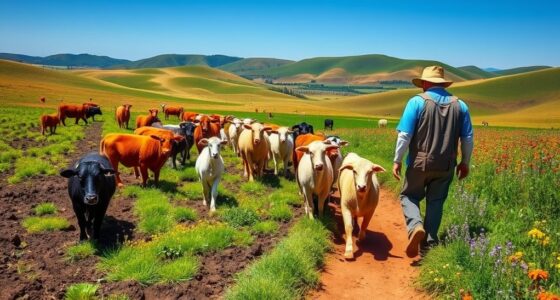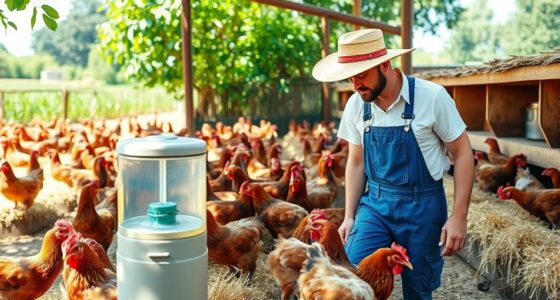
For multi-species livestock, electric fencing is an ideal solution because it’s flexible, humane, and customizable for different animals like cattle, sheep, goats, and dogs. Proper installation, including sturdy posts and good grounding, is key, along with regular maintenance to ensure the fence stays effective and safe. Adjusting wire voltage and design based on species behavior helps prevent escapes and testing. Keep exploring to discover how to optimize fencing for your herd’s needs.
Key Takeaways
- Use customizable electric fencing to safely contain different livestock species with species-specific voltage and wire configurations.
- Select sturdy posts and durable wires to accommodate larger animals like cattle and prevent escape attempts.
- Regularly inspect and maintain fencing to ensure proper grounding, voltage, and wire integrity, preventing shorts and failures.
- Incorporate flexible, portable fencing options for easy reconfiguration based on herd movement and species needs.
- Keep vegetation clear of wires and address damages promptly to maintain effective, humane containment for multi-species livestock.
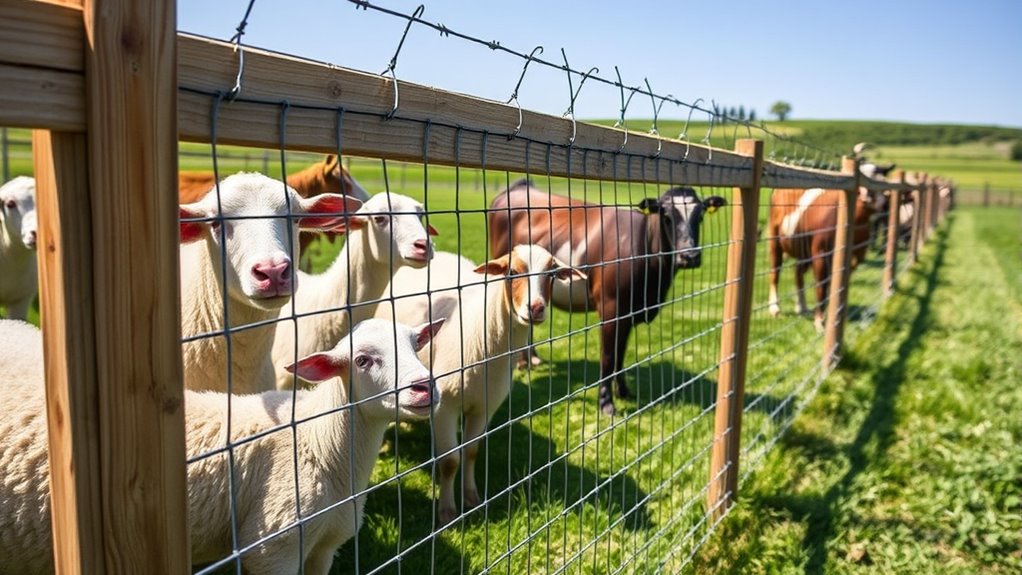
Ever wondered how to effectively fence different types of livestock on the same property? It’s a common challenge, but with the right approach, you can create a safe, durable, and versatile fencing system that keeps everyone secure. One of the most popular options for multi-species fencing is electric fencing. Its flexibility allows you to customize the setup based on the animals you’re housing, whether it’s cattle, sheep, goats, or even dogs. Electric fencing delivers gentle but effective shocks that deter animals from pushing boundaries or attempting to escape, making it a humane and efficient choice. When installing electric fencing, you’ll want to guarantee that the wires are properly energized and grounded, and that the voltage is appropriate for the species you’re containing. Proper installation is key to preventing animals from testing the fence or breaking through, especially when dealing with more curious or stubborn species.
Electric fencing is a humane, customizable solution for securely containing diverse livestock species.
Maintaining your fencing system is just as important as installing it. Fencing maintenance involves regular inspections to identify and repair any damage caused by weather, animals, or wear over time. For electric fencing, this means checking the energizer, wires, and grounding system frequently. Loose or broken wires, disconnected energizers, and weak grounding can reduce the effectiveness of the fence or cause it to fail altogether. Consistent maintenance ensures your electric fencing remains a reliable barrier, minimizing the risk of escapes or injuries. It’s also wise to keep vegetation away from the wires, as overgrown plants can short-circuit the system, reducing its voltage and effectiveness. Additionally, understanding the contrast ratio of your projector can help optimize the visibility and clarity of your displayed images, especially in varying lighting conditions.
When fencing different species together, it’s essential to consider their specific needs and behaviors. For example, sheep and goats might be more prone to testing fences with their horns or curiosity, so stronger, well-maintained electric fencing can prevent escapes. Cattle, being larger, require sturdier posts and more robust electric wires. Regularly inspecting and maintaining your fencing system allows you to adapt your setup as your herd grows or changes. Using flexible electric fencing options, like portable or temporary setups, can help you reconfigure areas easily without sacrificing safety.
Ultimately, effective fencing for multi‑species livestock hinges on choosing the right materials and staying vigilant with fencing maintenance. Electric fencing offers a humane, adaptable solution that, when properly installed and maintained, provides years of reliable service. By paying attention to these details, you’ll create a secure environment where your animals can graze, rest, and thrive without the constant worry of escape or injury.

Electric Fence Netting, 164'L x 42.5" H Movable Livestock Nets for Sheep, Hogs, Cattle, PE Net Fencing Kit with 14 Posts Double Spiked, Electric Fencing for Backyards, Homesteaders, Farms Ranches
- Premium Construction: High-strength PE and stainless steel mesh
- Enhanced Stability: Fiberglass poles and steel stakes included
- Easy Installation: Unfold, insert posts, connect, and energize
As an affiliate, we earn on qualifying purchases.
As an affiliate, we earn on qualifying purchases.
Frequently Asked Questions
How Do Fencing Needs Differ for Exotic Versus Native Species?
You need to tailor fencing to the species you’re containing. Exotic livestock often require species-specific barriers that prevent escape and protect them from predators, while native species might need more adaptable fencing. For exotic livestock containment, use stronger, more secure fencing types designed to handle their unique behaviors. Adjust your fencing height, material, and design to meet each species’ needs, ensuring safety and effective containment for both native and exotic animals.
What Are the Costs Associated With High-Tensile Versus Traditional Fencing?
Ever wondered which fencing saves you more in the long run? High-tensile fencing typically has higher initial installation costs but offers superior material durability, reducing maintenance expenses over time. Traditional fencing is cheaper upfront but may require frequent repairs, increasing overall costs. Consider your budget and durability needs carefully—investing in high-tensile might be more economical if you want long-lasting, reliable fencing that withstands diverse livestock.
How Can Fencing Be Adapted for Seasonal Livestock Movement?
To adapt fencing for seasonal livestock movement, you should consider using portable or moveable fences that allow for seasonal grazing. You can set up temporary fencing that’s easy to move, giving your animals access to fresh pasture while protecting other areas. This fence mobility enables you to efficiently manage grazing rotations, reduce overgrazing, and optimize land use throughout different seasons. Always guarantee your fencing is secure yet flexible for easy adjustments.
What Safety Features Are Recommended for Multi-Species Fencing?
Like a shield protecting a fortress, your fencing needs robust safety features. To prevent wildlife intrusion and guarantee fencing durability, install smooth wire or electric strands to deter animals from pushing through. Use sturdy posts and secure fastenings, and consider wildlife-safe barriers like mesh at critical points. Regular inspections help identify vulnerabilities, so your fencing remains a reliable barrier and keeps your multi-species livestock safe from predators and intruders.
How Does Fencing Influence Livestock Behavior and Social Interactions?
Fencing plays a vital role in livestock behavior and social interactions. When properly designed, it reduces livestock stress by preventing unnecessary conflicts and escapes, allowing animals to feel secure. It also encourages social bonding by keeping compatible groups together and minimizing disruptions. Conversely, poor fencing can cause stress and alter natural behaviors, leading to aggression or isolation. Therefore, effective fencing supports harmonious social interactions and overall animal well-being.
Conclusion
You might think fencing is just about keeping animals in, but it’s so much more—you’re building a fortress that protects your entire farm’s future. With the right fencing, you could hold back storms, predators, and chaos itself. It’s not just wire and posts; it’s your livestock’s safety net, their sanctuary, and your peace of mind. Invest in quality fencing today, and watch your farm transform into a legendary, unstoppable haven for all your animals.