Implementing renewable energy like solar panels and wind turbines can help you cut costs and reduce your farm’s environmental impact. Solar power can generate electricity for equipment, lighting, and water heating, while wind turbines provide a reliable energy source, especially in windy areas. These solutions boost your farm’s sustainability and promote environmental conservation. Plus, with incentives and grants available, you can improve your resilience and market appeal. Keep exploring to see how these strategies can transform your livestock operation.
Key Takeaways
- Implement solar panels and wind turbines to reduce energy costs and reliance on the grid for farm operations.
- Benefit from financial incentives, tax credits, and grants to offset installation expenses and improve ROI.
- Use renewable energy sources to decrease greenhouse gas emissions and enhance environmental sustainability.
- Combine solar and wind systems for reliable, continuous power supply regardless of weather conditions.
- Strengthen farm resilience, reduce operational costs, and attract eco-conscious markets through sustainable energy practices.
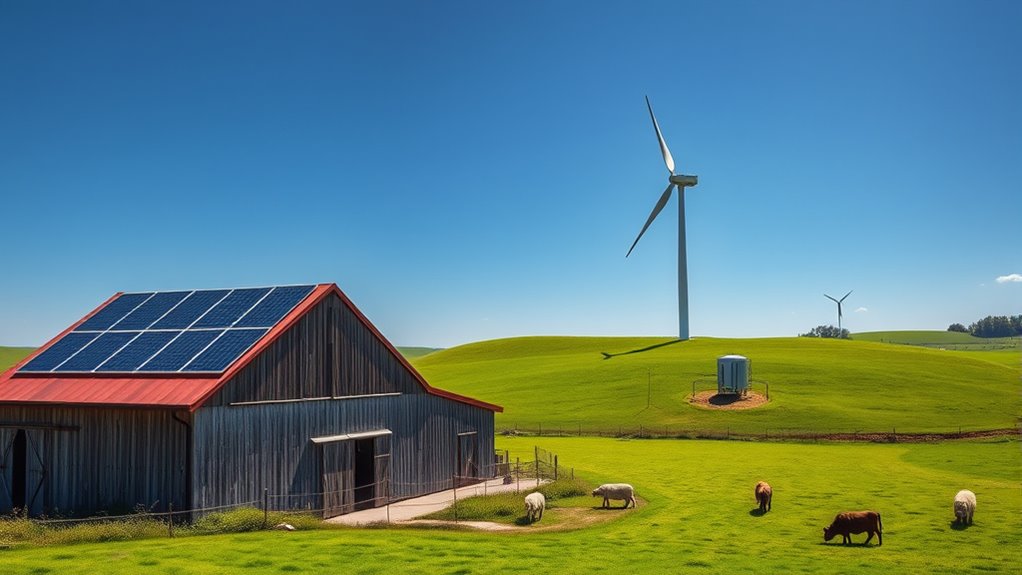
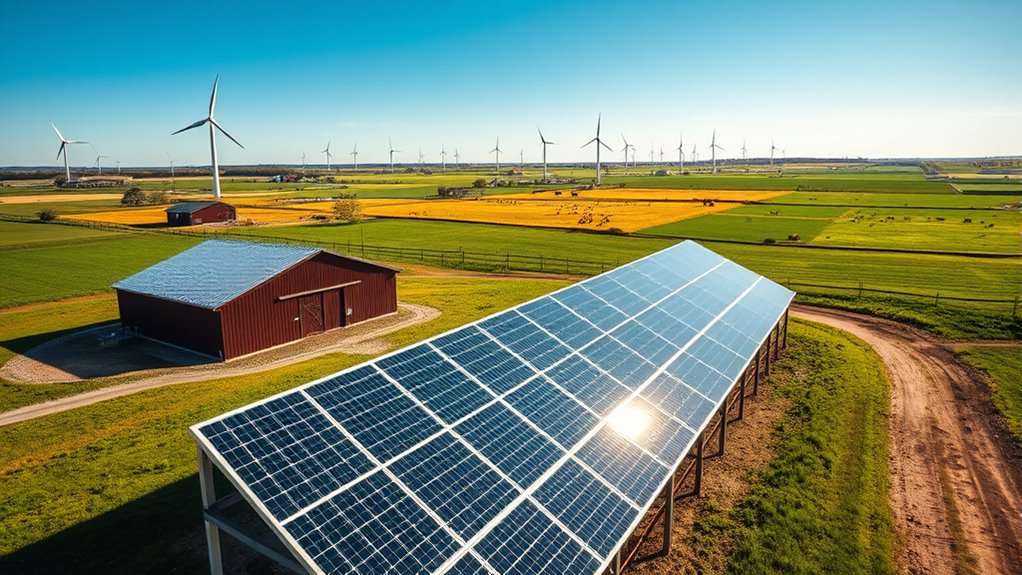
Implementing renewable energy in livestock operations can markedly reduce costs and environmental impact. As someone managing a farm, you might consider installing solar panels or wind turbines to power your facilities. Solar panels are especially popular because they harness sunlight to generate electricity, which can be used to run equipment, lighting, or even heat water. With the decreasing costs of solar technology, you’ll find that installing a solar panel system often pays for itself over time through energy savings. Plus, solar panels require minimal maintenance once set up, making them a reliable, long-term solution for your farm’s energy needs.
Installing solar panels can cut costs and boost farm sustainability with minimal maintenance.
Wind turbines are another excellent option, particularly if your farm is located in a windy area. They convert wind energy into electricity, providing a sustainable power source that can considerably cut your reliance on grid electricity. Small-scale wind turbines are designed for farm use and can be installed on existing structures or standalone towers, depending on your space and wind conditions. When you combine wind turbines with solar panels, you create a more resilient energy system that can generate power regardless of weather conditions. This hybrid approach ensures your livestock operations stay productive without interruption, even on cloudy or windless days.
Using these renewable energy sources not only reduces your electricity bills but also diminishes your farm’s carbon footprint. Livestock operations often consume substantial amounts of energy for tasks like water pumping, heating, and cooling. By switching to solar and wind power, you actively contribute to environmental conservation, reducing greenhouse gas emissions associated with fossil fuel consumption. Additionally, many states and federal programs offer incentives, tax credits, or grants for renewable energy projects, which can ease your upfront investment costs. These financial benefits accelerate your return on investment and make adopting renewable energy more feasible.
Furthermore, integrating solar panels and wind turbines can enhance your farm’s sustainability image. Consumers are increasingly interested in products produced responsibly, and showcasing your commitment to renewable energy can boost your farm’s reputation. It may also open doors to new markets or partnerships that value sustainable practices. Over time, renewable energy investments can make your livestock operation more resilient to fluctuating energy prices, giving you greater control over your operating costs.
Embracing energy independence through solar panels and wind turbines empowers you to run a more efficient, environmentally friendly farm. It’s a proactive step toward reducing operational expenses, limiting environmental harm, and setting a positive example within the agricultural community. With careful planning and investment, renewable energy can become a cornerstone of your livestock operation’s future, ensuring sustainability and profitability for years to come.

AeternaSol 400w Solar Panel,2pcs 200 Watt Bifacial Solar Panel,12V N-Type
- High Efficiency Cells: Up to 25% efficiency with A+ cells
- Night Energy Loss Prevention: Reverse current blocking diode technology
- Durable Waterproof Design: IP68 rated with sealed junction box
As an affiliate, we earn on qualifying purchases.
As an affiliate, we earn on qualifying purchases.
Frequently Asked Questions
What Are the Initial Costs of Renewable Energy Systems for Farms?
The initial costs of renewable energy systems for farms vary based on the size and type of equipment, but you can expect to spend anywhere from a few thousand to several hundred thousand dollars. Equipment financing options are available to help you handle these costs, making it easier to invest in solar panels, wind turbines, or biogas systems. Planning your budget carefully guarantees you maximize long-term savings and sustainability benefits.
How Long Does It Take to See a Return on Investment?
You can typically see a return on investment within 5 to 10 years, depending on factors like energy storage and grid integration. While initial costs are high, the savings on energy bills and potential incentives accelerate your payoff. Juxtapose this upfront expense with long-term benefits; renewable systems reduce reliance on the grid, lower emissions, and ultimately, boost your farm’s profitability over time.
Are There Government Incentives for Renewable Energy Adoption?
Yes, there are government incentives for renewable energy adoption. You can access government grants and policy incentives that help offset installation costs and improve your return on investment. These programs vary by region but often include tax credits, rebates, and funding opportunities. By taking advantage of these incentives, you make your livestock operation more sustainable and cost-effective, accelerating your progression to renewable energy sources.
What Maintenance Is Required for Renewable Energy Equipment?
You need to regularly inspect your wind turbines and clean your solar panels to guarantee efficiency. For example, a farm in Iowa performs annual wind turbine inspections and cleans solar panels twice a year, extending solar panel longevity and preventing issues. Routine maintenance includes checking for debris, loose connections, and wear. This proactive approach keeps your renewable systems running smoothly, saving you money and maximizing energy production.
Can Renewable Energy Meet the Entire Energy Needs of a Livestock Farm?
Yes, renewable energy can meet your entire livestock farm’s needs through solar integration and wind compatibility. By combining solar panels and wind turbines, you can create a reliable, sustainable energy system tailored to your farm’s requirements. This setup reduces reliance on grid power, lowers costs, and guarantees continuous operation even during cloudy days or low wind periods. Proper design and maintenance optimize performance, making your farm more eco-friendly and energy-independent.
Conclusion
By embracing renewable energy, you’re not just powering your livestock operation—you’re forging a path toward a sustainable future, much like Prometheus bringing fire to mankind. Each step you take reduces your carbon footprint and echoes the wisdom of those who sought harmony with nature. As the ancients understood balance, so too can you create a resilient, eco-friendly farm that honors the earth’s gifts while securing prosperity for generations to come.