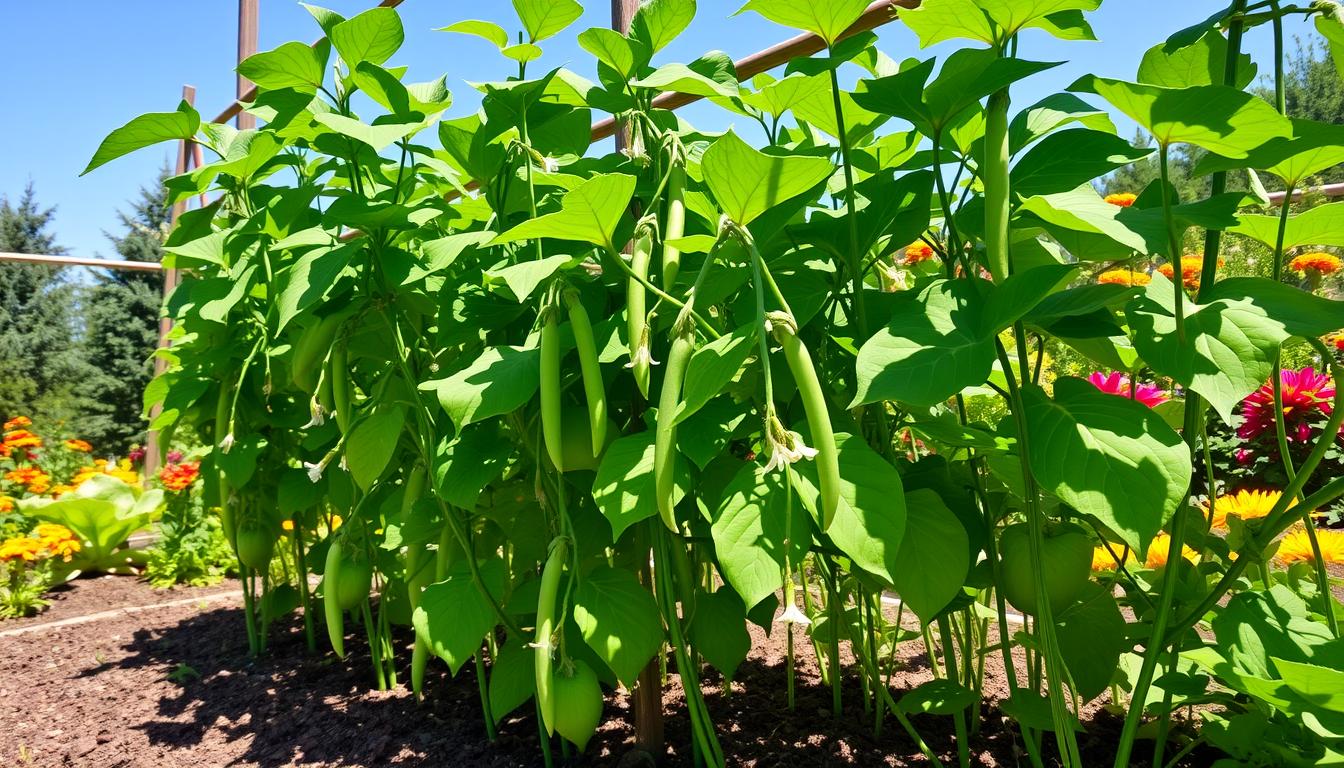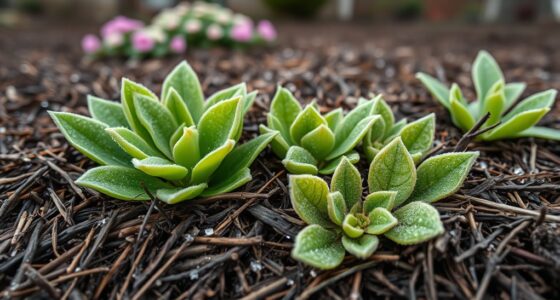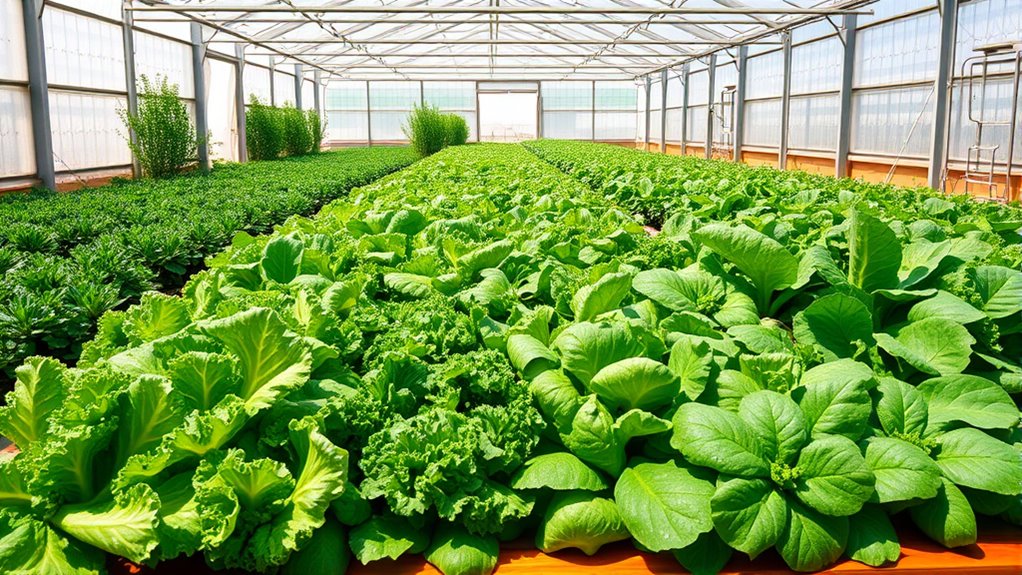

You can grow lettuce, kale, and spinach year-round by planning ahead and using season extension methods like row covers and greenhouses. Start seeds indoors early for transplanting outside during cooler months, and stagger planting dates to guarantee a steady supply. Proper crop rotation and organic pest control keep plants healthy, while regular maintenance and efficient tools make gardening easier. Keep exploring these strategies to enjoy fresh greens all year long.
Key Takeaways
- Use season extension methods like greenhouses and row covers to grow leafy greens year-round.
- Start seeds indoors early and transplant outside as weather permits for continuous harvests.
- Stagger planting dates every few weeks for a steady supply of lettuce, kale, and spinach.
- Implement crop rotation and organic pest control to maintain healthy, pest-free plants year-round.
- Optimize tools and planning to improve efficiency and ensure consistent, enjoyable gardening.
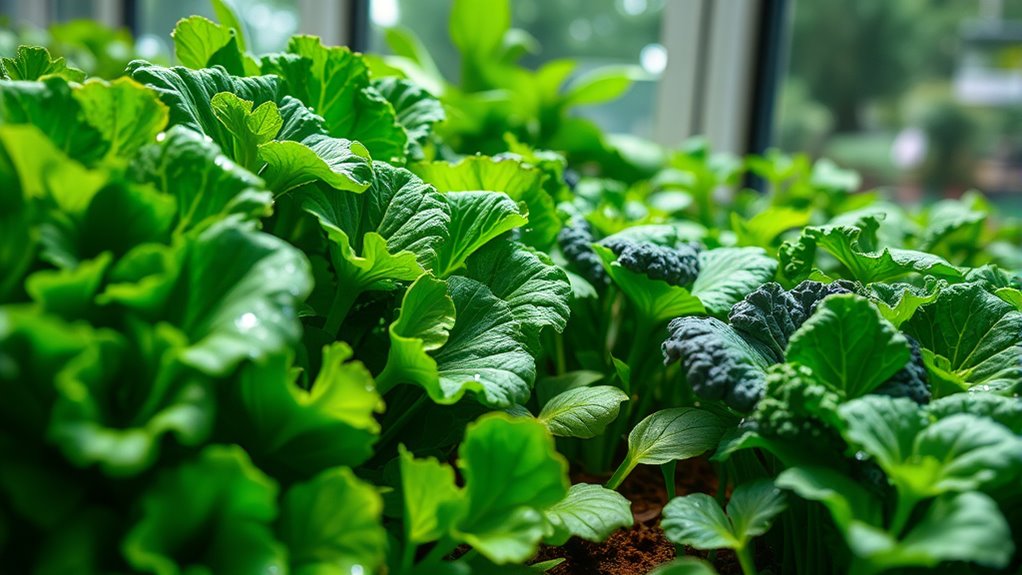
Growing leafy greens year-round is easier than you might think, even if you have limited space or live in a climate with harsh winters. With the right planning, you can enjoy fresh lettuce, kale, and spinach any time of the year. The key is understanding your planting schedules and staying on top of pest management. By carefully timing your plantings, you guarantee a steady harvest and prevent gaps in your greens supply. For example, in colder months, you can start seeds indoors or use season extension methods like row covers or greenhouses. As soon as the weather permits, transplant seedlings outside or continue to grow indoors. This approach helps you maintain a continuous cycle, so you’re never without your favorite leafy greens.
When it comes to planting schedules, it’s essential to know the ideal times for sowing each crop. Lettuce, for example, can be started indoors early in the season and transplanted outside once the soil warms up. Spinach prefers cooler weather, so planting in early spring or late fall works best, while kale is quite hardy and can be sown multiple times throughout the year. To keep a steady supply, stagger your planting dates every few weeks, ensuring new plants mature as others are harvested. This succession planting maximizes your space and provides fresh greens consistently.
Pest management is another important aspect of year-round leafy green cultivation. Pests like aphids, cabbage worms, and slugs can quickly damage your crops, especially when greens are grown close together. Preventative measures are your best defense. Use row covers to protect young plants from insects, and inspect your greens regularly for signs of pests. If you spot an infestation, remove pests manually or apply organic treatments like neem oil. Keeping your garden clean by removing debris and weeds also reduces pest habitats. Rotating your crops annually helps prevent disease buildup and pest cycles, ensuring healthier plants in the long run. Additionally, incorporating performance upgrades for tools and equipment can make your gardening tasks more efficient and enjoyable.

Greenhouse Gardening for the Absolute Beginner: How to Build an Indoor Food Oasis and Grow Your Own Fresh Produce Year-Round, No Matter Your Space, Skills, or Season
As an affiliate, we earn on qualifying purchases.
As an affiliate, we earn on qualifying purchases.
Frequently Asked Questions
What Are the Best Organic Fertilizers for Leafy Greens?
You should use organic compost and fish emulsion to fertilize your leafy greens. Organic compost enriches the soil with essential nutrients and improves soil health, promoting healthy growth. Fish emulsion acts as a quick natural boost, providing nitrogen and other crucial nutrients. Both are safe, eco-friendly options that support year-round growth of lettuce, kale, and spinach, ensuring your greens stay lush and nutritious.
How Do I Control Pests Without Chemicals?
You can control pests naturally by using natural pest controls like introducing beneficial insects such as ladybugs or applying neem oil. Additionally, practice companion planting with herbs like basil or marigolds, which repel pests. Regularly inspect your greens for signs of trouble and remove pests manually. These methods keep your leafy greens healthy without chemicals, promoting a safe, organic garden environment.
Can I Grow Leafy Greens Indoors Without Natural Sunlight?
Did you know that 60% of indoor gardeners successfully grow leafy greens without natural sunlight? You absolutely can grow greens indoors using artificial indoor lighting solutions like LED grow lights, which mimic sunlight effectively. Opt for soil-less growing methods like hydroponics to boost growth and reduce pests. With proper lighting and soil-less techniques, you’ll enjoy fresh leafy greens year-round, even without natural sunlight.
What Are Common Diseases Affecting Leafy Greens Year-Round?
You’ll encounter common diseases like downy mildew, bacterial leaf spot, and root rot when growing leafy greens year-round. To prevent these issues, practice disease prevention by maintaining proper airflow, avoiding overhead watering, and keeping your leaves dry. Also, incorporate crop rotation each season to reduce soil-borne pathogens. Regular inspections and good sanitation help keep your greens healthy, ensuring a continuous, disease-free harvest.
How Do I Harvest Leafy Greens to Maximize Longevity?
To maximize the longevity of your leafy greens, use proper harvesting techniques like picking leaves at the base to encourage regrowth. Avoid tearing or damaging the stems. After harvesting, store them in airtight containers or perforated bags in the fridge to keep them fresh longer. Keep greens cool and dry, and avoid overcrowding to prevent spoilage. Regularly check and remove any wilted leaves for ideal freshness.

FEED GARDEN Garden Netting 8x10FT Ultra-Fine Mesh PE Cover for Vegetables Fruits Garden Row Cover Raised Bed Durable Protection from Birds Animals
【Upgraded Fine Mesh Netting】This fine mesh garden netting uses 0.7*0.8mm high-density garden insect netting to block, birds, and…
As an affiliate, we earn on qualifying purchases.
As an affiliate, we earn on qualifying purchases.
Conclusion
By growing lettuce, kale, and spinach year-round, you open a garden that never truly sleeps. Imagine your greens as loyal friends, always there to nourish and refresh you, no matter the season. With a little effort and some smart techniques, you can enjoy fresh, vibrant greens anytime. So why wait for spring? Your leafy sanctuary is just a grower’s touch away—turn the seasons into your personal harvest, and watch your garden flourish endlessly.

Burpee SuperSeed Seed Starting Tray | 36 Cell Reusable Seed Starter Tray | for Starting Vegetable, Flower & Herb Seeds | Indoor Grow Kit for Plant Seedlings | for Germination Success
EASIER SEED STARTING: Our Burpee SuperSeed tray with 36 flexible pop-out cells is designed to simplify indoor seed…
As an affiliate, we earn on qualifying purchases.
As an affiliate, we earn on qualifying purchases.

Southern Ag 100520028 13021 Caterpillar Control, 8 oz
Southern Ag Thuricide Hpc Concentrate 8Oz Organic Insecticide
As an affiliate, we earn on qualifying purchases.
As an affiliate, we earn on qualifying purchases.