
The soil microbiome, made up of beneficial fungi and bacteria, plays a crucial role in supporting plant health and soil vitality. Fungi form partnerships like mycorrhizae, helping plants access nutrients more efficiently, while bacteria assist with nutrient cycling, nitrogen fixation, and suppressing harmful pathogens. A diverse microbial community also makes soil more resilient to environmental stresses. If you want to discover how these microorganisms influence your land’s health and productivity, there’s much more to explore.
Key Takeaways
- Beneficial fungi form mycorrhizal associations that enhance plant nutrient uptake and soil health.
- Diverse bacteria fix nitrogen, decompose organic matter, and produce antibiotics, supporting soil resilience.
- Fungal and bacterial interactions promote nutrient cycling and maintain ecosystem balance.
- Maintaining microbial diversity through sustainable practices boosts soil fertility and resistance to disturbances.
- The soil microbiome underpins plant growth, ecosystem stability, and sustainable land management.
Have you ever wondered what lies beneath the surface of the soil? Beneath your feet exists a bustling world teeming with tiny organisms working tirelessly to support plant life and maintain ecosystem health. Among these are beneficial fungi and bacteria that form a complex, interconnected community known as the soil microbiome. These microorganisms play essential roles, influencing plant growth, nutrient cycling, and soil structure. As you explore this hidden universe, you’ll discover that fungal symbiosis and bacterial diversity are key factors driving soil vitality.
Fungal symbiosis, particularly mycorrhizal associations, forms a fundamental link between plants and fungi. When plants establish these partnerships, fungi extend their hyphae far beyond the root zone, effectively increasing the root system’s reach. This allows plants to access nutrients like phosphorus and micronutrients more efficiently. In return, fungi receive carbohydrates produced by the plant through photosynthesis. This mutualistic relationship not only enhances plant health but also stabilizes soil structure by binding soil particles together, reducing erosion. You might notice that healthy, thriving plants often have abundant mycorrhizal networks beneath the surface, a testament to the importance of fungal symbiosis in soil ecosystems.
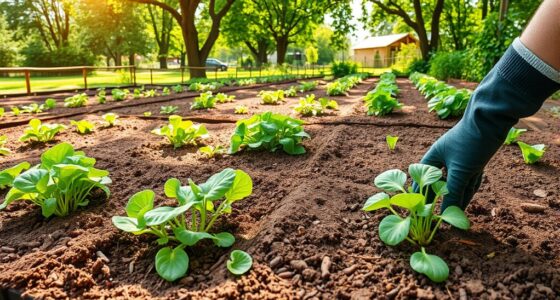
Healthy plants with rich mycorrhizal networks indicate vital fungal symbiosis supporting soil health.
Bacterial diversity adds another layer of complexity and resilience to the soil microbiome. The wide variety of bacterial species in the soil means there are countless ways they contribute to soil health. Some bacteria fix atmospheric nitrogen, transforming it into forms that plants can readily absorb, reducing the need for synthetic fertilizers. Others decompose organic matter, breaking down dead plant and animal material into essential nutrients. This process recycles nutrients back into the soil, maintaining a balanced ecosystem. Additionally, certain bacteria produce antibiotics and other compounds that suppress harmful pathogens, protecting plant roots from disease. The diversity of bacterial species also helps soils recover from disturbances, making the ecosystem more resilient to changes such as droughts, floods, or human activity.
Understanding these interactions highlights how essential the soil microbiome is for sustainable agriculture and environmental health. By fostering beneficial fungi and diverse bacterial populations, you support a resilient, productive soil system. Practices like reducing chemical inputs, planting cover crops, and avoiding soil compaction help maintain this delicate balance. Furthermore, recent research emphasizes that high microbial diversity is crucial for soil resilience and long-term fertility. As you delve deeper into soil health, you’ll realize that nurturing these microorganisms isn’t just about improving crop yields – it’s about preserving the complex, dynamic environment beneath your feet that sustains life on a broader scale. Recognizing the importance of fungal symbiosis and bacterial diversity empowers you to make informed decisions that benefit both the soil and the planet.
beneficial soil fungi and bacteria products
As an affiliate, we earn on qualifying purchases.
As an affiliate, we earn on qualifying purchases.
Frequently Asked Questions
How Do Beneficial Fungi and Bacteria Specifically Enhance Plant Nutrient Uptake?
Beneficial fungi and bacteria boost your plant’s nutrient uptake through mycorrhizal associations, expanding the root network and accessing nutrients beyond reach. They also facilitate nitrogen fixation, converting atmospheric nitrogen into forms your plants can absorb. This symbiotic relationship accelerates nutrient absorption, improves soil health, and enhances plant growth. By supporting these microbes, you guarantee your plants receive essential nutrients more efficiently, leading to healthier, more productive plants.
Can Soil Microbiome Health Be Restored After Contamination or Degradation?
Think of your soil like a garden after a storm; it can recover with care. Yes, soil microbiome health can be restored after contamination or degradation. Focus on microbial recovery by adding organic matter, avoiding chemicals, and planting cover crops. These steps boost soil resilience, encouraging beneficial fungi and bacteria to re-establish. Patience and consistent practices help rebuild a thriving, balanced microbiome, ensuring your soil’s long-term liveliness.
What Are the Best Practices to Promote Beneficial Microbes Naturally?
To promote beneficial microbes naturally, you should use organic amendments like compost and manure, which feed and support healthy soil life. Practice crop rotation to prevent pathogen buildup and diversify microbial communities. Avoid synthetic chemicals that harm microbes, and maintain soil moisture and organic matter. These steps help create a thriving environment for beneficial fungi and bacteria, boosting soil health and plant growth naturally.
How Do Climate Change and Pollution Affect Soil Microbiome Diversity?
Imagine your soil as a vibrant jungle teeming with life. Climate change causes arctic degradation and heats the environment, disrupting this delicate balance. Urban pollution introduces toxins, like invasive species choking the ecosystem. These threats reduce soil microbiome diversity, killing beneficial fungi and bacteria. As a result, soil health declines, weakening plant growth and ecosystem resilience. You need to protect and restore this underground jungle to maintain its essential functions.
Are There Risks Associated With Introducing Beneficial Microbes Into Soil?
Introducing beneficial microbes into soil can carry risks like potential pathogen transfer, which might harm plants or humans. You also risk creating a microbial imbalance, disrupting the natural soil ecosystem. To minimize these risks, guarantee you use well-tested, native strains and follow proper application procedures. Monitoring soil health afterward helps catch any negative effects early, keeping your soil balanced and productive while avoiding unintended consequences.
Conclusion
As you nurture the soil’s hidden symphony, you gently invite beneficial fungi and bacteria to dance together. Their quiet cooperation weaves a delicate balance, quietly supporting plant health and essentiality. By tending to these unseen allies, you help foster a thriving, resilient environment where growth blossoms effortlessly. In honoring this gentle dance beneath your feet, you reveal nature’s subtle magic, ensuring a vibrant future rooted in harmony and abundance.