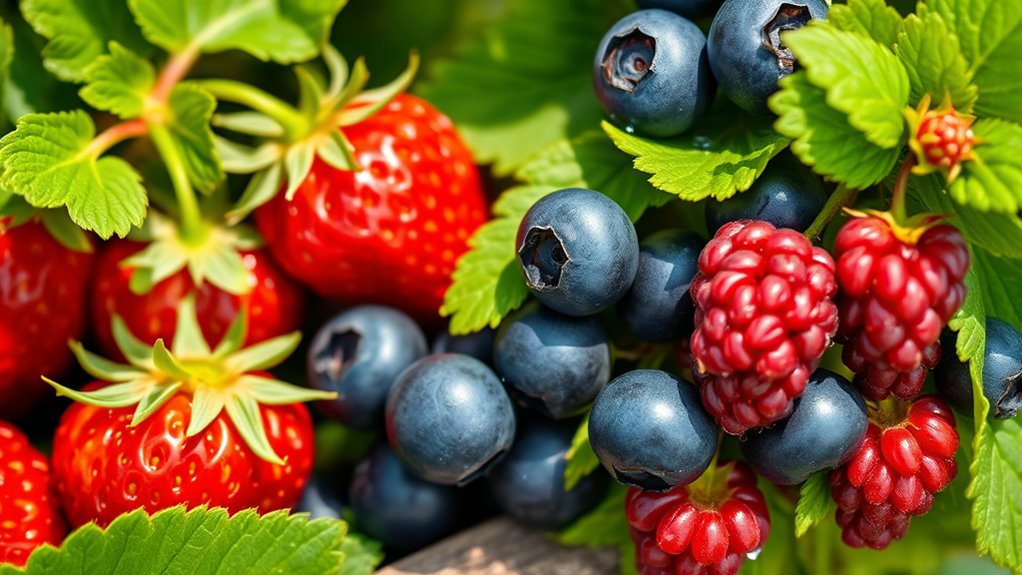

To grow berries like strawberries, blueberries, and raspberries at home, start by choosing the right types for your climate, space, and soil. Test your soil’s pH and adjust it as needed—blueberries need acidic soil, while strawberries and raspberries prefer a neutral to slightly acidic pH. Prepare the soil with organic matter, guarantee good drainage, and plant your berries with proper spacing. Keep soil healthy and maintained, and you’ll enjoy fresh berries. Tips for success await just ahead.

Get garden gear delivered free with Prime
- Fast, free delivery on millions of items
- Prime Video, Amazon Music and more included
- Member-only deals all year
Key Takeaways
- Choose berry varieties suited to your climate, space, and soil conditions for optimal growth.
- Test and adjust soil pH: blueberries need acidic soil (pH 4.5-5.5), while strawberries and raspberries prefer neutral to slightly acidic.
- Prepare well-draining, fertile soil by adding organic matter and creating raised beds or mounds if necessary.
- Clear weeds and plant berries with proper spacing, using containers or garden beds based on space and plant requirements.
- Maintain soil health through regular amendments and ensure proper watering, fertilizing, and pest control for a healthy berry harvest.
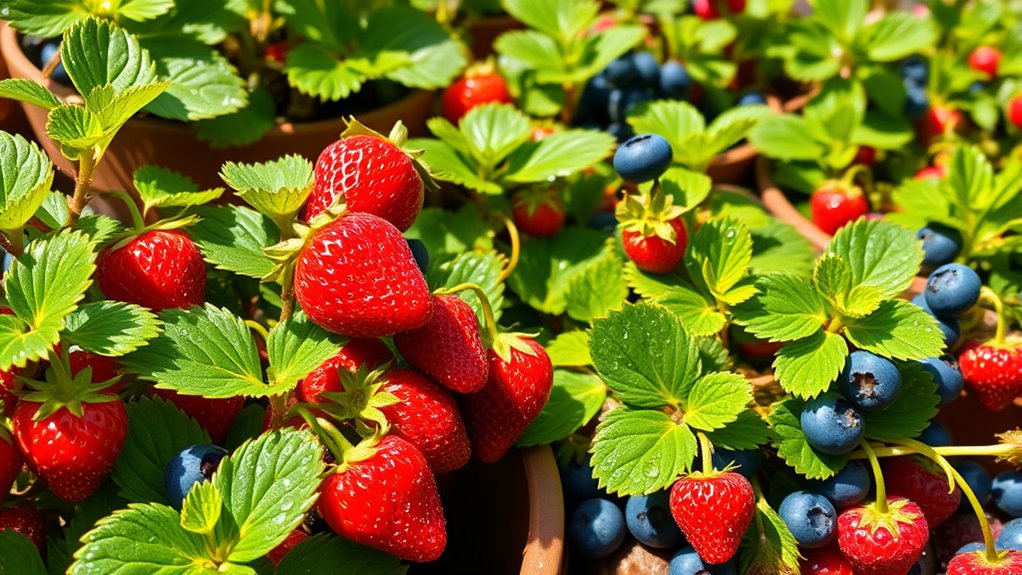
Have you ever wondered how to grow your own delicious berries at home? Starting your berry garden is easier than you might think, especially if you pay attention to choosing the right berry varieties and soil preparation techniques. The first step is selecting the berry types that suit your climate, space, and taste preferences. Strawberries are perfect for small spaces and can be grown in containers or garden beds. Blueberries require acidic soil, so you’ll want to choose varieties that thrive in your USDA zone. Raspberries are hardy and produce abundant fruit, but they need a bit more space and support. Knowing which berries grow best in your environment helps guarantee a successful harvest.
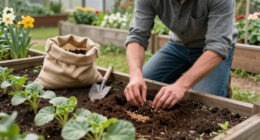
Once you’ve chosen your berry varieties, focus on soil preparation. Proper soil is essential for healthy plant growth and abundant fruit production. Start by testing your soil’s pH and nutrient levels to determine what amendments are needed. For blueberries, you’ll need acidic soil with a pH between 4.5 and 5.5, so adding peat moss or sulfur can help lower the pH. Strawberries and raspberries prefer slightly more neutral soil, with pH levels around 6.0 to 6.8. No matter what variety you select, well-draining soil is vital to prevent root rot and disease. Incorporate organic matter like compost or aged manure to improve soil fertility and structure. Loosen the soil to a depth of at least 12 inches to promote healthy root development. Additionally, ensuring your soil has adequate nutrients will support vigorous plant growth and fruit production. Proper soil preparation also involves understanding soil amendments that can optimize growing conditions for different berry types.
When preparing the planting site, clear away weeds and debris, then mix in organic amendments thoroughly. For berries, raised beds or mounded soil can improve drainage and soil warmth, especially in regions prone to heavy rain or cold temperatures. If you’re planting in containers, use a rich, well-draining potting mix designed for acid-loving plants if you’re growing blueberries. Be sure to space your plants according to their specific needs to allow airflow and facilitate maintenance. Proper soil preparation not only creates a good foundation for your berries but also minimizes the risk of pests and diseases.
blueberry planting soil pH tester
As an affiliate, we earn on qualifying purchases.
As an affiliate, we earn on qualifying purchases.
Frequently Asked Questions
What Are the Best Companion Plants for Berry Bushes?
For effective companion planting around your berry bushes, choose plants that attract beneficial insects and improve soil health. Marigolds and nasturtiums help ward off pests and attract pollinators, boosting berry production. Clover and garlic enrich the soil and deter pests naturally. These companion plants create a balanced ecosystem, encouraging beneficial insects to thrive and protecting your berries from common pests, leading to healthier, more bountiful harvests.
How Do I Prevent Birds From Eating My Berries?
Think of your berries as a treasure chest, and birds as enthusiastic pirates. To keep them at bay, you can shield your bounty with bird netting—like a protective net around your treasure. Additionally, scare devices such as reflective tape or fake predators can frighten birds away, making your garden less appealing. Use these tools consistently to outsmart the feathered thieves and enjoy a fruitful harvest.
Can I Grow Berries in Containers Indoors?
Yes, you can grow berries in containers indoors. Make sure your space has plenty of indoor lighting, ideally near a south-facing window or with grow lights, to support healthy growth. Choose the right container with proper drainage and use nutrient-rich soil. Regular watering and fertilizing are essential. This setup allows you to enjoy fresh berries year-round, even without outdoor space.
What Are Common Pests That Affect Home Berry Plants?
You often face pests like aphids, spider mites, and Japanese beetles that can harm your berries. Pest identification helps you recognize these invaders early. Use organic pest control methods such as neem oil, insecticidal soap, or introducing beneficial insects like ladybugs. Regularly inspect your plants to catch pests quickly, and keep your berries healthy by maintaining proper watering and hygiene, making organic pest control more effective.
How Often Should I Prune My Berry Bushes?
You might think pruning is complicated, but with proper pruning techniques, it becomes straightforward. You should prune your berry bushes annually, typically in late winter or early spring before new growth starts. The timing for pruning guarantees healthy fruit production and maintains plant vigor. Regularly removing dead or overgrown branches encourages airflow and sunlight exposure, helping your bushes thrive and produce better berries year after year.
Conclusion
Now that you’ve learned how to grow strawberries, blueberries, and raspberries at home, it’s time to embrace your inner gardener. With a little patience and care, your garden will burst with vibrant berries, turning your home into a sweet oasis. Remember, each berry is a tiny treasure waiting to be discovered—like nature’s jewels shining just for you. So go ahead, nurture your plants, and watch your berry patch flourish into a delicious paradise.
Fall Picks
fall essentials
As an affiliate, we earn on qualifying purchases.