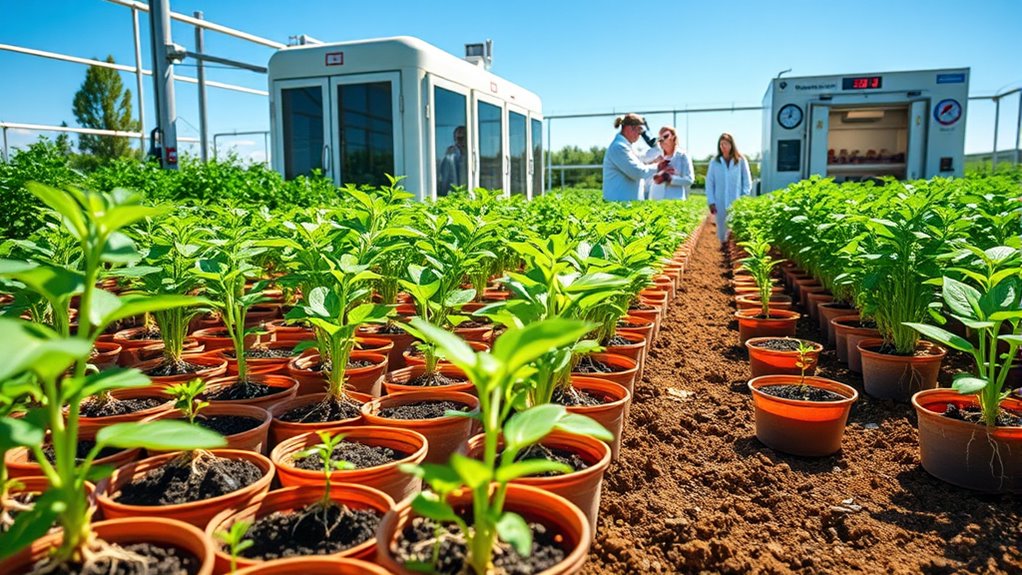

To breed and select seeds for climate resilience, focus on enhancing genetic diversity by sourcing germplasm from wild relatives and diverse regions. Prioritize traits like drought tolerance, deep roots, and efficient water use, using marker-assisted selection to identify key genes. Holistically evaluate seeds for yield stability, disease resistance, and stress tolerance. By combining these strategies, you’ll develop resilient crops capable of thriving amid climate challenges. Keep exploring to learn more about effective seed selection for a sustainable future.
Key Takeaways
- Incorporate diverse germplasm, including wild relatives, to introduce natural drought and stress tolerance traits.
- Utilize marker-assisted selection to identify and breed genes associated with climate resilience traits.
- Focus on developing seeds with deep root systems, water-use efficiency, and disease resistance for enhanced adaptability.
- Implement holistic seed evaluation considering yield stability, stress tolerance, and long-term performance.
- Expand genetic diversity through cross-breeding to strengthen crops against drought, heat, pests, and unpredictable climate conditions.
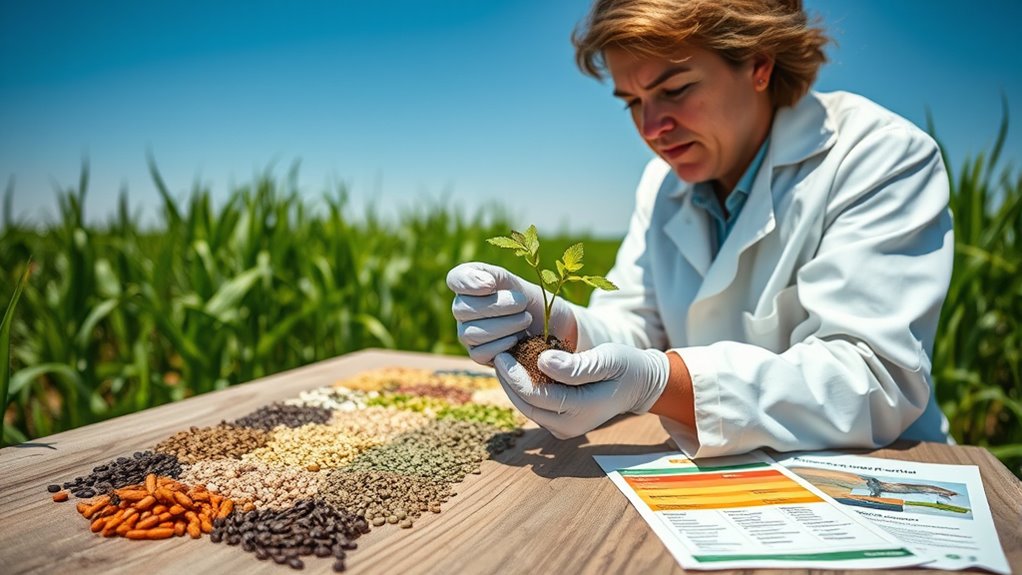
As climate change accelerates, developing resilient crop seeds becomes more urgent than ever. You need to understand that maintaining genetic diversity is key to this effort. Genetic diversity refers to the variety of genes within a plant species, and it’s essential because it provides the raw material for breeding crops that can withstand extreme weather conditions. When you focus on increasing genetic diversity, you give your crops a better chance to adapt to unpredictable environments, such as prolonged droughts or sudden temperature shifts. This diversity acts as a safety net, guaranteeing that some plants will thrive despite changing conditions, which ultimately secures food production.
Drought tolerance is a critical trait you should prioritize in your breeding programs. As water scarcity becomes more prevalent, selecting seeds that can endure dry spells is indispensable. To do this, you need to identify and cultivate plant varieties that naturally possess or can develop traits for drought resilience. These traits might include deep root systems that access underground water, reduced water requirements, or efficient water use. Breeding for drought tolerance involves screening numerous plant lines to find those that perform well under water-limited conditions. You can employ techniques like marker-assisted selection to pinpoint the genetic regions responsible for drought resilience, speeding up the process and increasing accuracy.
Incorporating genetic diversity into your breeding strategies enhances the likelihood of developing drought-tolerant seeds. Instead of relying on a narrow genetic pool, you should source germplasm from diverse regions and wild relatives of cultivated crops. These sources often contain genes that have evolved naturally to survive harsh conditions, making them invaluable for breeding resilient varieties. Cross-breeding these diverse lines can introduce new drought-tolerance traits into your cultivated crops, expanding their resilience spectrum. This approach not only improves drought tolerance but also enhances overall adaptability, helping your crops withstand other stresses like heat, pests, and diseases.
Furthermore, you must adopt a holistic approach when selecting seeds. This involves evaluating traits such as yield stability, disease resistance, and stress tolerance simultaneously. By doing so, you guarantee that your resilient seeds are not only capable of surviving droughts but also capable of producing reliable yields under challenging conditions. As you develop these seeds, keep in mind that ongoing monitoring and backcrossing are essential to maintaining their resilience over generations. The goal is to create a seed that’s not just resistant temporarily but remains robust as climate challenges evolve. Ultimately, your effort in harnessing genetic diversity and breeding drought-tolerant seeds will contribute profoundly to food security in an increasingly unpredictable world.
Frequently Asked Questions
How Do Seed Breeders Predict Future Climate Conditions?
You predict future climate conditions by using climate modeling and crop simulation tools. Climate models analyze current data to forecast temperature, rainfall, and other variables, giving you a picture of potential scenarios. Crop simulation helps you understand how plants might respond to these changes, guiding your breeding choices. By combining these approaches, you can make informed decisions to develop resilient seeds suited for future climates.
What Role Do Genetic Markers Play in Seed Selection?
Genetic markers act like signposts guiding your seed selection journey through a complex forest. They help you identify desirable traits quickly by highlighting specific DNA sequences linked to climate resilience. By analyzing these markers, you can efficiently choose seeds with the best genetic potential, ensuring your crops are better equipped for changing conditions. This precision accelerates breeding, making your efforts more targeted and successful in developing resilient plant varieties.
Are Traditional Breeding Methods Effective Against Climate Change?
Traditional breeding methods can be effective against climate change if you focus on enhancing genetic diversity and crop adaptability. By selecting plants with traits suited to changing conditions, you improve resilience. However, these methods might be slower and less precise than modern techniques. To stay ahead, combine traditional practices with advanced tools, ensuring your crops can withstand climate variability and sustain yields over time.
How Do Seed Companies Test Resilience Before Commercial Release?
You might think seed companies rely solely on lab tests, but they also evaluate seed viability and resilience through field trials mimicking real climate conditions. They expose seeds to stresses like drought and heat to guarantee durability. These tests help determine market acceptance by confirming the seeds’ performance in diverse environments, assuring growers of their reliability. This rigorous testing process validates that resilient seeds meet both biological standards and market demands.
What Are the Ethical Considerations in Climate-Resilient Seed Development?
When developing climate-resilient seeds, you must consider ethical issues like seed patenting, which can limit farmer rights to save and reuse seeds. You should guarantee transparency, avoid monopolies, and respect farmers’ traditional knowledge. Balancing innovation with farmers’ access is essential. By doing so, you protect community rights and promote fair, sustainable practices, guaranteeing that advancements benefit everyone without compromising ecological or social integrity.
Conclusion
By choosing to breed and select seeds for climate resilience, you’re planting the seeds of hope in a changing world. Think of your efforts as steering a sturdy ship through turbulent waters, ensuring crops can withstand storms ahead. Every seed you nurture becomes a fortress against unpredictable weather, safeguarding food security for future generations. Your actions today are the roots that will grow strong and resilient, anchoring communities in the face of climate change’s relentless tide.