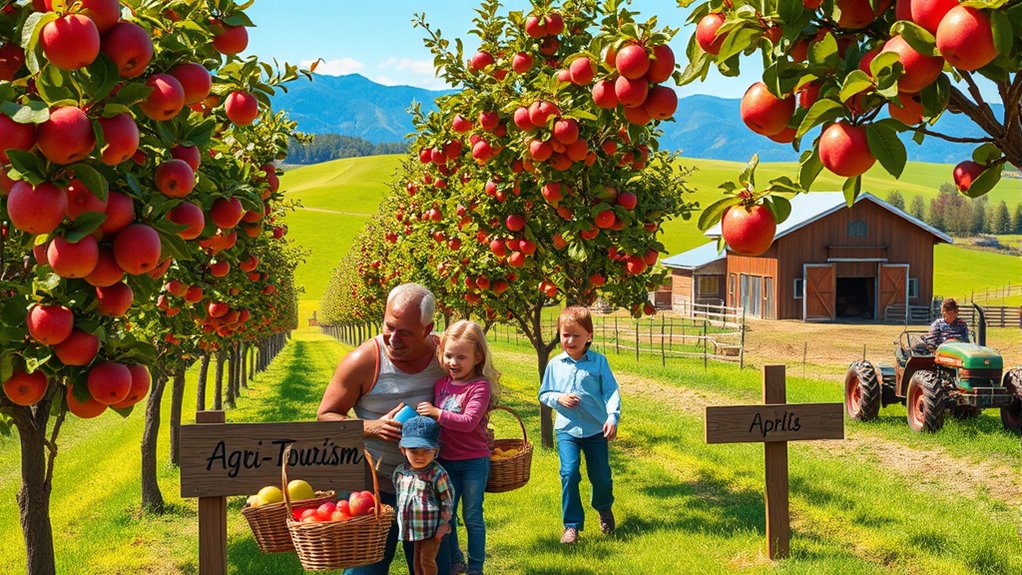

Agri-tourism helps you diversify your farm income by turning your land into an engaging destination for visitors. You can offer farm stays, guided tours, and hands-on activities like harvesting crops or feeding animals, which connect urban guests with rural life. Plus, hosting culinary tours or farm-to-table experiences showcases your local produce. These activities not only boost revenue but also support sustainability. To explore how you can implement agri-tourism on your farm, keep exploring the options available.
Key Takeaways
- Agri-tourism creates alternative revenue streams by attracting visitors to farm stays, tours, and experiential activities.
- Diversification through farm experiences enhances income stability amid market fluctuations in traditional agriculture.
- Offering educational and recreational farm-based services appeals to a broader audience, increasing farm profitability.
- Integrating culinary tours and farm-to-table experiences can generate additional income and promote local products.
- Agri-tourism fosters community engagement and supports rural economies, contributing to sustainable farm income diversification.
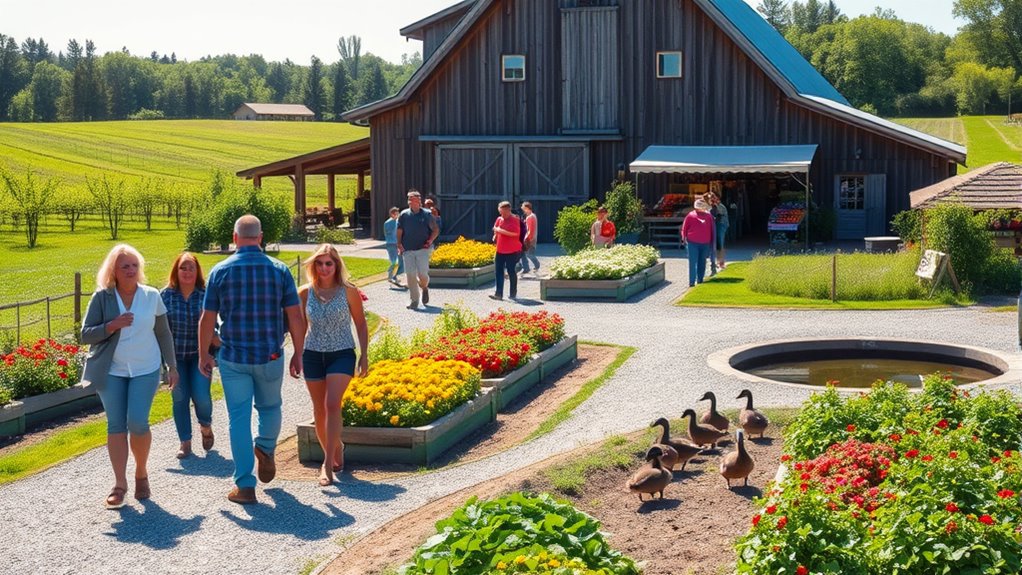
Have you ever wondered how you can enjoy a farm experience without leaving the city? Thanks to agri-tourism, you don’t have to venture far to immerse yourself in rural life. Farm stay experiences have become a popular way for city dwellers like you to connect with agriculture firsthand. Picture yourself spending a night or two on a working farm, waking up to the sights and sounds of nature, and participating in daily farm chores. It’s a chance to escape urban routines and gain a deeper appreciation for where your food comes from. These farm stay experiences often include guided tours, hands-on activities like feeding animals, harvesting crops, or milking cows, giving you a true farm life snapshot. It’s not just about relaxation; it’s an educational journey that enriches your understanding of sustainable farming practices and local food systems. Incorporating handcrafted decor items inspired by rural aesthetics can further enhance your understanding of traditional craftsmanship and farm culture.
Alongside farm stays, local culinary tours are another top attraction for agri-tourism. Imagine strolling through orchards, vegetable patches, or vineyards, then tasting fresh, farm-to-table produce. These tours highlight the flavors of the region and allow you to see how farmers grow and harvest their bounty. You’ll learn about traditional and modern farming techniques, and often, you get to sample the fruits of your labor right at the source. These culinary tours are a perfect complement to farm stay experiences, making your visit both delicious and informative. They also support local farmers by showcasing their products directly to visitors, creating a sustainable connection that benefits everyone involved.
Participating in farm stay experiences and local culinary tours gives you more than just a break from city life. It offers an authentic way to support local economies, promote sustainable agriculture, and foster a greater appreciation for rural communities. Many farms now offer customizable packages that include both types of experiences, allowing you to tailor your visit to your interests. Whether you’re interested in learning about organic farming, trying your hand at cooking with farm-fresh ingredients, or simply relaxing in a scenic rural setting, these options provide a meaningful and immersive experience.
Top picks for "agri tourism diversify"
Open Amazon search results for this keyword.
As an affiliate, we earn on qualifying purchases.
Frequently Asked Questions
How Can Small Farms Effectively Implement Agri-Tourism?
To effectively implement agri-tourism, you should focus on farm marketing to attract visitors and create a memorable visitor experience. Showcase what makes your farm unique, like seasonal activities or farm tours, and promote these through social media and local channels. Guarantee your facilities are welcoming and well-maintained, making visitors feel comfortable. Engaging activities and excellent customer service will encourage repeat visits, helping you diversify your farm income successfully.
What Are the Legal Permits Required for Agri-Tourism Activities?
You’ll need to check local zoning regulations to verify your property is permitted for agri-tourism activities. Additionally, securing liability insurance is essential to protect yourself and your visitors. You might also require permits for food service, events, or farm operations, depending on your location. Contact your local zoning office and health department early to understand specific requirements and avoid legal issues, guaranteeing your farm stays compliant and safe for guests.
How Does Agri-Tourism Impact Local Communities Economically?
Did you know that agri-tourism can boost local economies by up to 30%? When you open your farm to visitors, you create more local employment opportunities and stimulate community development. This activity attracts tourists who spend on accommodations, food, and entertainment, benefiting nearby businesses. By embracing agri-tourism, you help strengthen your community’s economic resilience and foster a vibrant, sustainable local economy that benefits everyone involved.
What Safety Measures Are Necessary for Visitors on Farms?
You need to prioritize farm visitor safety by implementing clear safety guidelines and providing proper training for staff. Make certain emergency preparedness by having accessible first aid kits, clear signage, and evacuation plans. Regularly inspect equipment and farm areas for hazards, and educate visitors on farm rules. Promoting safety measures not only protects your guests but also helps you avoid accidents and liability issues, creating a secure and enjoyable experience for everyone.
How Can Farms Balance Tourism With Sustainable Agriculture Practices?
Think of your farm as a delicate dance where every step counts. To balance tourism with sustainable practices, you should adopt eco-friendly methods and focus on farm diversification. By integrating eco-conscious tours and activities, you protect your land while attracting visitors. This harmony ensures your farm remains productive and environmentally healthy, allowing you to share its beauty without compromising future generations’ ability to enjoy and sustain it.
Conclusion
By embracing agri-tourism, you turn your farm into a bustling hub of activity, blending tradition with innovation. It’s a smart way to boost income while sharing your land’s story. Just like the pioneers of old, you’re forging new paths in agriculture’s wild west. So, saddle up and invite visitors to experience your farm’s charm—you’re not just growing crops, you’re cultivating community and resilience in a modern-day frontier.