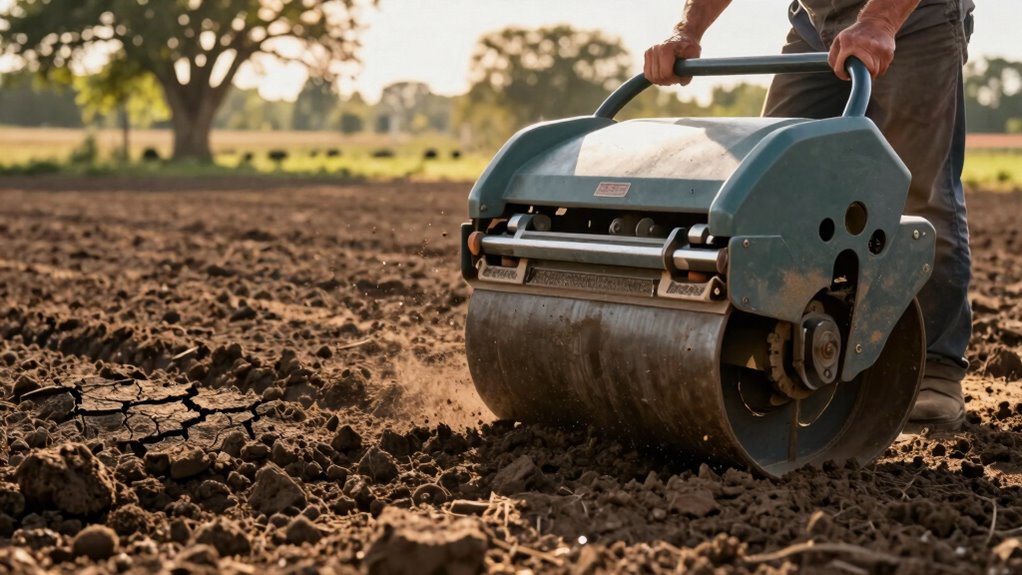

To restore your crop yields affected by soil compaction, the most effective move is to loosen the soil through aeration. Use tools like garden forks or rototillers to create small holes that improve air and water flow. Incorporate organic matter or cover crops to enhance soil structure over time. Taking these steps helps roots access nutrients and oxygen, boosting plant health and productivity. Keep exploring for detailed techniques to implement this proven solution effectively.
Key Takeaways
- Conduct soil testing to identify compaction levels and tailor appropriate aeration strategies.
- Incorporate organic amendments like compost or manure to improve soil structure and porosity.
- Use targeted soil aeration methods such as tilling or the use of garden forks to loosen compacted soil.
- Implement cover cropping and crop rotation to naturally enhance soil health and prevent future compaction.
- Minimize walking and heavy machinery on loosened soil to maintain improved structure and sustain higher yields.
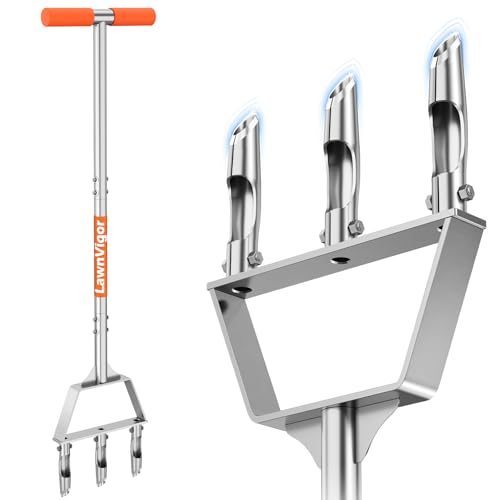
Manual Core Aerator Lawn Tool – Lawn Aerator Tool with 3 Hollow Tines, Semi-Assembled Grass Aerator Core Aeration Tool for Lawn, Yard Plug Aerator for Lawn Care Compacted Soil – Orange
- Promotes Healthier Lawn Growth: Enhances air, water, and nutrient absorption
- Durable Metal Construction: Sturdy, heat-treated hollow tines for longevity
- Efficient Soil Plug Removal: 3 hollow tines prevent clogging and create deep holes
As an affiliate, we earn on qualifying purchases.
As an affiliate, we earn on qualifying purchases.
What Causes Soil Compaction and Why It Matters

Soil compaction occurs when soil particles are pressed tightly together, reducing pore space and limiting air and water movement. This change directly affects soil structure, making it denser and less porous. As a result, roots struggle to grow downward and access essential nutrients, decreasing overall nutrient availability. When soil becomes compacted, beneficial air pockets diminish, impeding oxygen flow to roots and microorganisms crucial for nutrient cycling. Water infiltration slows, leading to water runoff and erosion, which further degrades soil health. You might notice sluggish plant growth or pooling water on the surface. Understanding these causes highlights why soil compaction matters—because it compromises the soil’s ability to support healthy plant development and sustain productive yields. Managing compaction helps maintain ideal soil structure and nutrient access. Additionally, implementing proper soil management strategies can reduce soil degradation and improve crop yields over time. Recognizing the importance of soil aeration can significantly enhance soil health and plant performance, especially through practices that encourage natural soil porosity and prevent compaction.
How to Recognize Soil Compaction in Your Field
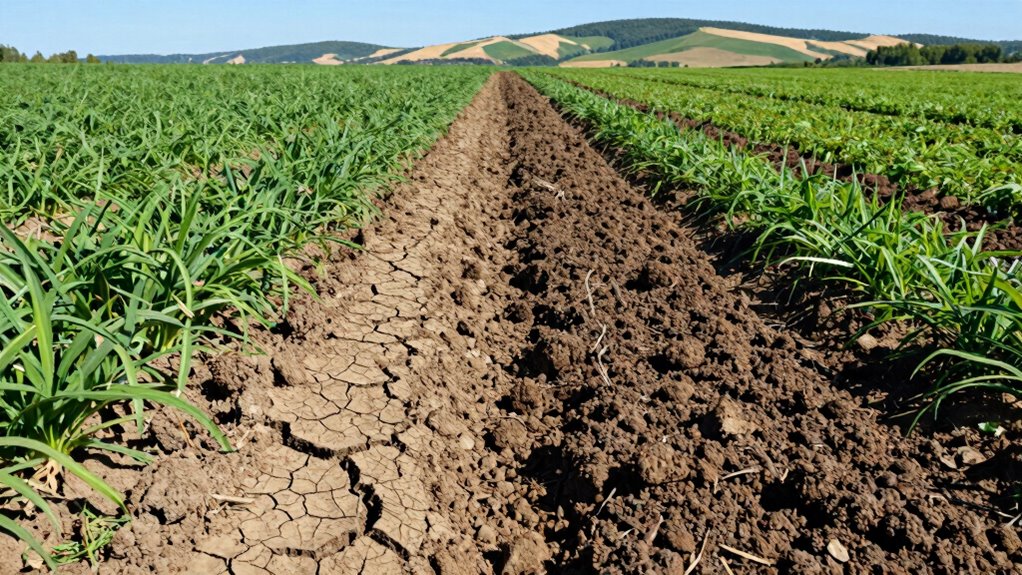
You’ll notice soil feels unusually hard and resistant when you walk across your field. Water also tends to drain slowly, leaving your crops struggling to grow. These signs often point to soil compaction, which can lead to lower crop yields and poorer performance. Implementing targeted soil management practices can help alleviate soil compaction and restore productivity. Recognizing the horsepower of electric dirt bikes that can be used for off-road tasks may inspire you to consider alternative methods of soil aeration using specialized equipment. Additionally, selecting the right support breakfast options, such as those with high-protein content, can provide the necessary energy for farmers and workers engaged in soil management activities. Proper equipment selection, including soil aerators, plays a crucial role in effectively alleviating compaction and improving soil health. Using the appropriate power source can make these aeration tasks more efficient and less labor-intensive.
Signs of Soil Hardness
Recognizing signs of soil hardness is essential for maintaining healthy fields, especially since compacted soil can hinder root growth and water infiltration. You might notice that plant roots struggle to penetrate the soil, indicating increased soil density. When soil feels unusually firm or resistant to tillage, it’s a sign of compaction. Other indicators include:
- Reduced plant growth and stunted roots
- Water pooling on the surface after rain
- Difficulties in digging or aerating the soil
- A “hard” or “cloddy” feel when pressing on the ground
- Proper soil management practices can help prevent and alleviate compaction issues.
These signs point to soil hardness, which prevents roots from expanding and accessing nutrients. Monitoring these cues helps you identify compaction early, enabling targeted measures to restore soil structure and boost crop yields.
Reduced Water Infiltration
When water struggles to penetrate the ground and instead pools on the surface, it’s a strong sign that your soil may be compacted. Reduced water infiltration indicates that the soil’s structure is dense, limiting pore space. You might notice water runoff or pooling after rain or irrigation, which prevents roots from accessing essential moisture. To address this, improve soil aeration by breaking up compacted layers, allowing water to move freely downward. Incorporating organic amendments like compost or cover crops can help enhance soil structure over time, increasing porosity and fostering beneficial microbial activity. These practices create a healthier environment for roots and encourage better water penetration, reducing surface runoff and ensuring your crops receive the moisture they need for ideal growth.
Decreased Crop Performance
Decreased crop performance is a clear sign that soil compaction may be limiting root growth and nutrient uptake. When roots struggle to penetrate the soil, plants can’t access essential nutrients or oxygen, leading to poor yields. Signs include stunted growth, yellowing leaves, and uneven ripening. To identify compaction, check soil aeration—compacted soil feels dense and hard. Implementing proper crop rotation can help break up compacted layers and improve soil structure. Pay attention to these indicators:
- Reduced root development
- Poor water drainage
- Shallow or uneven plant growth
- Difficulty tilling or working the soil
Soil structure and artisanal craftsmanship play crucial roles in maintaining healthy, productive fields. Additionally, employing balanced designs in land management practices can promote better soil health and reduce compaction over time. Developing an understanding of soil testing methods can further assist in diagnosing and addressing compaction issues effectively. Regular monitoring and adopting innovative techniques can also enhance soil aeration and overall crop yields.
The Best Method to Loosen Compacted Soil
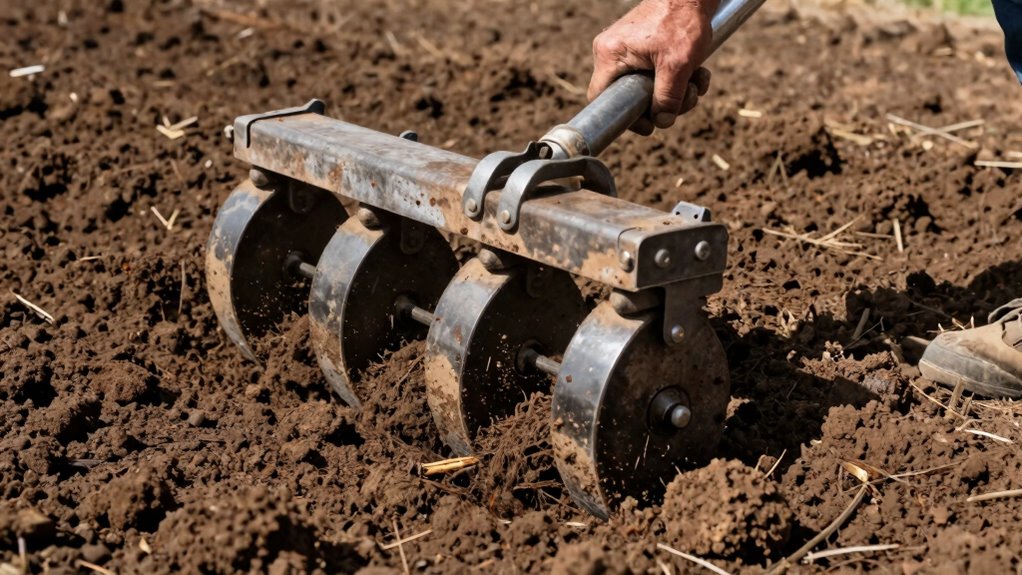
Loosened soil also benefits from adaptive aeration, which can be tailored to specific soil conditions and crop needs, ensuring more effective results over time. Implementing proper aeration techniques can further enhance soil health by reducing compaction and promoting better root development. Loosening compacted soil effectively starts with choosing the right method. One of the best approaches is soil aeration, which creates small holes that allow air, water, and nutrients to penetrate deeper. This process breaks up the dense layers and promotes healthy root growth. Additionally, incorporating organic amendments like compost or aged manure improves soil structure over time. These amendments enhance microbial activity, helping to naturally loosen the soil and increase its porosity. Understanding soil structure and composition can help tailor these methods even more effectively for optimal results. Moreover, paying attention to soil moisture levels ensures that aeration and amendments are most effective, preventing further compaction. Recognizing the importance of soil health management can lead to more sustainable and long-term improvements in crop yields.
How to Loosen Soil: Step-by-Step Instructions
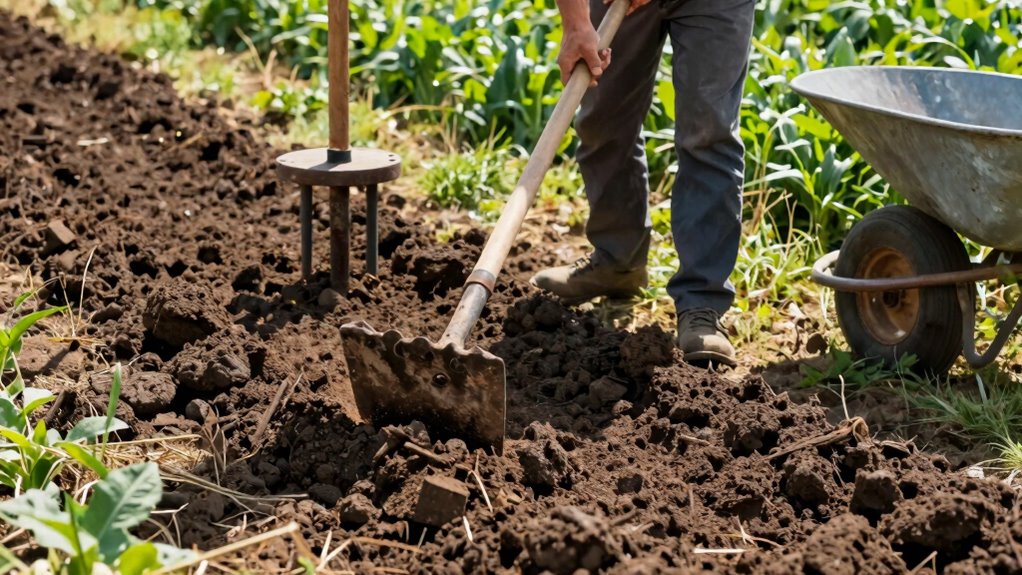
To loosen soil effectively, start by preparing the area you want to work on, removing any debris or large rocks. Next, use the right tools, like a garden fork or rototiller, to break up compacted layers. With proper preparation and equipment, you’ll make the process quicker and achieve better results. Additionally, understanding soil aeration techniques can help improve drainage and promote healthy root growth, which is essential for optimal crop yields. Incorporating soil structure improvement practices can further enhance soil looseness and long-term fertility, especially considering the importance of soil composition in sustainable farming. Using innovative planter designs can also aid in maintaining healthy soil conditions by reducing compaction around root zones.
Prepare Your Soil
Before you begin planting, it’s essential to loosen your soil to guarantee healthy root growth and proper drainage. Start with soil testing to identify nutrient levels and pH balance, which guides your amendments. Then, incorporate cover cropping to improve soil structure naturally. To prepare your soil:
- Remove debris and weeds to clear the area
- Use a garden fork or tiller to break up compacted layers
- Mix organic matter like compost into the soil
- Avoid walking over the loosened soil to prevent re-compaction
- Consider adding a Golden Retriever or Rottweiler friendly dog bed to ensure your furry friend stays comfortable during planting activities. Incorporating soil aeration techniques can further enhance soil permeability and health for optimal plant growth.
Cover cropping helps maintain soil looseness during off-season periods, while soil testing ensures you address specific deficiencies. Following these steps creates ideal conditions for plant roots to thrive and reduces future compaction issues.
Use Proper Equipment
Using the right equipment is essential for effectively loosening your soil. Start by conducting soil testing to determine its texture and compaction level. This helps you select the appropriate tools for the job. For instance, a rototiller works well for loose, medium, and heavy soils, while a garden fork is perfect for lighter soils. Consider equipment size and power based on your plot’s size. Here’s an overview:
| Equipment Type | Soil Condition | Best Use |
|---|---|---|
| Rototiller | Compact or heavy soils | Deep loosening |
| Garden Fork | Looser, lighter soils | Surface aeration |
| Cultivator | Small, manageable plots | Mixing amendments |
| Power Hoe | Hard, stubborn soil | Break up dense areas |
| Hand Trowel | Precise, small spots | Finishing touches |
Choosing the right equipment streamlines the process, ensuring thorough soil loosening for better yields.
Benefits of Fixing Soil Compaction for Better Crops
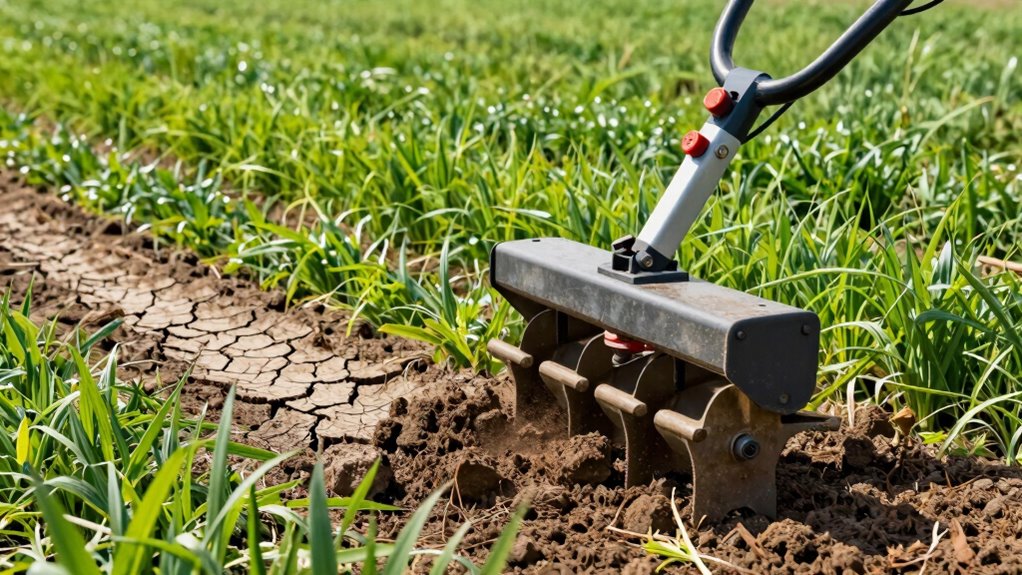
Fixing soil compaction can considerably boost crop yields and overall plant health. When you address compaction, you improve soil health by increasing porosity, allowing roots to access water, nutrients, and oxygen more effectively. This leads to healthier plants and higher crop yields. Benefits include:
Addressing soil compaction boosts plant health through better water, nutrient access, and root growth.
- Enhanced root development for stronger plants
- Better nutrient uptake and utilization
- Improved water infiltration and retention
- Reduced plant stress and vulnerability to pests
Preventing Future Soil Compaction With Sustainable Practices
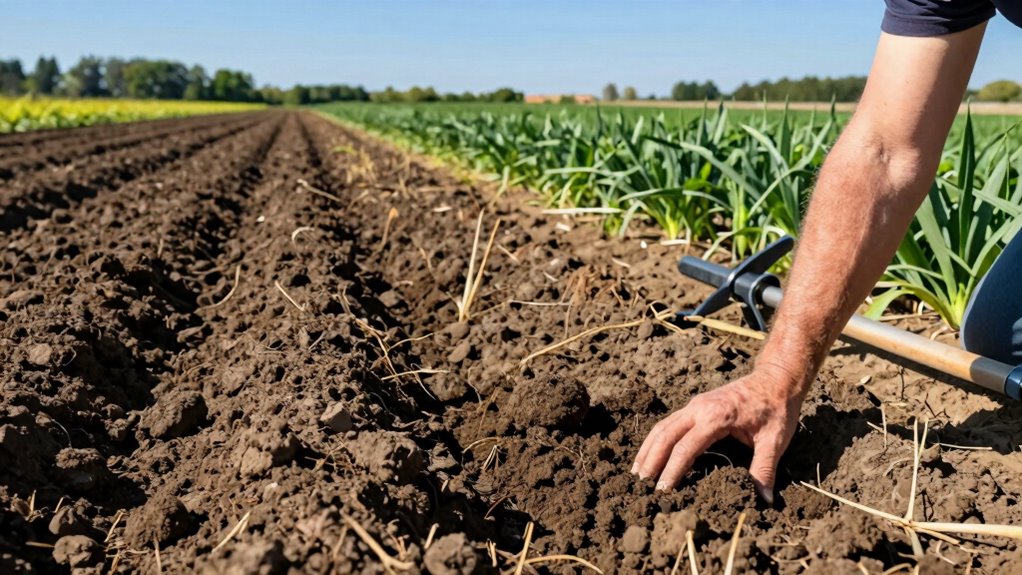
To prevent future soil compaction, adopting sustainable farming practices is essential. You should focus on cover crop selection, choosing plants like legumes or grasses that improve soil structure and reduce compaction risk. Cover crops loosen the soil, enhance organic matter, and prevent heavy machinery from compacting the ground during off-season periods. Incorporating crop rotation also plays a vital role; rotating different crops helps break up soil compaction cycles and maintains soil health. Avoid planting the same crop repeatedly, which can weaken soil structure over time. These practices promote better aeration and drainage, reducing the likelihood of future compaction. By implementing sustainable methods like strategic cover crop selection and crop rotation, you ensure healthier soil that supports ideal crop growth for seasons to come.
Frequently Asked Questions
How Often Should I Check My Soil for Compaction?
You should check your soil for compaction at least once a year, especially before planting or after heavy equipment use. Look for signs like poor soil aeration or the presence of compaction layers, which restrict root growth and water infiltration. Regular testing helps you identify issues early, allowing you to take corrective measures like aeration, ensuring healthy yields and ideal plant growth.
Can Certain Crops Tolerate Compacted Soil Better?
Some crops seem to laugh in the face of soil compaction, showcasing remarkable crop tolerance and soil resilience. You’ll find that legumes like soybeans and alfalfa handle compacted soil better, bouncing back faster and producing decent yields. These resilient crops can withstand tougher conditions, but don’t rely solely on them—improving soil structure benefits all plants. You’re better off addressing compaction directly for sustainable, high-yield farming.
Are There Organic Methods to Prevent Soil Compaction?
Yes, you can prevent soil compaction organically by using organic amendments like compost and mulch, which improve soil structure and promote healthy root growth. Additionally, practicing cover cropping helps maintain soil porosity, reduces surface compaction, and adds organic matter. These methods work together to enhance soil aeration and drainage, ultimately preventing compaction and supporting better crop yields without relying on synthetic interventions.
What Equipment Is Most Effective for Loosening Soil?
Think of your equipment as the key to unlatching healthy soil. For loosening soil, you should use a chisel plow or disc harrow, which are effective in breaking compacted layers. Tillage techniques, like deep ripping or aeration tools, help restore soil structure. These machines create channels that allow air, water, and roots to penetrate, boosting productivity and preventing future compaction. Always match equipment to your soil conditions for best results.
How Does Soil Compaction Affect Water Drainage?
Soil compaction reduces water drainage by limiting pore space, making it harder for water to infiltrate. When you improve soil aeration through techniques like aeration or tilling, you create channels that enhance water infiltration. This prevents water runoff and pooling, helping roots access moisture more efficiently. Proper aeration keeps the soil loose, ensuring better water flow and healthier plant growth, ultimately boosting your yields.
Conclusion
By addressing soil compaction, you can boost your crop yields considerably—studies show that properly managed soil can increase productivity by up to 30%. Recognizing the signs early and using effective techniques to loosen your soil makes all the difference. Implementing sustainable practices now will prevent future issues and maintain healthy, productive fields. Don’t wait—taking action today helps ensure your farm’s success tomorrow and keeps your soil thriving for years to come.