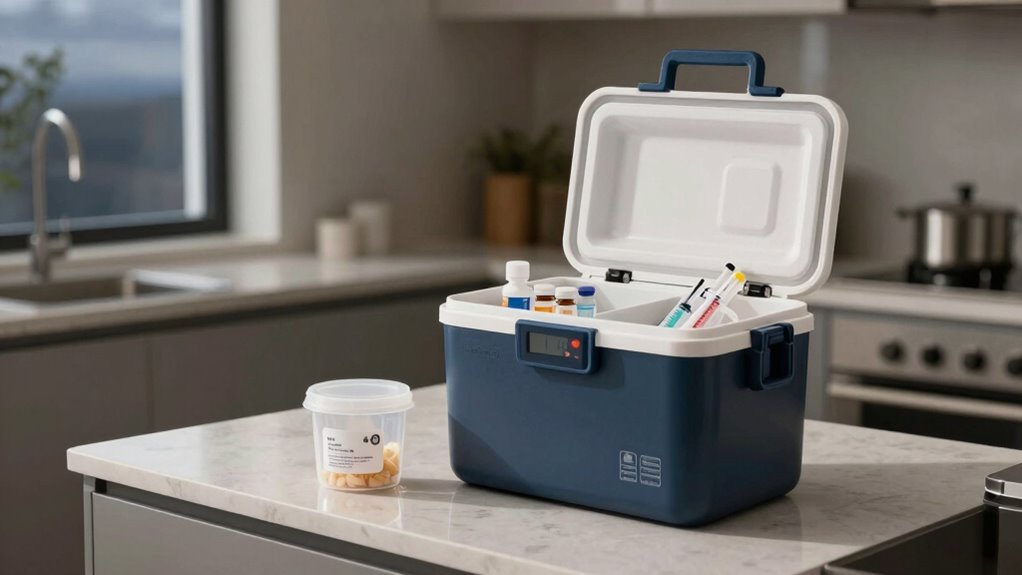

During outages, quickly transfer your pet’s medications to an insulated cooler filled with ice packs or frozen gel packs, but avoid direct contact to prevent freezing damage. Keep the medication away from ice and check temperatures often with a thermometer, aiming for 36°F to 46°F. Consider relocating medications to a neighbor’s freezer or a deep freezer if available, and stay vigilant about temperature stability. For more tips on protecting your pet’s medications during emergencies, keep exploring helpful strategies.
Key Takeaways
- Use insulated containers with ice packs to temporarily keep medications cool during outages.
- Relocate medications to a deep freezer or a neighbor’s freezer, ensuring proper labeling and temperature monitoring.
- Regularly check medication temperatures with a thermometer, maintaining 36°F to 46°F (2°C to 8°C).
- Prepare an emergency kit with extra ice packs, thermometer, and vet contact info for quick response.
- Consult your veterinarian or local pharmacy for guidance and assistance if outages last extended periods.
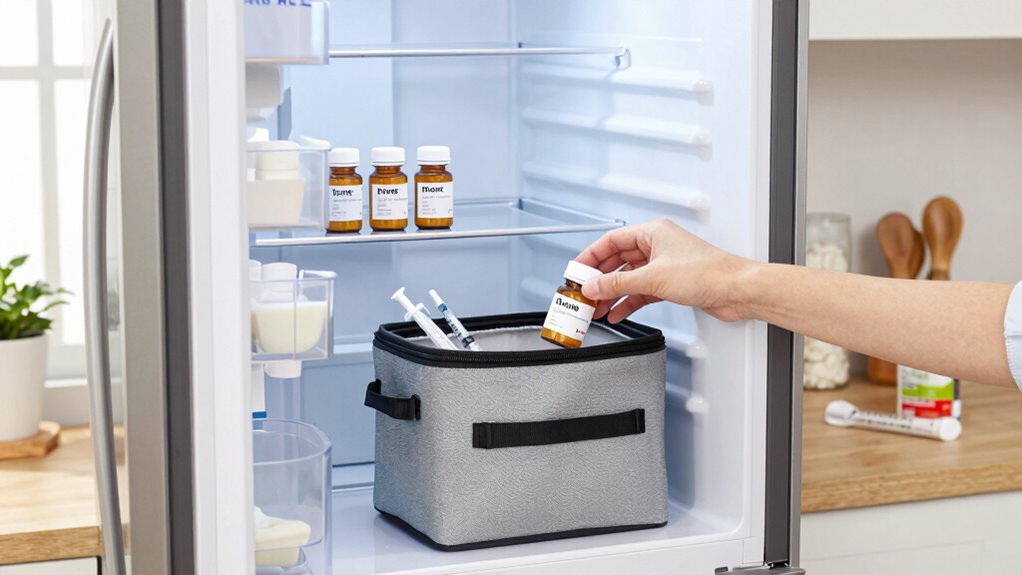
During power outages, keeping your pet’s medications properly refrigerated is vital to guarantee their effectiveness and safety. Pet medication storage often requires maintaining specific temperatures, and when the electricity goes out, your pet’s health could be at risk if these medications spoil or lose potency. To prevent this, you need to find temporary solutions for emergency refrigeration that keep medications within the recommended temperature range. Start by gathering insulated containers or coolers, which are designed to maintain cool temperatures for extended periods. Fill these with ice packs or frozen gel packs, and place your medications inside, making sure they’re not directly touching the ice to avoid freezing or damage. Check the medications frequently to monitor temperature stability, and replace the ice packs as needed. This simple step can help preserve your pet’s medications until power is restored or you find an alternative solution. Additionally, understanding proper medication storage can help you better prepare for emergencies and ensure your pet remains safe. If you have a deep freezer or access to a neighbor’s freezer, consider temporarily relocating the medications there. Deep freezers tend to retain cold longer than regular refrigerators, providing a more stable environment for sensitive medications. Make sure to label the medications clearly and keep them in a sealed, waterproof container to prevent contamination. When relocating medications, remember to keep them away from direct contact with ice or frozen items that could cause freezing damage. Some pet medications, especially those that require refrigeration, are sensitive to temperature fluctuations, so continuous monitoring is vital. Use a thermometer inside your emergency refrigeration setup to confirm the temperature remains within the safe range, typically between 36°F and 46°F (2°C to 8°C). To enhance your preparedness, consider creating an emergency kit that includes extra supplies of ice packs, a reliable thermometer, and contact information for your veterinarian. Regularly checking medication expiration dates is also important to ensure their effectiveness during storage. If the power outage is prolonged, consider reaching out to your veterinarian for advice or alternative storage options, such as local pharmacies or veterinary clinics that might assist during emergencies. Additionally, using specialized portable refrigeration units** can provide peace of mind during extended outages and safeguard your pet’s health more effectively. Remember, your pet’s health depends on proper medication storage, so acting swiftly and effectively during power failures is essential. Always have a plan in place before an outage occurs, including a supply of ice packs, a reliable thermometer, and contacts for emergency veterinary care. By taking these precautions, you can guarantee your pet’s medications stay effective and safe, even when the power is out. Proper pet medication storage during emergencies isn’t just about convenience; it’s about safeguarding your pet’s health** when they need it most.

YOUSHARES Portable Insulin Cooler Travel Case – TSA Approved Diabetic Medication Cooling Bag, EVA Insulated Organizer for Epi Pens, Refrigerated Diabetes Supplies Carrying Storage Kit with 2 Ice Pack
✈️ Pocket Carrying Case – This insulin pen travel case TSA approved, measures 8.5 x 3.2 x 1.7…
As an affiliate, we earn on qualifying purchases.
As an affiliate, we earn on qualifying purchases.
Frequently Asked Questions
How Long Can Pet Medications Stay Safe Without Refrigeration During Outages?
You can usually keep pet medications safe for about 24 hours without refrigeration if storage temperature remains between 68-77°F. After that, medication expiration dates may be compromised, reducing effectiveness or safety. Always check the storage instructions on the label, and if you’re unsure or temperatures fluctuate, contact your veterinarian. During outages, prioritize keeping the medication cool and avoid exposing it to extreme heat or direct sunlight.
Are There Alternative Storage Methods for Pet Medications Without Power?
You can use alternative cooling methods like portable coolers with ice packs to store pet medications without power. These coolers maintain a stable temperature, protecting your pet’s essential medicines during outages. Just make sure the cooler stays closed as much as possible to keep the cold in, and replace ice packs regularly. This simple step helps keep your pet’s medications safe and effective, even when the power’s out.
How Can I Tell if Refrigerated Pet Medication Has Spoiled?
You can tell if refrigerated pet medication has spoiled by checking for spoilage indicators like changes in color, texture, or smell. If the medication appears cloudy, discolored, or has an unusual odor, it’s a sign of spoilage and isn’t safe to use. Always prioritize medication safety by inspecting carefully before administering. When in doubt, consult your veterinarian to guarantee your pet’s health isn’t at risk.
Should I Contact My Vet for Emergency Medication Storage Tips?
You should definitely contact your vet for emergency storage tips—because what’s more ironic than needing extra advice on keeping meds safe during a power outage? Your vet provides essential guidance on medication safety, especially for emergency storage. They can suggest alternatives or specific methods to preserve your pet’s meds, ensuring their effectiveness. Don’t hesitate to reach out—your pet’s health depends on proper storage, even in unexpected situations.
What Are the Legal Considerations for Storing Pet Medications Without Proper Refrigeration?
You must prioritize legal compliance and storage regulations when storing pet medications without proper refrigeration. Check local laws and guidelines to guarantee you’re handling medications appropriately, as improper storage can lead to legal issues or reduced medication effectiveness. Always consult your veterinarian or local health authorities for specific advice. Keeping medications at recommended temperatures is essential to maintain their safety and efficacy, so follow all regulations carefully.

Healvaluefit 8-Holes Medication Vial Storage Box for Fridge, Insulin Vial Holder Organizer Case Fits Various 5ml-15ml Injectable Medicines Vials – Clear
Our 8-slot injectable vial organizer fits the vials up to 1" diameter and 3.1" height. It can store…
As an affiliate, we earn on qualifying purchases.
As an affiliate, we earn on qualifying purchases.
Conclusion
Think of your pet’s medication as a delicate seed that needs just the right conditions to stay healthy. During outages, your quick actions can be the sunlight and water they need to survive. By planning ahead, keeping a cool storage plan, and staying informed, you’re nurturing your furry friend’s well-being. When you act promptly, you’re not just preserving medicine—you’re planting the seeds for their continued happiness and health, even in stormy weather.

iProven Dog & Cat Thermometer for Accurate Fever Detection, Comfortable Flexible Tip, Waterproof Pet Thermometer, Fast Readings in 20 sec, Whelping and Veterinary Supply, DTK-117Y
COMFORTABLE FOR YOUR PET – The thermometer can be used for pets and is designed to be comfortable…
As an affiliate, we earn on qualifying purchases.
As an affiliate, we earn on qualifying purchases.
YOUSHARES Portable Insulin Cooler Travel Case – TSA Approved Diabetic Medication Cooling Bag, EVA Insulated Organizer for Epi Pens, Refrigerated Diabetes Supplies Carrying Storage Kit with 2 Ice Pack
✈️ Pocket Carrying Case – This insulin pen travel case TSA approved, measures 8.5 x 3.2 x 1.7…
As an affiliate, we earn on qualifying purchases.
As an affiliate, we earn on qualifying purchases.