
To make a grab-and-go paperwork binder, start by choosing a sturdy, waterproof, and fire-resistant container to protect your documents. Organize essential papers like medical records, IDs, and financial info with labeled dividers and laminated copies for quick access. Store the binder in a secure, accessible spot at home, and include small emergency items like a flashlight. Regularly review and update the contents to stay prepared—keep going to discover more useful tips for your disaster plan.
Key Takeaways
- Select a waterproof, fire-resistant binder with labeled dividers for quick organization.
- Include essential documents like IDs, medical records, emergency contacts, and legal papers.
- Use laminated copies for easy access and protect vital information from damage.
- Store the binder in a designated, secure, and accessible location known to all family members.
- Regularly review, update, and practice your emergency plan to ensure readiness.

When disaster strikes, having your important documents organized and ready to grab can make all the difference. A well-prepared paperwork binder guarantees you can quickly access critical information, reducing stress during chaotic moments. Start by selecting a sturdy, waterproof binder or a durable folder with dividers. This helps protect your documents from water, fire, or other damage, keeping everything intact when you need it most.
Next, gather essential documents you’ll want to include. Your medical records should be a top priority. Keep copies of prescriptions, immunization records, allergies, and important health history. Having these details accessible can be lifesaving if you or a family member need urgent care or if you’re separated from your primary healthcare provider. Alongside medical records, include a list of emergency contacts. This list should feature names, phone numbers, and relationships of trusted individuals, such as family, friends, and neighbors who can assist or provide support if you’re unable to communicate.
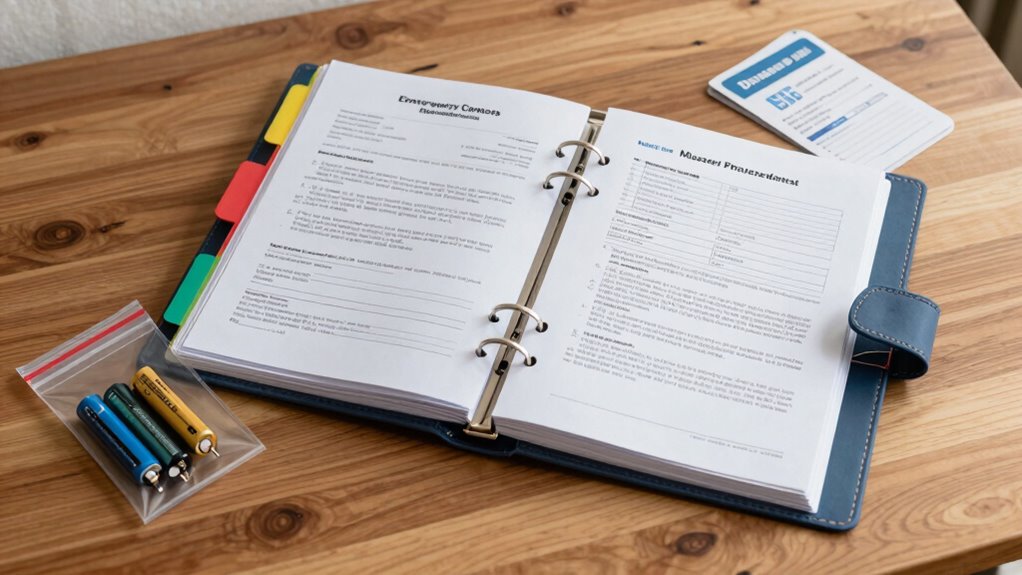
Organize your documents into clear sections with labeled dividers. One section should contain identification documents like driver’s licenses, passports, and Social Security cards. Another section can hold insurance policies, bank account information, and financial documents. Including copies of your home or rental lease, vehicle registration, and any legal documents adds another layer of preparedness. Consider adding a small, laminated copy of your emergency contact list and medical records for quick access, especially if the binder gets temporarily misplaced. Proper document organization can significantly streamline your response during emergencies. Incorporating disaster preparedness practices into your routine can further enhance your overall readiness and resilience. Additionally, keeping your documents in a waterproof and fire-resistant container can provide extra protection against unforeseen events.
Make sure you keep the binder in an accessible yet secure location, such as a designated safe spot in your home, where you can grab it quickly in an emergency. Regularly review and update the contents—medical records, emergency contacts, and other critical information—at least every six months or after any significant life changes. This guarantees all information remains current and reliable. Including a comprehensive emergency plan in your binder can help guide your actions when disaster strikes.
Finally, consider including a small flashlight or emergency whistle tucked into the binder or its case. These small additions can be invaluable during a disaster. Remember, your goal is to have a compact, organized, and essential resource that allows you to respond swiftly, confidently, and calmly. When you prepare your grab-and-go paperwork binder thoughtfully, you’re not just protecting your documents—you’re gaining peace of mind, knowing you’re ready for whatever disaster may come.

DocSafe Document Bag with Lock,Fireproof 3-Layer File Storage Case with Water-Resistant Zipper,Document Safe Portable Travel Home Organizer Bag for Laptop,Files,Certificates,Gifts for Him,Black
Fireproof and water-resistant safe: Fireproof file storage bag is made of double layered non-itchy silicone coated fiberglass which…
As an affiliate, we earn on qualifying purchases.
As an affiliate, we earn on qualifying purchases.
Frequently Asked Questions
How Often Should I Update My Emergency Paperwork Binder?
You should update your emergency paperwork binder at least once every six months. Regular updates guarantee your emergency kit essentials and family evacuation plan stay current, especially if there are changes in contact info, insurance details, or medical needs. Review and revise your binder after major life events or seasonal changes. Keeping it current ensures you’re prepared to act swiftly and confidently during a disaster.
What if I Lose My Printed Documents During a Disaster?
If you lose your printed documents during a disaster, don’t panic. Focus on your document security by keeping digital copies stored securely online or on a cloud service, accessible from anywhere. Make sure your emergency contact lists are backed up and easily reachable. Consider having a digital version on a USB drive or email copies to trusted contacts, so you can quickly recover crucial information if your physical binder is lost.
Can Digital Copies Replace Physical Documents in the Binder?
While digital backups offer a sleek, paperless storage solution, they shouldn’t fully replace your physical documents in a disaster kit. Digital copies provide convenience and quick access, but having tangible papers ensures you’re prepared if technology fails or power is lost. Combining both approaches gives you an all-encompassing safety net, blending the sophistication of paperless storage with the reliability of physical documents, so you’re always ready for any emergency.
What Are the Best Waterproof Materials for Binder Pages?
You should opt for waterproof paper or durable plastic for your binder pages. Waterproof paper resists water, tears, and spills, ensuring your documents stay intact during emergencies. Durable plastic pages provide extra protection and are highly resistant to moisture and rough handling. Combining these materials helps keep your important documents safe and legible, even if you encounter water or harsh conditions, making your grab-and-go binder more reliable in disasters.
How Do I Organize Paperwork for Multiple Family Members?
Organize paperwork for multiple family members by creating clear sections for each person, including emergency contact lists. Use color-coded tabs or labels to easily identify each family member’s documents. Keep family communication details, medical info, and important personal papers in separate folders. This way, everyone’s info stays accessible and organized, ensuring emergency preparedness and quick response during a disaster. Regularly update contacts and documents to stay current.

TLC Safety By Design Emergency Contact Numbers List Magnetic Dry Erase for Refrigerator – 8.5 x 11 inches with Dry Erase Marker for Family Fridge
The Dry Erase Emergency Contact List is magnetic and securely holds on any refrigerator or magnetic surface. It…
As an affiliate, we earn on qualifying purchases.
As an affiliate, we earn on qualifying purchases.
Conclusion
Creating a grab-and-go paperwork binder guarantees you’re prepared for emergencies, giving you peace of mind. While some believe that extensive planning can predict every disaster, studies show that preparedness markedly reduces stress and recovery time. By consolidating essential documents now, you’re not just reacting to crises—you’re proactively safeguarding your future. So, take the time today; a well-organized binder might be the difference between chaos and control when disaster strikes.

Family Emergency Handbook: 107-Page Preparedness Planner to Organize Vital Information, Finances, Insurance, Passwords, and Important Documents for Peace of Mind
As an affiliate, we earn on qualifying purchases.
As an affiliate, we earn on qualifying purchases.

Ready America 70280 72 Hour Emergency Kit, 2-Person, 3-Day Backpack, Includes First Aid Kit, Survival Blanket, Portable Preparedness Go-Bag for Camping, Car, Earthquake, Travel, Hiking, and Hunting, Red
Emergency Kit For Disaster Preparedness: Stay Prepared For Emergency Situations Everywhere You Go. Ready America Emergency Survival Kits…
As an affiliate, we earn on qualifying purchases.
As an affiliate, we earn on qualifying purchases.