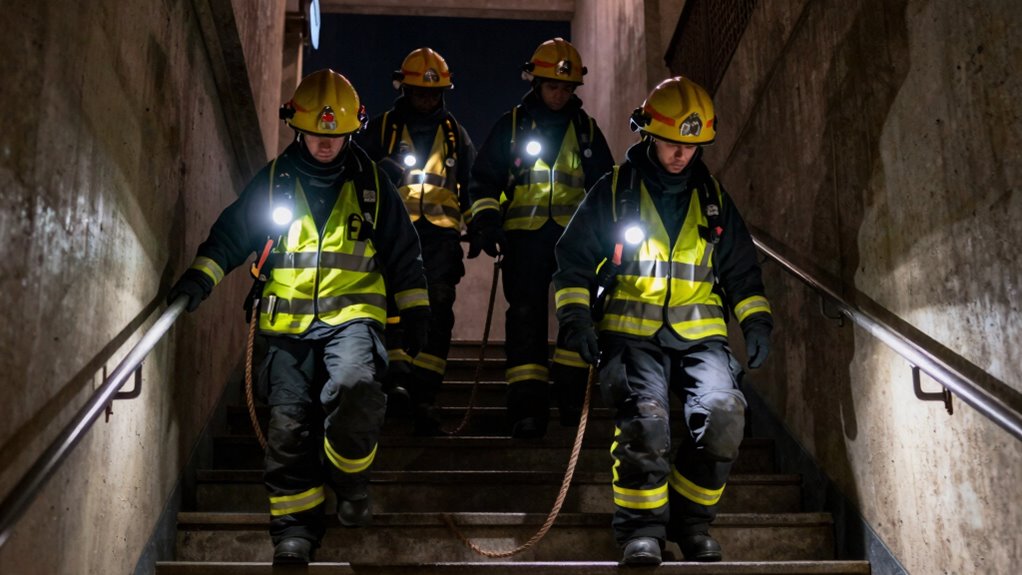

To practice a nighttime fire escape drill effectively, set a specific time and inform everyone ahead of time. Turn off lights or create darkness to simulate real conditions, then respond immediately when the alarm sounds. Practice crawling low, following your escape plan, and closing doors behind you. Afterward, gather at your meeting point for a quick headcount. Consistent drills build confidence and response efficiency, helping you be better prepared—continue exploring how to perfect your fire safety routine.
Key Takeaways
- Schedule the drill during nighttime hours and simulate darkness by turning off lights or using low lighting.
- Ensure all participants respond immediately, practicing quick drop, crawl, and exit procedures.
- Confirm clear, accessible escape routes and remove obstacles to prevent delays during evacuation.
- Conduct a debrief afterward to identify issues like blocked exits or confusion, then adapt the plan accordingly.
- Repeat regularly to build muscle memory, confidence, and improve response efficiency in real emergencies.
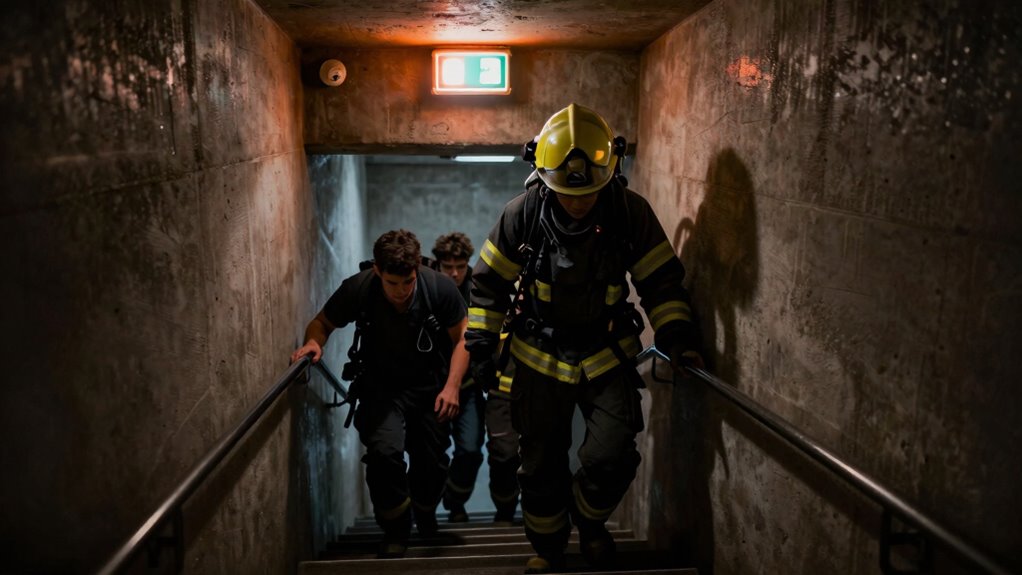
Practicing a fire escape drill at night is indispensable for guaranteeing everyone knows how to evacuate quickly and safely when it truly matters. Nighttime drills are essential because visibility is limited, and the environment can feel more intimidating, making it harder to remember the proper procedures. By regularly rehearsing during the evening hours, you reinforce critical fire safety habits and improve your emergency preparedness. When everyone understands how to respond in darkness, you reduce panic and confusion during an actual fire, helping to keep all occupants safe.
Nighttime fire drills are vital for building quick, calm evacuation skills when visibility is low and chaos could ensue.
Start by setting a specific time for the drill and informing everyone in advance, so they understand the importance of participating. Confirm that the entire household or team is involved, from children to seniors. Before initiating the drill, review the escape plan with everyone. Highlight key points, such as locating exits, checking for obstacles, and staying low to avoid smoke. Emphasize the importance of calmness and quick decision-making. During the drill, turn off the lights or simulate darkness to mimic nighttime conditions, forcing everyone to rely on their memory and instincts rather than sight. This enhances fire safety by making the exercise more realistic. Additionally, practicing with limited visibility helps individuals build confidence in their ability to respond effectively in darkness.
When the alarm sounds, instruct everyone to act immediately. Encourage a swift but controlled response—don’t rush blindly but avoid delays. Practice the sequence of actions: drop, crawl, and crawl to the nearest emergency exit. Remind everyone to close doors behind them to slow the spread of fire and smoke. Once outside, gather at a predetermined meeting point and perform a headcount to guarantee everyone is accounted for. Use this time to evaluate how well the evacuation went, noting any delays or obstacles encountered. Adjust your escape plan if needed, addressing issues like blocked exits or unclear routes. Incorporating fire safety protocols into your drills ensures that everyone remains aware of best practices during an emergency. Regularly practicing these drills also helps everyone become familiar with emergency procedures, which can otherwise be overlooked or forgotten over time. Reinforcing these procedures through repetition ensures that responses become instinctive in high-stress situations.
After completing the drill, hold a quick debrief. Discuss what went smoothly and what could be improved, fostering a culture of continuous emergency preparedness. Reinforce fire safety principles during this review, so everyone internalizes the importance of being prepared. Remember, the goal isn’t just to practice but to guarantee that, when it counts, everyone responds instinctively and efficiently. Regularly conducting nighttime fire escape drills builds muscle memory, boosts confidence, and ultimately saves lives. Your proactive approach to emergency preparedness makes a critical difference in how effectively your household or team can handle real fire emergencies in the dark.
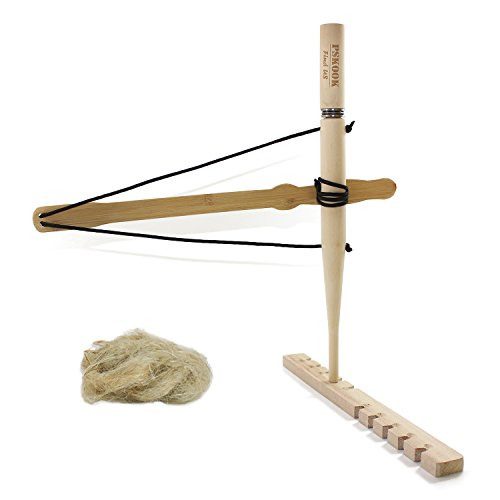
Bow Drill Fire Starter Kit, Pskook Survival Tool, Primitive Friction Fire Starting Kit, Bushcraft Gear, Camping Safety Equipment, Outdoor
- Easy-to-Use Fire Starter: Simple friction-based fire starting kit
- Premium Materials: Bamboo handle and high-quality wood
- Durable Construction: High-strength polyester rope and steel bearings
As an affiliate, we earn on qualifying purchases.
As an affiliate, we earn on qualifying purchases.
Frequently Asked Questions
How Often Should I Conduct Fire Escape Drills?
You should conduct fire escape drills at least twice a year to stay prepared and improve your fire safety and emergency planning. Regular practice helps you and your family recognize escape routes quickly and react calmly during an emergency. Consider scheduling drills quarterly if possible, especially in busy households, to reinforce safety habits. Consistent practice makes sure everyone knows what to do, reducing panic and increasing safety during real fires.
What Equipment Is Essential for a Nighttime Fire Drill?
You need a working fire alarm and an emergency flashlight for a nighttime fire drill. The fire alarm alerts everyone to evacuate, while the emergency flashlight provides visibility if the power’s out. Make certain the flashlight is fully charged and accessible. Test the alarm beforehand to make certain it functions properly. Having these essentials on hand helps you conduct a safe, effective drill, especially in low-light or dark conditions.
How Can I Ensure All Family Members Participate?
Imagine a family where everyone hesitates during a fire drill, risking safety. To guarantee all participate, assign clear family roles, like a designated leader and lookout. Use participation incentives, like rewards for completing the drill successfully. You can hold a friendly competition or offer small treats, encouraging engagement. Regular practice and positive reinforcement help everyone stay prepared, making the fire escape process quicker and safer for your loved ones.
What Are Common Mistakes to Avoid During Drills?
You should avoid rushing or panicking during drills, as it hampers effective fire safety and emergency preparedness. Don’t ignore specific escape routes or underestimate the importance of practicing with different scenarios, like low visibility or obstacles. Also, avoid complacency—regularly review and update your plan. Mistakes like these can compromise safety, so stay calm, stay prepared, and guarantee everyone understands their role in an emergency.
How Do I Adapt Drills for Different Age Groups?
Ironically, adapting drills for different ages isn’t rocket science—it’s about using age-appropriate strategies and clear safety communication. For young kids, keep instructions simple, use visual cues, and practice with fun, engaging scenarios. For teens and adults, emphasize realistic responses and detailed safety info. Always tailor your approach to their understanding, ensuring everyone stays safe and confident during the drill. Effective communication and tailored strategies are your best tools.
Conclusion
By practicing your fire escape with purpose and precision, you perfect your plan and promote peace of mind. Remember, a swift, safe escape depends on preparation, practice, and staying calm under pressure. When you prioritize your safety, you’ll progress from panic to preparedness, turning chaos into calm. So, take these tips to heart, and confidently conquer your nighttime fire escape drills — because a prepared person is a safer person, ready to face any fiery fright with fearless finesse.