
If your chicks don’t have enough escape space, your brooder system can fail quickly. Overcrowding causes poor ventilation, leading to heat and moisture buildup, which increases illness risks. It also makes it harder for chicks to escape predators or reach food and water, raising mortality rates. Sanitation becomes difficult, spreading disease more easily. Without proper space, your brooder environment deteriorates fast, affecting chick health and safety. Want more tips to prevent these issues? Keep exploring.
Key Takeaways
- Lack of escape space increases overcrowding, leading to poor ventilation and heat buildup.
- Restricted movement hampers chicks’ ability to evade predators and escape hazards.
- Overcrowded brooders complicate cleaning, raising disease and pest risks.
- Insufficient space stresses chicks, weakening immune systems and accelerating illness spread.
- Poorly designed brooders with limited escape routes fail quickly, compromising chick safety and health.
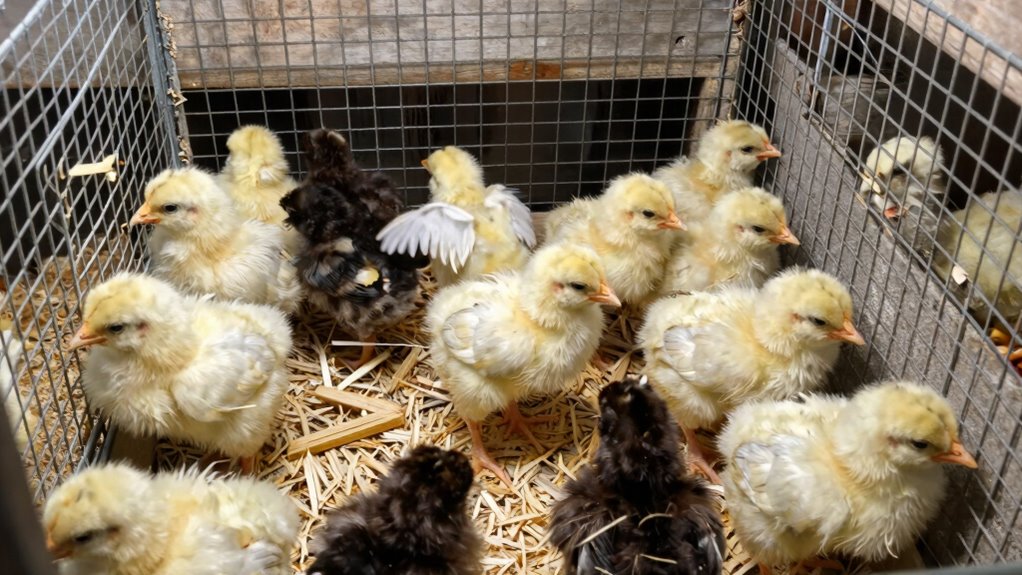
When chicks don’t have enough space to escape, brooder systems can quickly become overwhelmed and fail. Overcrowding creates chaos inside the enclosure, making it hard to maintain proper conditions. One of the immediate problems is ventilation issues. With too many chicks packed in a small area, the airflow drops, causing heat and moisture to build up. Poor ventilation leads to increased humidity, which can foster respiratory infections and other health problems. It also makes it difficult to keep the temperature consistent, leaving some chicks too cold and others too hot. As conditions worsen, the environment becomes stressful, leading to decreased growth and higher mortality rates.
Overcrowding in the brooder causes poor ventilation, heat buildup, and increased health risks for chicks.
Beyond ventilation concerns, overcrowding *considerably* raises predator risks. When chicks are packed tightly together, their movement becomes restricted, making it harder for them to escape if a predator breaches the brooder. A small opening or weak barrier can turn into a deadly trap. Predators like rodents, raccoons, or even larger birds can take advantage of the chaos, slipping in unnoticed when the space isn’t secure. Once inside, they can attack or kill multiple chicks in a matter of moments. Overcrowding also makes it difficult for you to spot threats quickly because the chicks are congested and scattered, which can hinder effective threat detection. Introducing adequate escape routes can significantly improve safety by giving chicks the means to flee from danger.
The lack of escape space also hampers your ability to manage the brooder effectively. When the system is crowded, cleaning becomes more challenging, leading to the buildup of waste and bacteria. These unsanitary conditions not only threaten the health of the chicks but also attract predators or pests that seek out dirty environments. *Furthermore*, overcrowding makes it harder for you to identify sick or injured chicks, allowing diseases to spread rapidly. The increased density of chicks can accelerate the transmission of illnesses, making outbreaks more difficult to control. The stress caused by inadequate space can weaken their immune systems, making them more vulnerable to illnesses that could wipe out entire flocks if not promptly addressed. Additionally, providing enough escape space helps to reduce stress and supports healthier development, which is essential for raising strong, resilient chicks. Ensuring proper ventilation and space management can help prevent many of these issues from escalating.
In essence, when you don’t provide enough escape space, your brooder system becomes a ticking time bomb. Ventilation issues intensify, predators become bolder, and the overall health and safety of your chicks deteriorate quickly. It’s essential to prioritize enough space, proper airflow, and secure barriers to prevent these failures. Ensuring your brooder is spacious enough not only promotes healthy growth but also protects your chicks from preventable dangers, giving them the best start in life.
As an affiliate, we earn on qualifying purchases.
Frequently Asked Questions
How Can I Tell if My Brooder Is Too Small?
You’ll know your brooder is too small if the chicks crowd together constantly, show signs of stress, or struggle to move comfortably. Check if the brooder material feels cramped and if the lighting setup causes overcrowding or discomfort. When space is limited, chicks can’t escape the heat or cold, which can lead to health issues. Make certain there’s enough room for them to spread out and for proper ventilation.
What Signs Indicate Chicks Are Stressed or Overcrowded?
Imagine a crowded dance floor where chicks struggle to find space, signaling stress. Watch their feeding habits—if they hoard food or peck aggressively, it suggests overcrowding. Disruptions in the pecking order and increased pecking or bullying are clear signs of distress. If chicks huddle together or avoid each other, they’re overwhelmed. These behaviors indicate your brooder’s too small, and you need to give them more space for healthy growth.
How Often Should I Clean the Brooder to Prevent Issues?
You should clean the brooder at least once a week to prevent issues. Regular cleaning helps maintain proper bedding materials and keeps the environment hygienic, reducing bacteria buildup. Keep an eye on feeding schedules to make certain chicks aren’t overfed or underfed, which can cause stress. Change bedding materials as needed, especially if they become soiled or damp, to promote healthy growth and prevent disease.
What Temperature Is Ideal for Different Chick Ages?
Imagine you have newly hatched chicks; at first, keep the temperature around 95°F to make certain chick comfort and effective temperature regulation. As they grow, gradually reduce the temperature by 5°F each week. For example, by week three, aim for about 85°F. Proper temperature control prevents stress and health issues, helping your chicks thrive. Regular monitoring ensures they stay comfortable and active, supporting healthy development.
Can Adding More Space Improve Chick Health Quickly?
Yes, adding more space can quickly improve chick health. Implement ventilation improvements and space expansion strategies to reduce stress, prevent overcrowding, and promote better airflow. When chicks have enough room, they can move freely, stay warmer, and avoid disease buildup. This reduces the risk of brooder system failures and helps chicks thrive. Regularly assess and adjust space to guarantee their environment remains comfortable and healthy.
Conclusion
If your brooder lacks escape space, it’s bound to fail fast. Without room to retreat, chicks become stressed, aggressive, and vulnerable. Without space to escape, they struggle to thrive; without space to hide, they struggle to feel safe; without space to grow, they struggle to flourish. Providing ample escape space isn’t just about comfort; it’s about survival. Make sure your brooder offers room, refuge, and safety—because when chicks have space, they can truly thrive.