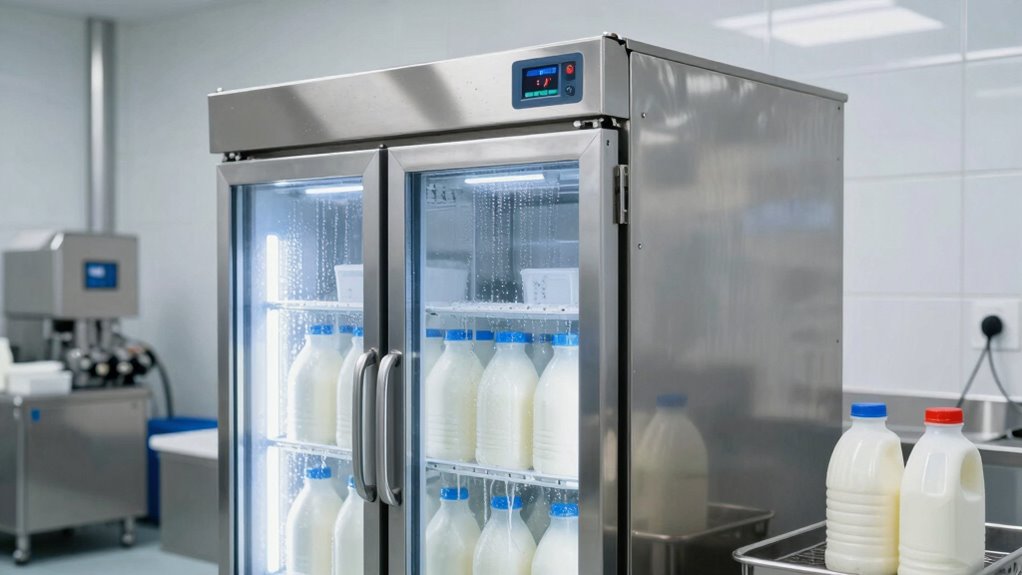

To guarantee small dairy chillers are effective, cooling must start quickly. You can achieve this by choosing a high-efficiency unit, pre-cooling the milk, and ensuring proper insulation for faster heat transfer. Regular maintenance, prompt startup procedures, and ideal operational strategies also help the chiller respond faster. When cooling begins promptly, your milk stays fresh longer. Keep exploring to discover more ways to enhance your chiller’s speed and performance.
Key Takeaways
- Proper pre-cooling and initial setup ensure the chiller starts cooling quickly when needed.
- Regular maintenance maintains optimal refrigerant levels and component function for rapid response.
- Selecting a chiller with adequate capacity prevents overloading and delays in cooling start-up.
- Effective insulation minimizes heat gain, helping the chiller reach target temperatures faster.
- Advanced temperature controls improve responsiveness, reducing the time to initiate effective cooling.
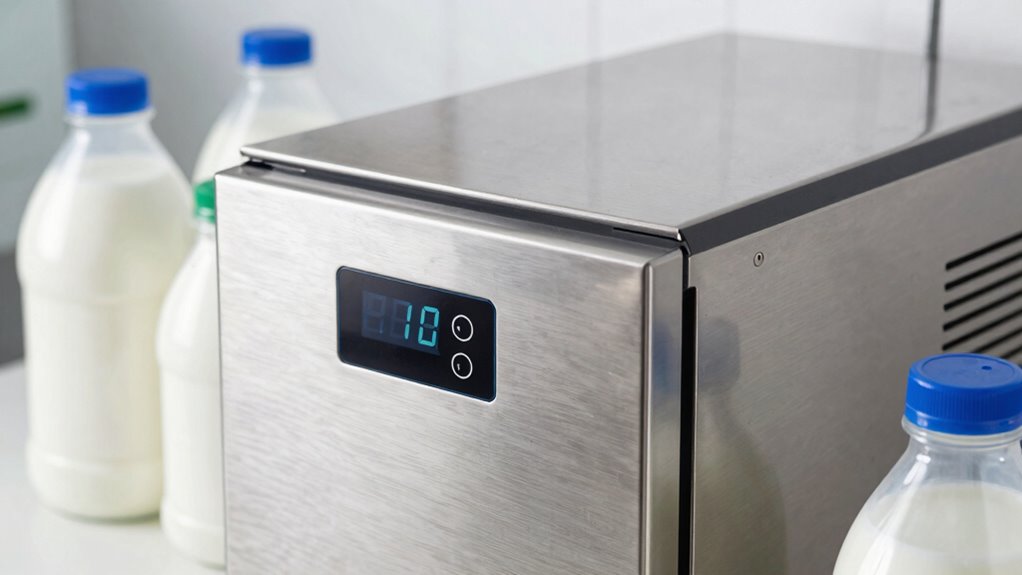
One of the key factors in guaranteeing fast cooling is the chiller’s energy efficiency. A high-efficiency unit cools milk faster because it’s designed to transfer heat more effectively. When your chiller operates efficiently, it not only cools milk quickly but also uses less power, saving you money in the long run. To maximize energy efficiency, regularly check the insulation of your chiller and guarantee that the compressor is functioning at its best. Proper insulation minimizes heat gain from the environment, allowing the chiller to reach the desired temperature faster. Also, selecting a unit with a suitable capacity for your volume helps prevent overworking the compressor, which can slow down cooling and increase energy consumption. Ensuring your chiller has Proper insulation is vital for optimal performance and quick cooling. Additionally, choosing a model with advanced temperature controls can enhance responsiveness and ensure rapid cooling times. Prompt startup is equally important. You need to guarantee the chiller is ready to go as soon as milk arrives. This means pre-cooling the unit before use and checking that all components are functioning properly. If your chiller has a defrost cycle, schedule it during off-peak times to avoid delays when milk is collected. When milk is poured into the chiller, make sure it’s already at the right temperature for rapid cooling. The faster the chiller can lower the milk’s temperature below spoilage levels, the better its preservation qualities and the higher the milk’s quality. Proper pre-cooling techniques can significantly reduce the time needed to reach the target temperature. Regular maintenance, including refrigerant level checks, plays a crucial role in guaranteeing your chiller starts fast and operates efficiently. This not only prolongs the lifespan of your equipment but also guarantees it responds quickly when needed most. Additionally, inspecting seals and valves to prevent leaks or inefficiencies ensures consistent performance. Incorporating efficient heat transfer methods in your chiller design can further optimize cooling performance.
small dairy chiller with fast cooling
As an affiliate, we earn on qualifying purchases.
As an affiliate, we earn on qualifying purchases.
Frequently Asked Questions
How Long Does It Typically Take for a Dairy Chiller to Reach Optimal Temperature?
A dairy chiller typically takes 2 to 4 hours to reach ideal temperature. You can speed this up by guaranteeing the temperature sensors are accurate and functioning properly. Efficient compressor operation also plays a key role, as it helps the cooling process happen faster. Regular maintenance and monitoring your chiller’s performance will guarantee it reaches the desired temperature promptly, keeping your dairy products fresh and safe.
What Are the Signs That a Chiller Is Not Cooling Fast Enough?
If your chiller isn’t cooling fast enough, you’ll notice signs like persistent warm temperatures and inconsistent cooling. You might also hear unusual chiller noise, which indicates problems. Check for refrigerant leaks, as they reduce cooling efficiency. These issues suggest the chiller isn’t functioning properly, and addressing them promptly ensures your dairy products stay fresh. Regular maintenance helps catch these signs early and keeps your chiller operating effectively.
Can Small Dairy Chillers Be Used for Other Types of Food Preservation?
While small dairy chillers are specialized, their equipment versatility allows you to use them for other food preservation needs. They can be suitable as alternative preservation methods for items like fruits or beverages, but only if they maintain proper temperature control. Keep in mind, their effectiveness depends on whether the cooling process is fast enough and consistent, which is essential for safely extending the shelf life of various foods.
What Maintenance Is Required to Ensure Quick Cooling Startup?
To guarantee quick cooling startup, you need to regularly check your refrigeration efficiency with a maintenance checklist. Make certain the condenser coils are clean, the door seals are tight, and there’s no ice buildup. Inspect fans and compressors for proper operation. Regular maintenance keeps the system running effectively, reducing startup delays. This way, your small dairy chiller quickly reaches ideal temperatures, protecting your products and maintaining quality.
How Does Ambient Temperature Affect Chiller Cooling Speed?
Ambient effects and temperature fluctuation considerably influence your chiller’s cooling speed. Higher ambient temperatures can slow down startup because the cooler has to work harder to reach desired temperatures, delaying effective chilling. Conversely, stable, cooler surroundings help maintain consistent cooling speeds. To guarantee quick startup, you should minimize temperature fluctuations around the chiller, providing a stable environment that supports rapid cooling regardless of external conditions.

Dr. Brown's Breast Milk and Formula Chiller, Portable Insulated Storage for Breast Pumping and Bottle Feeding, 20 oz/590 mL Capacity, Arctic White, BPA-Free, 1-Pack
BREAST MILK AND FORMULA CHILLER. A vacuum-insulated stainless steel tumbler designed for safe, convenient storage of breast milk…
As an affiliate, we earn on qualifying purchases.
As an affiliate, we earn on qualifying purchases.
Conclusion
If you want your dairy to stay fresh and safe, don’t delay cooling. The quick start of your small dairy chiller can make all the difference in preventing spoilage and bacteria growth. Think of it like a race—every second counts. So, test your system regularly and guarantee it cools fast enough. When cooling kicks in promptly, you protect your product and boost your farm’s reputation. Don’t let slow starts spoil your success!

ECEVT 47.8'' W Commercial Beverage Refrigerators, 40 Cu.ft Glass Door Refrigerator Commercial Cooler with LED Light and 10 Shelves, Display Refrigerator for Restaurant Store Cafe Bar, White
Optimal Cooling & Energy Efficiency: This commercial fridge maintains a temperature range of 32F to 47F, ensuring your…
As an affiliate, we earn on qualifying purchases.
As an affiliate, we earn on qualifying purchases.

Chill-O-Matic Instant Beverage Cooler – Chill 12 oz Soda & Beer Cans in 60 Seconds – Portable Electric Drink Chiller for Tailgating, BBQs, Camping & Parties (Black)
CHILL DRINKS IN 60 SECONDS – Rapidly cool standard 12 oz soda or beer cans from room temperature…
As an affiliate, we earn on qualifying purchases.
As an affiliate, we earn on qualifying purchases.