
To reduce hay waste in winter, make sure you store hay properly in well-ventilated, dry structures like sheds or on pallets to keep moisture out. Cover your bales with tarps to protect from snow and rain, and check regularly for dampness or mold. Proper stacking also prevents damage and spoilage. By maintaining good ventilation, securing bales, and inspecting often, you’ll preserve hay quality and save money. Keep going to discover even more tips to maximize your hay’s lifespan.

Get garden gear delivered free with Prime
- Fast, free delivery on millions of items
- Prime Video, Amazon Music and more included
- Member-only deals all year
Key Takeaways
- Store hay in well-ventilated, covered structures to prevent moisture and mold buildup during winter.
- Use pallets or concrete pads to keep hay off the ground and reduce contact with moisture.
- Cover hay bales with tarps or sheds to shield them from snow, rain, and snow melt.
- Regularly inspect stored hay for dampness or mold and promptly remove affected bales.
- Stack hay securely to prevent damage and minimize waste from toppling or spoilage.
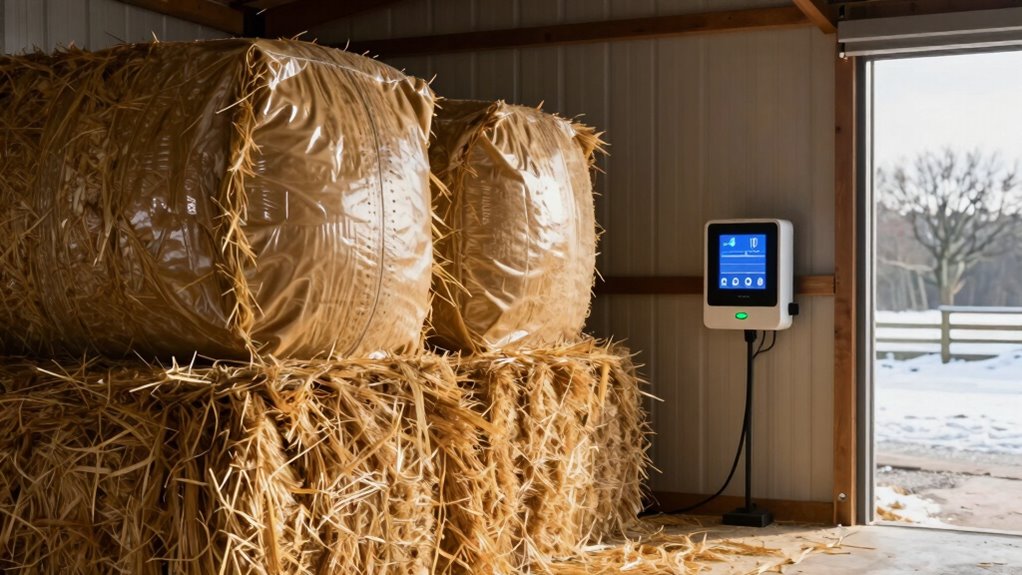
Have you ever wondered how you can cut down on hay waste and save money? During winter, managing hay effectively becomes more critical since your animals rely heavily on stored feed. The key to reducing waste lies in smart hay storage strategies and animal feeding techniques that optimize every bit of your hay supply. When it comes to hay storage, you want to keep your hay dry, well-ventilated, and protected from the elements. Using proper storage methods, like stacking hay on pallets or a concrete pad, prevents moisture from seeping in and causing mold or spoilage. Covering hay with a tarp or building a dedicated hay shed also shields it from snow and rain, ensuring it stays fresh longer. If you store hay in a barn, make sure the structure is well-ventilated to prevent condensation, which can lead to mold growth. Proper stacking and securing bales prevent them from toppling and getting damaged, saving you money and reducing waste. Additionally, maintaining good ventilation in storage areas helps prevent condensation, which is essential for preserving hay quality. Incorporating proper ventilation techniques can significantly improve hay storage conditions and prolong its usability. Ensuring that hay is stored in a way that minimizes moisture buildup is crucial for maintaining its nutritional value and preventing spoilage. Regular inspections and prompt removal of damp or moldy bales are also vital for maintaining overall hay quality and reducing waste. Proper storage methods are fundamental in protecting your hay investment and keeping it in optimal condition.
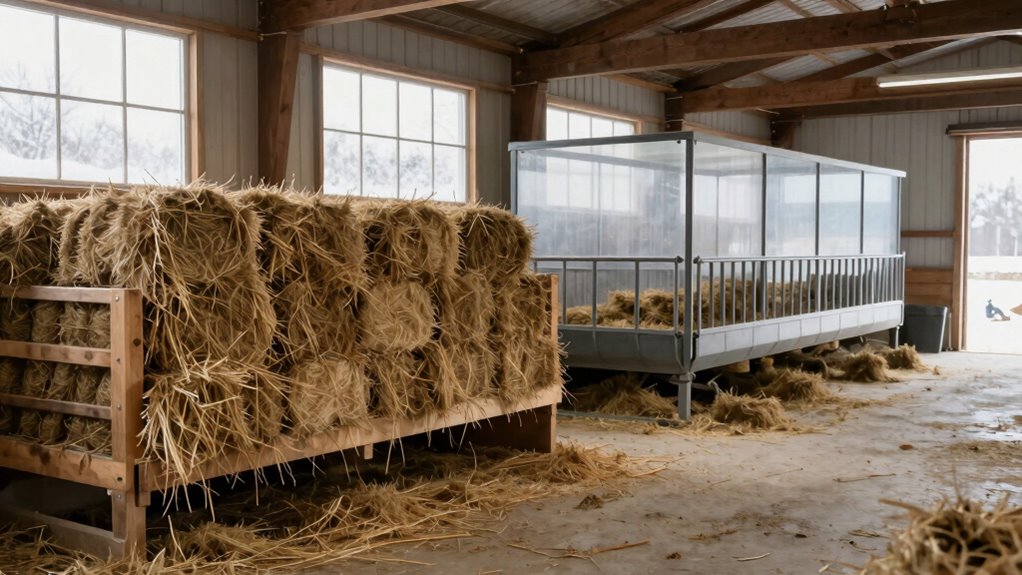
hay storage shed with ventilation
As an affiliate, we earn on qualifying purchases.
As an affiliate, we earn on qualifying purchases.
Frequently Asked Questions
How Often Should Hay Storage Areas Be Cleaned for Optimal Preservation?
You should clean your hay storage areas at least every three to six months to maintain ideal preservation. Regular cleaning schedules help prevent mold, pests, and moisture buildup, which can compromise hay quality. Focus on good storage hygiene by removing old debris, inspecting for leaks, and ensuring proper ventilation. Staying consistent with cleaning routines keeps your hay dry, fresh, and safe for feeding, reducing waste and preserving its nutritional value.
What Are the Best Types of Hay to Reduce Waste During Winter?
You should choose hay types that are dense and well-preserved to minimize waste during winter. Grass hay, like Timothy or orchard grass, often offers better hay preservation because they dry thoroughly before storage. Alfalfa is excellent too if properly dried. Focus on moisture control during storage to prevent mold and spoilage, which considerably reduces waste. Opt for high-quality hay, and regularly check storage conditions to keep hay fresh and minimize winter waste effectively.
How Can I Tell if Hay Has Gone Bad or Moldy?
Hay that’s gone bad or moldy almost screams at you with a foul odor and slimy texture. To detect mold, check for visible fuzzy patches, discoloration, or a musty smell. Use your hand to assess hay moisture—if it feels damp or heavy, it’s too moist and prone to mold growth. Regular mold detection and monitoring hay moisture levels help keep your animals safe and healthy during winter.
Are There Specific Tools to Measure Hay Quality Effectively?
Yes, there are specific tools to measure hay quality effectively. Hay testing involves using moisture meters, which help you determine the hay’s moisture content, vital for preventing mold and spoilage. These meters are easy to use and provide quick readings. Regularly testing your hay with moisture meters guarantees you harvest and store it at the best dryness, reducing waste and maintaining nutritional value. It’s a smart step in managing hay quality efficiently.
What Are Cost-Effective Ways to Insulate Hay Storage Sites?
Did you know that proper insulation can cut winter hay spoilage by up to 30%? To insulate your hay storage cost-effectively, use affordable insulation materials like straw bales or recycled foam boards. Combine this with weatherproofing techniques such as sealing gaps and adding tarps or metal roofing to protect against moisture and wind. These simple steps help maintain hay quality without breaking the bank, saving you money and reducing waste.
Conclusion
By blending careful planning with clever techniques, you can confidently cut costly hay waste during winter. Implement simple strategies such as stacking, covering, and monitoring to maximize your hay’s health and minimize waste. Remember, a little effort now prevents plenty of problems later, turning your winter woes into wins. Stay savvy, stay sustainable, and see your savings soar as you skillfully safeguard your hay. With these smart steps, winter worries will wave goodbye!
Fall yard work Picks
leaf blowers
As an affiliate, we earn on qualifying purchases.