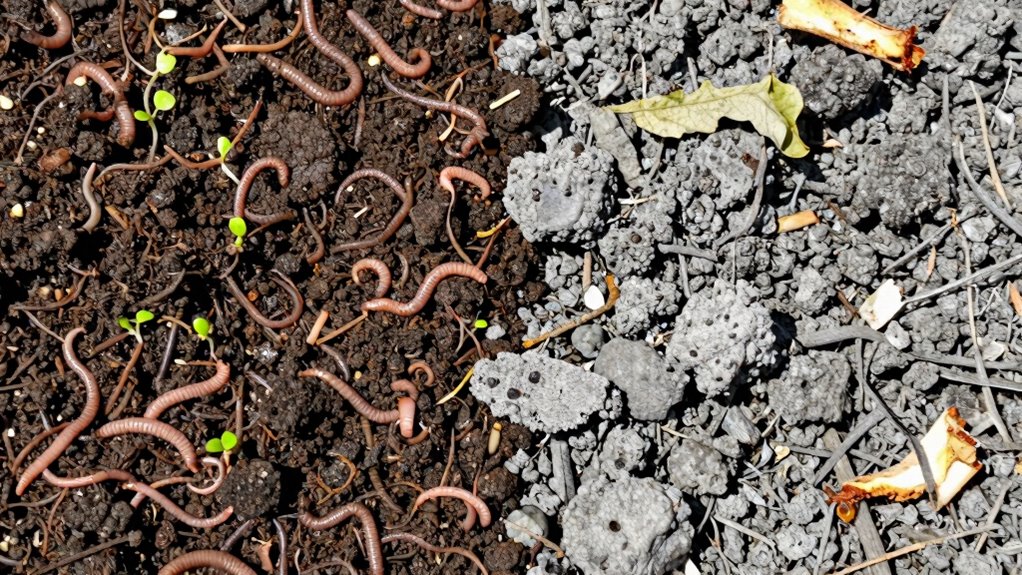

Proper compost helps your garden by providing essential nutrients, improving soil structure, and promoting healthy plant growth. However, if you don’t balance greens and browns, moisture, and aeration, compost can become too acidic, nutrient-deficient, or produce odors. Incorrect management can damage plants or disrupt soil health. Understanding how to control these factors guarantees your compost benefits your garden rather than harms it—so, keep exploring to discover how to get it just right.

Get garden gear delivered free with Prime
- Fast, free delivery on millions of items
- Prime Video, Amazon Music and more included
- Member-only deals all year
Key Takeaways
- Proper composting balances nutrients and maintains optimal microbial activity, ensuring beneficial soil enhancement.
- Imbalanced composts with excess nitrogen or acidity can harm plants and disrupt soil chemistry.
- Insufficient aeration or moisture leads to anaerobic conditions, producing odors and slowing decomposition.
- Overly rich or poorly managed compost can cause nutrient lockout or toxicity in plants.
- Correct layering, turning, and monitoring prevent negative effects and promote healthy, nutrient-rich compost.
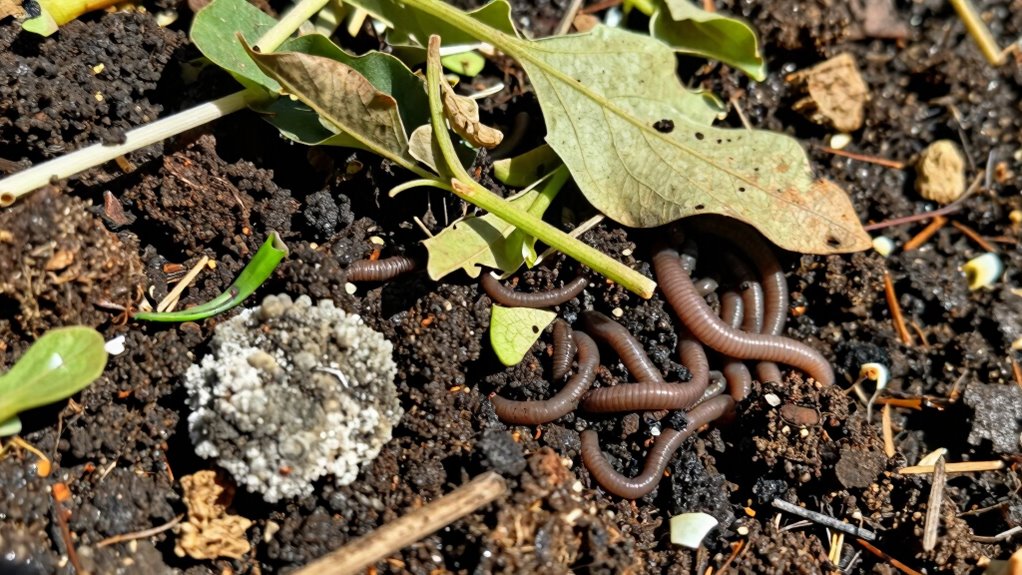
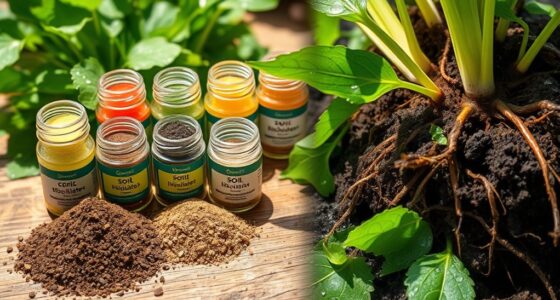
Composting can be a powerful way to enrich your soil and reduce waste, but it’s not always beneficial. The key lies in understanding how your compost interacts with your soil nutrient balance. When compost is well-made, it supplies essential nutrients and organic matter that help plants grow strong. However, if your compost isn’t properly balanced or managed, it can do more harm than good. The difference often boils down to your composting techniques. If you don’t pay attention to the materials you add, the moisture levels, or the aeration, you risk creating compost that’s either too rich, too acidic, or lacking in nutrients altogether.
Your goal should be to create a harmonious soil nutrient balance. Compost that’s too high in nitrogen, for instance, can lead to excessive leafy growth at the expense of fruit or root development. Conversely, compost lacking enough nitrogen, phosphorus, or potassium won’t support healthy plant growth. Over time, improper composting can cause imbalances that disrupt your soil’s natural chemistry. This imbalance can lead to issues like nutrient lockout or deficiencies, making your plants more vulnerable to pests and diseases. That’s why it’s essential to understand the composting techniques that promote a stable, nutrient-rich end product. Proper compost management helps ensure your compost remains balanced and beneficial. Additionally, understanding how to monitor compost conditions can help prevent common problems and improve compost quality.
Effective composting techniques involve layering greens and browns properly, maintaining adequate moisture, and turning the pile regularly to guarantee proper aeration. Greens, like vegetable scraps and coffee grounds, are high in nitrogen, while browns, such as dried leaves or straw, supply carbon. Striking the right ratio ensures your compost heats up enough to break down materials efficiently without becoming anaerobic—a condition that produces unpleasant odors and slow decomposition. When done correctly, this process produces a dark, crumbly compost packed with nutrients that, when applied properly, improve your soil’s structure and fertility. Proper composting techniques are crucial for avoiding common problems such as odor or slow decomposition.
In addition, understanding the importance of maintaining a balanced carbon-to-nitrogen ratio can significantly influence the success of your composting efforts. On the other hand, neglecting these techniques can lead to compost that’s unbalanced or smelly, indicating anaerobic conditions. Such compost can introduce excess nutrients or toxins into your soil, harming plants or encouraging algae growth. Additionally, improper composting can lead to nutrient imbalances that diminish soil health over time. Monitoring your compost’s temperature, moisture, and texture consistently is essential to maintaining its quality and preventing issues. Remember, a balanced, well-managed compost not only enriches your soil but also helps maintain a healthy soil nutrient balance, supporting long-term plant health. When you follow proper composting techniques, you’ll see that your compost helps your garden thrive rather than hinder it.
As an affiliate, we earn on qualifying purchases.
Frequently Asked Questions
Can Composting Attract Pests or Rodents?
Yes, composting can attract pests or rodents if you’re not careful. To prevent this, practice pest prevention by avoiding meat, dairy, and oily foods in your compost. Use rodent control methods like secure bins with tight-fitting lids and regularly turning your compost to decrease odors. Keeping the compost moist but not wet also discourages pests. Proper management helps guarantee your composting process remains pest-free and effective.
How Long Does Composting Typically Take?
Composting typically takes anywhere from a few weeks to several months, depending on factors like compost temperature and layering. When you maintain high compost temperatures, microbes work faster, speeding up decomposition. Proper layering—alternating greens and browns—ensures airflow and moisture balance, which also accelerates the process. Keep your compost moist and aerated, and you’ll see finished compost in about 4 to 8 weeks, depending on conditions.
Is All Organic Waste Suitable for Composting?
Think of your compost as a garden’s treasure chest, but not all organic waste fits. You need to carefully segregate waste, like a skilled jeweler sorting gems. Not all plant nutrient-rich scraps, such as meat or dairy, are suitable—they can attract pests or disrupt balance. Stick to fruit peels, vegetable scraps, and coffee grounds, ensuring your compost remains healthy and productive, like a well-tended orchard.
Can Compost Be Used in Indoor Gardening?
Yes, you can use compost in indoor gardening. It offers numerous indoor plant benefits, such as improved nutrient absorption and healthier growth. To do so, apply compost carefully using proper compost application techniques—mix it into potting soil or top-dress your containers. Be mindful of the compost’s quality to avoid over-fertilizing or introducing pests, ensuring your indoor plants thrive with healthy, organic nutrition.
What Are Signs of Compost That Has Gone Bad?
If your compost has gone bad, you’ll notice spoilage signs like foul odors, which indicate anaerobic fermentation. It may become slimy or develop mold, and the smell can be overwhelming. You might also see pests attracted to it or hear buzzing insects. These signs show your compost isn’t breaking down properly and needs to be turned, aerated, or dried out to prevent further spoilage and restore its beneficial properties.
Conclusion
So, next time you’re tempted to toss compost on your garden, remember: not all help is equal. Like a wise old sage from the days of chivalry, good compost nurtures your plants, but the wrong kind can do more harm than good. Think of it as your secret weapon—use it wisely, and your garden will flourish like a renaissance masterpiece. Choose your compost with care, and watch your green kingdom thrive!
Columbus Day / Indigenous Peoples' Day Picks
long weekend sales
As an affiliate, we earn on qualifying purchases.