Choosing the right soil is key to successful seedlings. Seed starting mixes are lightweight, well-draining blends designed to promote germination and prevent diseases like damping-off. Potting mixes are heavier, formulated for mature plants, providing stability and nutrients. Using a potting mix too early can drown roots or cause disease, while a seed starting mix won’t give seedlings enough nutrients. To avoid ruining trays, understanding these differences helps. Keep going to discover how to pick the best soil for healthy growth.

Get garden gear delivered free with Prime
- Fast, free delivery on millions of items
- Prime Video, Amazon Music and more included
- Member-only deals all year
Key Takeaways
- Seed starting mixes are lightweight, well-draining, and formulated for germination, unlike heavier potting mixes for mature plants.
- Using potting mix prematurely can cause poor drainage, damping-off, and root rot in seedlings.
- Correctly matching the mix to seedling stage ensures healthy growth and prevents transplant shock or disease.
- Using garden soil or heavy potting mixes for starting seeds introduces pests, pathogens, and moisture issues.
- Proper sterilization and organic amendments in seed-starting mixes promote vigorous germination and healthy root development.
As an affiliate, we earn on qualifying purchases.
Seed Starting Mix vs. Potting Mix: What’s the Difference?
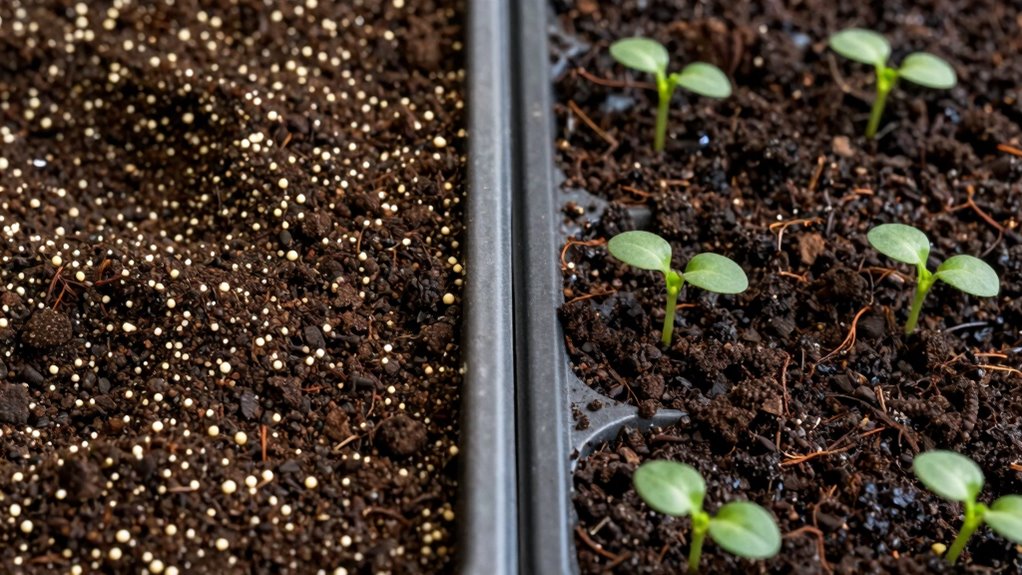
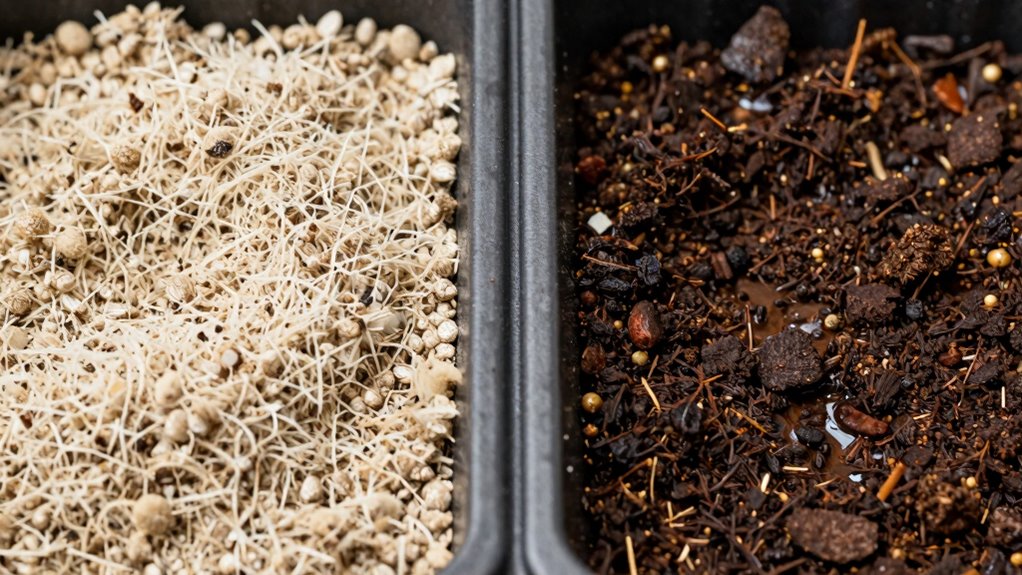
Although seed starting mixes and potting mixes are both soil types used for growing plants, they serve different purposes and have distinct compositions. You’ll find seed starting mixes designed to promote seedling health by providing a lightweight, well-draining environment that encourages strong root development. Their soil composition typically includes fine particles like peat moss, vermiculite, or perlite, which help retain moisture without becoming waterlogged. In contrast, potting mixes are formulated for mature plants in containers. They tend to be heavier, with a more substantial soil structure that offers stability and nutrients over time. Knowing these differences guarantees you choose the right mix to give your seedlings the best start, supporting healthy growth and preventing issues like damping-off or root rot.
Why Using the Wrong Soil Can Kill Your Seedlings Before They Grow
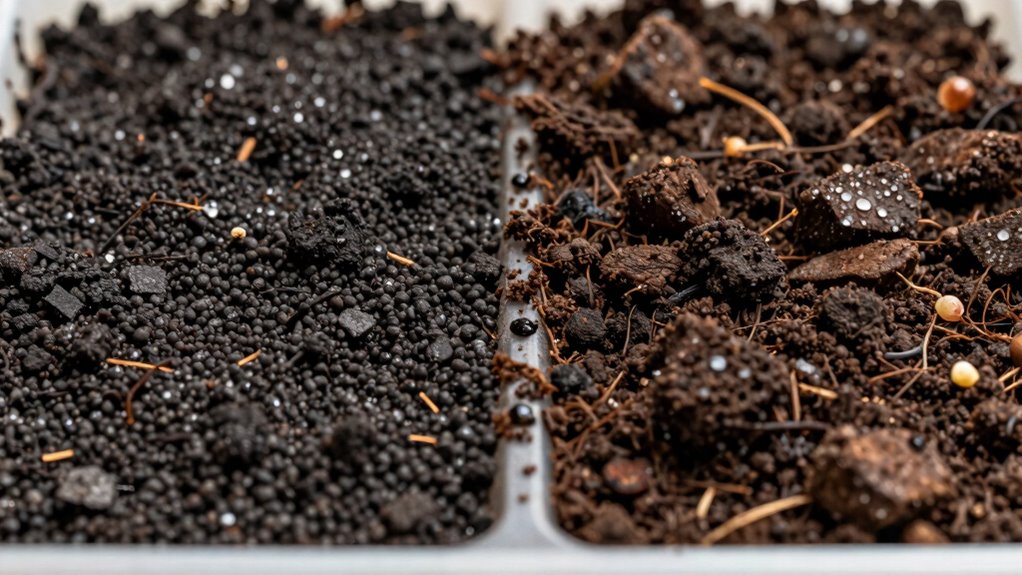
Using the wrong soil can quickly harm your seedlings before they even get started. Poor drainage can cause root rot, while nutrient imbalances may stunt growth or cause weakness. Additionally, disease-causing pathogens in unsuitable soil can spread rapidly, killing your young plants. Choosing a soil with proper drainage characteristics is essential to prevent waterlogging and ensure healthy root development. Understanding the importance of soil composition can help you select the best mix for vigorous seedling growth. Recognizing the significance of auditory processing can also support sustainable gardening practices by providing reliable data management for plant growth tracking. Proper soil testing can further help in assessing and optimizing soil conditions for optimal seedling development.
Nutrient Imbalance Risks
Choosing the wrong soil for your seedlings can lead to a dangerous nutrient imbalance that stunts growth or kills young plants before they even take root. When the soil lacks proper seed nutrients, your seedlings struggle to develop strong roots and healthy stems. An imbalance can cause deficiencies in essential minerals like nitrogen, phosphorus, or potassium, or an overload of certain nutrients that can be toxic. This soil imbalance hampers nutrient uptake, leaving your seedlings undernourished or overwhelmed. Using inappropriate soil means your young plants won’t get the balanced nourishment they need to thrive. Without the right seed nutrient profile, your seedlings may weaken, become susceptible to diseases, or simply fail to grow altogether. Proper soil choice is vital for healthy, vigorous seedlings.
Poor Drainage Issues
Poor drainage can quickly undermine your seedlings’ chances of survival, especially if you select the wrong soil. Using a mix with low compost quality can lead to compaction, trapping excess moisture around roots and causing root rot. When drainage is inadequate, water pools in the tray, depriving roots of oxygen and stunting growth. Additionally, soil pH levels play a vital role; if the mix is too acidic or alkaline, it can hinder nutrient uptake, weakening seedlings further. A well-draining soil ensures excess water escapes efficiently, preventing waterlogging and oxygen deprivation. Proper soil choice with natural filtration systems promotes healthy water flow and supports sustainable practices. To avoid these issues, choose a soil blend designed for good drainage, with balanced pH levels and high-quality compost. Using the right soil mixture can make all the difference in preventing soil compaction and ensuring optimal conditions for seedlings. Proper soil choice supports healthy root development and sets the stage for strong, vigorous seedlings, especially when considering soil structure and its impact on aeration and moisture retention. Incorporating soil aeration techniques can further improve drainage and root health, leading to more resilient plants. Understanding soil properties helps in selecting the best mix for your seedlings’ needs.
Disease Transmission Potential
Inadequate drainage isn’t the only risk when selecting the wrong soil; it can also introduce diseases that threaten your seedlings’ survival. Using the wrong mix increases the chance of encountering seed-borne pathogens, which can cause damping-off and other fungal issues. These pathogens often linger in contaminated soil or tools, risking cross contamination between trays. To reduce this danger, always sterilize your soil and tools before use. Avoid reusing old soil that might harbor harmful microbes. Opt for a quality seed-starting mix specifically designed to minimize pathogen presence. Additionally, choosing appropriate soil types can help prevent disease transmission and improve seedling health. Selecting soils with proper microbial balance can further enhance healthy growth and reduce disease susceptibility.
How to Spot a Good Seed Starting Mix for Healthy Germination

To spot a good seed starting mix, check that it drains well and allows air to reach the roots, preventing soggy conditions. Make sure it has a balanced nutrient content to support early growth without overwhelming delicate seedlings. Also, verify that the mix is free from contaminants like weeds or pathogens to guarantee healthy germination. Incorporating trusted market options can help ensure quality and reliability in your seed starting supplies. Additionally, selecting mixes with soil health management features can promote vigorous seedling development. Using proper sterilization techniques can further reduce the risk of disease and improve success rates, making your gardening experience more rewarding. Being aware of organic amendments can also enhance soil vitality and foster healthy root systems.
Proper Drainage and Aeration
A good seed starting mix should have excellent drainage and aeration to support healthy germination. Proper soil texture prevents water from pooling, which can drown tiny roots, and promotes air circulation essential for root development. To identify this, look for:
- Well-draining particles like perlite or coarse sand that create space for excess water to escape.
- A light, fluffy consistency that avoids compaction, ensuring roots get enough oxygen.
- Moderate water retention that keeps the seeds moist without becoming soggy, balancing moisture with airflow. Proper soil texture is crucial for preventing issues like root rot and mold while encouraging strong sprouting.
- The use of appropriate soil amendments can improve soil structure and enhance drainage properties, further supporting healthy seedling growth. Additionally, selecting a mix with consistent moisture levels helps maintain an ideal environment for germination. Using a well-balanced soil composition can also contribute to better seedling development and vigor. These qualities help prevent root rot and mold while encouraging strong sprouting. By choosing a mix with the right soil texture and water retention properties, you’ll set your seeds up for successful growth from germination onward.
Nutrient Content Balance
Since nutrient content is crucial for healthy germination, you should choose a seed starting mix that offers a balanced supply of essential nutrients. A good seed starting mix has an ideal soil composition that provides the right seed nutrient balance without overwhelming delicate seedlings. Look for mixes containing organic matter like compost or peat moss, which supply essential nutrients gradually. Avoid mixes with excessive fertilizers, as they can cause nutrient burn or inhibit germination. The soil composition should promote steady nutrient release to support root development and early growth. A well-balanced seed starting mix ensures your seedlings get the nutrients they need at the right time, leading to healthier, stronger plants. Always check labels or ingredient lists to verify the mix’s nutrient profile before planting.
Free of Contaminants
Because contaminants can seriously hinder seed germination and seedling health, selecting a mix that is free of harmful substances is essential. Look for seed starting mixes that prioritize contaminant prevention through proper soil sterilization. To guarantee you’re choosing a safe mix, check for these features:
- Sterilized ingredients – The mix should be heat-treated or otherwise sterilized to eliminate pathogens and pests.
- Clean packaging – Avoid mixes that show signs of mold, debris, or pests.
- Trusted brands – Opt for reputable suppliers known for soil sterilization and contaminant prevention measures.
When and Why You Should Use Potting Mix for Transplanting Seedlings
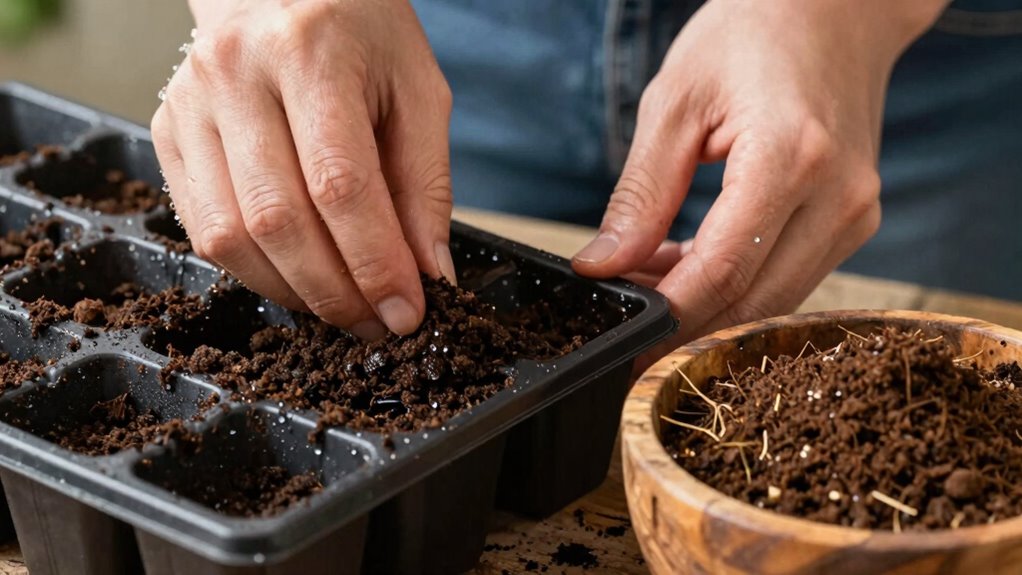
Transplanting seedlings into potting mix is ideal when they’ve developed strong roots and are ready to move to larger containers or outdoor beds. Using potting mix provides better drainage and aeration, promoting healthy growth. It’s also important to ensure soil sterilization to prevent disease. Incorporate organic amendments like compost or worm castings to boost nutrients without chemicals. This mix supports vigorous development and reduces transplant shock. Keep in mind that potting mix typically contains peat, bark, or perlite, offering impeccable structure for seedlings. Here’s a quick comparison:
| When to Transplant | Why Use Potting Mix |
|---|---|
| Seedlings are strong | Good drainage and aeration |
| Ready for larger containers | Prevents soil-borne diseases |
| Roots are well-established | Supports healthy growth |
| Outdoor beds are prepared | Organic amendments enhance nutrition |
Common Soil Mistakes That Can Hurt Your Seedlings
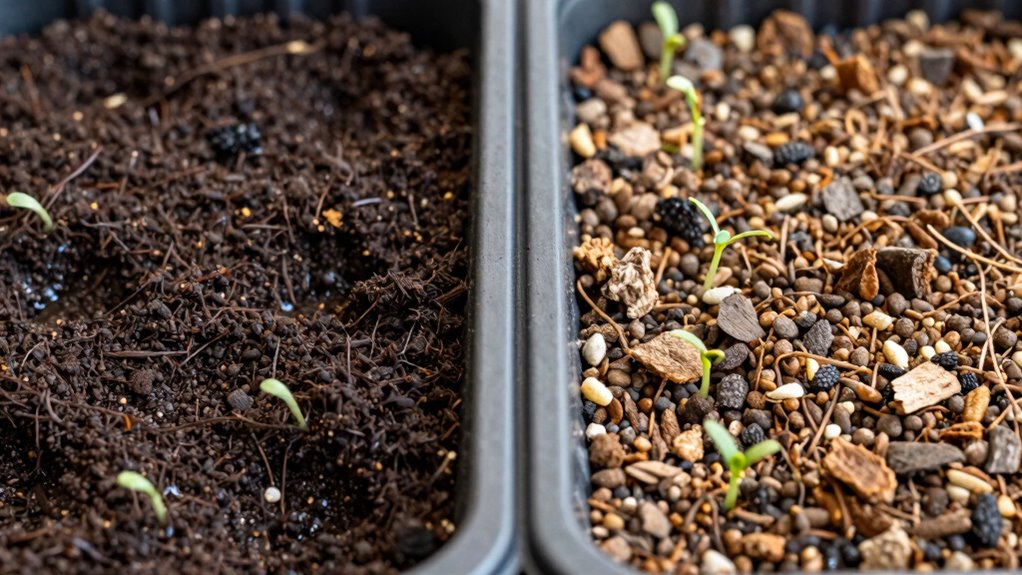
One of the most common mistakes that can harm your seedlings is using soil that’s too dense or poorly draining. This prevents roots from accessing oxygen and can cause root rot. To avoid this, consider these tips:
Avoid dense, poorly draining soil to keep roots healthy and prevent root rot.
- Incorporate soil amendments like perlite or vermiculite to improve drainage and aeration.
- Use proper watering techniques, such as watering only when the top inch feels dry, to prevent overwatering.
- Steer clear of heavy, clay-based soils unless you amend them.
These mistakes can lead to weak or dying seedlings. Ensuring your soil has good structure and moisture balance is key. Adjust your soil mix with amendments and be mindful of watering habits to promote healthy root development and vibrant growth.
How to Choose the Best Soil to Keep Your Seedlings Thriving
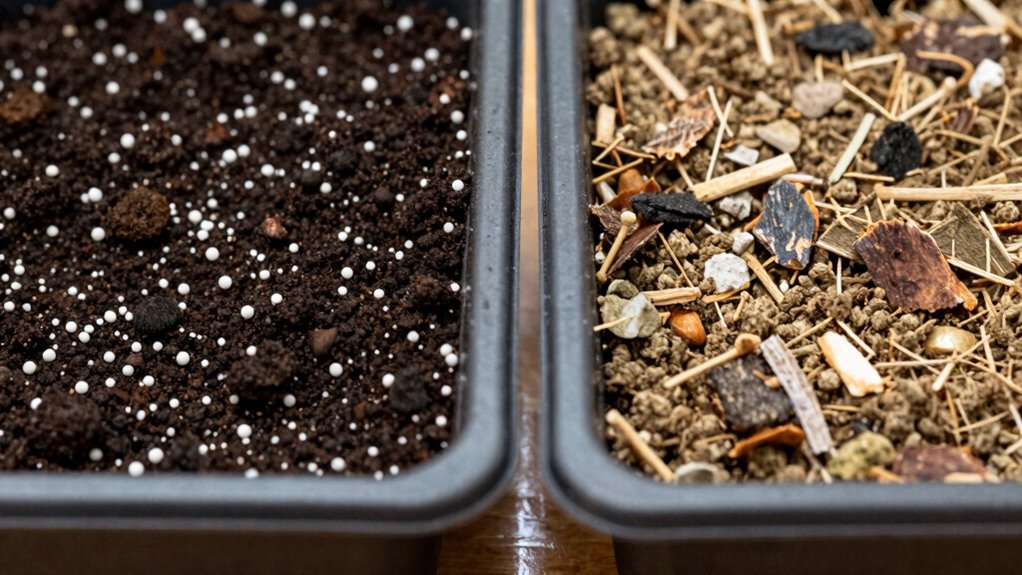
Choosing the right soil for your seedlings is essential to guarantee healthy growth from the start. Start by selecting a mix that’s well-draining and lightweight, providing good aeration. Soil sterilization is important to eliminate pests, diseases, and weed seeds that could harm your young plants. You can sterilize soil by baking it in the oven or using commercial sterilants. Incorporate organic amendments like compost or worm castings to boost nutrients naturally. These amendments improve soil structure, retain moisture, and support healthy root development. Sound healing science indicates that healthy soil microbiomes can influence plant growth positively, emphasizing the importance of clean, nutrient-rich mediums. Avoid using garden soil directly, as it may contain pathogens or heavy minerals. Instead, opt for commercial seed-starting mixes or create your own blend with sterilized soil and rich organic amendments. This approach gives your seedlings the ideal environment to thrive, and understanding soil sterilization techniques can further enhance your success. Additionally, selecting appropriate soil types tailored for seed starting can significantly improve germination rates and overall plant vigor.
Frequently Asked Questions
Can Seed Starting Mix Be Used for Outdoor Planting?
You can use seed starting mix for outdoor planting if it’s outdoor compatible, but it’s not ideal long-term. This mix is lightweight and nutrient-rich, perfect for seedlings, but it lacks the soil amendments needed for outdoor plants to thrive. For best results, consider mixing it with garden soil or compost to improve drainage and fertility. Always tailor your soil to your plants’ specific needs for healthy outdoor growth.
Is It Necessary to Sterilize Potting Mix Before Use?
Think of soil sterilization as your modern-day shield against pests and diseases. You don’t always need to sterilize potting mix, but if the soil’s been sitting around or you’re reusing containers, it’s a smart move. Sterilizing helps maintain microbial balance, ensuring healthy roots and vigorous growth. Simply heat the mix in the oven or microwave, and you’ll give your plants the best start without the bugs or fungi.
How Often Should I Fertilize Seedlings in Each Mix?
You should fertilize your seedlings every 1 to 2 weeks to guarantee proper seedling nutrition. Use a diluted, balanced liquid fertilizer to avoid overfeeding, which can harm young plants. Pay attention to the growth stage; as seedlings develop, you can gradually increase fertilizer frequency if needed. Consistent fertilization helps promote healthy roots and sturdy stems, giving your plants the best start in either seed starting mix or potting mix.
Are There Specific Plants That Prefer Seed Starting Mix Over Potting Mix?
Some plants, like delicate herbs and small ornamentals, prefer seed starting mix because it provides the perfect balance of drainage and nutrients, ensuring healthy seedlings right from the start. You should pay close attention to plant preferences, as using the wrong mix can hinder seedling health. Think of it as giving each plant its favorite shoes—match them well, and they’ll thrive without a hitch.
Can I Reuse Seed Starting or Potting Mix for Multiple Seasons?
You can reuse garden soil for multiple seasons, but it’s best to refresh it with compost enrichment to restore nutrients. Remove any plant debris and sterilize the soil if possible to prevent diseases. Incorporate fresh seed starting mix or potting mix when needed to improve drainage and aeration. This practice helps maintain healthy plants and guarantees your trays stay productive season after season.
Conclusion
Choosing the right soil mix is essential for healthy seedlings, so don’t assume all soils are the same. While it might seem simpler to use potting mix everywhere, starting with a proper seed starting mix gives your seedlings the best chance to thrive. If you’re worried about cost, remember that investing in quality soil now saves you time and trouble later. Trust the right mix—your seedlings will thank you with strong, vibrant growth.
Fall yard work Picks
leaf blowers
As an affiliate, we earn on qualifying purchases.