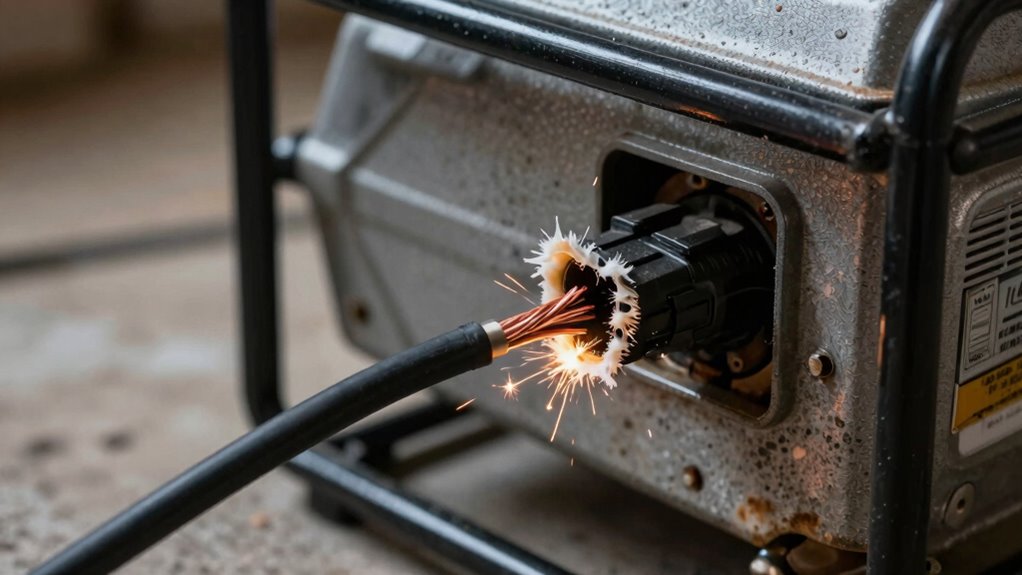

Using the wrong gauge extension cord for your generator can be dangerous quickly, as it may cause overheating, damage, or electrical fires. If the cord’s gauge is too thin for the load or distance, it can’t handle the current safely, especially over longer lengths. Always choose a cord with the correct amperage capacity and gauge to prevent voltage drops and overheating. To avoid these risks, make certain you’re using the proper cord—keep going to learn how to pick the right one.
Key Takeaways
- Using an extension cord with an inadequate gauge for long distances can cause overheating and electrical fires.
- Proper gauge selection prevents voltage drops that can damage generator and connected equipment.
- Overloading cords beyond their amperage rating increases risk of overheating and failure.
- Longer cords require thicker gauges to maintain safe, stable voltage levels.
- Regularly inspecting and replacing damaged cords ensures safe operation and prevents accidents.

When you need to extend the reach of your generator, choosing the right extension cord is essential for safety and performance. Using an incorrect gauge can lead to overheating, electrical fires, or damage to your equipment, so understanding the importance of proper gauge selection is crucial. Always prioritize safety precautions when handling generator extension cords. Ensure the cord is rated for outdoor use and designed to handle the power load of your generator. Never stretch a cord beyond its rated capacity, and avoid plugging multiple extension cords together, as this can cause voltage drops and increase fire risk. Before connecting your generator, inspect the cord for any cuts, frays, or damage that could compromise safety, and replace damaged cords immediately. Proper gauge selection is vital for maintaining safe and efficient operation, especially over longer distances or higher loads. Additionally, selecting a cord with the appropriate amperage capacity ensures it can safely handle the electrical load without overheating or failure. Using the correct gauge also helps prevent unnecessary voltage drops that could affect your equipment’s performance. Proper cord management helps prevent damage and maintains electrical safety. When plugging in your generator, make sure the connection is secure, and avoid forcing connectors into sockets, which can damage the prongs or socket. Remember that the length of the extension cord can also impact its performance; longer cords may require a thicker gauge to compensate for voltage drops.

50ft Outdoor/Indoor Extension Cord 10/3 Gauge Ultra Heavy Duty 3 Prong SJTW, Waterproof, Flexible Cold-Resistant Long Power Cord,15A 125V 1875W, Yellow by LifeSupplyUSA
- Durable Waterproof Design: Resilient for indoor and outdoor use
- Heavy Duty Construction: Oil, grease, moisture, and abrasion resistant
- Lighted End for Safety: Indicates power status and enhances visibility
As an affiliate, we earn on qualifying purchases.
As an affiliate, we earn on qualifying purchases.
Frequently Asked Questions
Can You Leave Generator Extension Cords Outside During Rain?
You shouldn’t leave generator extension cords outside during rain. Rain can cause electrical shorts or damage if cords aren’t weatherproofed. Follow weatherproofing tips, like using outdoor-rated cords and connections, to protect your equipment. When not in use, store cords indoors according to storage guidelines, ensuring they stay dry and safe. Proper storage prevents damage and keeps your extension cords reliable and safe for future use.
Are There Specific Safety Certifications to Look For?
You should look for cords with certification standards like UL or ETL, which guarantee safety and quality. Imagine a safety label glowing in the dark, guiding you to reliable gear. These labels confirm the cord meets strict safety standards, reducing risks. Always choose extension cords with clear certification markings, especially for outdoor use, to protect yourself and your equipment from potential hazards. Don’t take chances—trust certified safety labels.
How Long Can a Generator Extension Cord Safely Run?
You can safely run a generator extension cord for about 50 to 100 feet, depending on its gauge and wattage load. To guarantee generator safety, always use the proper gauge extension cord and avoid overloading it. Regular extension cord maintenance, like inspecting for damage and keeping connections secure, helps prevent hazards. Remember, longer cords require thicker gauges to handle the power safely, so choose wisely to keep everyone safe.
What Are Signs of a Damaged Extension Cord?
You might notice your extension cord is damaged if the cord insulation shows cracks, burns, or fraying, which indicates wear or exposure to heat. Also, check for connector corrosion—rusty or greenish buildup can hinder electrical flow and pose safety risks. These signs suggest the cord isn’t safe, and you should replace it immediately. Regular inspections help prevent electrical shocks or fires caused by compromised insulation or corroded connectors.
Can Multiple Extension Cords Be Connected Safely?
You can connect multiple extension cords safely, but only if you consider the power capacity and cord length. Guarantee the combined cords can handle the total power load without overloading. Keep the total cord length as short as possible to prevent voltage drops and overheating. Avoid daisy-chaining cords with different gauges, and always follow manufacturer guidelines. Properly rated cords prevent potential fire hazards and ensure your equipment runs safely and efficiently.
Conclusion
Choosing the right generator extension cord is like picking the right tool for a job—you need the correct gauge to keep everything running smoothly and safely. Using a cord with too thin a gauge is like trying to carry water in a leaky bucket; it just doesn’t work and can be dangerous. Always double-check your cord’s gauge before plugging in your generator. Stay safe and keep your power flowing—because safety, like a sturdy bridge, keeps everything intact.