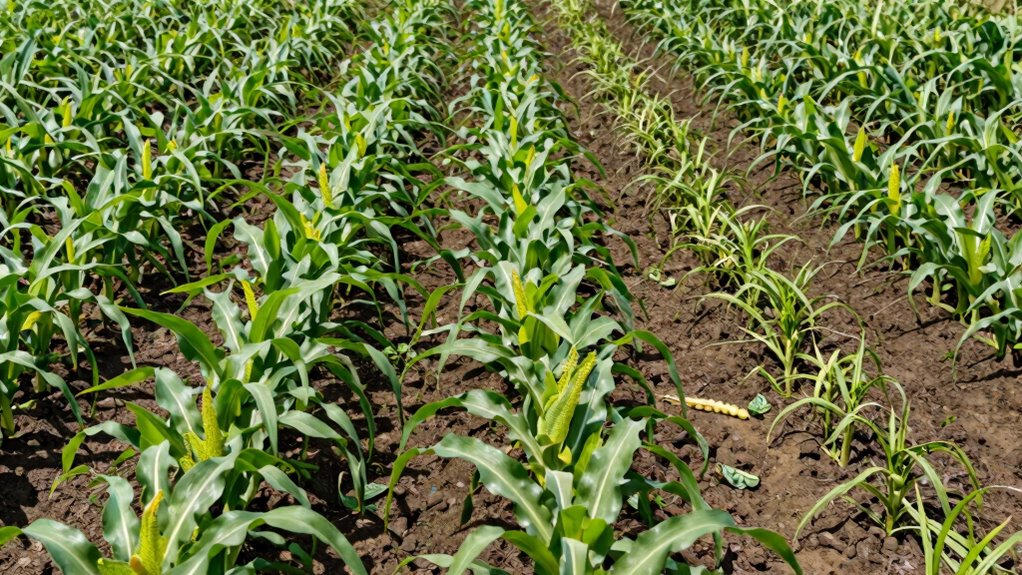

Crop spacing mistakes can cost you more than the seeds you buy because crowded plants struggle to grow healthily, leading to weaker roots and less nutrients. This results in lower yields and increased expenses on pest control, disease management, and soil recovery. Poor spacing also wastes land and makes farm equipment harder to use, raising your costs. Fixing spacing issues upfront saves money in the long run and boosts your crop’s overall success—there’s more to explore on how to get it just right.

Get garden gear delivered free — and shop member deals
- Fast, free delivery on millions of items
- Access to Prime Big Deal Days deals on October 6–7
- Prime Video, Amazon Music and more included
Key Takeaways
- Incorrect spacing leads to poor root development, reducing nutrient uptake and crop health, ultimately lowering yields.
- Crowded plants increase pest and disease spread, raising pest control and management costs.
- Overcrowding causes soil compaction and degradation, requiring costly remediation and reducing land productivity.
- Improper spacing results in inefficient land use, limiting overall farm output and profitability.
- Costs for fertilizers, water, and pesticides escalate due to increased competition and health issues from improper spacing.
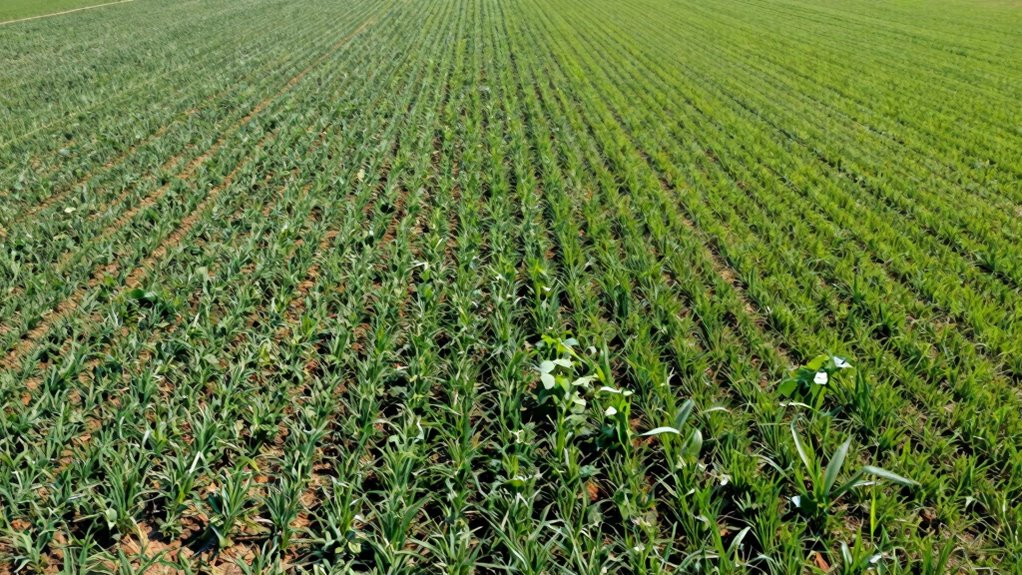
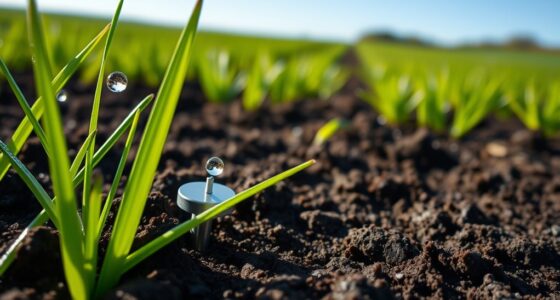
Have you ever wondered why your crops aren’t thriving as expected? One common mistake that many growers overlook is improper crop spacing. It’s easy to focus solely on seed quantity and overlook how spacing affects the overall health of your plants. When you plant too close together, it can lead to poor soil health because the roots don’t have enough room to grow and access nutrients effectively. Overcrowded plants compete for water, nutrients, and sunlight, which weakens their resilience and hampers growth. This competition can also create a perfect environment for pests and diseases to spread quickly, making pest management more complicated and costly. When plants are too crowded, pests find easier access and can multiply rapidly, increasing your need for pesticides and other control measures.
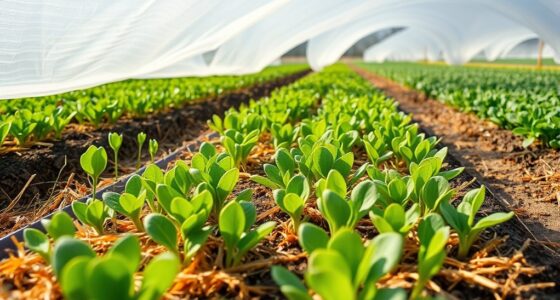
On the other hand, if you space your crops too far apart, you might waste valuable land that could be better utilized. But the real issue lies in the balance: ideal spacing allows for better airflow, reducing humidity around plants, which in turn minimizes the risk of fungal infections and pest infestations. Proper spacing improves soil health because it encourages more efficient root development, enabling plants to access nutrients more effectively. When roots are given enough room, the soil is less likely to become compacted or depleted in specific areas, which keeps your soil in better shape over time. This natural balance promotes healthier plants, reducing the need for chemical interventions and helping you maintain a sustainable farm. Additionally, understanding crop spacing can help optimize land use and increase overall productivity, especially when combined with soil health practices. Recognizing the importance of plant growth fundamentals can further support sustainable and productive farming practices.
Furthermore, implementing proper crop spacing techniques can also facilitate easier access for farm equipment and manual labor, streamlining your overall farm management process. Proper crop spacing also plays a crucial role in maintaining plant health, which is fundamental to achieving consistent yields and quality. The cost of poor crop spacing doesn’t stop at lower yields. It can lead to increased expenses for pest management, fertilizers, and water, all of which eat into your profit margins. When your plants are crowded and unhealthy, you’re essentially fighting an uphill battle to keep pests at bay and maintain soil vitality. Correct spacing techniques are a simple yet powerful way to prevent these issues from escalating. By giving each plant enough room to grow, you’re not only safeguarding their health but also reducing the long-term costs associated with pest outbreaks and soil degradation. Ultimately, investing time and effort into proper crop spacing pays off by boosting your crop quality, reducing input costs, and ensuring a more resilient, profitable harvest.
As an affiliate, we earn on qualifying purchases.
Frequently Asked Questions
How Does Crop Spacing Affect Overall Yield Quality?
Crop spacing directly impacts your yield quality by influencing plant density and nutrient competition. When spacing is ideal, plants have enough room to grow, reducing competition for nutrients, water, and sunlight. Proper spacing ensures each plant can develop fully, leading to healthier crops with higher quality. Conversely, too dense planting causes nutrient competition, stunting growth and decreasing overall yield quality, ultimately costing you more in the long run.
Can Improper Spacing Lead to Increased Pest Problems?
Yes, improper spacing can lead to increased pest problems. When plants are too close, they create a dense pest habitat, making it easier for pests to thrive and spread. Overcrowding also hampers airflow, which promotes disease spread. By maintaining proper crop spacing, you reduce pest habitat, improve airflow, and help prevent both pest infestations and disease proliferation, ultimately protecting your crop’s health and yield.
What Are the Long-Term Soil Impacts of Spacing Errors?
Think of your soil like a delicate dance floor—spacing errors can lead to long-term damage. When you misjudge, soil compaction increases, restricting root growth and water movement. Over time, nutrient depletion worsens, making it harder for crops to thrive. These issues can persist, reducing productivity and soil health for seasons to come. Proper spacing preserves your soil’s essentiality, ensuring a sustainable, fruitful harvest in the years ahead.
How Do Crop Spacing Mistakes Influence Irrigation Efficiency?
Crop spacing mistakes reduce irrigation efficiency by increasing water runoff and root competition. When plants are too close, they compete for limited water, leading to uneven growth and stress. Excessive spacing causes water to runoff instead of being absorbed, wasting resources. Proper spacing guarantees roots access water efficiently, minimizes runoff, and promotes healthy growth, ultimately saving water and improving crop yields.
Are There Specific Crops More Sensitive to Spacing Errors?
Certain crops, like tomatoes and peppers, are especially sensitive to spacing errors. When you misjudge spacing, roots compete fiercely for nutrients, leading to stunted growth, while dense planting can facilitate disease spread. These crops require precise spacing to prevent root competition and reduce disease risks. Proper spacing guarantees healthy development, maximizes yield, and minimizes costly crop failures, making careful planning essential for successful cultivation.
Conclusion
Ignoring proper crop spacing is like leaving money on the table—you might think you’re saving time, but in reality, you’re sacrificing yields and profits. When you make spacing mistakes, you risk overcrowding, disease, and poor growth, which can cost more than the seeds themselves. Pay attention to spacing guidelines, because every inch counts. Clear, precise spacing is your best investment, helping your crops flourish as smoothly as a well-conducted symphony.
Fall yard work Picks
leaf blowers
As an affiliate, we earn on qualifying purchases.