TL;DR
An outdoor garden storage box keeps patio cushions, tools, and toys organized and close at hand, but weather protection depends on its construction and placement. Compare interior dimensions, ventilation, material, lid support, and care instructions with what you plan to store and the conditions in your garden.
A sudden shower can turn a stack of patio cushions into a damp, musty chore. An outdoor garden storage box gives cushions, toys, and tools a place to go, but the label alone cannot tell you whether rain will stay out or whether your folded seat pads will fit.

Get garden gear delivered free with Prime
- Fast, free delivery on millions of items
- Prime Video, Amazon Music and more included
- Member-only deals all year
This guide helps you match a box to the things you store and the weather it faces. You’ll learn what to check in its dimensions, material, ventilation, lid, and placement, plus how to keep the contents in good shape. A little measuring before you buy can save you from wrestling a bulky cushion through a lid that is too narrow.
Measure bulky items and compare them with interior dimensions, the opening, and lid clearance.
Treat weather-resistant as a description of intended exposure, not a guarantee that no water can enter.
Choose resin, wood, or metal based on upkeep, appearance, and the contents you plan to store.
Dry cushions and tools before storage; airflow can help limit mustiness and condensation.
Check seating limits, lid support, anchoring instructions, and warranty guidance before buying.
Choose a size that fits the things you actually store
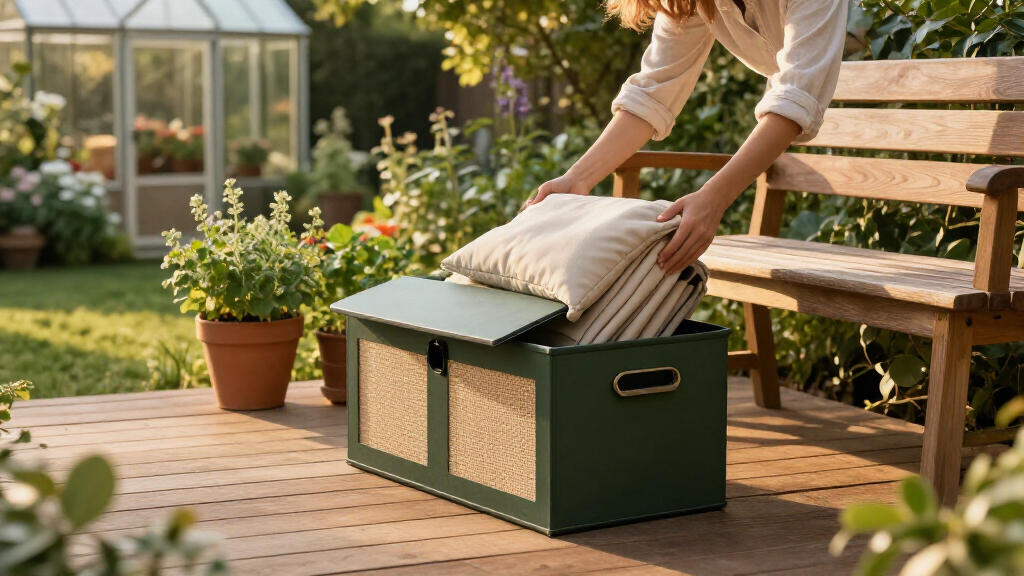
An outdoor garden storage box should fit the widest and bulkiest items you plan to store, with room to lift them in and out. Capacity in litres or gallons gives you a rough idea of volume, but it does not describe the opening or interior shape. Measure your items and compare those measurements with the box’s internal dimensions. A large capacity can still be awkward if the box is narrow, tapered, or has a small lid opening.
For example, four patio cushions may stack neatly in a wide, shallow box but refuse to fit in a taller, narrow one. A long-handled trowel or watering wand may need more length than the capacity number suggests. Check the opening, corners, and space beneath the lid as well as the base measurements. The usable space can be smaller than the outside dimensions because of sloped walls, hinges, or a lid that dips into the interior.
Make a quick list before you shop: seat pads, garden gloves, children’s toys, hand tools, or something else. If you store cushions and small items together, consider whether you can reach the items at the bottom without emptying everything. A tote or breathable bag inside the box can keep smaller pieces together, though extra containers take up room and may limit airflow around textiles.
Think about where you will open the lid. A box squeezed against a fence may technically fit the patio yet leave too little room to lift a lid or remove a cushion. Measure that working space too, especially if you want the box to sit under a table or beside a narrow path. A slightly smaller box that opens fully can be more useful than a larger one that blocks a walkway or makes everyday access awkward.
- Measure bulky items at their widest, longest, and tallest points.
- Check internal dimensions, the opening, and lid clearance.
- Leave access space so you can open and use the box comfortably.
Popular right now

Roborock Qrevo S Pro Robot Vacuum and Mop, 18,500 Pa Suction

Dyson V8 Cordless Vacuum

Bose QuietComfort Headphones (2nd Gen), Wireless Over-Ear Noise-Cancelling Headphones, Black
As an affiliate, we earn on qualifying purchases.
Know what weather resistance can and can’t protect
An outdoor garden storage box described as weather-resistant can handle some outdoor exposure, but the term does not promise that water can never get inside. Rain may enter through seams, hinges, or ventilation openings, and standing water can reach the base. Look for clear manufacturer guidance on exposure, care, and year-round use. This matters because the same design feature can help in one condition and create a tradeoff in another: vents reduce trapped moisture, for example, but may leave a path for wind-driven rain.
Picture a box on a level deck in light rain: its sloped lid sheds water, and its base stays out of puddles. The same box on uneven paving may collect water along one edge. Placement changes the job the box has to do, so a sheltered, well-drained spot can help even when the product is made for outdoor use. If water repeatedly gathers around the base, the box may be exposed to more moisture than its materials or joints are designed to handle.
If you need to keep textiles dry, store them only after they have dried and follow the product’s advice about bags or covers. A cover can add protection, but trapping damp fabric can lead to a stale smell. For tools, check for both rain entry and condensation; a closed box is not automatically a dry, ventilated space. This distinction is useful when choosing between a tighter-sealing design and one with more airflow: the first may limit rain entry, while the second may help moisture escape but requires more careful placement.
Weather varies by garden. A windy, cold spot may call for a box rated for year-round outdoor conditions, and light models may need securing according to the manufacturer’s instructions. Treat advertising terms as a starting point, then check the care instructions and warranty for details that fit your local conditions. A box that needs to be moved or covered in winter may still suit a sheltered patio, but could be inconvenient if you expect to leave it exposed all year.
Water-resistant does not mean waterproof. Seams, openings, placement, and standing water all affect what gets inside.
Compare resin, wood, and metal before you pick a look
Resin, wood, and metal each bring different strengths to an outdoor garden storage box. Resin is usually lightweight and low-maintenance; wood offers a natural appearance but may need periodic sealing or staining; metal can feel sturdy, though its finish and ventilation matter outdoors. The best choice depends on your setting, upkeep habits, and what you will store. Those differences shape everyday use: low upkeep can matter most on a busy patio, while a material that matches existing furniture may be worth extra seasonal care.
A resin box with a wicker-style finish may blend into a small balcony without adding much maintenance. A wooden chest may suit a garden with timber furniture, provided you are happy to follow its care guidance. A metal box might work for garden equipment, but inspect its finish and consider condensation if you plan to store items that rust or textiles that must stay dry. In each case, the finish and construction matter alongside the material name: a worn coating can expose metal to moisture, and untreated wood may need more protection than a treated model.
Neutral resin finishes that mimic wood or wicker, larger modular designs, and boxes that double as seats or side tables are common product trends. Some makers also offer recycled plastics or repairable parts. Those claims and features vary, so check what the manufacturer says about the material and its upkeep instead of assuming that a particular finish signals a specific lifespan. A modular box can be easier to fit into a changing space, while a seat-style model may save room, but both still need to meet your storage and access needs.
| Material | What it can suit | What to check |
|---|---|---|
| Resin | Lightweight, low-maintenance patio storage | UV guidance, assembly, and water entry points |
| Wood | A natural look alongside garden furniture | Sealing or staining advice and seasonal care |
| Metal | A sturdy-feeling place for outdoor gear | Finish condition, ventilation, and condensation |
Keep cushions fresh by managing moisture and airflow
Cushions stay in better shape when you store them dry and give moisture a way to escape. Ventilation helps reduce condensation and musty smells, but openings can also admit rain, so consider the box’s design and placement together. If your manufacturer provides specific care instructions, use those for your model. The goal is to limit both water entering from outside and moisture lingering inside; a design that addresses only one can still leave fabrics damp.
Imagine bringing in seat pads just after a cool, damp evening. They may feel dry on top while the seams and undersides still hold moisture. Let them air out before packing them away, and avoid pushing them tightly against a damp box wall. Breathable storage bags can help keep textiles together while allowing some airflow. They are most useful when cushions are already dry; bagging damp fabric can slow drying and make a musty smell more likely.
Tool storage has a different concern: metal tools can collect moisture and rust even when rain does not visibly enter. Wipe muddy tools clean and dry them before storage. If you keep both tools and cushions in one box, separate them in containers so dirt, sharp edges, and damp soil do not damage fabric. That separation uses some of the box’s capacity, but it reduces the chance that one muddy or rusty item spoils the items stored beside it.
A box can help keep items organized and close at hand, but it cannot dry wet contents for you. If your patio is exposed to repeated wind-driven rain, a sheltered location or an additional cover may help, provided it does not trap moisture. Check the box after a wet spell to see whether water or condensation has collected. If dampness returns, use that as a sign to change the placement or storage routine rather than assuming the contents will dry on their own.
- Dry cushions and tools before putting them away.
- Use breathable bags for textiles when suitable.
- Check after rain for dampness, puddles, or stale smells.
Check the lid, lock, and seat rating before you buy
A storage box lid needs to open safely and suit the way you plan to use the box. Gas struts or slow-close hinges can make a heavy lid easier to handle, while a lid stop can help prevent a sudden drop. Check whether the lid stays open and whether the hinges look sturdy enough for frequent use. An assisted lid can be especially useful when the box is deep, since you may need both hands to lift items out; it also adds moving parts that should be assembled and maintained as instructed.
That detail matters when you are reaching inside with both hands full of cushions, or when a child is nearby on a busy patio. If the box will sit against a wall, confirm that you can still lift the lid fully. Some models also need space behind them for hinges or an assisted-opening mechanism. Without that clearance, the lid may open only partway, making the advertised capacity difficult to use and putting extra strain on the hinges.
A box marketed as a bench should state its seating limit and have a lid designed to support people. A storage lid is not automatically a seat; leaning on it or letting a child climb on it can damage the box. If you need a seat, check the stated limit and follow the instructions for use. Seat-style boxes can save space on a small patio, but the seating feature is useful only if the lid is rated for the intended load and remains stable when opened and closed.
A padlock hole may deter casual access to garden gloves or toys, but it does not make a lightweight box high-security storage. Look at the construction and what you intend to leave inside. For valuable equipment, use storage designed for that level of security rather than relying on a small lock alone. The lock point is only one part of security; the lid, panels, and ability to anchor the box affect how much resistance it offers.
A lid is only a bench when the maker rates it for seating. Check the stated limit before anyone sits down.
Set the box on a stable spot and keep it in good shape
A level, well-drained location helps prevent water pooling beneath an outdoor garden storage box and reduces stress on its base. Follow the manufacturer’s instructions for assembly, anchoring, cleaning, and seasonal care. Uneven ground can leave a lid misaligned or make a large box feel unstable. That can affect more than appearance: a lid that no longer meets its frame evenly may leave a gap for rain, while a rocking base can make opening the box less safe.
For example, if rain runs across a paved patio toward a low corner, placing the box there may leave water sitting around its base. Move it to firmer, better-drained ground or address the pooling as the product guidance allows. In a windy location, check whether the box needs anchoring or should move under cover during severe weather. A more sheltered position may reduce exposure, though it should still leave room to open the lid and avoid blocking access around the patio.
Assembly affects how the box handles ordinary use. Make sure panels and hinges sit as intended, and do not force parts into place if the instructions call for a different order. A poorly assembled lid may leave a gap where rain can enter. Keep the instructions and warranty details so you can refer to the maker’s care advice later. Correct assembly also helps fittings carry weight as intended, which matters if the box is opened often or used as a rated seat.
For cleaning, use the method and products recommended for the material. A gentle wipe may suit many surfaces, but wood, coated metal, and resin can have different care needs. Check the box at the start and end of the outdoor season: remove debris, look for loose fittings or worn finishes, and let the interior dry before storing it for a long spell. Small maintenance needs are easier to address early; a loose hinge or worn coating can become a bigger problem if it is left through months of rain or sun.
- Choose a level, drained location with enough room to open the lid.
- Assemble and anchor the box as the manufacturer directs.
- Inspect and clean it periodically, following material-specific care advice.
Frequently Asked Questions
Are outdoor garden storage boxes waterproof?
Some are built to resist rain, but weather-resistant does not guarantee waterproof. Seams, hinges, vents, and standing water can let moisture in, so check the manufacturer’s guidance and place the box on well-drained ground.
What size storage box do I need for patio cushions?
Measure the cushions when folded or stacked, then compare their length, width, and height with the box’s internal dimensions and opening. Also check lid clearance so you can lift the cushions out without squeezing them through a narrow gap.
Will cushions get damp or mouldy inside a storage box?
Damp cushions can develop stale smells, especially when packed tightly in a closed space. Dry them before storage, consider breathable bags, and check the box after wet weather for condensation or water entry.
Can a garden storage box double as a bench?
Only use it as a seat if the manufacturer gives a seating limit and the lid is designed to support people. A typical storage lid may not hold a person’s weight safely, even if it looks sturdy.
Can I leave an outdoor storage box outside all year?
That depends on the model, your climate, and where you place it. Check the manufacturer’s year-round use and seasonal care instructions; in windy or cold locations, the box may need securing or moving under cover.
Conclusion
Choose your box by measuring what you will store, checking how its lid works, and matching its material and care instructions to your garden. Then give it a level, well-drained place and put away dry contents.
Do that, and the next time rain taps on the patio, your cushions and tools will have a sensible place to wait.