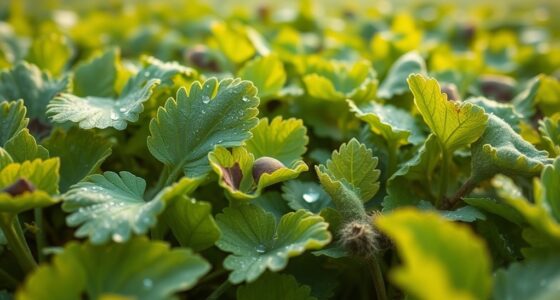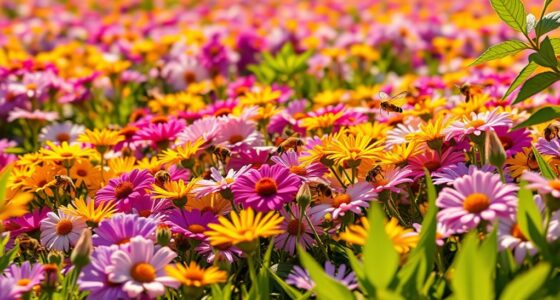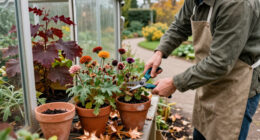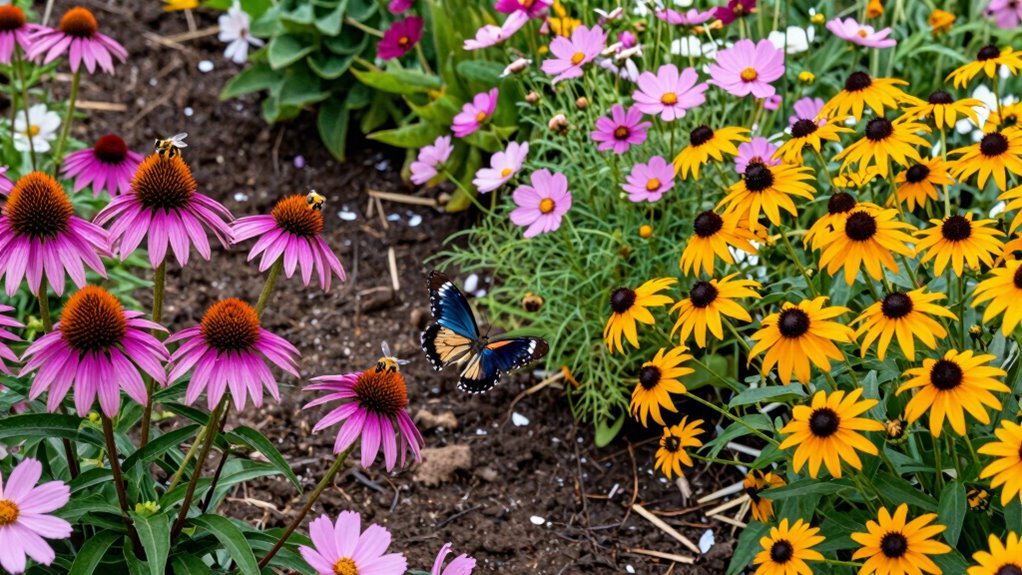

To design a better pollinator border around your crops, choose native plants that bloom at different times for continuous food and support diverse insects. Arrange plants in layers—ground covers, shrubs, and taller flowers—to create shelter and microhabitats. Avoid chemical pesticides, and instead use organic methods and natural predators to manage pests. Include habitat refuges and water sources to sustain pollinators year-round. Keep learning how these strategies can transform your landscape into a resilient, buzzing habitat.

Get garden gear delivered free — and shop member deals
- Fast, free delivery on millions of items
- Access to Prime Big Deal Days deals on October 6–7
- Prime Video, Amazon Music and more included
Key Takeaways
- Select a diverse mix of native flowering plants blooming at different times for continuous pollinator food sources.
- Use layered planting with ground covers, shrubs, and taller plants to create shelter and microhabitats.
- Incorporate native grasses and flowering weeds to provide nesting sites and overwintering refuges.
- Avoid chemical pesticides; instead, use organic, targeted controls and encourage natural predator populations.
- Include water sources and minimize disturbances during nesting seasons to support pollinator health and ecosystem stability.
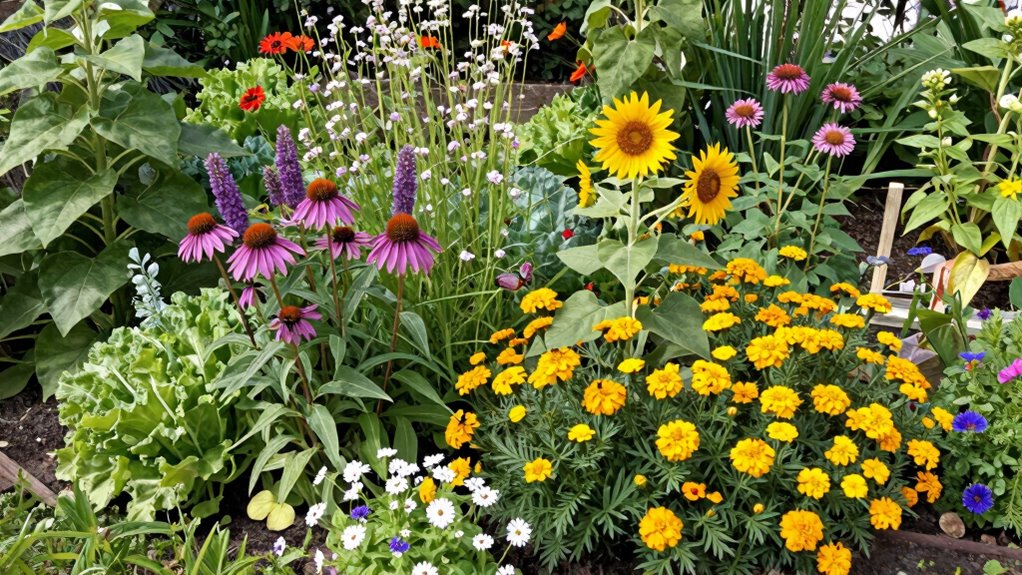
Ever wondered how to boost your crop yields while supporting local pollinators? Creating an effective pollinator border around your crops can do just that. The key is designing a border that attracts and sustains beneficial insects, while also protecting your crops from pests. To start, focus on native plant selection. Native plants are adapted to your region’s climate and soil, making them more resilient and easier to maintain. They provide the ideal nectar and pollen sources for local pollinators like bees, butterflies, and hummingbirds. Choose a diverse mix of flowering plants that bloom at different times throughout the season, ensuring a continuous food supply for pollinators. Incorporate plants with varying flower shapes and sizes to attract a wide range of beneficial insects. Be mindful of plant height and density; a layered planting approach with low-growing ground covers, mid-height shrubs, and taller flowering plants creates a microhabitat that offers shelter, nesting sites, and food sources. Considering plant diversity can further enhance the resilience of your pollinator border. Additionally, selecting plants that are native and well-adapted helps maintain local biodiversity and supports the health of the ecosystem. Including native pollinator-friendly plants can also attract a greater variety of beneficial insects, enriching your ecosystem. Incorporating native plant communities ensures a more stable and self-sustaining environment for pollinators year-round. Including a variety of flowering plants can also help extend the flowering season, providing continuous resources for pollinators even during less active months.
Alongside native plant selection, it’s essential to implement effective pest management strategies that protect both your crops and pollinators. Avoid broad-spectrum chemical pesticides that can harm beneficial insects; instead, opt for targeted, organic solutions like insecticidal soaps or biological controls such as beneficial nematodes. Regular monitoring of your border allows you to identify pest issues early, reducing the need for chemical intervention. When pests do appear, use manual removal or introduce natural predators like ladybugs or lacewings to keep pest populations in check. Maintaining plant diversity in your border naturally discourages pest outbreaks by disrupting their life cycles and limiting their food sources. Additionally, avoid planting overly dense or monoculture borders, which can create pest hotspots and reduce overall ecosystem health.
A well-designed pollinator border should also serve as a habitat refuge for beneficial insects year-round. Incorporate native grasses or flowering weeds that provide nesting materials and overwintering sites. Providing water sources, like shallow dishes with stones or mud puddles, further supports pollinator health. Remember to minimize disturbances during critical nesting times and avoid the use of harmful chemicals. With thoughtful native plant selection and strategic pest management, your pollinator border becomes a thriving ecosystem that enhances pollination, boosts crop yields, and promotes biodiversity. Not only will your crops benefit from increased pollination, but you also contribute to the health of your local environment, creating a sustainable, resilient farm landscape for years to come.
As an affiliate, we earn on qualifying purchases.
Frequently Asked Questions
What Are the Best Native Plants for Pollinator Borders?
You should choose native plants that thrive in your area to support pollinators effectively. Opt for a mix of flowering species to guarantee habitat diversity, which attracts a variety of bees, butterflies, and other beneficial insects. Native plant selection like bee balm, coneflowers, milkweed, and goldenrod provides essential nectar and pollen. By creating a diverse habitat, you foster a healthier ecosystem that benefits your crops and nearby wildlife.
How Do I Attract Specific Pollinator Species to My Border?
To attract specific pollinator species, you should focus on pesticide avoidance and habitat diversity. Avoid using harmful chemicals that can harm them, and plant a variety of native species that cater to their preferences. Provide shelter and nesting sites, such as bare ground or hollow stems. By creating a diverse habitat, you encourage targeted pollinators to visit your border, supporting their populations and enhancing pollination for your crops.
What’s the Ideal Size for a Pollinator Border?
You should aim for a pollinator border that’s at least 10-30 feet wide, providing enough space for native bees and butterflies to thrive. Incorporate native flowering plants and create diverse butterfly gardens to attract and support these pollinators. A larger border enhances habitat quality and guarantees a steady supply of nectar and pollen, making your garden more inviting for native bees, butterflies, and other beneficial pollinators.
When Is the Best Time to Plant Pollinator Flowers?
You should plant pollinator flowers as early as possible in spring or late winter, because that’s when seasonal blooms burst forth, attracting bees and butterflies before your crops even wake up. Check your planting schedules to match local frost dates, ensuring your flowers bloom just in time to draw pollinators when they’re most enthusiastic. Timing is everything—plant too late, and you miss the pollination party!
How Can I Maintain a Pollinator Border Year-Round?
To maintain a pollinator border year-round, you should perform seasonal planting, rotating flowers to match bloom times across different seasons. Incorporate a variety of native plants that attract pollinators in all weather conditions. Regular pest management is essential to keep pests from damaging your plants. Mulch to protect roots and guarantee consistent watering. This approach creates a continuous food source for pollinators and keeps your border vibrant throughout the year.
Conclusion
By creating a vibrant, thoughtfully designed pollinator border, you’re not just supporting bees and butterflies — you’re transforming your entire farm into an unstoppable fortress of productivity and resilience. Imagine a border so bursting with life, it attracts every pollinator in the universe, boosting your crop yields to legendary heights! Don’t settle for ordinary when you can craft a border that turns your fields into a buzzing, blooming paradise — the ultimate secret to farming greatness!
Fall yard work Picks
leaf blowers
As an affiliate, we earn on qualifying purchases.