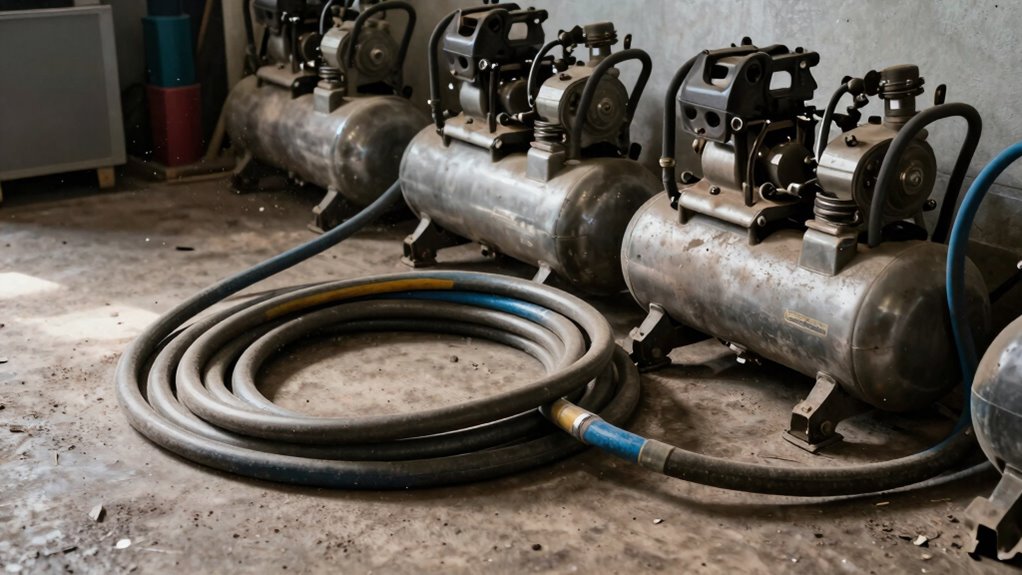

When hose planning is sloppy, you risk tripping hazards, hose damage, and inefficient tool performance. Tangled or stretched hoses can lead to leaks, pressure drops, or bursts, while draping hoses across walkways creates accidents. Proper routing and regular inspections prevent these issues, ensuring safety and longevity of your tools. If you want to avoid common mistakes and keep your workspace safe and efficient, keep an eye out for key tips that can make a difference.

Get garden gear delivered free — and shop member deals
- Fast, free delivery on millions of items
- Access to Prime Big Deal Days deals on October 6–7
- Prime Video, Amazon Music and more included
Key Takeaways
- Poor hose planning leads to tripping hazards and workspace clutter, increasing the risk of accidents around air compressors.
- Tangled or stretched hoses cause leaks, pressure drops, and damage to the compressor and tools.
- Inadequate routing can result in hose damage from heat, sharp edges, or excessive wear.
- Neglecting regular inspections allows damaged hoses to go unnoticed, risking compressor failure and safety hazards.
- Sloppy hose management increases the likelihood of compressor misuse and workplace injuries.
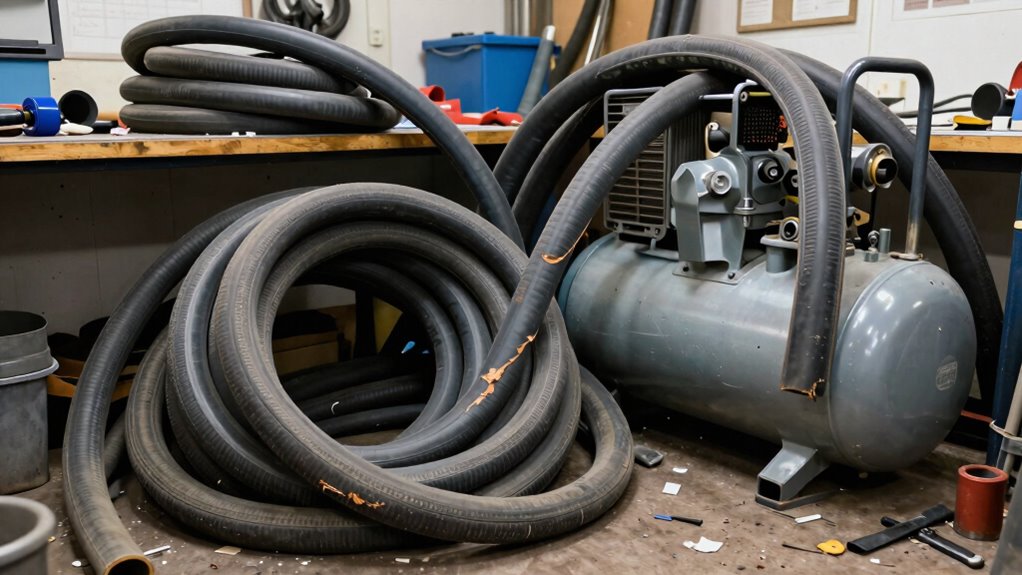
Are you looking for a reliable way to power your tools and equipment in a workshop? If so, you probably rely heavily on shop air compressors. But even the best compressors can become a hassle if hose planning isn’t handled properly. When hoses are tangled, stretched, or poorly routed, it not only hampers your workflow but also creates safety hazards. Proper air compressor maintenance isn’t just about keeping the machine in good shape—it also involves paying attention to how hoses are managed. Neglecting hose planning can lead to leaks, damage, or accidents that could have been easily prevented.
Proper hose management ensures safety, efficiency, and prevents costly damage in your workshop.
One of the most common ways hoses get misused is through sloppy routing. When hoses are draped across walkways or left tangled on the floor, they pose tripping hazards. This isn’t just inconvenient—it’s dangerous. You could easily trip and injure yourself or someone else. To avoid this, you should always use proper hose reels or hooks to keep hoses off the ground and neatly stored when not in use. This simple step *substantially* reduces the risk of accidents and *guarantees* your workspace remains safe.
Hose length management is also *essential*. If hoses are too long, they tend to tangle and create clutter. If they’re too short, you might be tempted to stretch them across the work area, which strains the hose and increases the chances of leaks or bursts. Measure your work area carefully and choose hoses that are just long enough to reach comfortably without excess slack. This will keep your workspace organized and reduce wear on the hoses, prolonging their lifespan. Additionally, understanding hose planning and proper routing techniques can make a significant difference in maintaining an efficient workspace. Regularly inspecting hoses for any signs of wear or damage is equally important to prevent unexpected failures. Proper air pressure regulation also plays a crucial role in extending the life of your hoses and ensuring safe operation.
Another key aspect is regularly inspecting your hoses for signs of wear or damage. Cracks, leaks, or stiff spots indicate it’s time for replacement. Damaged hoses can cause pressure drops, reducing the efficiency of your tools, or worse, they might burst under pressure, causing injury or property damage. As part of your air compressor maintenance routine, always check hoses thoroughly before and after use. Replace any compromised hoses immediately to maintain safety and performance.
Safety precautions should always be your top priority. Never operate your compressor with damaged hoses or without proper hose management. Always wear safety gear, including eye protection, when working with compressed air. Keep hoses away from heat sources and sharp edges. Proper hose planning not only improves your workflow but also *considerably* minimizes the chances of accidents, ensuring your workspace remains safe, efficient, and productive.
As an affiliate, we earn on qualifying purchases.
Frequently Asked Questions
How Do I Choose the Right Hose Length for My Compressor?
To choose the right hose length for your compressor, measure the distance from the compressor to your work area, adding extra length for hose storage and movement. Avoid overly long hoses that can cause pressure drops, so consider pressure regulation options to maintain consistent power. Proper hose storage keeps it organized and prevents damage, ensuring efficient airflow and safe operation. Always select a hose length that balances reach and performance.
What Are the Safety Precautions for Using Shop Air Compressors?
Think of safety as your best armor when using shop air compressors. Always wear safety gear like goggles and hearing protection. Before starting, review emergency procedures so you’re prepared for any mishap. Keep hoses properly maintained and avoid kinks or leaks. Never point the hose at yourself or others, and turn off the compressor when not in use. These precautions guarantee a safe, smooth operation every time.
How Often Should I Inspect and Replace Hoses?
You should inspect your hoses weekly to guarantee their durability and catch any damage early. Replace hoses immediately if you notice cracks, leaks, or wear, as these compromise safety and efficiency. Regular inspections help prevent sudden failures and extend hose lifespan. Keeping a consistent inspection schedule ensures your hoses stay in good condition, reducing risks and downtime. Remember, proactive maintenance is key to safe, reliable compressor operation.
Can I Use a Single Hose for Multiple Tools?
You can use a single hose for multiple tools, but it’s not always ideal. Did you know that nearly 60% of air leaks come from improper hose setups? When selecting hose materials, consider durability and flexibility, especially for portable versus stationary tools. Using one hose for multiple tools saves space, but make sure it’s rated for all tools’ pressure and airflow needs. Proper planning prevents misuse and extends your equipment’s lifespan.
What Are the Signs of Improper Hose Planning?
You’ll notice signs of improper hose planning through tangled hoses and frequent pressure drops. Poor hose organization causes clutter and delays, while inadequate pressure regulation leads to inconsistent tool performance. If hoses are hard to access or frequently kink, you’re likely neglecting proper planning. Regularly check your hose layout and pressure settings to guarantee smooth operation. Proper organization and pressure regulation help prevent damage and improve efficiency in your shop.
Conclusion
If you neglect proper hose planning, your shop air compressor becomes a ticking time bomb waiting to misfire. Think of it like a well-tuned orchestra—every instrument (or hose) must be in harmony for smooth operation. When hoses are tangled or poorly organized, you risk leaks, damage, and inefficiency. So, take the time to plan your hose layout carefully; it’s the secret ingredient to keeping your compressor humming like a well-oiled machine.
Fall Picks
fall essentials
As an affiliate, we earn on qualifying purchases.