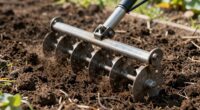
Choosing between a rear-tine and front-tine tiller depends on your garden size and soil type. Rear-tine models offer better balance, power, and stability, making them ideal for tough, compact soil and reducing back strain during heavy digging. Front-tine tillers are lighter, more maneuverable, and better suited for small gardens and lighter tasks, helping you work with less fatigue. If you want to find the perfect fit for your needs, there’s more to evaluate ahead.

Get garden gear delivered free with Prime
- Fast, free delivery on millions of items
- Prime Video, Amazon Music and more included
- Member-only deals all year
Key Takeaways
- Rear-tine tillers offer better weight distribution and ergonomic handles, reducing back strain during extensive soil work.
- Front-tine tillers are lighter and maneuverable, ideal for quick tasks and small gardens, minimizing back fatigue.
- For tough, compacted soil, rear-tine tillers provide deeper penetration with less physical effort, protecting your back.
- Proper technique and ergonomic features on either tiller type help prevent back injuries during operation.
- Choose a tiller matching your garden size and soil condition to ensure comfort and back health during use.
As an affiliate, we earn on qualifying purchases.
What’s the Difference Between Rear‑Tine and Front‑Tine Tillers?

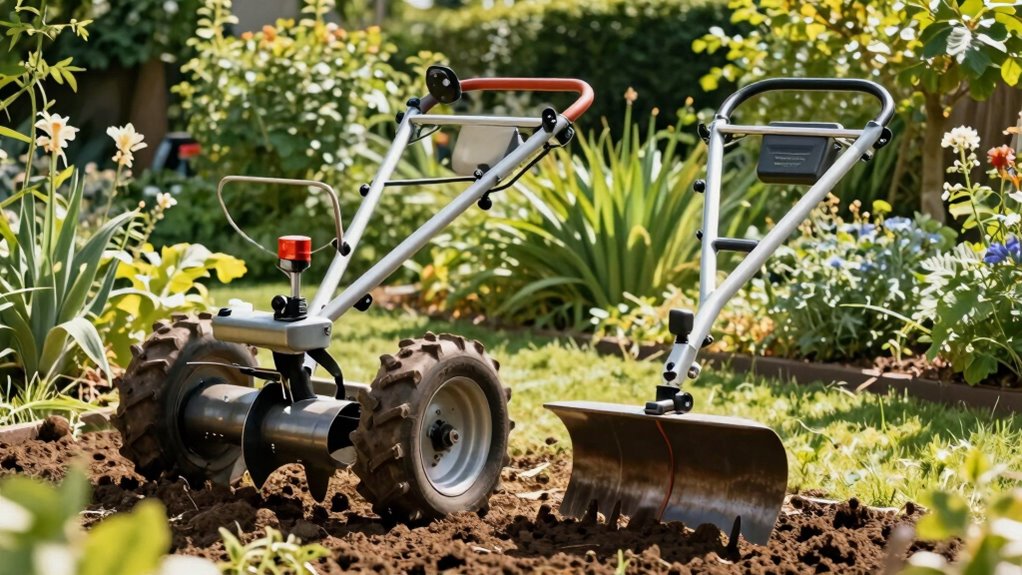
While both rear-tine and front-tine tillers are designed to break up soil, they differ markedly in their construction and how they operate. Rear-tine tillers have the engine and tines positioned at the back, giving you better balance and power, especially for larger garden design projects. They excel at soil aeration and breaking up tougher, compacted soil, making them ideal for extensive or challenging beds. Additionally, their stability during operation allows for more efficient work on larger plots. Rear-tine tillers often feature self-propulsion, reducing physical effort during use and increasing productivity. Front-tine tillers have the engine in front, with the tines rotating at the front, making them lighter and easier to maneuver for smaller gardens or raised beds. They are suitable for lighter soil tasks and quick jobs. Understanding these differences helps you choose the right tiller for your garden’s soil condition and design needs, saving time and effort. Choosing the right tiller can significantly improve your gardening efficiency and reduce physical strain.
Which Tiller Is Better for Tough, Compact Soil?

If you need to break up tough, compact soil, a rear-tine tiller is generally the better choice because of its power and ability to handle dense conditions. Its sturdy tines and strong engine make soil preparation easier, especially when dealing with stubborn, packed ground. This type of tiller penetrates deeply and loosens soil effectively, saving you time and effort. Additionally, a rear-tine tiller typically offers better soil aeration and structure, which promotes healthier plant growth. By improving soil aeration and structure, a rear-tine tiller enhances your garden’s productivity. It’s ideal for breaking through compacted layers and creating a fertile bed for planting. Proper equipment, such as a reliable tiller, plays a crucial role in achieving optimal results and reducing physical strain during gardening tasks. Choosing the right tiller based on soil conditions ensures you get efficient soil preparation and a healthier garden overall. For particularly tough soils, a tiller with powerful engine capabilities can make a significant difference in ease and effectiveness.
How Do Rear‑Tine Tillers Reduce Back Strain During Heavy Digging?

Rear-tine tillers help reduce back strain during heavy digging by allowing you to work more upright and maintain proper posture. Their design offers better weight distribution, so the machine stays balanced and easier to control. This minimizes the need to bend over, decreasing pressure on your back. Additionally, ergonomic handles help you grip comfortably, reducing fatigue. To maximize comfort, consider these features:
- Properly positioned ergonomic handles that support a natural working stance
- Even weight distribution that prevents tipping or pulling during use
- Increased stability, reducing the effort needed to maneuver heavy soil
- The rear-tine drive system that requires less force, easing the strain on your back
Implementing these features can also improve your home maintenance efficiency and reduce overall fatigue during gardening tasks. Ensuring the correct tiller size for your specific needs can further enhance comfort and effectiveness. Additionally, selecting a tiller with adjustable handles can help customize your working position for optimal comfort. Using a tiller with reduced vibration features can also help minimize fatigue and protect your joints during extended use.
Are Front‑Tine Tillers Easier to Maneuver in Small Gardens?
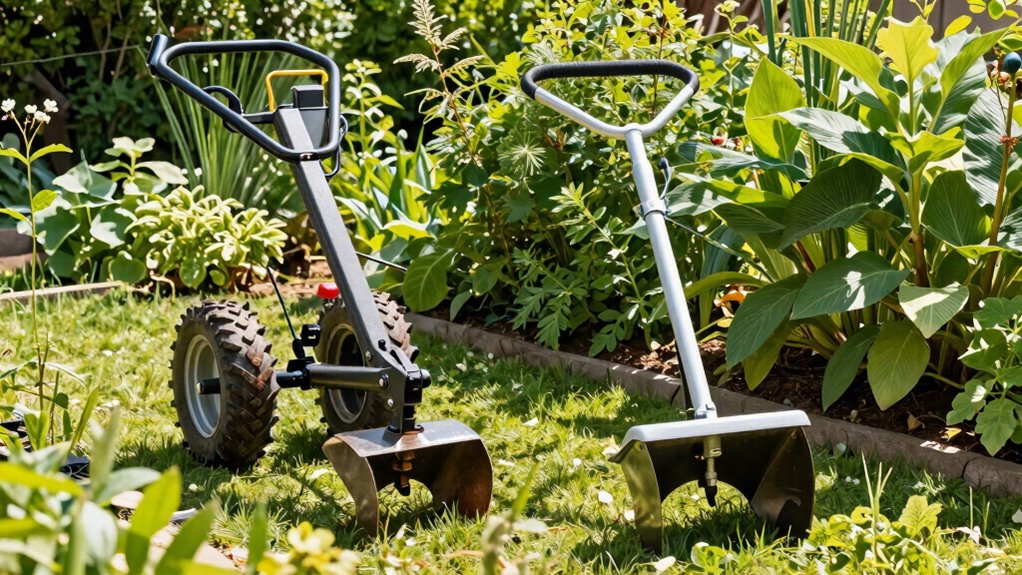
Front-tine tillers are generally easier to maneuver in small gardens because their compact size and lighter weight allow for greater agility. When working with a limited garden layout, you can easily navigate tight corners and narrow spaces, making soil preparation more efficient. Their design lets you quickly adjust direction and control the tiller’s movement, saving you effort and reducing strain. This ease of handling is especially helpful when breaking up soil in confined areas or around existing plants. The lighter weight means less fatigue during prolonged use, so you can focus on shaping your garden without battling a bulky machine. Additionally, their security features can help prevent theft or misuse in your yard. The ergonomic design of front-tine tillers also contributes to reduced strain on your body during extended use. Moreover, their maneuverability makes them ideal for small or intricate garden layouts, enhancing overall gardening efficiency. The inclusion of adjustable tines further improves control and adaptability for various soil conditions. Regularly maintaining the tiller and ensuring proper jewelry measurements can also help prevent damage and extend its lifespan. Overall, if your garden is small or has a complex layout, front-tine tillers offer better maneuverability and convenience.
How Easy Are These Tillers to Handle and Keep Stable?

Handling and stabilizing tillers depends largely on their design, but generally, front-tine models are easier to control because their lightweight construction allows for quicker adjustments and smoother maneuvering. You’ll find ergonomic handles improve comfort, reducing fatigue during use. Proper weight distribution also plays a key role: front-tine tillers tend to be more balanced, making them easier to steer. Additionally, integrating smart automation features can help monitor and adapt tiller performance for safer operation. Selecting a model with easy-to-use controls can further enhance handling and reduce operator strain, especially when considering ergonomic handle design that minimizes user fatigue during extended use. Moreover, considering models with adjustable tine depth can provide greater control and stability when working on different soil conditions. Incorporating stability features such as wider wheelbases can also improve operator confidence and safety during operation.
What Factors Should You Consider When Choosing a Tiller: Cost, Size, and Maintenance?
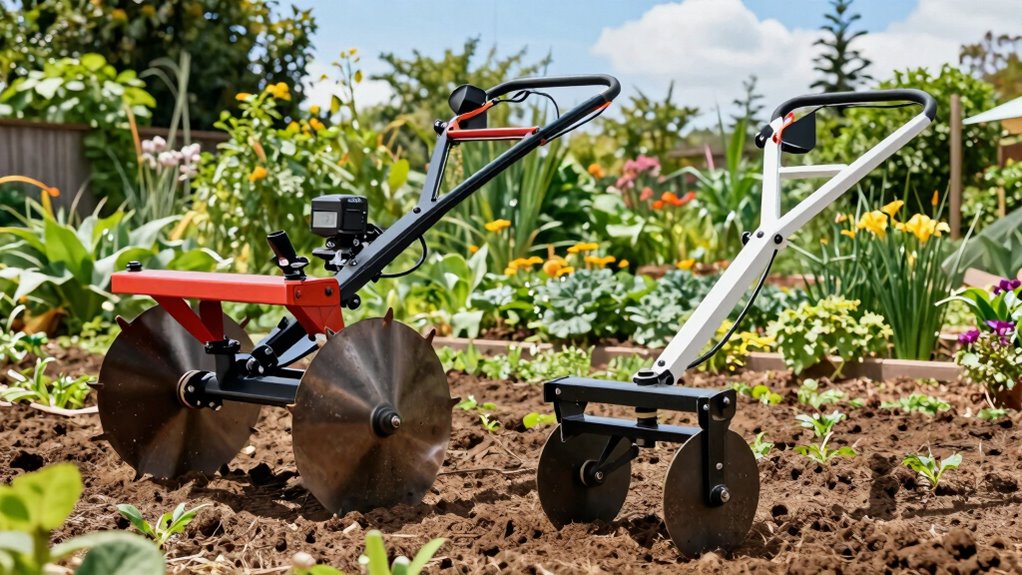
When choosing a tiller, your budget and how much space you have are key factors to contemplate. You’ll want a model that fits within your price range and storage area without sacrificing performance. Balancing cost, size, and maintenance needs will help you pick the best tool for your garden. Additionally, considering outdoor safety features can ensure a more secure and confident gardening experience. Incorporating easy-to-use controls can make operation more comfortable, especially for those new to gardening tools. Understanding the total-cost clarity of different models can also help you make a more informed decision over the long term.
Budget and Affordability
Choosing the right tiller involves balancing your budget with the features you need. Your garden budget and affordability options play a key role in narrowing down choices. To make an informed decision, consider these factors:
- Initial cost: Determine how much you’re willing to spend upfront.
- Long-term expenses: Factor in maintenance and parts replacement.
- Features vs. price: Assess which features provide value within your budget.
- Resale value: Think about the longevity and potential resale, if relevant.
Sticking to your garden budget helps you avoid overspending and guarantees you select a tiller that fits your financial situation. Exploring affordability options, like buying used or leasing, can also make quality tillers more accessible. This way, you get the best deal without sacrificing essential features.
Size and Storage Needs
Selecting the right tiller requires considering how much space you have for storage and how large the equipment can be to fit comfortably in your shed or garage. If you have a small garden bed or limited storage space, a compact tiller might be best. Front-tine tillers tend to be lighter and easier to store, making them suitable for smaller gardens. Rear-tine tillers are bulkier but often more powerful, so ensure your storage area can accommodate their size. Think about how often you’ll use the tiller and whether you’ll need to store it during the off-season. Proper sizing guarantees it fits well in your storage space and is manageable to handle when working in your garden bed.
Avoid These Common Mistakes That Can Hurt Your Back When Using a Tiller

To protect your back while using a tiller, it’s essential to maintain proper posture and avoid bending over excessively. Using correct tilling techniques, like keeping your knees slightly bent and engaging your core, helps reduce strain. Paying attention to these details keeps you safe and makes your work more efficient.
Maintain Proper Posture
Maintaining proper posture is essential to prevent back injuries while operating a tiller. To do this, focus on your body alignment and equipment features like ergonomic handle design and vibration reduction. Here are four tips:
- Keep your back straight and knees slightly bent to reduce strain.
- Adjust the handles to a comfortable height, ensuring minimal bending or reaching.
- Use the ergonomic handle design to maintain a natural grip, reducing fatigue.
- Engage your core and rely on vibration reduction features to lessen shock absorption on your spine.
Use Correct Tilling Technique
Using proper tilling techniques helps prevent back strain and injuries. Before starting, ensure your soil preparation is thorough—remove debris and rocks to reduce resistance. Garden planning is essential; know the size and shape of your plot to avoid overexertion. When operating the tiller, keep your movements controlled and steady, letting the machine do the work. Maintain a slight bend in your knees and keep your back straight, avoiding twisting motions. Don’t rush through the process; taking breaks helps prevent fatigue. Adjust the tiller’s depth to match your soil conditions, preventing unnecessary strain. By focusing on correct technique, you minimize the risk of injury and make tilling more efficient and safer.
Tips for Using Your Tiller Safely and Minimizing Back Pain
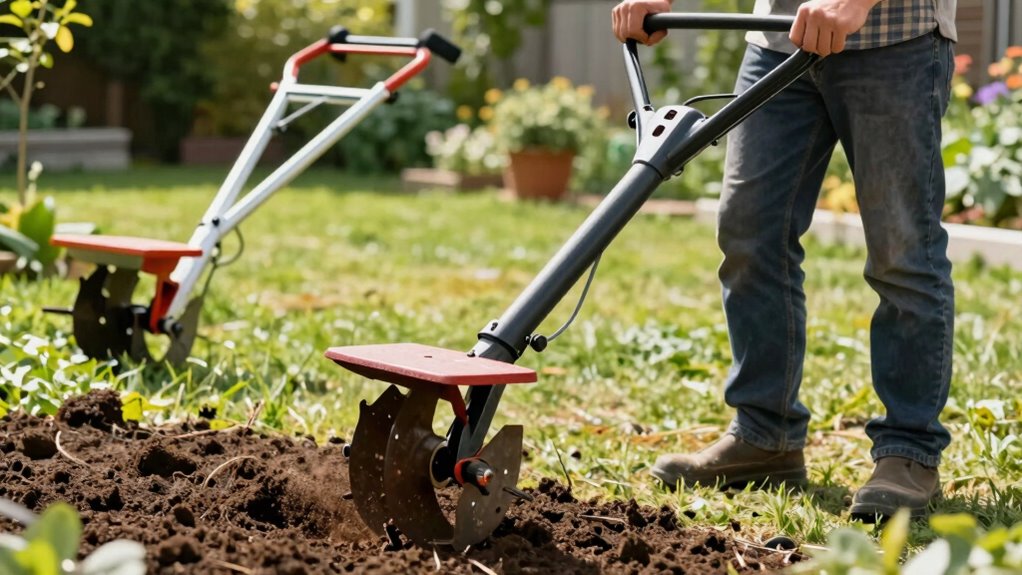
Handling your tiller safely is essential to prevent injuries and guarantee efficient gardening. To protect yourself and reduce back pain, always wear proper safety gear, including gloves, safety glasses, and sturdy footwear. When working with garden soil, maintain good posture—keep your back straight and bend at the hips, not the waist. Use both hands to control the tiller firmly, avoiding strain. Keep the tiller at a steady pace, and take frequent breaks to prevent fatigue. Confirm the area is clear of obstacles before starting. Adjust the tiller’s handles to a comfortable height to minimize bending. In the end, stay focused and avoid distractions. Following these tips will help you work safely and keep your back pain-free.
Which Tiller Is Right for Your Garden and Back Health?
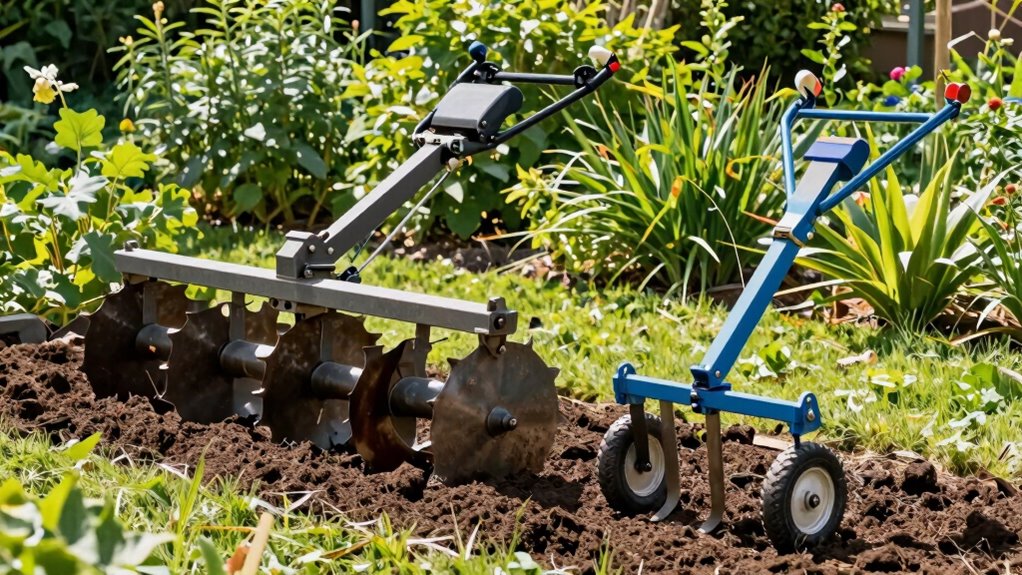
Choosing the right tiller for your garden depends on both the size of your space and your comfort needs. If you have a small to medium garden, a front-tine tiller with ergonomic handles can reduce strain and improve control. For larger areas, a rear-tine tiller offers more power and stability, easing back stress during extended use. Consider the power source options—electric models with ergonomic handles are quieter and easier to maneuver, while gas-powered tillers provide more strength for tough soil. Your choice should balance your garden’s size, soil condition, and your back health. Prioritizing ergonomic handles helps minimize fatigue, and selecting the appropriate power source ensures efficient, comfortable tilling without risking injury.
Frequently Asked Questions
Can Rear‑Tine Tillers Handle Larger Garden Plots Efficiently?
Yes, rear-tine tillers handle larger garden plots efficiently because of their greater tiller capacity. They’re designed with powerful engines and larger tines, making them ideal for extensive areas. You’ll find that they can break through tough soil and cover more ground quickly. If your garden plot size is substantial, a rear-tine tiller helps you finish your work faster and with less effort, saving your back in the process.
What Are the Maintenance Differences Between Rear‑Tine and Front‑Tine Tillers?
Imagine your tiller as a tiny mechanical beast needing TLC. You’ll spend more time on rear‑tine tiller lubrication and engine maintenance, because it’s built tougher and demands regular oil checks and belt adjustments. Front‑tine models are simpler, requiring less fuss, but still need periodic spark plug checks. So, if you love playing mechanic, rear‑tine’s your friend; if not, stick with the low-maintenance front‑tine.
How Does Tiller Weight Affect Ease of Use and Back Safety?
Tiller weight considerably impacts ease of use and back safety. Heavier tillers can challenge your ergonomics, making them harder to maneuver and increasing strain. Proper weight distribution helps balance the tiller, reducing fatigue and the risk of injury. Lighter models are easier to steer and control, especially for prolonged use. Always consider your strength and terrain to choose a tiller with the most suitable weight and ergonomic features that protect your back.
Are Electric Tillers Suitable for Heavy Gardening Tasks?
Electric tillers are great for light gardening tasks, but they aren’t ideal for heavy gardening limitations. With electric power, you get a quieter, cleaner experience, yet their power usually isn’t enough for tough, dense soil or large areas. If you’re tackling heavy-duty projects, a gas tiller might be your better choice. Electric tillers work well for small, manageable gardens, saving your back and reducing hassle.
What Safety Gear Is Recommended When Operating a Tiller?
Hold onto your bonnet and gear up! When operating a tiller, you should wear protective eyewear to guard against debris and hearing protection to prevent noise damage. Gloves and sturdy boots are also essential to keep your hands safe and feet firm. Always read the manual and stay alert to avoid accidents. Safety gear is your best friend, making gardening safer and more enjoyable.
Conclusion
Choosing between a rear‑tine and front‑tine tiller depends on your garden’s needs and your back’s comfort. Picture yourself guiding the tiller through rich, dark soil, each pass easing your workload and saving your strength. Whether you’re tackling tough ground or maneuvering tight spaces, select the one that feels right in your hands. With the right choice, gardening becomes a rhythmic dance, turning soil with ease and protecting your back for seasons to come.
Halloween Picks
halloween
As an affiliate, we earn on qualifying purchases.