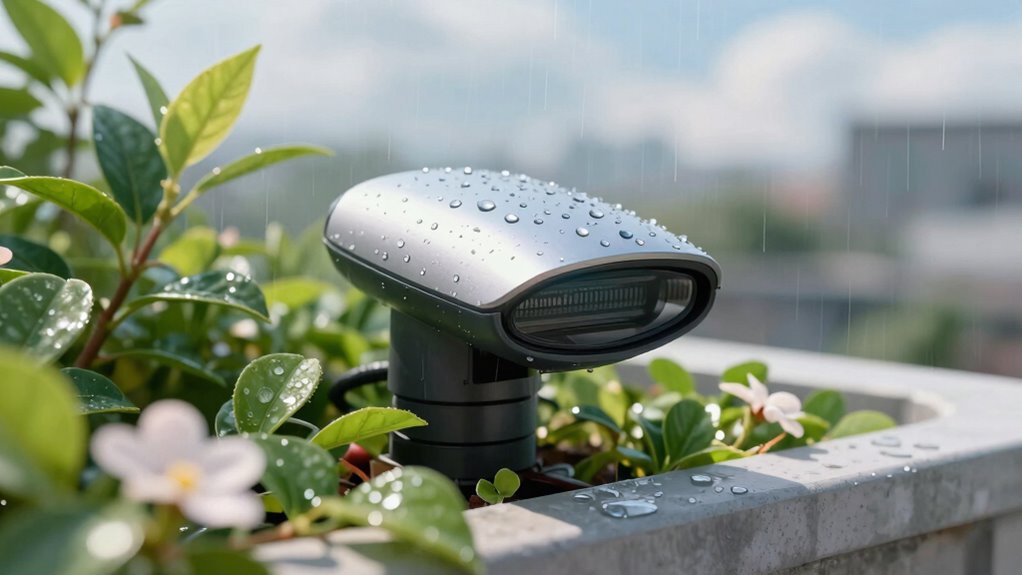
You save water with rain sensors, but proper placement is key to ensuring they work accurately. Position your sensor away from direct sunlight, debris, and areas prone to false readings, like near sprinklers or buildings. Proper placement helps prevent overwatering or missed rain detection, maximizing water savings. Regularly check and calibrate your sensor to keep it functioning well. If you want to learn how to optimize your sensor placement for the best results, keep exploring this topic.
Key Takeaways
- Proper placement prevents false readings caused by sunlight, debris, or wind, ensuring accurate rain detection.
- Position sensors away from direct sun exposure to avoid premature triggering or missed rain signals.
- Place sensors in representative areas, avoiding spots that don’t reflect typical moisture levels for the entire garden.
- Regularly calibrate sensors based on local weather patterns to maintain accuracy over time.
- Adjust sensor location if weather conditions or landscape changes affect moisture detection reliability.
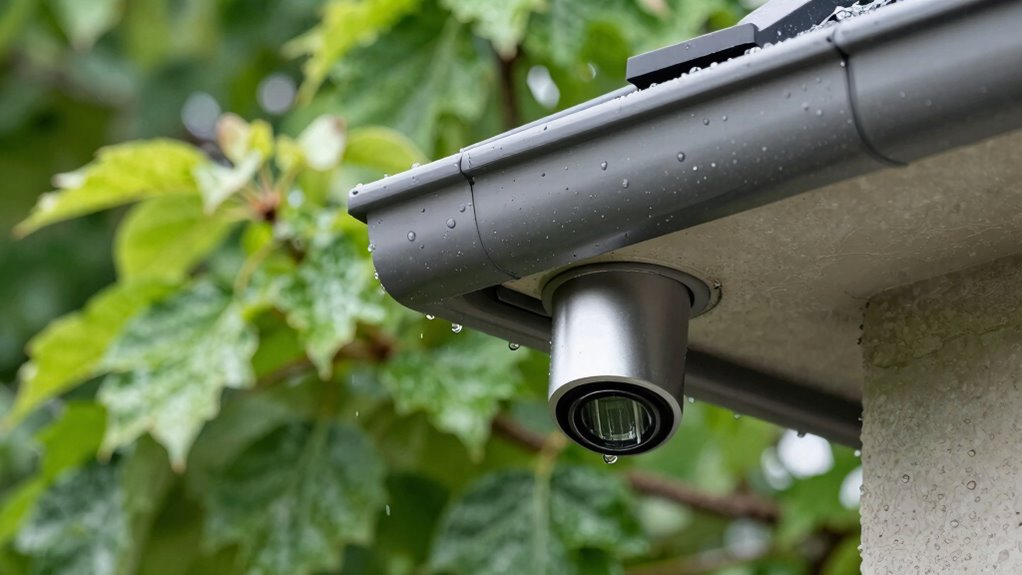
Rain sensors are an innovative way to conserve water by automatically stopping irrigation systems when it’s raining. They detect moisture levels in the air or soil and signal your sprinkler system to turn off, preventing unnecessary watering. However, for these sensors to work effectively, proper placement is vital. If you don’t position them correctly, you might find yourself wasting water or, worse, watering when it’s unnecessary. Understanding the importance of sensor calibration and weather variability can help you maximize their benefits. Additionally, considering sensor placement in relation to local climate conditions can significantly improve their performance. Proper placement also involves avoiding areas where the sensor might be exposed to direct sunlight or debris, which can skew its readings. Sensor calibration is essential to guarantee your rain sensor responds accurately to moisture levels. If the sensor isn’t calibrated properly, it might not detect rain at the right time or could trigger false alarms. For example, if it’s set too sensitive, it may turn off your system during light drizzles, leading to under-watering. Conversely, if it’s not sensitive enough, it may ignore significant rainfall, causing overwatering. Regular calibration helps keep the sensor’s response aligned with actual weather conditions, ensuring your irrigation system only operates when needed. To maintain optimal performance, it’s also important to monitor sensor accuracy regularly and adjust settings as weather patterns change. Recognizing weather variability is crucial because fluctuations in climate can impact the sensor’s effectiveness over time, so staying aware of changing conditions will help you fine-tune its operation. Many sensors come with adjustable settings, so take the time to fine-tune them based on your local climate and typical rainfall patterns.
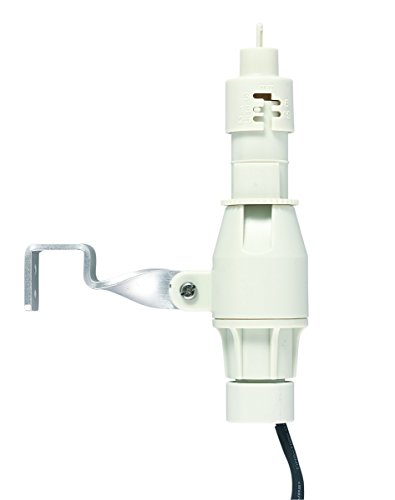
Orbit 57069N Rain and Freeze Sensor for Sprinkler Controllers
- Detects Rain and Freeze Conditions: Automatically detects rainfall or low temperatures
- Weather-Resistant Wiring: Durable wire runs from controller to outdoor area
- Water-Absorbing Disks: Disks expand when wet to suspend watering
As an affiliate, we earn on qualifying purchases.
As an affiliate, we earn on qualifying purchases.
Frequently Asked Questions
How Long Do Rain Sensors Typically Last Before Needing Replacement?
Rain sensors typically last between 3 to 10 years before needing replacement, depending on factors like sensor calibration and battery life. You should regularly check and calibrate your sensor to guarantee accuracy. Battery life varies based on usage and type, with most lasting 1 to 3 years. Replacing batteries promptly and maintaining proper calibration extend your sensor’s lifespan, helping you save water effectively and avoid unnecessary irrigation.
Are Rain Sensors Compatible With All Irrigation Systems?
Think of rain sensors as puzzle pieces; not every piece fits every puzzle. They aren’t compatible with all irrigation systems straight out of the box. You’ll need to check irrigation compatibility and possibly do sensor calibration to guarantee proper function. Some systems may require adapters or specific sensor types. Always verify your irrigation system’s specifications and consult the manufacturer to avoid mismatched components and ensure smooth operation.
Can Rain Sensors Be Automated or Require Manual Adjustments?
Rain sensors can be automated, but they often require manual override for specific conditions or adjustments. You’ll need to perform sensor calibration regularly to guarantee accuracy, especially after installation or weather changes. Manual override allows you to turn the system on or off if the sensor isn’t functioning correctly or if you prefer to control watering manually during certain weather. Proper maintenance ensures your rain sensor works efficiently and saves water effectively.
What Maintenance Is Required for Rain Sensors?
You should regularly check your rain sensor’s power supply to guarantee it’s functioning properly, especially after storms or power outages. Keep an eye on sensor calibration; dust, dirt, or debris can block its rain detection ability. Visualize the sensor like a vigilant eye, constantly monitoring weather, so cleaning its surface and verifying calibration and power supply checks keep it accurate and reliable, saving water while avoiding false triggers.
Do Rain Sensors Work Effectively in Heavy or Continuous Rain?
In heavy rainfall, rain sensors can still work effectively if they’re properly calibrated. Excessive rain might sometimes cause false readings, but regular sensor calibration helps maintain accuracy. You should also check for debris or dirt that could interfere with the sensor’s performance. Keep in mind that sensor placement matters; installing it in an open area away from obstructions guarantees it responds correctly during heavy or continuous rain.
Conclusion
While rain sensors can ensure water waste is minimized, their placement truly makes or breaks their effectiveness. Don’t assume any spot will do—proper positioning guarantees accurate readings and prevents unnecessary watering. You might think it’s too much hassle, but investing a little time now saves you from wasting water and money later. When installed correctly, rain sensors become reliable allies in conservation, proving that smart placement is key to maximizing their benefits.