Greenhouse condensation can seriously damage your plants by creating damp, sticky surfaces that promote fungal growth like powdery mildew and botrytis. When moisture builds up, it weakens plant tissues, stunts growth, and makes them more vulnerable to pests. High humidity also hampers transpiration, stressing your plants further. Managing condensation requires proper ventilation and watering practices—if you keep these under control, you’ll help guarantee healthier, more resilient plants. Discover more ways to protect your greenhouse environment.
Key Takeaways
- Condensation increases humidity, creating ideal conditions for fungal pathogens like powdery mildew and botrytis.
- Excess moisture on plant surfaces hampers transpiration, stressing plants and reducing their growth.
- Persistent dampness weakens plant tissues, making them more vulnerable to pests and diseases.
- High humidity from condensation promotes fungal infections that can cause crop loss.
- Poor airflow and excess moisture disrupt the balance needed for healthy plant development.
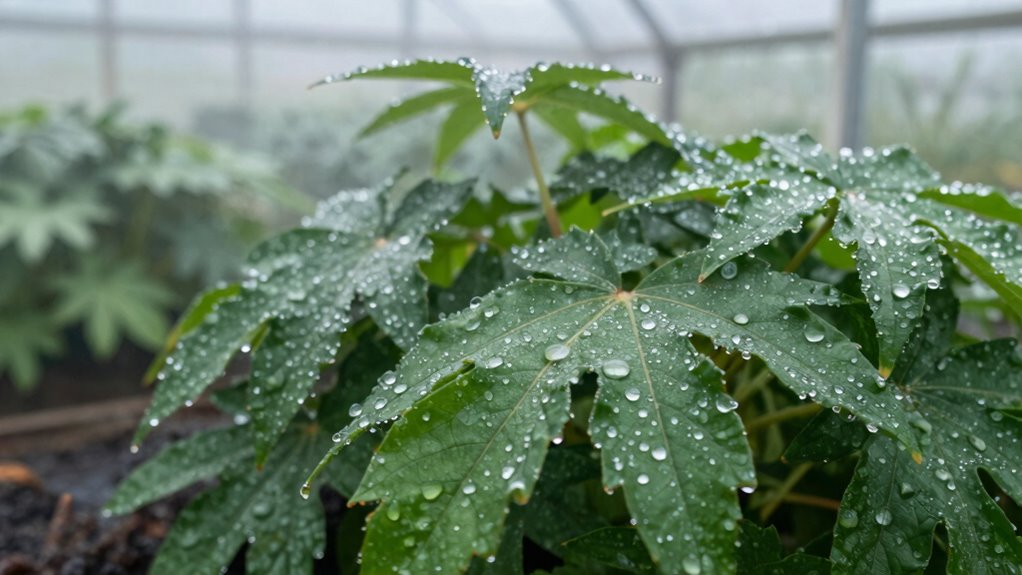
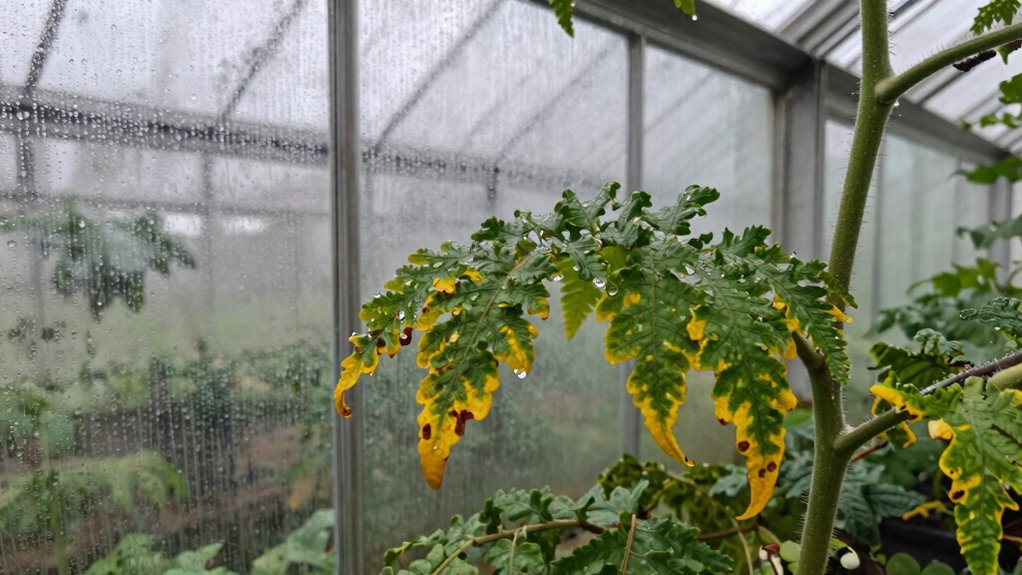
Greenhouse condensation can substantially impact your plants’ health, often leading to problems if not managed properly. When warm, moist air inside your greenhouse cools, it causes water vapor to condense on surfaces, increasing humidity buildup. This excess moisture creates an ideal environment for fungal growth, which can quickly spread and damage your plants. Fungal pathogens thrive in damp conditions, causing diseases like powdery mildew, botrytis, and damping-off that weaken plant tissues and stunt growth. If you ignore these signs, you risk losing entire crops or suffering considerable setbacks in your greenhouse management.
Greenhouse condensation fosters fungal growth, risking crop loss and plant health if not properly managed.
Your first instinct might be to think that condensation is just a minor inconvenience, but it’s a warning sign that your environment’s humidity levels are out of balance. Elevated humidity not only fosters fungal growth but also hampers your plants’ ability to transpire properly. When moisture lingers on leaves and stems, plants can’t effectively regulate water loss, leading to stress and making them more susceptible to pests and diseases. Proper humidity control is essential to prevent these issues and maintain a healthy environment. Over time, this stress can stunt growth, reduce yields, and weaken your plants’ overall resilience. Managing humidity buildup is vital to maintaining a healthy, productive greenhouse.
To prevent these issues, you need to monitor your greenhouse’s temperature and humidity levels closely. Ventilation plays a key role; by increasing airflow, you help disperse excess moisture and reduce condensation. Installing exhaust fans or opening windows during the warmest parts of the day can considerably lower humidity. Additionally, using dehumidifiers or moisture-absorbing materials can help keep the air drier, especially during humid seasons. Proper spacing of plants also allows better air circulation around each one, preventing moisture from settling on leaves and stems. Remember, consistent monitoring and timely adjustments are your best tools in controlling condensation and humidity buildup.
You should also pay attention to watering practices. Overwatering can contribute to high humidity levels, so water your plants only when necessary, and avoid splashing water on foliage. Mulching can help retain soil moisture without increasing surface wetness, reducing the chances of fungal spores taking hold. Regularly inspecting your plants for early signs of fungal infection allows you to take swift action before the problem worsens. Additionally, using ventilation systems effectively helps remove excess moisture and maintains a balanced environment. Good air circulation is essential for preventing stagnant pockets of humid air that encourage fungal growth. Creating a healthy environment through proper management techniques is crucial for overall plant health. In essence, managing condensation isn’t just about preventing visible water droplets; it’s about creating a balanced, healthy environment where your plants can thrive without the threat of fungal growth or disease. By staying vigilant and proactive, you’ll ensure your greenhouse remains a safe haven for your plants’ growth and productivity.
As an affiliate, we earn on qualifying purchases.
Frequently Asked Questions
How Can I Prevent Condensation Buildup in My Greenhouse?
To prevent condensation buildup in your greenhouse, focus on humidity regulation and proper plant placement. Use a dehumidifier or increase ventilation to control excess moisture. Spread out your plants to guarantee good airflow, reducing trapped humidity that causes condensation. Regularly monitor humidity levels and adjust as needed. These steps help maintain a balanced environment, preventing condensation from damaging your plants and promoting healthier growth.
Does Greenhouse Insulation Affect Condensation Levels?
Yes, greenhouse insulation affects condensation levels. While insulation helps with climate control by maintaining consistent temperatures, poor insulation materials can trap moisture, increasing condensation. You might think insulation always reduces humidity, but it can sometimes create colder surfaces where moisture condenses. To prevent this, choose quality insulation designed for greenhouses, ensuring proper ventilation and temperature regulation, which together help manage condensation and protect your plants.
What Are the Signs of Condensation-Related Plant Diseases?
You’ll notice signs of condensation-related plant diseases like mold, powdery patches, or fuzzy spots on leaves. High humidity control helps prevent these issues, as excess moisture fosters fungal infections. Keep an eye out for wilting, discolored, or rotting tissue, which can indicate fungal problems caused by persistent condensation. Regularly manage humidity levels to reduce these risks, and guarantee good airflow to keep plants healthy and disease-free.
Can Ventilation Alone Control All Condensation Issues?
Ventilation alone can’t control all condensation issues in your greenhouse. While it helps with humidity control and improves air circulation, excess moisture can still linger, especially during rapid temperature changes. You need a combination of measures—like dehumidifiers, heating, and proper spacing—to prevent condensation buildup. Good air circulation reduces stagnant air pockets, but it’s not a complete solution. Addressing condensation requires an all-encompassing approach for healthy plants.
Are Certain Plants More Susceptible to Condensation Damage?
Yes, certain plants are more susceptible to condensation damage due to their lower humidity tolerance and plant susceptibility. If you notice delicate or tropical species struggling, it’s likely because they can’t handle excess moisture or rapid humidity changes. You should monitor your plants closely, especially those sensitive to humidity fluctuations, and adjust ventilation or humidity controls to prevent condensation-related issues that can weaken their health and increase disease risk.
Conclusion
If you ignore greenhouse condensation, you risk harming your plants’ health. Imagine a hobby gardener noticing mold on their lettuce due to persistent moisture buildup—this is a clear sign condensation is unchecked. Regular ventilation and humidity control can prevent such issues. By staying vigilant and managing condensation, you protect your plants from diseases and guarantee a thriving, healthy greenhouse environment. Don’t let condensation be the silent threat to your gardening success.