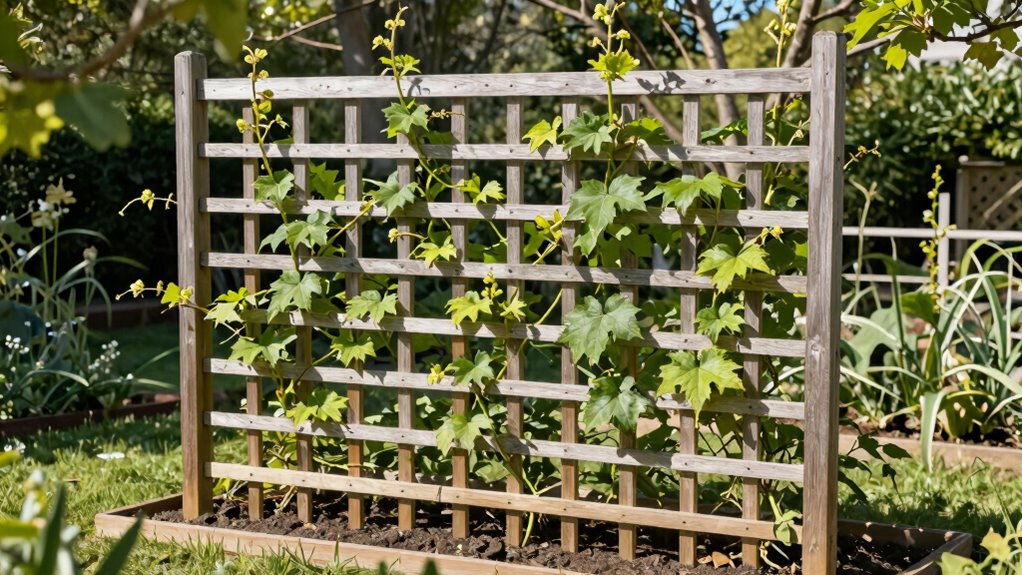
To build a better trellis plan before vines take over, start by evaluating your garden layout to position the trellis for ideal sunlight and space. Choose weather-resistant, sturdy materials that match your garden’s style. Design it as an attractive focal point and guarantee it provides strong support for future vine growth. Regularly prune and maintain the vines to prevent overcrowding. Keep these tips in mind, and you’ll set a solid foundation for a thriving, organized garden.
Key Takeaways
- Assess sunlight exposure and mature vine size to position the trellis effectively.
- Choose durable, weather-resistant materials that match your garden’s style.
- Design the trellis as a focal point, balancing support and decorative elements.
- Plan for sufficient height and support to accommodate future vine growth.
- Incorporate maintenance strategies like pruning to control vine spread and airflow.
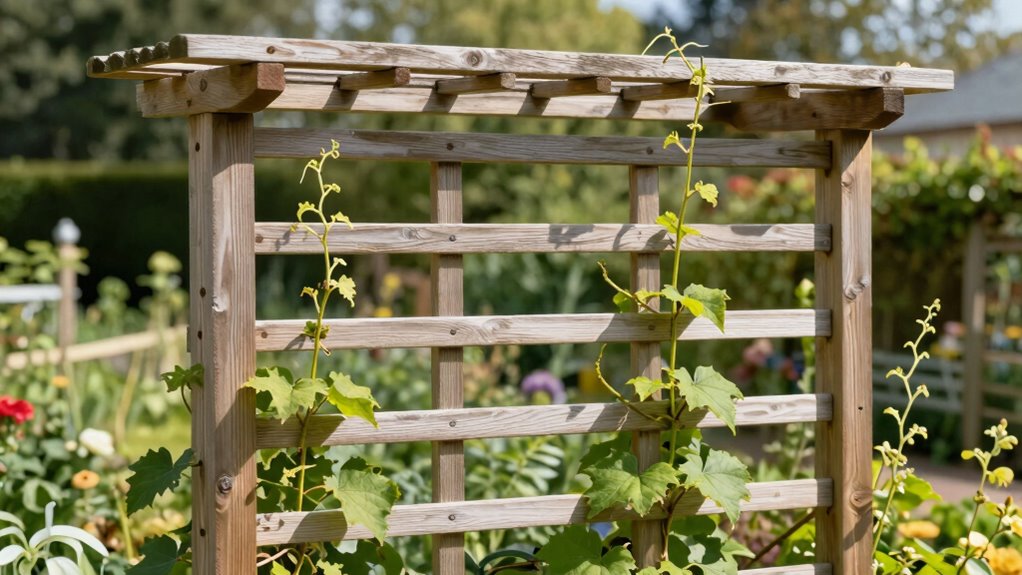
Creating a well-designed trellis plan is essential for supporting your plants and maximizing your garden’s productivity. When you plan carefully, you not only give your vines a sturdy structure to climb but also enhance the overall garden aesthetics. A thoughtfully designed trellis acts as a focal point, adding height and visual interest, and helps keep your garden organized. It’s important to contemplate the type of plants you’re growing, their growth habits, and the space available so that your trellis can serve both functional and decorative purposes.
Before installing anything, assess your garden’s layout. Think about where sunlight hits and where your vines will thrive best. Position your trellis in a way that maximizes sunlight exposure and allows your plants to grow freely without crowding. Reflect on the material—wood, metal, or plastic—and choose a sturdy option that can withstand weather conditions in your area. The size and height of the trellis should correspond to the mature size of your vines, so plan for future growth. This foresight prevents frequent adjustments and ensures your plants have ample support from the start.
As you build your trellis, keep garden aesthetics in mind. A clean, simple design can blend seamlessly with your landscape, while a more decorative structure can become a garden feature. Incorporate elements that complement your overall garden style, whether it’s rustic, modern, or whimsical. The visual appeal matters because a well-designed trellis can elevate the entire garden landscape. Remember, a cluttered or poorly planned trellis can detract from your garden’s beauty and create a chaotic appearance. Proper planning is key to ensuring your trellis remains both attractive and functional over time. Additionally, considering garden design principles can help you create a cohesive and harmonious outdoor space. Understanding plant growth habits can further inform your trellis placement and support structure, making maintenance more manageable. To maintain the health and appearance of your vines, regular vine pruning is essential, as it encourages healthy growth and airflow.
weather-resistant garden trellis
As an affiliate, we earn on qualifying purchases.
As an affiliate, we earn on qualifying purchases.
Frequently Asked Questions
Which Materials Are Best for a Durable Trellis?
For a durable trellis, you should choose rust-resistant materials like galvanized steel or powder-coated metal to withstand weather conditions. Wire mesh is an excellent option because it provides strong support for climbing vines while being easy to install. Avoid cheaper materials that rust or weaken over time. By selecting high-quality, rust-resistant materials and sturdy wire mesh, you’ll guarantee your trellis remains strong and functional, supporting your vines for years to come.
How Tall Should a Trellis Be for Different Vines?
Vine height varies based on the plant, so you should tailor trellis dimensions accordingly. For smaller vines like clematis, a height of 6 to 8 feet often suffices, while larger vines such as grapevines need trellises reaching 10 to 12 feet or more. Consider vine height, growth habit, and space, ensuring your trellis provides enough support, promotes healthy growth, and accommodates future expansion. Proper dimensions help your vines thrive and stay well-managed.
Can I DIY a Trellis Without Prior Carpentry Skills?
Yes, you can DIY a trellis without prior carpentry skills by following simple DIY basics and carpentry tips. Start with basic tools like a saw, drill, and measuring tape. Use straightforward designs, such as a grid or ladder style, and choose sturdy materials like wood or metal. Follow clear instructions, take your time, and don’t hesitate to watch tutorials. With patience, you’ll create a functional trellis perfect for your vines.
How Do I Prevent Pests From Damaging the Trellis?
Think of your trellis as a fortress protecting your plants. To prevent pests, choose pest-resistant plants and keep your trellis clean, removing debris and hiding spots. Use organic pest control methods like neem oil or insecticidal soap to deter unwanted visitors without harming beneficial insects. Regularly inspect your trellis, and act early if pests appear, ensuring your vines stay healthy and your garden remains resilient.
What Is the Ideal Placement for a Trellis in My Garden?
You should place your trellis where it enhances your garden aesthetics, ideally in a spot with plenty of sunlight and good airflow. Position it against a sturdy wall or in an open area to support your vines without overcrowding other plants. Think about visibility and accessibility, making sure it’s easy to tend and enjoy. Proper trellis placement not only supports healthy growth but also elevates your garden’s overall beauty.
Conclusion
By planning your trellis thoughtfully, you’re shaping your garden’s future, much like Da Vinci sketched his masterpieces with precision. When you consider the structure early on, you’re setting the stage for lush, healthy vines to flourish without chaos. Think of your trellis as the frame of a great painting—give it the right support, and your garden will thrive like a work of art, beautifully balanced and full of life. Start strong, and watch your vines grow with purpose.