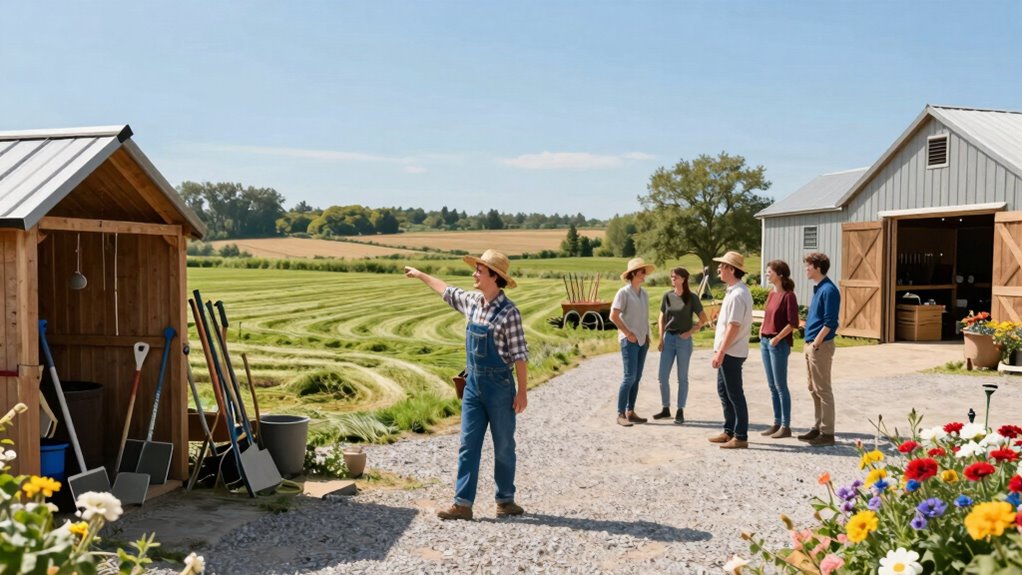

To prepare your farm for guest helpers or hired help, start by identifying potential hazards and making necessary adjustments. Clear pathways and designate work zones for safety, store tools properly, and guarantee safety gear is available. Inspect all equipment and maintain a tidy workspace. Establish safety protocols and conduct briefings to promote awareness. Fostering a culture of safety and responsibility helps everything run smoothly. If you continue, you’ll find even more tips to set your farm up for success.

Get garden gear delivered free — and shop member deals
- Fast, free delivery on millions of items
- Access to Prime Big Deal Days deals on October 6–7
- Prime Video, Amazon Music and more included
Key Takeaways
- Conduct a thorough walkthrough to identify hazards and establish safe work zones before helpers arrive.
- Organize tools, supplies, and chemicals in designated, easily accessible areas to prevent confusion.
- Provide safety gear and brief helpers on proper equipment use and safety protocols.
- Ensure all machinery and tools are well-maintained and safety shields are in place.
- Foster a safety-conscious culture through regular training and clear communication of procedures.

Preparing your farm for guest helpers or hired help is essential to guarantee a smooth and productive experience. When you’re bringing in others to work your land, safety should be your top priority. Assuring farm safety involves identifying potential hazards and making necessary adjustments. Clear pathways free of obstacles, proper signage, and designated work zones help prevent accidents and keep everyone on the same page. Before your helpers arrive, walk through the entire farm, point out any risky areas, and establish safety protocols. Providing protective gear like gloves, helmets, and boots isn’t just a good idea; it’s a must. Your goal is to create a secure environment that minimizes injuries and boosts confidence among your team.
Equally important is equipment maintenance. Well-maintained equipment not only keeps your farm running smoothly but also reduces the risk of accidents. Before your helpers start working, inspect all tools, machinery, and vehicles. Sharpen blades, check hydraulic systems, and ensure safety shields are in place. Faulty or poorly maintained equipment can lead to dangerous malfunctions, which can cause injuries or costly delays. Keeping a maintenance schedule and documenting checks help you stay organized and proactive. When your helpers need to use equipment, give them a quick rundown on proper operation and safety procedures. This not only boosts efficiency but also prevents misuse that could lead to breakdowns or accidents.
Having a clean and organized workspace makes a huge difference. Store tools and supplies in designated areas so your helpers can easily find what they need without clutter or confusion. Well-organized storage minimizes the chance of tripping hazards and ensures safety gear is readily available. If you’re working with chemicals like fertilizers or pesticides, make sure they’re stored correctly, labeled properly, and that everyone understands handling procedures. A clean, orderly farm also allows you to spot potential issues early, such as leaks or broken equipment, so you can address them before they become bigger problems. Maintaining farm safety protocols is crucial for preventing accidents and creating a responsible work environment. Incorporating proper hazard identification techniques can further enhance your safety measures.
Additionally, establishing clear procedures for handling chemical substances helps protect both your helpers and the environment from potential hazards. Implementing regular safety training sessions encourages your team to stay informed about best practices and safety updates. Finally, communication is key. Share your safety protocols clearly, and encourage your helpers to ask questions or voice concerns. When everyone understands the importance of farm safety and equipment maintenance, you foster a responsible and efficient working environment. This preparation not only protects your helpers but also ensures your farm operates smoothly, making the entire experience more productive and enjoyable.
As an affiliate, we earn on qualifying purchases.
Frequently Asked Questions
How Do I Ensure Guest Helpers Understand Farm Safety Protocols?
You guarantee guest helpers understand farm safety protocols by clearly explaining safety signage and emergency procedures at the start. Walk them through each sign’s meaning and demonstrate how to follow emergency steps. Encourage questions to clarify any confusion. Keep safety signage visible and up-to-date. Regularly remind helpers of protocols, especially before engaging in new tasks, so everyone stays safe and prepared throughout their time on the farm.
What Legal Requirements Should I Consider for Hired Help?
You need to guarantee your hired help complies with all relevant farm safety laws, including OSHA regulations and state-specific requirements. Make sure they receive proper training, understand safety protocols, and have access to necessary protective equipment. Legally, you must provide a safe working environment, maintain accurate employment records, and adhere to wage laws. Staying updated on legal compliance helps protect both your farm and your workers.
How Can I Accommodate Dietary Restrictions of Guest Helpers?
You can accommodate dietary restrictions by practicing thorough meal planning and allergy management. Ask your guest helpers beforehand about any allergies or specific dietary needs, and prepare meals that cater to those restrictions. Label ingredients clearly, avoid cross-contamination, and include a variety of options. By proactively managing allergies and customizing meals, you guarantee everyone feels safe, comfortable, and well-fed during their stay.
What Training Is Necessary for New Farm Workers?
You need thorough farm tool training and livestock handling skills to guarantee safety and efficiency. Start with basics like proper tool use, maintenance, and safety protocols, then move to handling livestock calmly and confidently. Remember, your new workers are the backbone of your farm, and proper training can prevent accidents and boost productivity. By investing in their skills, you transform your farm into a powerhouse of productivity and safety.
How Do I Handle Language Barriers With Diverse Helpers?
To handle language barriers with diverse helpers, you should use clear communication tools like visual aids, gestures, and simple instructions. Learning basic phrases in their languages can also help build rapport. Encourage open dialogue and patience, and consider using translation apps for more complex tasks. By actively adapting your communication methods, you guarantee everyone understands their roles, making teamwork more effective and the farm run smoothly.
Conclusion
Getting your farm ready for guest helpers or hired help isn’t just about physical setup—it’s about creating a welcoming, organized environment. Proper preparation boosts efficiency and morale, making work more enjoyable for everyone. Did you know farms with clear, well-maintained facilities see a 30% increase in productivity? By taking these steps, you’re not only easing their tasks but also fostering a positive atmosphere that benefits your entire farm operation. It’s a small effort with big results.
Fall yard work Picks
leaf blowers
As an affiliate, we earn on qualifying purchases.