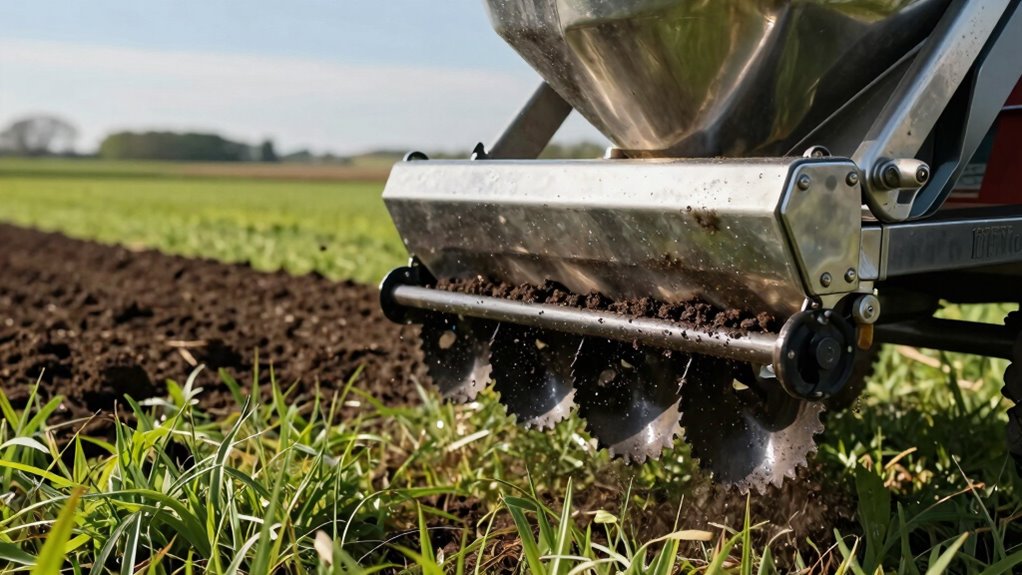

To help your compost spreaders work better, you should keep the moisture level even. Too wet compost clogs the equipment, while dry compost creates dust and reduces adherence. Check moisture regularly by feeling a handful, and adjust with dry materials or water as needed. Environmental factors like humidity and wind also affect moisture, so covering piles or adding dry matter can improve performance. Keep moisture under control, and you’ll see more even spreading and healthier soil—continue to explore for more tips.

Get garden gear delivered free with Prime
- Fast, free delivery on millions of items
- Prime Video, Amazon Music and more included
- Member-only deals all year
Key Takeaways
- Maintaining proper moisture prevents compost from becoming too heavy or too dusty, ensuring smooth spreading.
- Regular moisture checks help avoid clumping or dust, promoting even distribution across soil.
- Adjusting moisture content based on weather conditions improves spreader performance and consistency.
- Properly moist compost flows more easily through spreader mechanisms, reducing clogging and delays.
- Controlling moisture prevents compost spoilage, odors, and mold, maintaining high-quality spreading material.
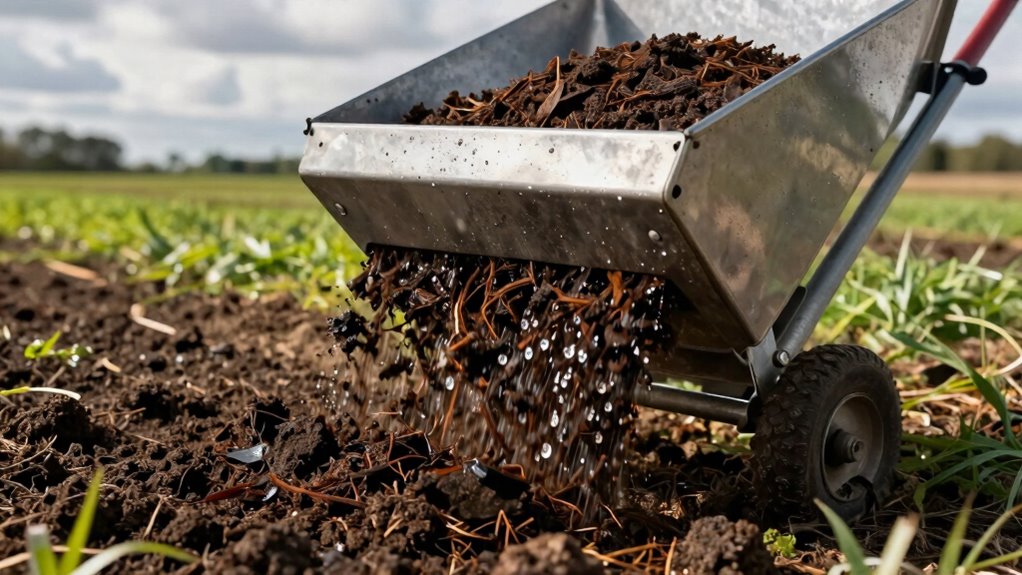
Maintaining proper moisture levels in compost material is vital for achieving ideal spreading results. When your compost is too wet or too dry, your spreader won’t perform as well, and your composting process can suffer. Moisture regulation directly impacts spreading efficiency, making it easier to distribute the compost evenly across your garden beds or fields. If your compost is overly moist, it becomes heavy and clumpy, which can clog your spreader and cause uneven application. Conversely, if it’s too dry, it turns into dust that blows away or doesn’t stick well to the soil. Finding the right moisture balance guarantees smooth operation and more uniform coverage.
Proper moisture balance in compost ensures smooth spreading and even soil coverage.
To control moisture levels effectively, start by checking your compost before loading it into your spreader. Feel a small handful—if it feels damp but not soggy, you’re in the ideal range. If it’s excessively wet, add some dry materials like shredded leaves or straw to absorb excess moisture. If it’s too dry, lightly sprinkle water and mix thoroughly to evenly distribute moisture. This step is vital because it prevents you from overloading your spreader with material that could cause clumping or dusting issues. Proper moisture regulation not only improves spreading efficiency but also reduces strain on your equipment, prolonging its lifespan. Additionally, understanding how environmental factors like humidity influence moisture levels helps you manage compost conditions more effectively. Regularly monitoring weather conditions and adjusting your practices accordingly can prevent moisture problems before they occur. Being aware of environmental influences can help you fine-tune your moisture management strategies for optimal results.
When using your compost spreader, keep an eye on the consistency of the material during application. If you notice clumping or uneven flow, it’s a sign that moisture levels need adjustment. Regularly checking and adjusting the moisture content ensures that your compost flows smoothly through the spreader’s mechanisms, resulting in more consistent coverage. This consistency is key to achieving healthy, thriving plants, as it guarantees that nutrients are evenly distributed across your soil. Besides, maintaining the correct moisture level minimizes waste and reduces the need for re-spreading, saving you time and effort. In addition, controlling moisture levels can help prevent compost spoilage and odors, contributing to a healthier garden environment. Proper moisture control is also crucial for preventing mold growth, which can compromise compost quality and safety. Recognizing the importance of moisture balance helps prevent issues before they arise, ensuring your compost remains in prime condition for application. By implementing simple measures to regulate moisture, you can greatly enhance your compost’s performance and your gardening success.
Incorporating moisture regulation into your routine also means being mindful of environmental conditions. High humidity can increase moisture levels in your compost, so you might need to add drier materials or cover your compost pile to prevent excess dampness. On dry, windy days, you’ll want to make sure your compost isn’t too dry, which can cause dust and uneven spreading. By adjusting these factors proactively, you optimize spreading efficiency and keep your compost in the best possible condition for application. Ultimately, controlling moisture is a simple yet effective way to enhance the performance of your compost spreader and improve your gardening results.
As an affiliate, we earn on qualifying purchases.
Frequently Asked Questions
What Are the Best Tools for Measuring Compost Moisture Levels?
You should use moisture sensors to measure compost hydration accurately. These tools give you real-time readings, helping you maintain ideal moisture levels for composting. A simple soil moisture meter is also effective, especially for quick checks. By keeping moisture levels in check, you guarantee better compost quality and more efficient spreading. Regularly monitoring moisture helps you avoid overly dry or soggy compost, making your composting process more successful.
How Often Should I Check Moisture Content During Composting?
Ever wonder how to keep your compost thriving? You should check moisture content every few days during active composting. Consistent moisture control guarantees proper compost aeration and prevents it from drying out or becoming too soggy. Regular monitoring helps you adjust watering or adding dry materials, maintaining ideal conditions. This way, your compost breaks down efficiently, producing rich, healthy soil for your garden.
Can Adding Water Improve Compost Spreader Efficiency?
Adding water can improve compost spreader efficiency if you aim for moisture uniformity. Slightly moist compost spreads more evenly, reducing clumping and ensuring better distribution. Before adding water, check your spreader calibration to ensure accurate application. Too much water can cause soggy material, hampering spreader performance, so add gradually. Regularly monitor moisture levels during spreading to maintain ideal conditions, making your composting process more effective and efficient.
What Signs Indicate Compost Moisture Is Too High or Low?
Your compost’s moisture level is like Goldilocks’ porridge—too wet or too dry, and it’s off. Signs moisture is too high include a slimy feel, foul smell, and slow drying from moisture evaporation. Too low, and compost becomes dusty, crumbly, and difficult to spread. If you notice compost drying out quickly or feeling brittle, it’s time to add water. Maintaining moisture balanced ensures efficient spreading and healthy decomposition.
How Does Compost Moisture Affect Nutrient Retention?
When moisture levels are off, your compost’s nutrient retention suffers. Too much moisture causes a moisture imbalance, leading to nutrient loss as nutrients leach out or become unavailable to microbes. Conversely, too little moisture slows microbial activity, also risking nutrient loss. By maintaining ideal moisture, you guarantee microbes efficiently break down materials, preserving essential nutrients. This balance helps your compost stay rich in nutrients and improves its overall quality.
Conclusion
When you keep your compost’s moisture just right, it’s like tuning a fine instrument—you’ll notice the harmony in faster, healthier decomposition. A well-moistened pile dances smoothly beneath your spreader’s reach, transforming waste into rich soil with ease. So, don’t let moisture slip away like dry sand; instead, nurture it gently, and watch your compost work its magic, turning chaos into a lush, fertile masterpiece that’s ready to bloom.
Halloween Picks
halloween
As an affiliate, we earn on qualifying purchases.