
TL;DR

Get garden gear delivered free with Prime
- Fast, free delivery on millions of items
- Prime Video, Amazon Music and more included
- Member-only deals all year
A gardening report advises waiting until a Christmas cactus has finished flowering before repotting, ideally until spring when new growth begins. Repotting during autumn bud formation may cause buds to drop; an urgent problem such as a cracked pot or rotting roots may justify careful intervention.
Gardeners should generally wait until a Christmas cactus has finished flowering before repotting it, ideally until spring, according to advice published by Ideal Home. The report warns that disturbing a plant while it is forming autumn buds may cause them to drop, putting its seasonal flowers at risk.
Jo Lambell, founder of Beards & Daisies, told Ideal Home that spring is the preferred time to repot, after flowering has ended and the plant begins producing new growth. That timing, she said, gives the cactus a better chance to settle into a new container. The guidance is to repot only when needed: Christmas cacti do not require frequent changes of pot, and a slightly snug container is not in itself a problem.
Lambell said repotting every two or three years is generally enough. She also cautioned against routine repotting in October, when the plant starts setting flower buds. According to her, disturbance at that stage can cause buds to fall, although the report does not quantify how often that happens or how much risk varies between plants.
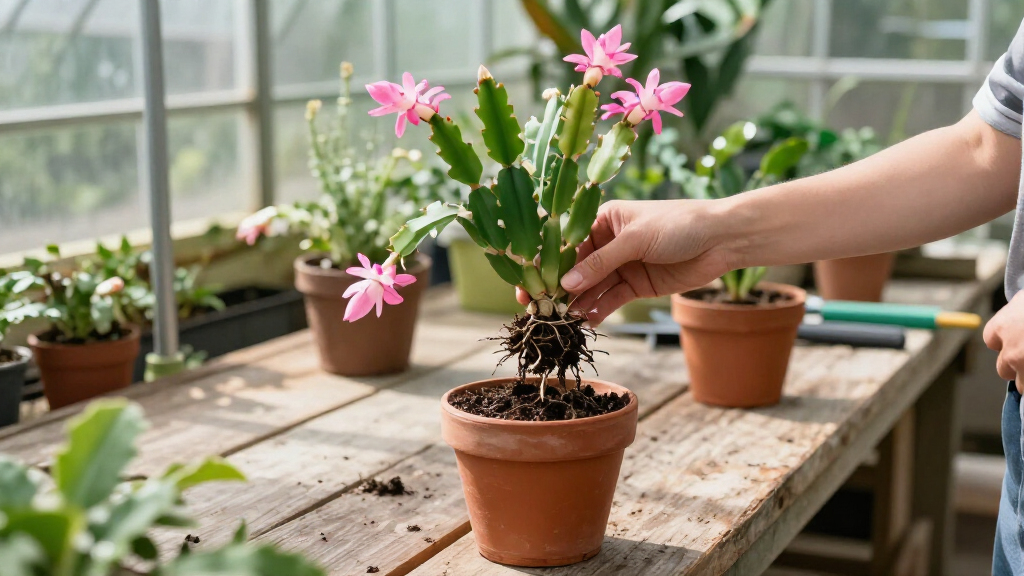
There are exceptions when waiting could worsen a serious problem. Lambell cited a cracked pot or soggy, rotting roots as reasons to act in October if necessary. In that situation, she advised handling the plant gently, keeping the root ball as intact as possible and returning it to the same place. Andy Little, a houseplant buyer at British Garden Centres, said rotten sections can be removed and healthy parts used to grow new plants, though he recommended doing this in spring when possible.
Protecting Buds Before the Holidays
The timing advice matters because a healthy Christmas cactus may already be preparing to flower when an owner notices it looks crowded in its pot. Acting on appearance alone could disturb buds just weeks before the expected display. Waiting until after flowering avoids that avoidable disruption in ordinary circumstances, while the exceptions make clear that plant health takes priority if the container is broken or roots are rotting.
The guidance also helps prevent unnecessary work. A plant that looks snug does not automatically need a larger pot, and the report says these cacti prefer not to be repotted often. For readers, the practical decision is to distinguish routine upgrades from urgent repairs: postpone the former, but respond carefully to severe damage.
Popular right now

Ninja Foodi DZ201 8-Quart DualZone 6-in-1 Air Fryer

Shark Navigator Robot Vacuum with Self-Empty Base, Dark Grey (RV2120AE)

iRobot Roomba 105 Vac Robot Vacuum
As an affiliate, we earn on qualifying purchases.
Autumn Buds and Spring Growth
The Ideal Home report frames the advice around the Christmas cactus’s seasonal cycle. It says the plant begins setting flower buds in October and recommends postponing ordinary repotting until after flowering, when spring growth starts. The advice is attributed to Lambell and Little, rather than presented as a new horticultural study or formal trial.
The report also notes that a mildly restricted pot can suit the plant and may help it flower. That is why it recommends repotting only when needed, with a two-to-three-year interval offered as a general guide rather than a fixed schedule for every plant. The article does not provide a specific pot-size rule or a detailed assessment method for root health.
“The best time to repot a Christmas cactus is in spring, once it has finished flowering.”
— Jo Lambell, founder of Beards & Daisies, as quoted by Ideal Home
When Waiting May Not Be Safe
The report does not establish how likely a cactus is to drop buds after repotting, or whether the risk differs by variety, severity of disturbance or growing conditions. It presents bud loss as a risk from Lambell, not a guaranteed outcome. It also does not set out a diagnostic checklist for distinguishing harmless pot crowding from root rot, or give detailed instructions for emergency repotting.
Readers therefore cannot use the article alone to determine the condition of a particular plant. Its stated exceptions are a cracked pot and soggy, rotting roots; for other urgent-looking problems, the appropriate response is not specified. The advice is general seasonal guidance, not a diagnosis.
Wait for Flowering to Finish
For a cactus that is budding and otherwise appears healthy, the report’s next step is to leave it undisturbed and plan any needed repotting for spring after flowering. If serious damage, such as a cracked container or rotting roots, makes waiting impractical, Lambell advises preserving as much of the root ball as possible and returning the plant to its usual spot.
After flowering, owners can reassess whether repotting is necessary rather than moving the plant automatically. The source gives no additional schedule or later update; its guidance is to keep routine repotting infrequent and time it around the plant’s seasonal growth.
Key Questions
When should I repot a Christmas cactus?
The Ideal Home report, citing Jo Lambell, recommends repotting in spring after flowering, when new growth begins.
Can I repot a Christmas cactus in autumn?
The report advises against routine autumn repotting because the plant starts setting buds in October and disturbance may cause them to drop. It identifies a cracked pot or soggy, rotting roots as reasons repotting may be necessary sooner.
How often does a Christmas cactus need repotting?
Lambell says these plants do not need frequent repotting and suggests that every two or three years is plenty. The report also says a snug pot is not automatically a problem.
What if my Christmas cactus has rotting roots?
The report treats soggy, rotting roots as a possible reason for urgent action. Lambell advises gentle handling, keeping the root ball as intact as possible and returning the plant to the same spot. The article does not provide a complete treatment guide.
Source: rss