
TL;DR

Get garden gear delivered free with Prime
- Fast, free delivery on millions of items
- Prime Video, Amazon Music and more included
- Member-only deals all year
A Gardening Know How report recommends reusing seven household items to protect plants during a light frost: cardboard boxes, cotton sheets, milk jugs, bubble wrap, newspaper, autumn leaves and paper tubes. Most covers need to be removed or adjusted in the morning, and they are not a substitute for sturdier protection during a prolonged freeze.
A Gardening Know How report describes seven household items that gardeners can reuse to protect plants during a light fall frost, including boxes, bedsheets, milk jugs and newspaper. The advice may help extend a harvest through a chilly night, but the report cautions that these materials offer limited protection and are not suited to a freeze that lasts for days.
The suggested items are cardboard boxes, old cotton sheets or pillowcases, plastic milk jugs, bubble wrap, newspaper, autumn leaves and toilet-paper or paper-towel tubes. Their uses differ: boxes, fabric, jugs and newspaper can cover above-ground plants; bubble wrap insulates the outside of patio pots; leaves insulate the soil around perennial crowns; and paper tubes act mainly as collars around seedlings.
For covers that go over plants, the report advises placing them loosely, with edges reaching the ground, while leaving air space around stems, as with floating row covers. Secure lightweight materials against wind. Remove covers in the morning once temperatures are above freezing, particularly cardboard and newspaper, which block light and can lose effectiveness when damp. The report warns that plastic should not touch foliage because it can carry cold to the leaves; use it on a frame or over a fabric layer instead.
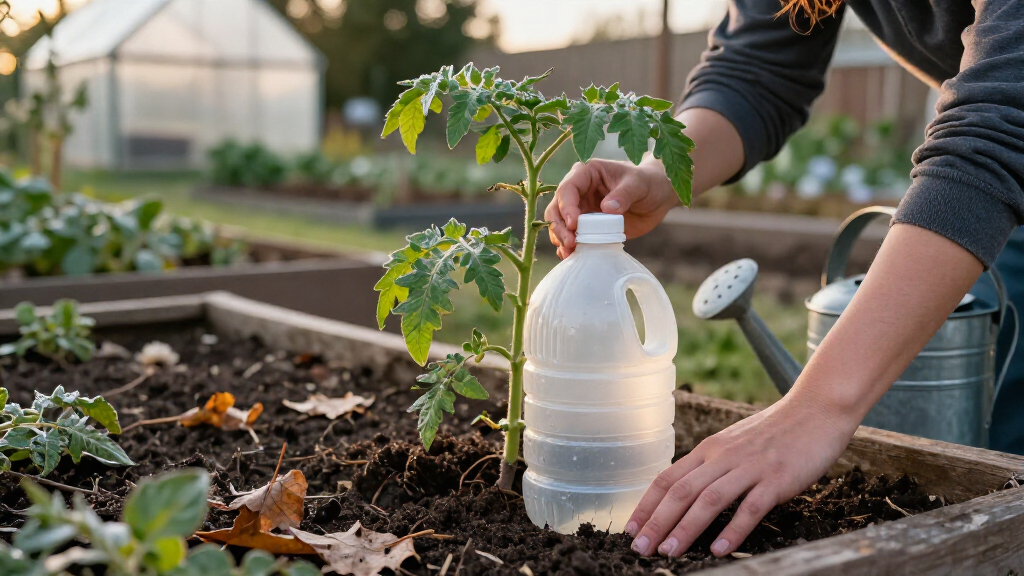
A cut-down milk jug can serve as a small cloche, with its open edge pushed into the soil. The report recommends leaving the cap on during cold nights and removing it on sunny days so heat can escape. Bubble wrap can be taped around a pot below its rim, where it insulates the container without contacting the plant. Paper tubes provide only modest protection from wind and frost and should be paired with another cover on cold nights.
Low-Cost Covers for Chilly Nights
For gardeners with tender crops still growing in fall, a night of frost can damage leaves or end production early. Reusing materials already at home offers a low-cost way to shield plants from a brief cold snap, without requiring a special purchase before the weather changes.
The approach is most useful for short, light frosts, not sustained freezing weather. Choosing an appropriate cover and removing it promptly also matters: a cover that blocks cold overnight can trap excess heat after sunrise, while wet paper or cardboard may stop insulating effectively. These methods are practical steps, not a guarantee that plants will survive every frost.
Popular right now

Dyson Car+Boat Cordless Handheld Vacuum

Roborock F25 BX Cordless Wet Dry Vacuum Mop

Bose QuietComfort Wireless Bluetooth Headphones with Active Noise Cancellation, Mic, USB‑C Charging, Deep Bass, 24‑Hour Battery – White Smok
As an affiliate, we earn on qualifying purchases.
How the Covers Hold Heat
The report explains that on a clear, calm night, soil releases some of the warmth it absorbed during the day. A cover can hold some of that heat near plants. The advice is to drape covers so their edges reach the ground while keeping the material from pressing against stems or leaves.
Different household materials address different risks. Above-ground covers help shelter foliage, while insulation around a pot slows heat loss from roots that are more exposed than roots in garden soil. A layer of shredded autumn leaves can insulate a perennial’s crown and roots after the soil has cooled, but does not protect its foliage. The report cautions against spreading leaves too early and advises leaving space around stems so the crown does not remain wet.
Limits of Household Frost Protection
The report does not provide temperature thresholds for when each item stops helping, or quantify how much warmth any cover retains. Its guidance is framed around light frost and brief cold; it says household materials cannot carry plants through a freeze that persists for days. Results may also vary with wind, moisture, cover fit and conditions at ground level, which can be colder than the air higher up.
No independent testing or expert quotations are included in the supplied source material. The recommendations should be treated as practical gardening guidance rather than measured performance claims. Gardeners facing a severe or prolonged freeze may need stronger protection or to move vulnerable container plants to shelter.
Check Forecasts and Remove Covers
Gardeners can set aside clean, dry boxes, fabric, jugs and paper ahead of a frost advisory, then choose a cover suited to the plant and the expected conditions. Secure lightweight covers before nightfall, keep plastic away from foliage and check the garden after temperatures rise above freezing.
For continued cold, reassess protection rather than assuming a household cover will remain effective. The source gives no forecast, regional guidance or follow-up update; the next step is to monitor local conditions and adjust or remove coverings as the weather changes.
Key Questions
Which household items can help protect plants from a light frost?
The report lists cardboard boxes, cotton sheets or pillowcases, plastic milk jugs, bubble wrap, newspaper, autumn leaves and paper tubes. Their uses vary, and paper tubes alone provide limited frost protection.
Should frost covers stay on during the day?
Most covers placed over foliage should come off once morning temperatures are above freezing. Removing them allows light and airflow and reduces the risk of trapped heat and moisture.
Can plastic touch plant leaves?
The report advises against direct contact. Plastic can transfer cold where it touches foliage, so use it on a frame or over a fabric layer rather than directly on leaves.
Will these materials protect plants through a long freeze?
Not reliably, according to the report. The suggestions are for a light frost or a brief cold night, not a freeze that lasts for days.
How should autumn leaves be used around perennials?
After the soil has cooled in late fall, shredded leaves can be spread a few inches around a perennial’s crown and roots. Leave a gap around the stem to avoid keeping the crown wet; leaves do not protect foliage.
Source: gardeningknowhow.com