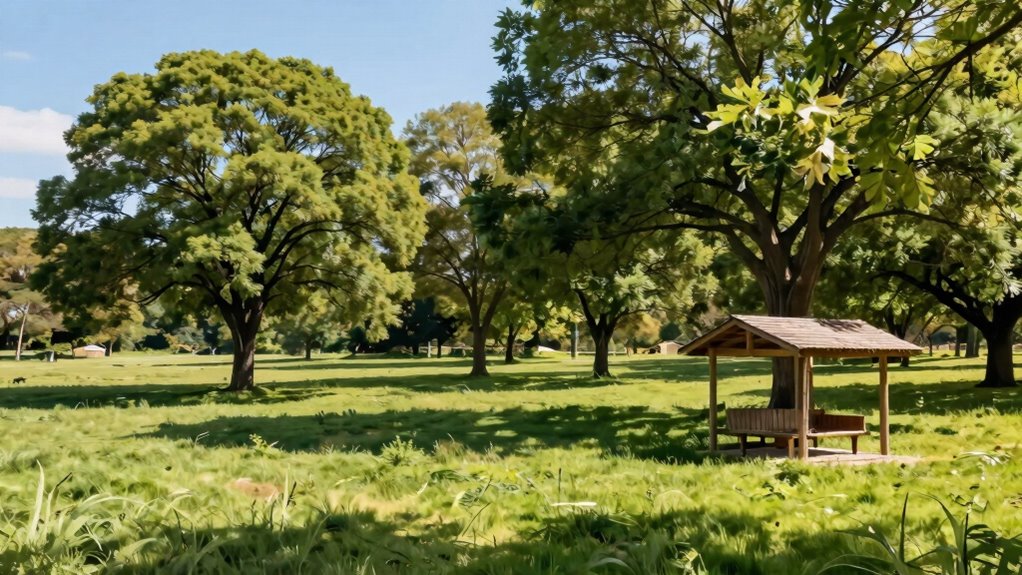

To plan better shade for summer grazing areas, position trees on the south or west sides to maximize shade during peak heat hours. Choose fast-growing, durable species suited to your climate, and guarantee they have enough space to develop fully. Regular maintenance helps keep trees healthy and provides long-lasting cover. By considering soil conditions and plant growth habits, you can create effective shade that protects your animals. Keep going to discover more tips for ideal shade planning.

Get garden gear delivered free with Prime
- Fast, free delivery on millions of items
- Prime Video, Amazon Music and more included
- Member-only deals all year
Key Takeaways
- Select fast-growing, durable trees suited to local climate and soil conditions for quick and long-lasting shade.
- Position trees on south or west sides of pastures to maximize shade during peak heat hours.
- Plan tree placement to ensure proper canopy development and avoid interference with fences or water sources.
- Incorporate soil management practices to promote healthy growth and optimal shade coverage over time.
- Implement regular maintenance to sustain tree health, canopy density, and long-term shade availability.
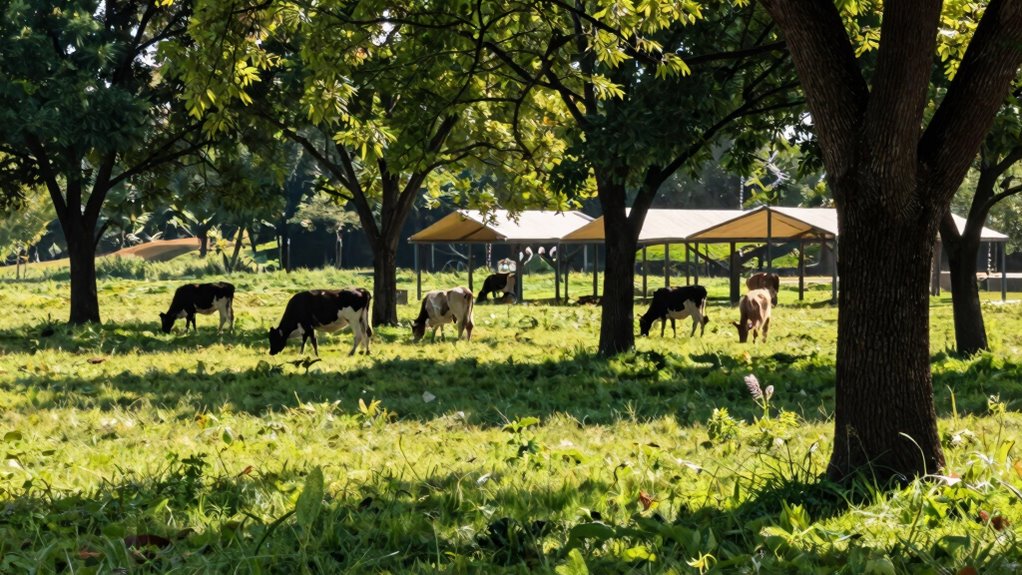
Summer heat can quickly turn grazing areas into stressful environments for your livestock, making shade vital for their health and comfort. Providing adequate shade helps animals stay cooler, reduces heat stress, and promotes better overall health. To create effective shade, you need to carefully plan your shade structures, considering the types of tree species and their growth habits, as well as the placement to maximize protection.
Choosing the right tree species is essential. Some species grow quickly and offer dense, long-lasting shade, while others may take years to develop a sufficient canopy. Fast-growing deciduous trees like willows or maples can provide quick relief, but you also want species known for their durability and deep root systems, such as oak or honey locust. These trees tend to withstand the wear and tear from livestock and endure harsh weather conditions better. When selecting tree species, consider your local climate, soil conditions, and the specific needs of your livestock to guarantee the trees thrive and provide consistent shade.
Once you’ve selected the appropriate tree species, you need to think about the shade structure’s placement. Proper positioning is key to maximizing shade coverage during the hottest parts of the day. Plant trees in a way that they can cast shade over the grazing areas during peak heat hours, typically from late morning to late afternoon. Avoid planting too close to fences or water sources where root competition or soil moisture issues might arise. Also, consider the direction of the sun; planting trees on the south or west sides of pastures can offer the most shade when it’s needed most. Understanding plant growth habits can help you select the best locations for shade trees to ensure they develop properly and provide optimal coverage. Additionally, taking into account soil conditions can significantly influence the success of your shade trees and their ability to provide consistent protection. Incorporating the right soil management practices can also improve the health and growth rate of your trees, ensuring long-term shade coverage. Recognizing the importance of tree maintenance can help extend the lifespan and effectiveness of your shade structures over time.
fast-growing shade trees for pasture
As an affiliate, we earn on qualifying purchases.
As an affiliate, we earn on qualifying purchases.
Frequently Asked Questions
How Do I Choose the Best Shade Materials for Livestock?
To choose the best shade materials for livestock, prioritize durability, breathability, and ease of maintenance. Opt for materials like shade cloth or natural tree canopies that provide ample coverage and withstand weather conditions. Keep in mind that shade maintenance is key to ensuring ongoing livestock comfort; regularly inspect and repair shading structures. Select materials that promote airflow, reduce heat stress, and keep your animals cool and comfortable during hot summer days.
What Is the Ideal Height for Shade Structures?
The ideal height for shade structures is typically around 8 to 10 feet, giving livestock plenty of space to comfortably seek shelter. You should consider tree growth potential and shade spray options when planning. Taller structures promote better airflow and prevent overheating, while allowing space for trees to thrive. Shade spray can supplement natural shade, but ensuring structures are sufficiently high guarantees plenty of room for animals to relax and cool down effectively.
How Can I Ensure Shade Lasts Through Extreme Weather?
To guarantee shade lasts through extreme weather, you should incorporate sturdy seasonal windbreaks around your grazing areas. These windbreaks reduce wind impact and protect structures from storm damage. Position your shade structures to minimize solar exposure during peak heat, and consider using durable, weather-resistant materials that can withstand high winds and heavy rain. Regular maintenance and inspections also help prolong shade effectiveness during harsh weather conditions.
Are There Cost-Effective Shading Options for Large Areas?
Imagine you’re a pioneer seeking cost-effective shade options. For large areas, consider using shade cloths or natural tree canopies, which offer affordable solutions. Conduct a thorough cost analysis to compare material durability and long-term savings. Durable materials like heavy-duty fabric or sturdy timber can withstand extreme weather, saving you money over time. These options are budget-friendly, effective, and easy to install, making them perfect for providing reliable shade for your grazing area.
How Do I Balance Shade With Access to Water Sources?
You should strategically place shade trees near water sources to guarantee animals have easy access without compromising water quality. Position trees to maximize shade during peak heat hours while keeping pathways clear for water access. Consider the natural landscape, avoiding obstacles that block access. Regularly monitor water sources and adjust tree placement as needed. This approach balances shade with water accessibility, keeping your livestock comfortable and healthy during hot summer days.
Conclusion
By planning effective shade for summer grazing, you can considerably boost your livestock’s comfort and health. Did you know that cattle can experience heat stress when temperatures exceed 77°F, reducing their productivity by up to 20%? Providing ample shade helps keep them cool, improving overall well-being and performance. So, take the time now to design shade structures that meet your animals’ needs—your herd will thank you, and your farm will thrive.
Fall yard work Picks
leaf blowers
As an affiliate, we earn on qualifying purchases.