Cheese vats and presses can’t fix bad milk handling upstream because poor initial handling affects the entire production process. If the milk is contaminated, mismanaged, or mishandled, no equipment can fully recover its quality. Proper hygiene, temperature control, and training are essential from the start to prevent problems. Continuing this guide will help you understand how upstream practices directly influence cheese quality and why fixing issues later is much more difficult.
Key Takeaways
- Poor initial milk handling introduces contaminants that cannot be eliminated by processing equipment.
- Hygiene and sanitation are critical early steps that directly impact final cheese quality.
- Proper temperature control during transportation prevents bacterial growth before processing.
- Training staff on handling protocols ensures milk remains high quality before reaching cheese vats.
- Quality control measures upstream are essential, as faulty milk cannot be corrected during cheese pressing.
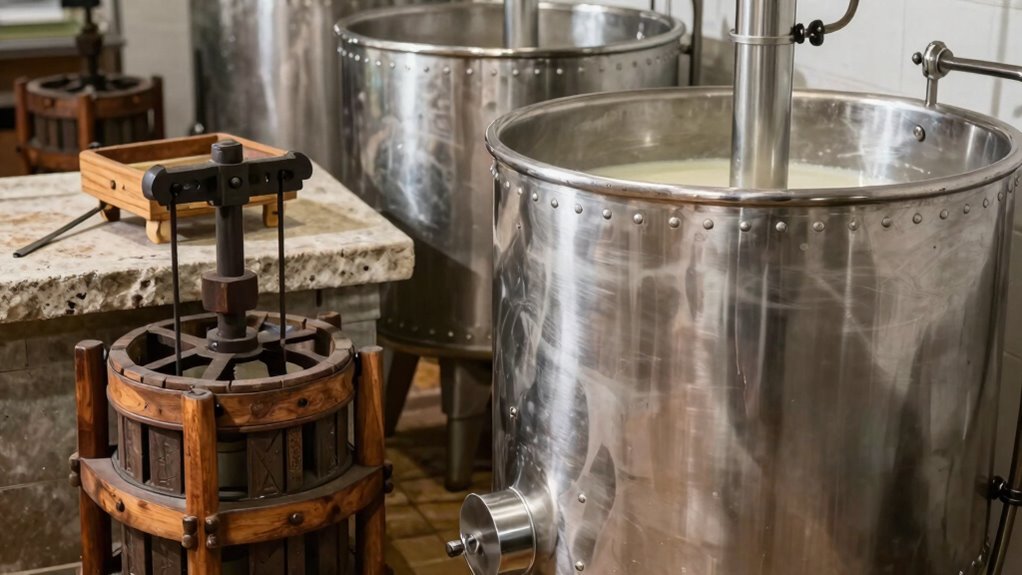
No matter how advanced your cheese vats and presses are, they can’t make up for poor milk handling before it reaches your facility. The foundation of good cheese starts long before it hits your equipment. If the milk’s quality is compromised early on, no amount of technological sophistication can fully salvage the final product. That’s why paying close attention to how you handle and manage milk from the outset is essential. Milk quality depends heavily on hygiene practices that prevent contamination and spoilage. Skimping on cleanliness at the farm or during transportation introduces bacteria and impurities that can undermine your entire process.
Poor milk handling early on compromises quality, making even the best equipment unable to save your final cheese.
You need to guarantee that hygiene practices are strict and consistent. Proper cleaning of equipment, sanitized storage tanks, and hygienic transportation methods aren’t optional—they’re indispensable. When you neglect these steps, you risk introducing harmful microbes that multiply quickly, even if your pasteurization process is thorough. The goal is to keep the milk as fresh and uncontaminated as possible from the moment it’s collected. This means training everyone involved in handling milk—farmers, transporters, and your staff—to follow strict hygiene protocols. Regular sanitation schedules and checks help prevent cross-contamination and maintain the integrity of the milk.
Another key aspect is controlling the environment around the milk. Temperature management during transportation and storage plays a critical role in preserving milk quality. If milk is left at unsafe temperatures, bacteria can rapidly grow, making the milk unsafe and unsuitable for cheese production. Maintaining cold chain logistics isn’t just a matter of efficiency; it’s a safeguard for milk quality. When you prioritize proper handling, you reduce the risk of spoilage, off-flavors, and microbial contamination that can ruin your cheese batch. Additionally, understanding the importance of upstream milk handling can help you implement better practices and prevent issues before they arise. Proper hygiene practices and quality control are the cornerstones of a successful cheese production process, ensuring that your final product is of the highest quality. Only then can your equipment work efficiently, producing cheese that meets your standards and delights your customers.
Implementing comprehensive quality control measures at every stage can further help detect potential issues early on, saving time and resources in the long run.
milk hygiene and sanitation equipment
As an affiliate, we earn on qualifying purchases.
As an affiliate, we earn on qualifying purchases.
Frequently Asked Questions
How Can Farmers Improve Milk Quality Before It Reaches the Cheese Plant?
To improve milk quality before it reaches the cheese plant, you should focus on proper milk storage and equipment sanitation. Keep milk refrigerated immediately after milking to prevent bacterial growth. Regularly clean and sanitize all equipment, including pipelines and containers, to avoid contamination. Handle milk gently to prevent damage and maintain freshness. These practices help guarantee high-quality milk, reducing issues later in the cheese-making process.
What Are the Common Mistakes in Milk Handling That Affect Cheese Quality?
Think of milk handling as tending a delicate garden—you must avoid weeds that spoil the crop. Common mistakes include poor milk storage, which lets bacteria thrive, and neglecting strict hygiene protocols that introduce contaminants. If you mishandle milk at this stage, no amount of cheese-making magic can fix it later. Keep everything clean, cool, and well-maintained, so your milk stays fresh and your cheese quality remains first-rate.
How Does Milk Contamination Impact the Final Cheese Product?
When milk gets contaminated, it can cause milk spoilage and bacterial contamination, which directly affect your final cheese quality. These issues lead to off-flavors, inconsistent textures, and even spoilage bacteria that can make your cheese unsafe to eat. If you don’t handle milk properly from the start, no amount of cheese vats or presses can fix the problem later. Proper hygiene and quick processing are key to preventing these contamination risks.
What Testing Methods Detect Milk Quality Issues Early?
You can use sensor technology and rapid testing methods to detect milk quality issues early. Sensor technology, like inline milk analyzers, continuously monitors parameters such as pH, somatic cell count, and bacterial levels, alerting you to potential problems immediately. Rapid testing kits, like ATP tests or pathogen detection assays, provide quick results in the field or lab, helping you identify contamination or spoilage before it impacts the cheese production process.
Are There Best Practices for Maintaining Milk Hygiene During Collection?
Think of your milking process as a well-choreographed dance. To keep it smooth, you must follow strict hygiene protocols and regularly clean your milking equipment. Always sanitize equipment after each use, verify your containers are spotless, and keep the collection area clean. Proper maintenance and hygiene practices prevent contamination, guaranteeing high-quality milk from the start. Staying vigilant in hygiene during collection is the first step to better cheese and dairy products.
Conclusion
Remember, cheese vats and presses are like band-aids for poor milk handling—they can’t repair deeper issues. If you don’t start with quality milk and proper practices from the beginning, no amount of processing can fix the problem. Just as a strong foundation supports a sturdy house, good upstream handling ensures your cheese turns out right. Pay attention early on, or you risk ending up with a product as fragile as a house of cards.