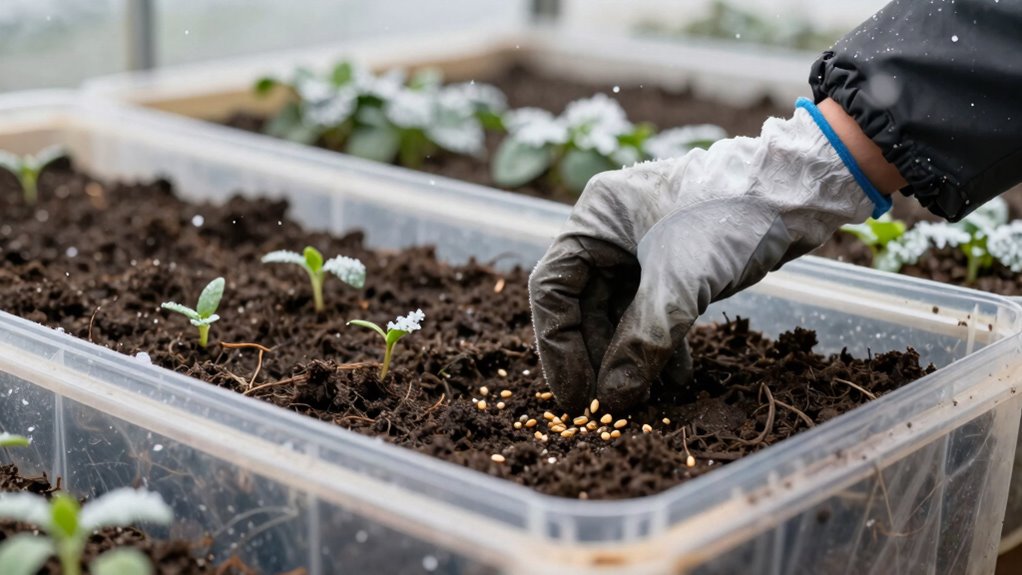

To improve seed germination in cold or unstable weather, start by stratifying your seeds in the fridge for a few weeks to break dormancy. Use soil with a neutral pH, adjusting with lime or sulfur if needed. Keep the soil consistently warm using heat mats or controlled coverings, and guarantee it stays moist but not waterlogged. Choosing climate-appropriate seeds and creating microclimates can boost success. Keep going for more tips to maximize your seed-starting success.
Key Takeaways
- Stratify seeds by chilling them in the refrigerator to break dormancy before planting.
- Use germination mats or heat sources to maintain consistent warmth around seeds.
- Adjust soil pH with lime or sulfur to create a suitable environment for germination.
- Keep soil consistently moist with gentle watering, avoiding waterlogging.
- Create microclimates with humidity domes or cover trays to protect from cold and dryness.
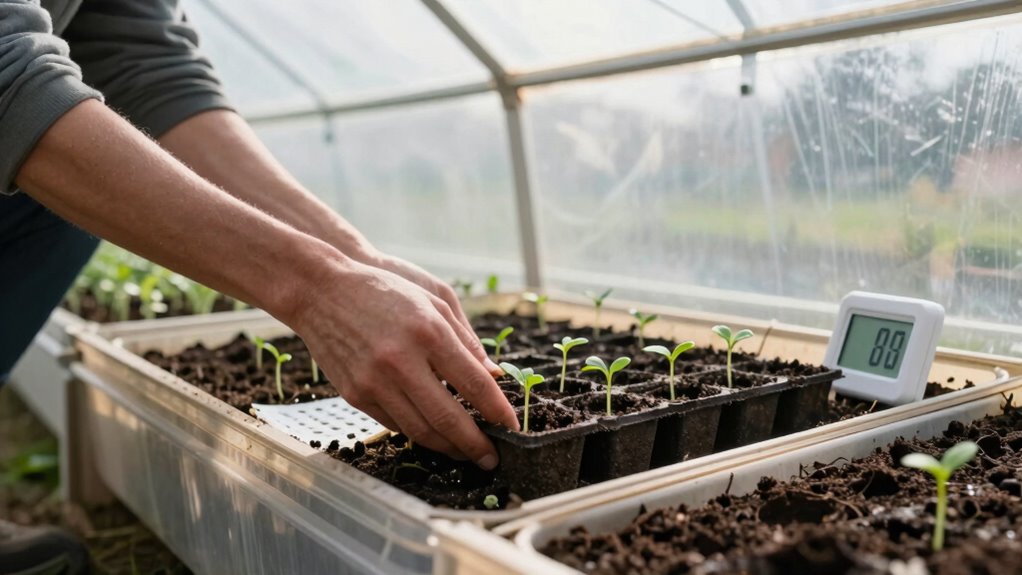
Starting your garden successfully depends on how well your seeds germinate, and there are simple ways to boost their chances. When the weather is cold or unpredictable, seed germination can be tricky because many seeds enter a state of seed dormancy, which prevents them from sprouting until conditions are right. To improve your success rate, you need to address these dormancy issues and create a more favorable environment for your seeds to grow. One effective method is to use stratification—simulating winter conditions by chilling seeds in the refrigerator for a few weeks. This helps break seed dormancy, especially for species that require cold treatment before germination. Additionally, understanding the importance of soil pH and making appropriate adjustments can significantly influence germination success. Alongside stratification, adjusting the soil pH can make a significant difference. Many seeds prefer slightly acidic to neutral soil (around pH 6.0 to 7.0). Cold or unstable weather can lead to soil pH fluctuations, making it harder for seeds to absorb nutrients and sprout successfully. Testing your soil and making pH adjustments using lime or sulfur can create a more consistent environment, encouraging better germination. If your soil is too acidic, adding lime raises the pH; if too alkaline, sulfur can lower it. These adjustments help guarantee that nutrients are more accessible to the seeds, promoting stronger and quicker sprouting. Incorporating soil testing into your gardening routine can help you better understand your soil’s needs and improve overall seedling health. Using a germination mat or heat source to maintain consistent warmth, especially if outdoor temperatures are fluctuating wildly, can also improve germination rates. Many seeds require a specific temperature range to break dormancy and sprout. Using a heating pad or placing your seed tray in a warm location can mimic the natural warmth of spring and support faster germination. Covering the seed trays with plastic or a humidity dome also helps retain moisture and warmth, creating a microclimate that encourages sprouting even when the weather outside is cold or unpredictable. Maintaining soil moisture levels is crucial for successful germination, especially in fluctuating weather conditions. It’s also essential to keep the soil consistently moist but not waterlogged. In cold weather, evaporation slows down, but if the soil dries out, seeds can fail to germinate. Using a spray bottle or gentle watering system ensures even moisture without disturbing the seeds. Proper seed selection based on your climate can also improve germination rates and overall success. Patience is key—cold conditions often slow germination, but with these adjustments, you’ll give your seeds a better chance to break dormancy and grow strong. By managing seed dormancy with stratification, adjusting soil pH, maintaining warmth, and ensuring proper moisture, you set your garden up for success despite the challenging weather conditions.
As an affiliate, we earn on qualifying purchases.
Frequently Asked Questions
What Are the Best Seed Varieties for Cold Weather?
You should choose seed varieties with high cold tolerance for cold weather gardening. Look for seeds like kale, spinach, peas, and broccoli, which naturally withstand lower temperatures. Proper seed selection is essential; opt for fast-growing or hardy types designed for cooler climates. These varieties are more likely to germinate successfully and thrive despite the chilly conditions, helping you extend your growing season and improve overall crop yields.
How Does Soil pH Affect Germination in Cold Conditions?
Soil pH directly influences seed germination in cold conditions by affecting soil nutrients and pH balance. When pH levels are suitable, nutrients like nitrogen, phosphorus, and potassium become more accessible, promoting healthy germination. Conversely, imbalanced pH hampers nutrient uptake, slowing or stopping sprouting. You can improve germination chances by testing and adjusting soil pH, ensuring your seeds get the most favorable environment for sprouting despite the chilly weather.
Can Seed Coatings Improve Germination Success?
Seed coatings can considerably improve germination success by offering protection and enhancing seedling emergence. The benefits include better moisture retention, disease resistance, and easier handling. To maximize these benefits, apply coating techniques like slurry or pelleting carefully, ensuring even coverage. This helps seeds withstand cold or unstable weather, boosting germination rates and promoting stronger, healthier plants right from the start.
What Are Natural Methods to Insulate Seeds From Cold?
You can use natural insulation methods like mulching techniques to protect seeds from cold. Applying a thick layer of straw, leaves, or grass clippings around your planting area traps warmth and shields seeds from frost. This natural insulation helps maintain soil temperature, encouraging germination even in chilly weather. Regularly check and replenish the mulch to make certain of continuous protection, giving your seeds the best chance to sprout successfully.
How Do Watering Practices Influence Germination in Unstable Weather?
You might find it interesting that watering practices directly impact germination in unstable weather. By maintaining consistent watering frequency, you guarantee ideal moisture retention around your seeds, preventing them from drying out or rotting. Overwatering can cause waterlogged soil, hindering sprouting, while underwatering leaves seeds vulnerable to cold stress. Adjust your watering schedule based on weather changes, keeping the soil evenly moist to promote healthy germination despite unpredictable conditions.
Conclusion
By blending basic barriers with bright ideas, you’ll boost your seed’s chances despite cold or uncertain conditions. Cover seeds with care, create cozy covers, and keep consistent contact with moisture. Maintain motivation by managing mulch and monitoring soil temperatures. With patience and persistence, your planting practices will flourish, fostering fast sprouting even in fickle weather. So, seize the season, sow with strategy, and watch your seedlings soar despite the chilly or changeable climate!