
To balance forage and grain in your farm animals’ diets, make certain you provide enough high-quality forage to promote healthy rumen function and use grains to meet energy needs without causing digestive issues. Gradually introduce changes and monitor your animals’ condition to prevent problems like acidosis or bloat. Properly balancing these components supports overall health and productivity. If you keep exploring, you’ll discover how to fine-tune your feeding strategies for ideal farm results.

Get garden gear delivered free with Prime
- Fast, free delivery on millions of items
- Prime Video, Amazon Music and more included
- Member-only deals all year
Key Takeaways
- Balance forage and grain to maintain rumen stability and prevent digestive disorders like acidosis or bloat.
- Incorporate high-quality forage tailored to animal needs to support digestion and overall health.
- Gradually introduce grain to avoid sudden digestive upset and promote efficient fermentation.
- Adjust forage and grain ratios based on animals’ production stage and nutritional requirements.
- Supplement diets with minerals and vitamins to optimize nutrient absorption and maximize farm productivity.

Have you ever wondered how proper nutrition impacts the health and productivity of farm animals? It all starts with understanding the importance of balancing forage and grain in their diets. When you pay close attention to this balance, you support their overall health, improve growth rates, and maximize milk or meat production. But beyond just what to feed, you need to focus on digesting how their digestive health responds to different feeding strategies. This is essential because a healthy digestive system ensures animals efficiently absorb nutrients, prevent digestive disorders, and maintain ideal performance.
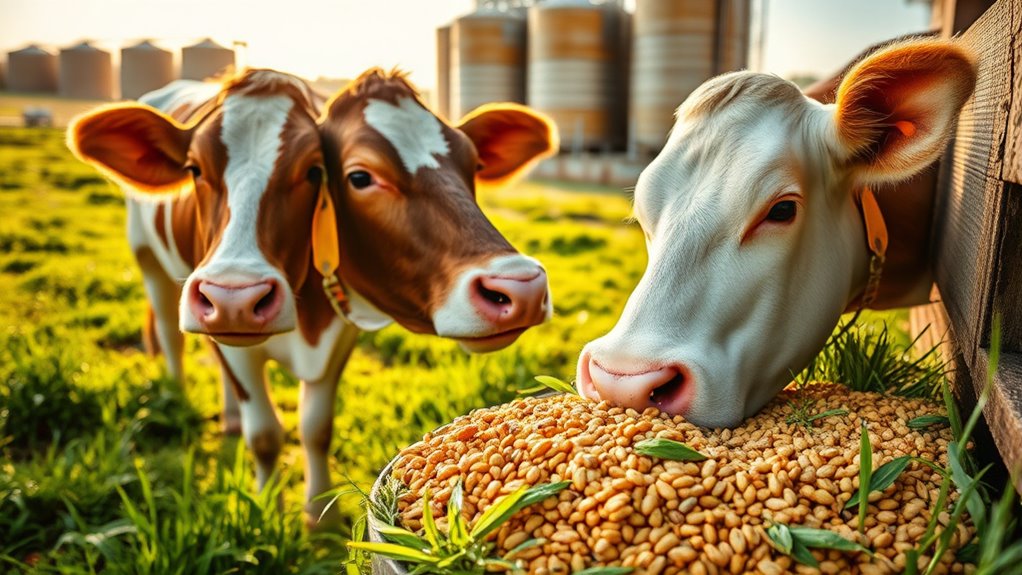
Feeding strategies directly influence your animals’ digestive health. Forages, like grasses and legumes, are high in fiber and promote healthy rumen function, especially in ruminants like cattle and sheep. They stimulate chewing and saliva production, which helps buffer stomach acids and supports proper fermentation. Grain, on the other hand, provides readily available energy but is more calorie-dense and can cause digestive upset if fed excessively or without proper moderation. The key is to develop feeding strategies that incorporate the right amount of forage to maintain rumen stability while supplementing with grains to meet energy requirements. This balance prevents issues like acidosis or bloat, which can occur when animals consume too much grain too quickly.
Proper forage and grain balance supports rumen health and prevents digestive issues in farm animals.
You should aim to tailor your feeding strategies to the specific needs of each farm animal and their production stage. For example, lactating cows require more energy and nutrients, so a higher proportion of grain might be appropriate, but with careful monitoring to avoid digestive disturbances. Young animals or those in growth phases benefit from more forage to support their developing digestive systems and promote natural feeding behaviors. Implementing a gradual transition when adjusting diets helps animals adapt to new feeding regimens, reducing stress and improving digestibility.
Paying attention to the quality of forage is just as important as the quantity. High-quality forage with optimal nutrient levels supports better digestion and overall health. Supplementing with minerals and vitamins can also enhance digestive efficiency and prevent deficiencies. Regularly monitoring animals’ body condition and performance helps you fine-tune your feeding strategies to ensure they’re getting what they need without overloading their digestive systems. Remember, a well-balanced diet that considers both forage and grain, along with tailored feeding strategies, is fundamental to supporting your animals’ digestive health and maximizing their productivity.
In essence, understanding how to balance forage and grain in your feeding programs allows you to enhance digestive health, reduce health issues, and improve farm profitability. It’s about making informed choices that align with your animals’ needs, ensuring they thrive and perform at their best day after day.
As an affiliate, we earn on qualifying purchases.
Frequently Asked Questions
How Does Forage Quality Vary Across Different Seasons?
You’ll notice seasonal forage variation markedly impacts forage quality. In spring and early summer, forage has higher nutritional content, with more protein and digestibility, due to active growth. As seasons shift to late summer and fall, forage nutritional changes cause a decline in nutrient levels, especially fiber and energy. Winter forage often has reduced digestibility and lower nutrient density. Adjust your feeding strategies accordingly to compensate for these seasonal nutritional fluctuations.
What Are the Environmental Impacts of Grain-Based Diets?
You might not realize it, but grain-based diets can increase your farm’s carbon footprint due to higher energy use and emissions during production. Additionally, relying heavily on grains can lead to soil degradation from intensive cultivation. This impacts local ecosystems and reduces land fertility over time. To minimize these effects, consider integrating more forage and sustainable practices, balancing nutrition with environmental responsibility.
How Can Farmers Assess the Optimal Forage-To-Grain Ratio?
Think of balancing forage and grain like tuning a musical instrument. You assess fiber content to guarantee proper digestion and monitor energy density to meet your animals’ needs. Regularly analyze feed samples and observe animal performance—like growth rates and health—to fine-tune the ratio. This hands-on approach helps you find the harmony that maximizes productivity while maintaining animal well-being.
Are There Specific Nutrients Missing in Forage-Only Diets?
Yes, forage-only diets can cause vitamin deficiencies and mineral imbalances. You might notice a lack of essential vitamins like A, D, and E, which are limited in forage. Mineral imbalances, such as inadequate calcium or excess phosphorus, can also occur. To prevent these issues, you should supplement with vitamin and mineral mixes tailored to your animals’ specific needs, ensuring balanced nutrition and ideal health.
How Does Animal Age Influence Diet Formulation Choices?
Think of your animal as a young sapling or a sturdy oak. As it ages, its age-related metabolism shifts, requiring different nutrients. Younger animals need developmental nutritional needs to support growth, while older ones focus on maintenance. You adjust diet formulation accordingly, providing more energy-dense grains for growth and easier-to-digest forage for mature animals. Tailoring diets guarantees ideal health, growth, and productivity at every life stage.
Conclusion
Just like the wise shepherd balances his flock’s needs, you must carefully blend forage and grain to keep your animals healthy and thriving. Remember, the secret lies in harmony—too much grain can cloud their digestion like a storm on the horizon, while too little can leave them starved of energy. By striking that perfect balance, you guarantee your farm runs smoothly, much like a well-conducted symphony, where every note plays an essential role in success.
Columbus Day / Indigenous Peoples' Day Picks
long weekend sales
As an affiliate, we earn on qualifying purchases.