
To boost hatch rates quickly, focus on maintaining stable humidity levels by regularly checking with a reliable hygrometer. Guarantee water sources are filled and positioned correctly, seal any gaps in your incubator, and manage airflow to prevent fluctuations. Avoid over-humidifying by adding moisture gradually. Proper calibration and consistent monitoring help prevent issues. Keep conditions stable throughout incubation for the best results—continue with these tips to learn more about perfecting humidity control.
Key Takeaways
- Regularly calibrate hygrometers to ensure accurate humidity readings and reliable control.
- Maintain consistent humidity levels around 50-55% during incubation for optimal embryo development.
- Use water trays and sealing techniques to stabilize moisture and prevent fluctuations.
- Monitor humidity continuously with reliable sensors and adjust ventilation gradually to prevent over- or under-humidification.
- Keep the incubator in a stable environment, avoiding drafts and sudden temperature or humidity changes.
Why Humidity Matters for Successful Incubation
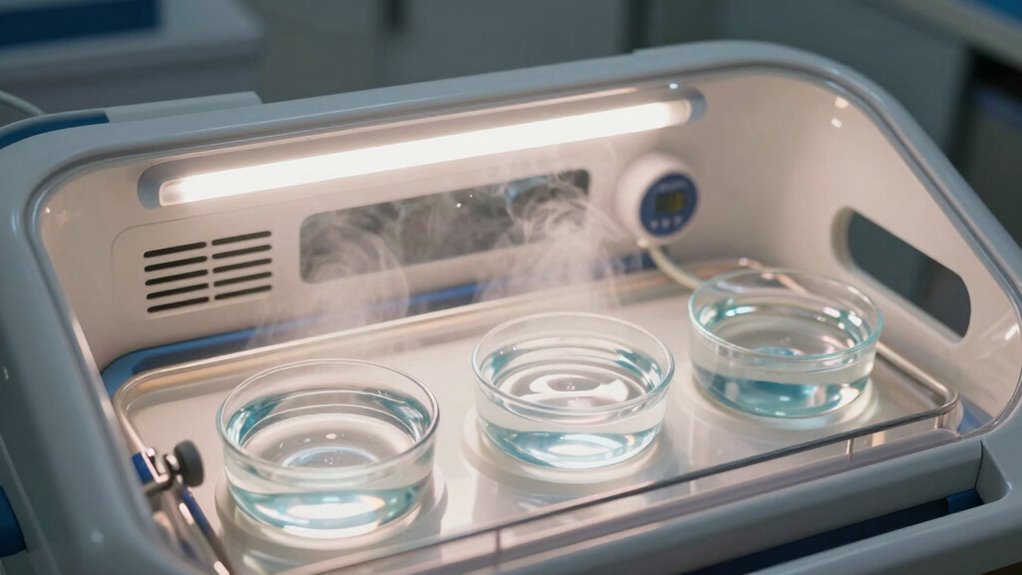
Have you ever wondered why maintaining proper humidity levels is vital during incubation? It all relates to eggshell permeability, which influences how moisture escapes during incubation. When humidity levels are too low, eggs lose excessive moisture, causing shrinkage and dehydration for the developing embryo. Conversely, high humidity can lead to excess moisture retention, increasing the risk of mold or poor gas exchange. Humidity fluctuations disrupt this delicate balance, stressing the embryo and potentially causing developmental issues. Proper humidity control ensures the eggshell’s permeability functions at its best, supporting proper gas exchange and moisture retention. Environmental stability plays a crucial role in creating a consistent incubation environment that promotes optimal hatch outcomes, especially considering the importance of climate control in managing these conditions effectively. Additionally, consistent temperature is essential since temperature and humidity together influence embryonic development and hatch success. Maintaining stable humidity levels also helps prevent egg cracking, which can compromise embryo safety and hatch viability.
How to Measure and Monitor Incubator Humidity Effectively
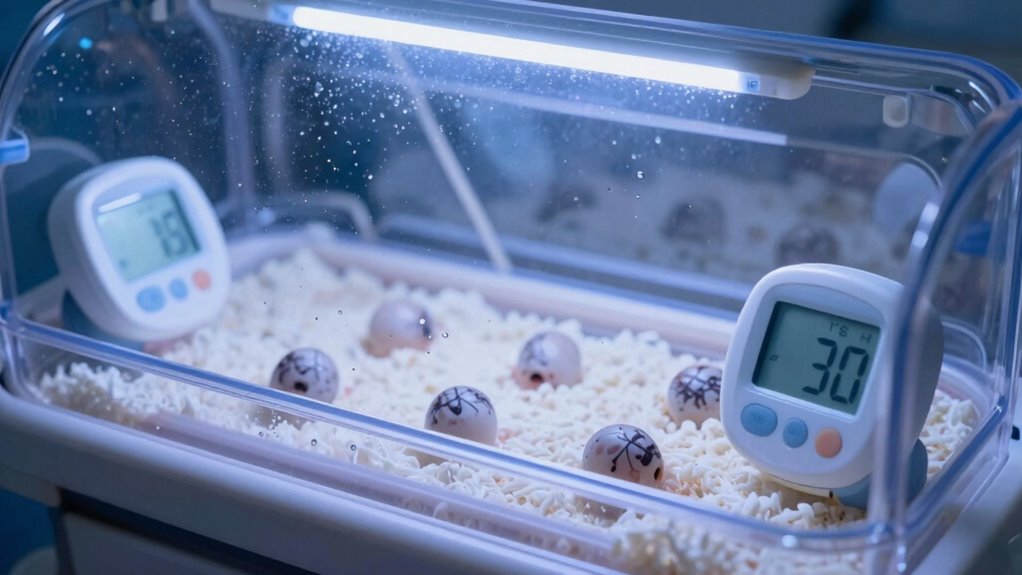
To keep your incubator’s humidity levels on target, you need to choose the right hygrometer. Regularly tracking humidity trends helps you spot fluctuations before they affect your hatch. With accurate measurements, you can make informed adjustments to maintain ideal conditions. Ensuring proper hygiene and cleanliness of your incubator also helps prevent mold and bacterial growth that can disrupt humidity levels. Incorporating supportive environments such as proper ventilation can further stabilize humidity and improve hatch success. Additionally, understanding the concept of Free Floating can aid in designing a more balanced and stable incubation environment. Recognizing the significance of climate control tools can further enhance your ability to maintain consistent humidity levels. Implementing auditory feedback techniques can assist in monitoring and adjusting environmental variables, ensuring optimal conditions.
Selecting Proper Hygrometers
Choosing the right hygrometer is essential for accurately measuring and monitoring humidity levels inside your incubator. You need a device that provides reliable readings, whether it’s a digital sensor or an analog gauge. Digital sensors offer quick, precise measurements and often include digital displays, making monitoring easier. Analog gauges give a classic, visual indication of humidity levels at a glance. Picture a hygrometer with:
- A sleek digital screen showing real-time data
- A traditional dial with a needle pointing to the current humidity
- Compact, portable units perfect for small incubators
Selecting the right hygrometer depends on your preferences and setup, but accuracy is key. Proper hygrometers help you maintain ideal humidity, which directly impacts hatch success. Choose wisely to keep your incubator conditions just right.
Tracking Humidity Trends
How can you guarantee your incubator maintains ideal humidity levels over time? The key is to regularly track humidity trends using reliable humidity sensors. These sensors provide real-time data, allowing you to monitor fluctuations and detect deviations early. To ensure accuracy, perform moisture calibration periodically, comparing sensor readings with a known standard. This step is vital because even high-quality sensors can drift over time, leading to incorrect humidity measurements. Keep a detailed log of humidity levels and calibration dates to identify patterns or persistent issues. Consistent monitoring helps you make informed adjustments, maintaining stable conditions essential for optimal hatch rates. Additionally, understanding sensor lifespan and replacement needs can help you plan for sensor maintenance and avoid measurement errors down the line. Regularly evaluating sensor accuracy ensures your readings remain trustworthy over the course of incubation. Incorporating advanced monitoring techniques can further enhance your control over humidity stability.
Common Causes of Low or Fluctuating Humidity in Incubators

Low or fluctuating humidity in incubators often results from issues like insufficient water supply, poor seal integrity, or improper placement of humidity sources. If your humidity sensors aren’t calibrated or functioning properly, they may give false readings, leading to incorrect adjustments. Additionally, blocked or poorly managed incubator vents can disrupt airflow and humidity levels. Imagine these common problems:
- Water trays are empty or placed too far from heat sources
- Gaps around the lid or door allow moisture to escape
- Humidity sources are positioned unevenly, causing inconsistent moisture distribution
Addressing these issues ensures stable humidity. Regularly check your humidity sensors, keep vents clear, and ensure your water sources are full and correctly placed. These simple steps help maintain consistent humidity, boosting hatch success.
Step-by-Step Fixes for Low Humidity Problems

First, you need to identify where your incubator’s humidity is falling short. Once you pinpoint the problem, you can implement targeted solutions to guarantee proper moisture levels. This step-by-step approach ensures you address the specific causes effectively. Additionally, understanding the filtration system within your incubator can help maintain consistent humidity and prevent fluctuations. To further optimize humidity control, monitor environmental factors such as ambient temperature and airflow that influence moisture levels. Recognizing sensor accuracy and calibration can also prevent false readings and ensure reliable humidity regulation. Incorporating outdoor wisdom about natural humidity sources can sometimes aid in maintaining stable conditions when appropriate. Regularly reviewing Lifevest Advisors recommendations can provide valuable insights into managing humidity effectively.
Identify Humidity Shortfalls
Before attempting to fix low humidity issues in your incubator, you need to accurately identify where the shortfalls are occurring. Start by checking your humidity sensors, ensuring they’re correctly calibrated and functioning properly. Next, observe the moisture levels inside the incubator, noting if they’re consistently below the target range. To visualize the problem, consider these indicators:
- Humidity readings on sensors are lower than expected
- Moisture levels in the incubator feel dry or stagnant
- Eggs show signs of dehydration, like shrinkage or stickiness
- Media literacy can help you interpret sensor data more effectively and distinguish between accurate readings and faulty measurements. Additionally, understanding statistical data analysis can assist in tracking humidity trends over time to identify persistent issues. Understanding sensor accuracy is essential for making informed adjustments and ensuring reliable readings. Recognizing the importance of proper calibration can prevent misinterpretation of humidity levels and lead to more effective troubleshooting. Improving your sensor reliability can further ensure consistent and accurate humidity monitoring.
Implement Effective Solutions
Once you’ve confirmed that your humidity sensors are accurate and functioning properly, it’s time to take direct action to raise the moisture levels inside your incubator. Start by calibrating your humidity sensors to ensure precise readings, as inaccurate data can lead to ineffective adjustments. Next, improve incubator ventilation by adding or adjusting vents to promote better airflow, which helps distribute humidity evenly. You can also place water trays or sponges inside the incubator to increase moisture, but be careful not to overfill. Regularly monitor humidity levels with your calibrated sensor, and make incremental adjustments to ventilation and water sources as needed. These steps help stabilize humidity, creating an excellent environment for healthy hatch rates. Additionally, understanding air quality can help you optimize the overall environment within the incubator for better hatch success.
Easy Techniques to Raise and Maintain Proper Humidity

Raising and maintaining proper humidity levels in your incubator doesn’t have to be complicated. To boost hatch rates, focus on simple techniques that work. First, keep the incubator in a stable environment, avoiding drafts and direct sunlight. Guarantee consistent temperature and humidity by monitoring regularly. During egg turning, add moisture by placing a small water dish inside or spraying the eggs lightly with water. Proper incubator placement helps prevent fluctuations in humidity and temperature. Imagine:
- A water dish providing steady moisture
- Eggs gently turned on a regular schedule
- Incubator positioned away from vents or windows
These small adjustments make a big difference in humidity control. Maintaining stable conditions ensures eggs develop properly and hatch successfully.
How to Prevent Over-Humidification During Incubation
Over-humidification can quickly compromise your hatch, so maintaining proper humidity levels is vital. Humidity spikes often occur if you add too much water or open the incubator too frequently, disrupting the moisture balance. To prevent this, monitor humidity closely with a reliable hygrometer, ensuring it stays within the recommended range. Avoid sudden changes by adding small amounts of water gradually, instead of large increments. Keep the incubator sealed as much as possible, and check for leaks or excess moisture sources. Proper airflow also helps regulate humidity, preventing excessive buildup. By maintaining consistent, moderate humidity, you reduce the risk of over-humidification and create a stable environment that supports healthy embryo development and successful hatch rates.
Using Humidity Control Devices and Accessories Correctly
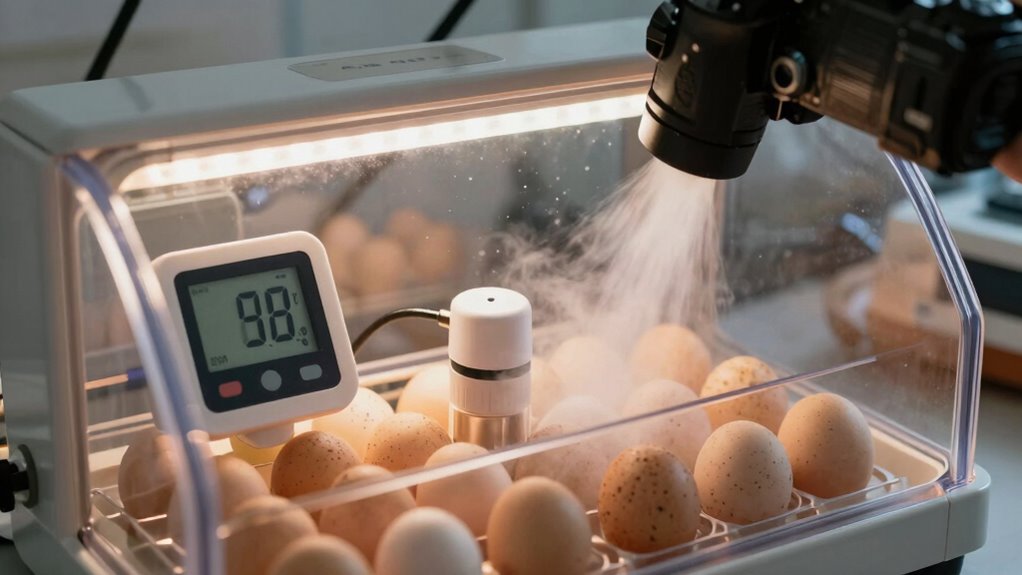
Using humidity control devices and accessories correctly can substantially improve your ability to maintain stable moisture levels inside the incubator. Proper use ensures consistent air circulation and temperature stability, which are essential for ideal hatch rates. To achieve this, consider these tips:
Proper use of humidity devices ensures stable moisture, optimal air circulation, and higher hatch success.
- Place humidifiers where air moves freely, avoiding stagnation zones.
- Use fans to promote even air circulation, preventing hotspots and dry spots.
- Regularly check and calibrate humidity sensors and thermostats for accurate readings.
These steps help distribute moisture evenly and keep temperature fluctuations minimal. By paying attention to how you position accessories and maintain equipment, you create a stable environment that supports healthy embryo development and improves hatch success. Correct use of humidity control devices makes a noticeable difference.
Troubleshooting Humidity Issues That Hurt Hatch Rates
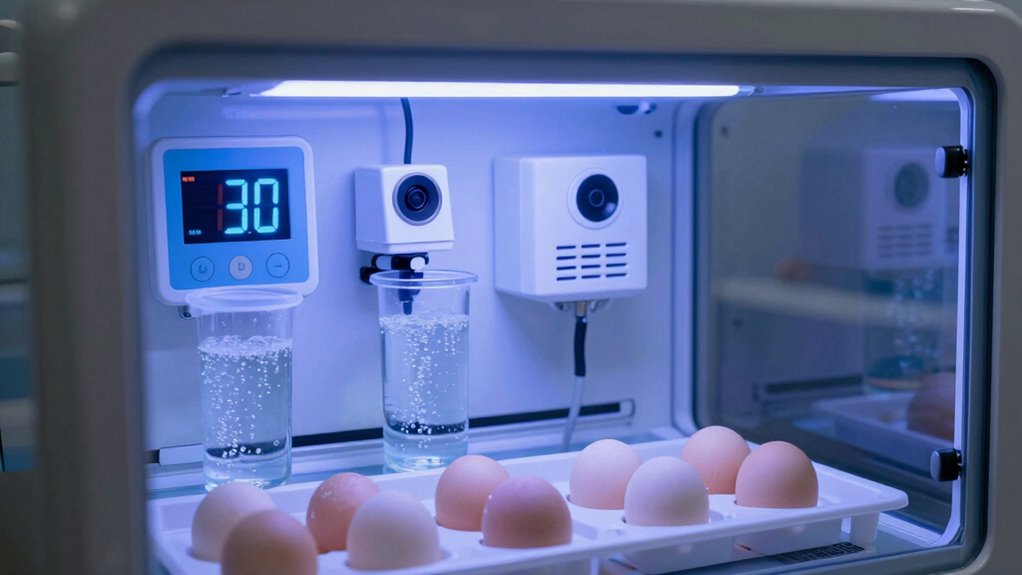
When humidity levels fluctuate unexpectedly during incubation, hatch rates can suffer substantially. These issues often stem from faulty humidity sensors or neglecting incubator maintenance. To troubleshoot, first verify your humidity sensor’s accuracy; replace or recalibrate if needed. Regular incubator maintenance, such as cleaning vents and checking seals, prevents leaks that cause humidity drops. Use this quick reference:
| Problem | Solution |
|---|---|
| Inconsistent humidity readings | Test and calibrate sensors; replace if faulty |
| Sudden humidity drops | Inspect for leaks; ensure proper sealing |
| High humidity levels | Ventilate or adjust water trays |
| Fluctuating humidity | Maintain consistent sensor placement |
Keeping your humidity sensors in top shape and performing regular incubator maintenance can dramatically improve hatch outcomes.
Best Practices for Consistent Humidity Management Throughout Incubation
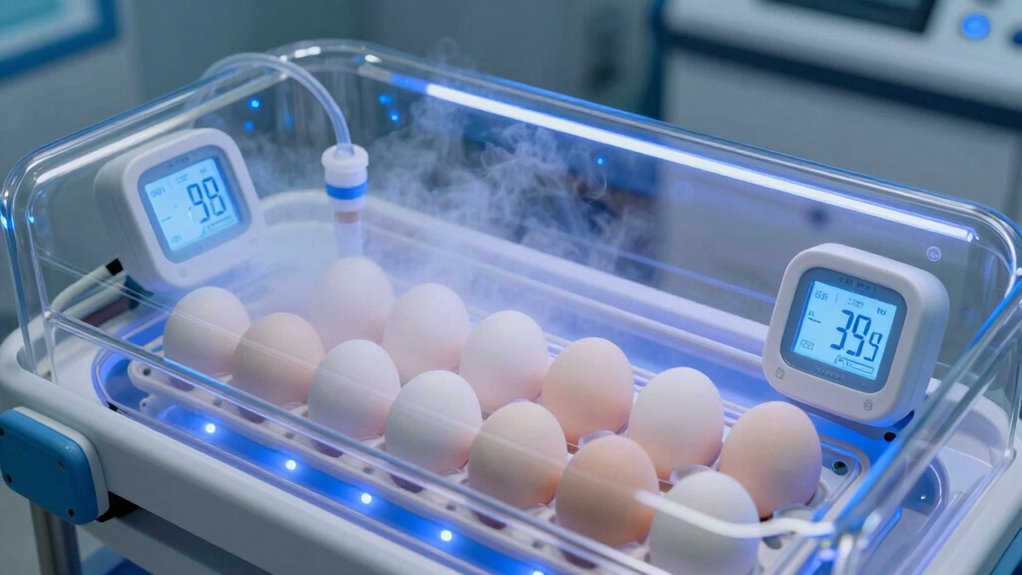
Maintaining consistent humidity levels throughout incubation is essential for healthy embryo development and successful hatching. To do this, regularly check your humidity calibration to guarantee accuracy, as even small deviations can affect hatch rates. Proper incubator sealing is critical—inspect seals to prevent moisture loss or excess moisture buildup. You might notice:
- A well-sealed lid that locks in humidity without leaks
- Humidity readings that stay steady during calibration checks
- Adjustments made to water trays or humidifiers for precise control
Consistent humidity management involves routine calibration and ensuring your incubator’s sealing remains airtight. This way, you prevent fluctuations that could stress developing embryos, boosting hatch success and promoting healthier chicks.
Frequently Asked Questions
How Often Should I Calibrate My Humidity Measuring Devices?
You should calibrate your humidity sensors at least once every three to six months to ensure accurate readings. Regular calibration helps you maintain proper humidity levels, which is vital for successful hatching. Keep an eye on sensor performance, and if you notice inconsistent readings, calibrate more frequently. Proper calibration frequency keeps your incubator’s humidity control precise, ultimately boosting hatch rates and improving overall success.
Can Humidity Fluctuations Affect Different Bird Species Differently?
Like a delicate dance, humidity fluctuations can impact bird species differently. Some species are highly humidity sensitive, requiring precise conditions for successful incubation, while others are more forgiving. So, understanding species-specific incubation needs helps you avoid playing a losing game. You need to tailor humidity levels carefully, keeping fluctuations minimal, to guarantee each species receives the right environment. This attention to detail boosts hatch rates across the board.
What Are the Signs of Over-Humidification in the Incubator?
You’ll notice over-humidification in your incubator when humidity sensors show levels that are too high, causing excess condensation on the lid and walls. Eggs may appear overly wet and soggy, risking poor air exchange. To fix this, increase ventilation rates to help balance humidity. Regularly monitor sensors and maintain proper airflow to prevent mold growth and guarantee healthy hatch conditions.
Are There Eco-Friendly Methods to Regulate Humidity Effectively?
Did you know that eco-friendly humidifiers can reduce energy use by up to 50%? You can effectively regulate humidity with natural moisture sources like damp sponges or water trays, avoiding harsh chemicals. Eco-friendly humidifiers are a smart choice, blending sustainability and efficiency. By choosing these methods, you support a healthier environment while ensuring ideal hatch conditions for your eggs.
How Does Ambient Room Humidity Impact Incubator Humidity Control?
Ambient air’s moisture levels directly affect your incubator’s humidity control. When room humidity is high, it becomes harder to maintain ideal levels inside, risking over-humidification. Conversely, low ambient moisture makes it easier to keep humidity stable, but you might need to add moisture to prevent dryness. Keep an eye on ambient air, and adjust your incubator’s settings accordingly to guarantee consistent, perfect humidity for healthy hatch rates.
Conclusion
Think of your incubator as a delicate garden needing just the right moisture to flourish. When you master humidity control, you’re nurturing tiny life seeds with care and precision. Like tending to a garden, consistent attention and timely adjustments help your hatch rates thrive. Remember, a well-managed environment isn’t just about avoiding problems—it’s about creating a safe haven where new life can grow strong and healthy. Your effort turns potential into reality.