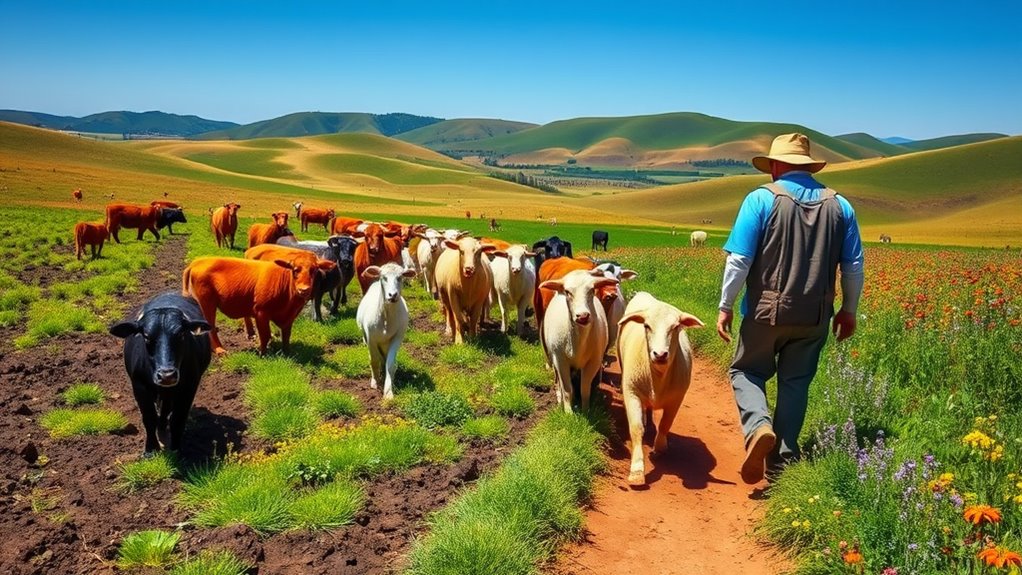
Integrating livestock into regenerative farming systems boosts soil health by cycling nutrients naturally through manure and urine, which increases organic matter and improves soil structure. It promotes biodiversity by supporting diverse plants and animals and fosters resilience against environmental stresses. Rotational grazing allows pastures to recover, preventing overgrazing and maintaining healthy roots and soil ecosystems. If you explore further, you’ll discover how this approach creates a sustainable, resilient farm that works in harmony with nature.
Key Takeaways
- Livestock naturally fertilize soils, increasing organic matter and enhancing soil fertility and structure.
- Rotational grazing prevents overgrazing, promoting healthy plant growth and soil ecosystem recovery.
- Integrating animals boosts biodiversity and supports cover crops, reducing erosion and chemical inputs.
- Livestock-driven nutrient cycling improves farm resilience to environmental stresses like droughts and heavy rains.
- Combining livestock with regenerative practices fosters a sustainable, resilient farm system with improved soil health.
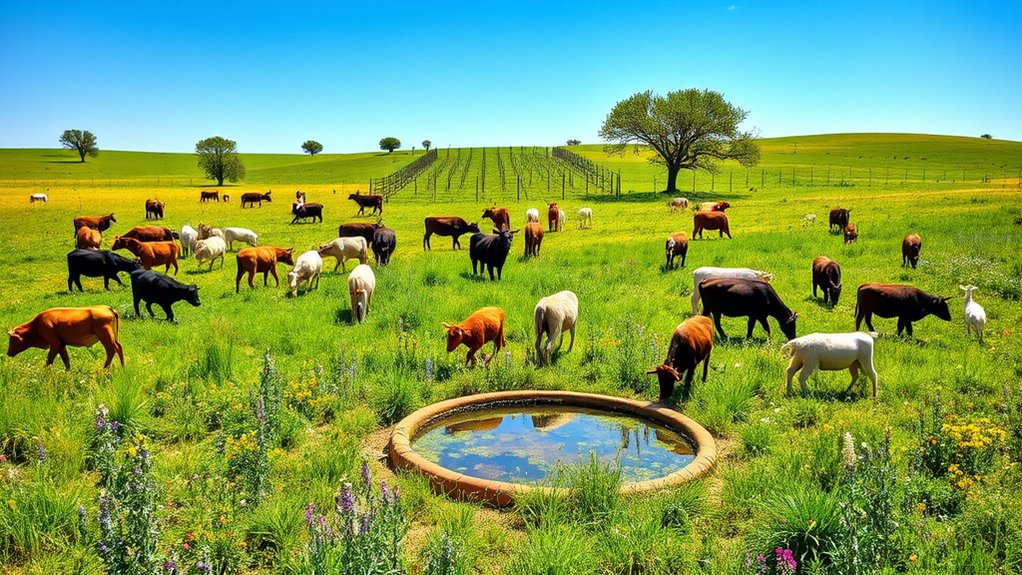
Integrating livestock into regenerative farming systems offers a powerful way to enhance soil health, increase biodiversity, and improve farm resilience. One of the most effective methods to achieve this is through rotational grazing. This practice involves moving livestock systematically across different pasture sections, allowing each area time to recover before being grazed again. By implementing rotational grazing, you prevent overgrazing, which can deplete soil nutrients and lead to erosion. Instead, you create a cycle that promotes healthy plant growth and maintains a vibrant soil ecosystem. As animals graze, they consume the above-ground biomass, but their manure and urine are naturally returned to the soil, enriching it with essential nutrients. This not only improves soil fertility but also fosters the development of a diverse soil microbiome, which is crucial for plant health and resilience.
With rotational grazing, you actively manage the grazing pressure, ensuring that the soil remains protected and continually replenished. When livestock are moved frequently, root systems remain intact and vigorous, leading to increased organic matter in the soil. This organic matter boosts the soil’s capacity to retain moisture, reduces runoff, and enhances its structure. Over time, these benefits contribute to a more resilient farm ecosystem capable of withstanding droughts, heavy rains, and other environmental stresses. Furthermore, implementing integrated nutrient cycling can maximize the benefits of manure and urine, further enriching the soil naturally. Additionally, by diversifying your grazing patterns, you create a habitat that supports a wide range of plant and animal species, adding increasing biodiversity on your farm.
You’ll notice that this integrated approach also encourages the growth of native plants and cover crops, which moreover stabilize the soil and prevent erosion. As the soil health improves, your crops and pasture grasses become more vigorous, reducing the need for synthetic inputs and enhancing overall farm sustainability. The natural cycle of grazing and recovery also decreases dependency on chemical fertilizers, making your farm more environmentally friendly and economically resilient. Livestock become an integral part of your farm’s regenerative system, not just as producers of meat or dairy but as active agents in building healthier soils.
Frequently Asked Questions
How Do I Determine the Right Livestock Types for My Farm?
To determine the right livestock types for your farm, start with species selection based on your land’s size, climate, and available resources. Consider how each species fits into your herd management plan and complements your crop systems. Think about your goals, such as improving soil health or controlling pests, and choose animals that support these objectives. This approach guarantees sustainable integration and long-term farm productivity.
What Are Common Challenges When Integrating Livestock Into Regenerative Systems?
You might face challenges like regulatory hurdles that complicate livestock management and limit certain practices. Predator management also becomes a concern, as protecting your animals without harming ecosystems requires careful planning. Additionally, balancing soil health, grazing pressure, and maintaining biodiversity can be tricky, but staying informed about local regulations and employing humane predator control methods helps. With careful management, you can successfully integrate livestock into your regenerative system while overcoming these common obstacles.
How Does Livestock Grazing Impact Soil Health Long-Term?
Livestock grazing boosts soil health long-term by increasing soil carbon and enhancing microbial diversity. As you manage grazing carefully, you encourage organic matter buildup, which feeds microbes and improves soil structure. This process promotes better water retention and nutrient cycling, creating a resilient ecosystem. Your thoughtful grazing practices support sustained soil robustness, helping your farm become more productive and environmentally sustainable over time.
What Financial Incentives Support Livestock Integration in Regenerative Farming?
You can benefit from financial incentives like subsidies and market premiums when integrating livestock into regenerative farming. Governments often offer financial subsidies to promote sustainable practices, making livestock management more affordable. Additionally, you may receive market premiums for selling products labeled as eco-friendly or regenerative, which can boost your farm’s income. These incentives encourage you to adopt regenerative methods, helping you improve soil health while making your farm more profitable.
How Can I Balance Livestock Needs With Crop Production Goals?
Balancing livestock needs with crop goals is like walking a tightrope—precision is key. You should focus on nutrient cycling and pasture management, ensuring animals graze sustainably while enriching the soil. Rotate pastures to prevent overgrazing, and plan crop planting to complement grazing cycles. This way, you optimize productivity without compromising either system, creating a harmonious farm that benefits both your crops and animals.
Conclusion
Imagine the fertile earth beneath your feet, teeming with life as lush grasses sway in the breeze. When you integrate livestock into your regenerative farm, you become part of this vibrant cycle—cattle grazing gently, manure enriching the soil, and plants thriving anew. This harmony creates a resilient, thriving landscape where every element supports the other. Embrace this dance of nature, and watch your land flourish, turning your farm into a living, breathing masterpiece of sustainability.