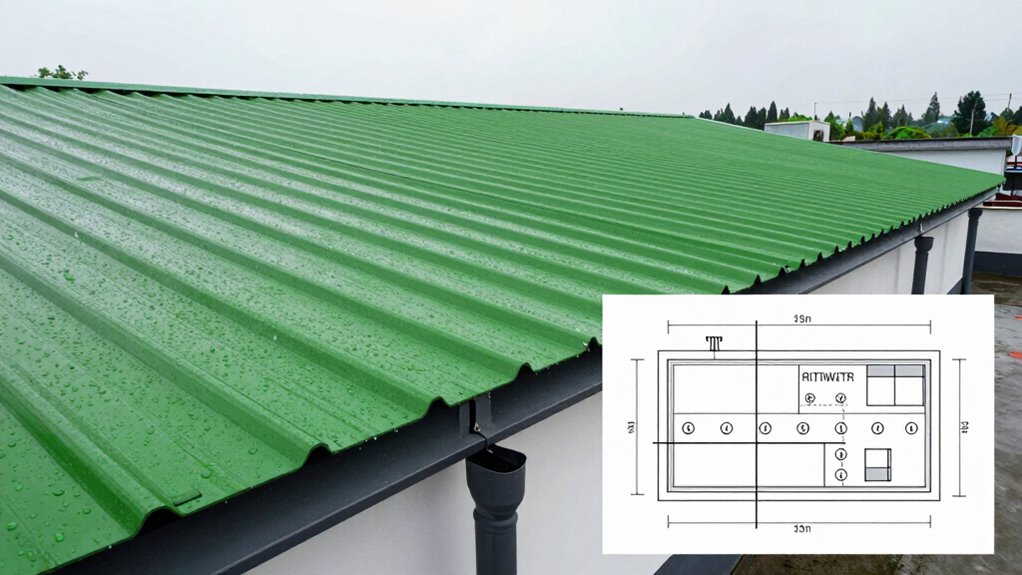

To size your rainwater harvesting system, start by accurately measuring your roof’s surface area, including slopes, to determine how much rainwater you can collect. Combine this with local rainfall data to estimate your potential catchment volume. Choose a tank size that matches your annual water needs and rainfall pattern, avoiding oversizing or undersizing. Keep gutters clean and well-maintained to maximize efficiency. If you want to learn more about optimizing your system, continue exploring the key steps involved.

Get garden gear delivered free — and shop member deals
- Fast, free delivery on millions of items
- Access to Prime Big Deal Days deals on October 6–7
- Prime Video, Amazon Music and more included
Key Takeaways
- Measure the total roof area accurately, including slopes and complex shapes, to determine runoff potential.
- Convert roof area from square feet or meters to catchment volume using local rainfall data.
- Use rainfall amount (in inches or millimeters) and roof area to estimate monthly and yearly water collection.
- Regularly maintain gutters and roof surfaces to ensure efficient water flow and prevent losses.
- Select tank size based on estimated annual rainfall and roof catchment to meet water needs efficiently.
As an affiliate, we earn on qualifying purchases.
How to Calculate Roof Area for Rainwater Harvesting
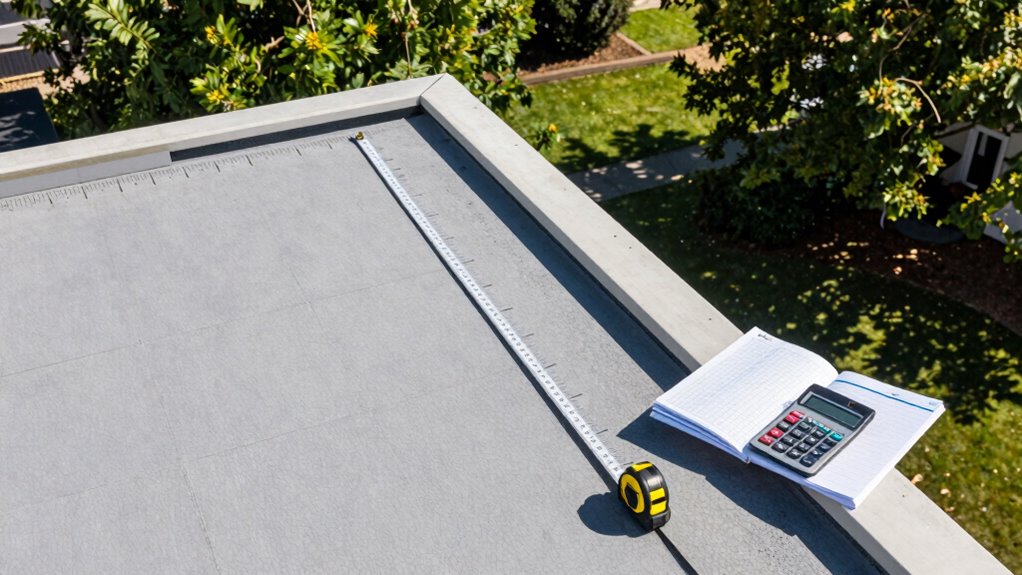
Calculating the roof area is a essential first step in designing an effective rainwater harvesting system. Your roof materials influence how much water you can collect; smooth, non-porous materials like metal or tiles typically yield better runoff than rough or porous surfaces. Color accuracy impacts overall image quality, so choosing materials with consistent reflectivity can help optimize water collection. To determine your roof area, measure its length and width, then multiply these dimensions for a square or rectangular roof. If your roof has multiple sections or angles, break each down into simple shapes, calculate each area, then add them together. Properly measuring and planning ensures your system is efficient and effective. Understanding the rainwater collection process allows for better system design and water yield estimation. Gutter design also plays a significant role—ensure gutters are properly aligned and sized to channel water efficiently from the roof to your storage system. Accurate measurements and thoughtful gutter placement guarantee optimal collection and reduce water loss. Additionally, understanding the Gold IRA Markets can provide insights into investing surplus water capacity or system components effectively. Moreover, considering the impact of climate patterns helps in selecting suitable storage capacities and system components for your specific location.
Estimating Rainfall and Collection Potential in Your Area
Understanding your area’s rainfall patterns helps you estimate how much water you can collect. By measuring your roof area accurately, you’ll determine its potential to catch rainwater. Combining these factors allows you to calculate your overall collection potential effectively. Additionally, recognizing how inner wisdom influences sustainable choices can enhance your connection to eco-friendly practices. Incorporating water conservation principles into your planning ensures a more efficient and environmentally conscious rainwater harvesting system. Being aware of climate variability can further refine your estimates and improve system design. Considering rainwater collection efficiency helps optimize your system’s performance and maximizes water yield. Evaluating local rainfall data can provide more precise insights into your specific environment, ensuring your system is tailored for optimal results.
Local Rainfall Patterns
Knowing the local rainfall patterns in your area is essential for accurately estimating your rainwater harvesting potential. Climate variability means rainfall can differ greatly across seasons and years, affecting collection estimates. To get a better picture, research historical rainfall data and check local regulations that may influence harvesting practices. Use this table to compare typical rainfall amounts:
| Month | Average Rainfall (inches) |
|---|---|
| Jan | 2.5 |
| Feb | 2.8 |
| Mar | 3.2 |
| Apr | 3.5 |
| May | 4.0 |
Understanding these patterns helps you determine how much water you can expect to collect, ensuring your system is properly sized and compliant with local regulations. Additionally, considering European cloud innovation and sustainable practices can inspire more environmentally friendly water management solutions. Recognizing climate variability is crucial for adapting your rainwater harvesting system to changing weather patterns and ensuring its long-term effectiveness.
Measuring Your Roof Area
To accurately estimate how much rainwater your system can collect, start by measuring your roof area. Proper roof maintenance guarantees accurate measurements and prevents debris from affecting gutter design. A well-maintained roof also maximizes catchment efficiency. When measuring, consider the total surface area, including slopes and extensions, for precise calculations. Keep in mind that gutter design influences water flow and collection efficiency, so ensure gutters are properly installed and free of blockages. Additionally, check for any obstructions or damage that could reduce runoff. Regular inspection helps maintain peak performance. Remember, a correctly measured roof and thoughtful gutter design are critical to accurately estimating your rainwater collection potential and ensuring your system works effectively. Incorporating seasonal maintenance routines can further optimize your system’s performance year-round. Moreover, understanding water flow dynamics can help you identify potential issues early and improve overall collection efficiency.
Calculating Collection Potential
Ever wondered how much rainwater your harvesting system can actually collect? To estimate, you need to understand your area’s rainfall patterns and how they translate to collection potential. Consider average monthly rainfall, which varies by region. This helps you predict stormwater management needs and plan gutter maintenance accordingly. Here’s a simple way to visualize potential collection:
| Month | Average Rainfall (inches) | Estimated Collection (gallons) |
|---|---|---|
| January | 3.5 | 2,800 |
| April | 4.2 | 3,360 |
| July | 4.8 | 3,840 |
| October | 3.9 | 3,120 |
Understanding rainwater harvesting systems can help optimize your setup and ensure efficient water collection. Additionally, selecting the right support options can enhance system durability and maintenance efficiency. Proper system sizing based on rainfall data ensures your harvesting system is both effective and sustainable throughout the year.
How to Choose the Right Tank Size for Your Roof
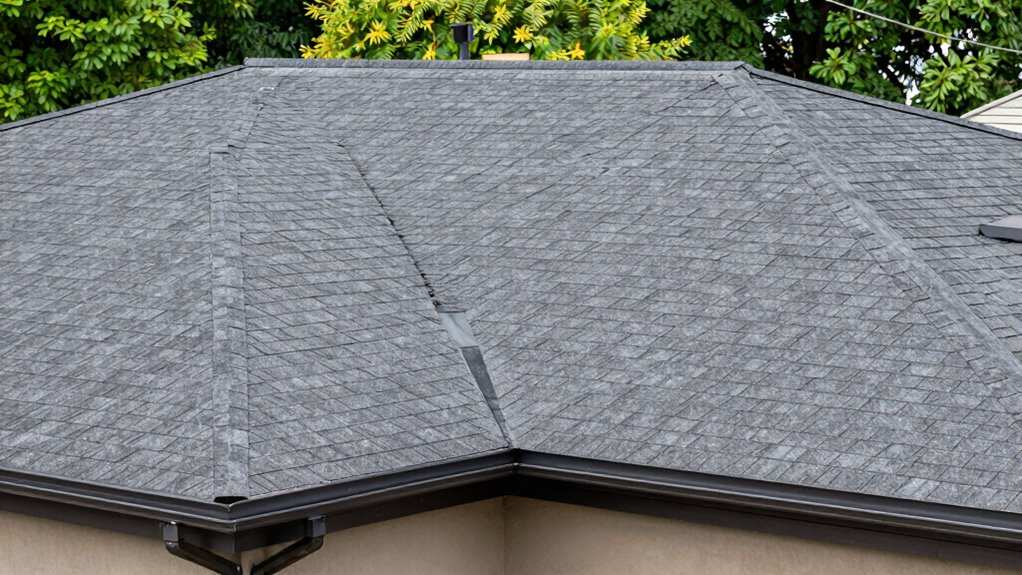
To select the appropriate tank size, you need to estimate your roof’s collection area and understand how much rainfall you can expect. Calculating the volume of water your roof can gather helps determine the suitable capacity for your needs. Matching your tank size to these factors ensures you’ll have enough water without over- or under-sizing your system. Additionally, considering smart design principles can optimize the overall efficiency and comfort of your water harvesting system. Incorporating correct sizing techniques can further improve system performance and reduce waste. Understanding water flow rate is also essential to ensure your system can handle your household’s water demands effectively. Properly assessing system capacity ensures that your rainwater harvesting setup functions reliably throughout the year. Using accurate rainfall data can enhance your sizing calculations, leading to a more reliable water supply.
Estimating Roof Collection Area
Estimating your roof’s collection area is a crucial step in choosing the right tank size for rainwater harvesting. Knowing your roof’s size helps determine how much water you can collect during rainfall events. To accurately estimate, consider:
- Measuring the length and width of all roof sections
- Accounting for roof shape and orientation
- Ensuring gutters are clear for efficient stormwater reuse
- Regular gutter maintenance to prevent blockages and maximize collection
- Understanding rainwater harvesting science can improve your system’s efficiency and water yield. Being aware of stormwater runoff patterns can further refine your collection estimates and system design. Additionally, understanding the impact of roof materials on water quality can help ensure safe and effective rainwater use.
A larger collection area means more water potential, but it also requires appropriate tank sizing. Accurate measurements ensure you don’t oversize or undersize your system. Proper estimation helps you plan for seasonal variations and optimize stormwater reuse. Remember, a well-maintained gutter system maximizes rainwater collection efficiency and reduces overflow risks.
Calculating Rainfall Volume
Once you’ve measured your roof’s collection area, the next step is to determine how much rainwater you can expect during a storm. To do this, use local rainfall data to calculate the volume based on your roof size. This helps you estimate potential rainwater yield, ensuring your tank size matches your needs. Remember, rainwater quality can vary depending on debris, air pollution, and other factors, so a proper filtration system is essential. Planning a maintenance schedule for cleaning filters and gutters keeps water quality high and prevents blockages. Knowing the expected rainfall volume allows you to choose a tank that captures enough water without overflow or shortages, optimizing your harvesting system’s efficiency and reliability.
Matching Tank Capacity
Choosing the right tank size is crucial to guarantee you capture enough rainwater without risking overflow or shortages. When selecting your tank, consider your water needs, roof catchment, and local rainfall patterns. A larger tank reduces the frequency of tank maintenance and helps maintain water quality by diluting contaminants. However, an oversized tank may be unnecessary and costly. Conversely, a too-small tank risks running out of water during dry spells. To balance these factors, estimate your annual rainwater volume and match it with a tank capacity that provides a buffer for peak periods. Remember, proper tank maintenance is essential to keep water quality high and prevent algae or mosquito breeding. Ultimately, choosing the right size ensures efficient harvesting and reliable water supply.
Common Mistakes to Avoid When Sizing Your Rainwater System
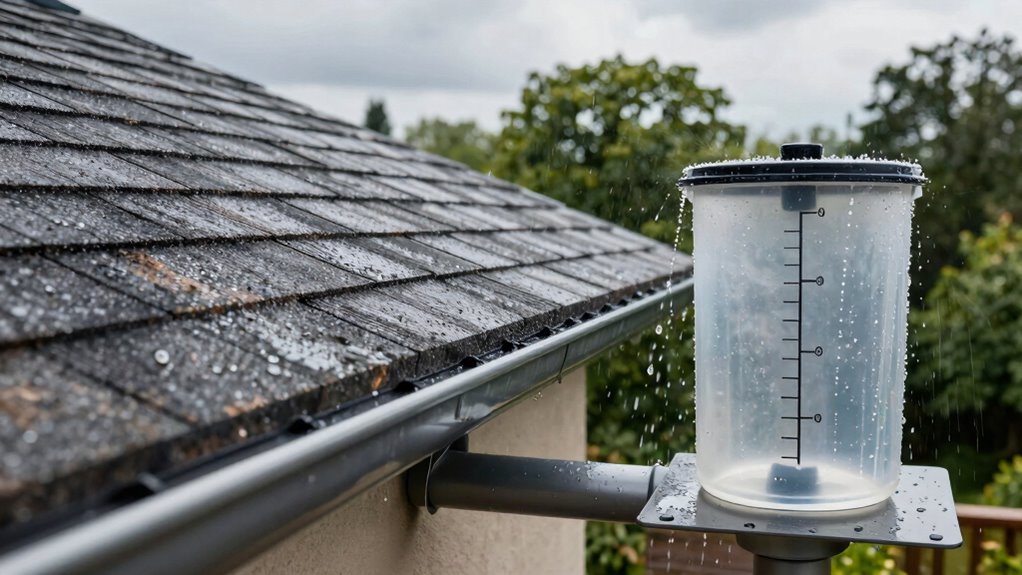
Many people make the mistake of sizing their rainwater harvesting system without considering their actual water needs or local rainfall patterns. Overestimating tank size leads to unnecessary costs and space issues, while underestimating results in shortages. To avoid this, focus on accurate calculations and local climate data. Also, neglecting maintenance tips can cause system inefficiencies or damage over time—regular cleaning and inspections are essential. Don’t overlook legal considerations; some regions have regulations on water collection, tank sizes, or permits. Failing to comply can result in fines or system modifications later. Proper planning, including understanding these legal aspects and maintaining your system, ensures reliable performance and long-term sustainability. Avoid these common mistakes to make your rainwater system efficient and compliant.
Practical Tips to Maximize Rainwater Collection Efficiency
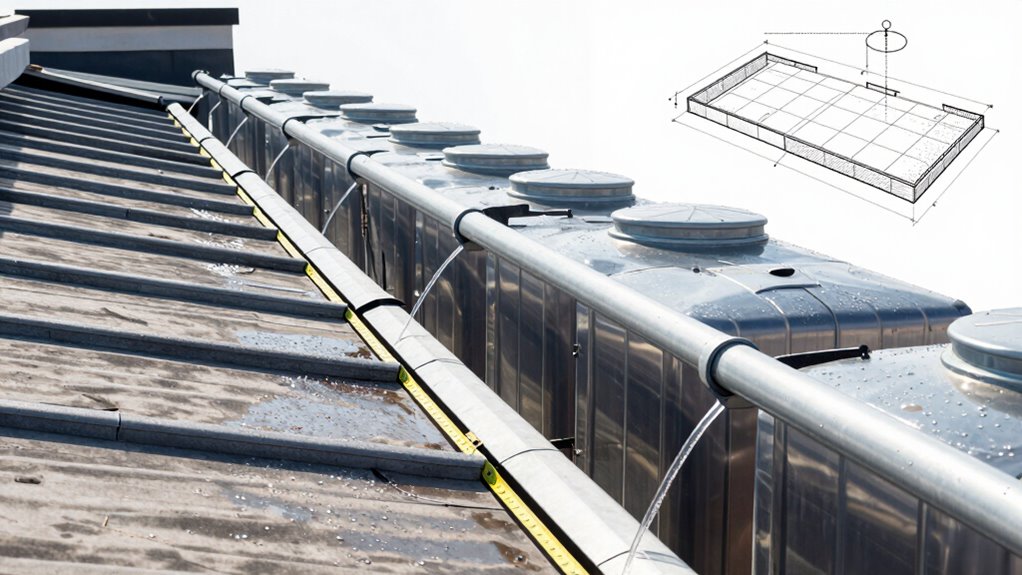
Maximizing rainwater collection efficiency starts with simple yet effective practices you can implement right away. Regular gutter maintenance ensures debris doesn’t block flow, preventing overflow and contamination. Proper rainwater filtering removes leaves, dirt, and other pollutants before storage, keeping your water clean and usable. To boost efficiency, consider installing screens over gutters to catch debris early. Keep gutters clear and secure to avoid leaks or overflow during heavy rains. Additionally, check for and seal any leaks in your system to prevent loss of water. Using clean, well-maintained components reduces contamination risk and maximizes collection potential. These small steps make a big difference in ensuring you harvest the most rainwater possible, saving resources and improving water quality for your needs.
Planning Your Rainwater Harvest System for Drought Conditions
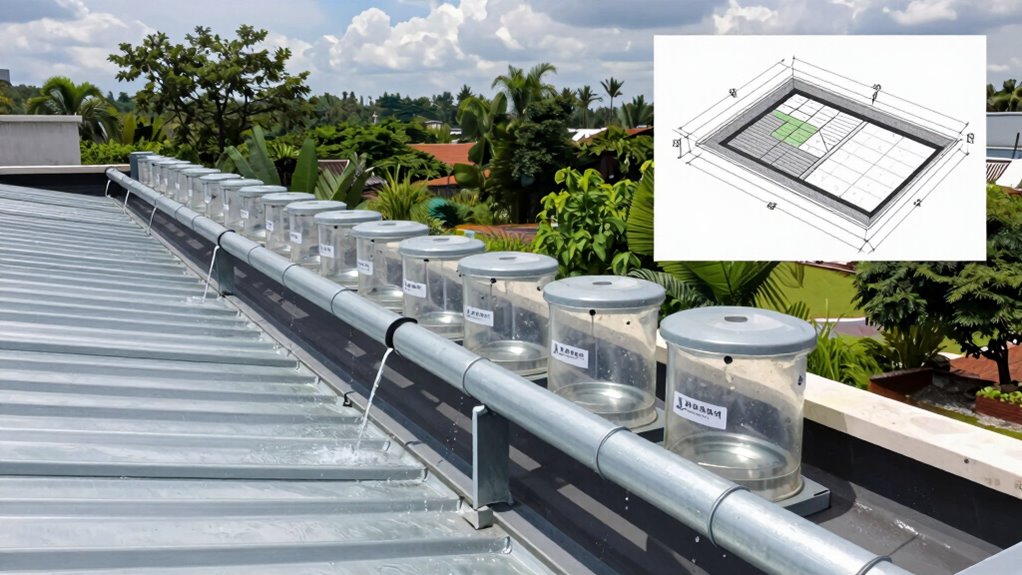
When planning your rainwater harvest system for drought conditions, it is vital to prioritize storage capacity and water conservation strategies. During droughts, water demand increases, so make certain your system can store enough rainwater to meet needs. Keep in mind that rainwater quality may vary, so proper filtration is indispensable for safe use. Additionally, familiarize yourself with legal regulations governing rainwater harvesting, which can differ by region. To optimize your system, consider these factors:
| Storage Capacity | Water Usage Goals | Legal Regulations |
|---|---|---|
| Larger tanks for drought | Reduce consumption | Permits required? |
| Adequate filtration | Rainwater quality | Restrictions on collection |
| Backup sources | Emergency needs | Compliance standards |
Balancing these elements helps you create a resilient, compliant system for drought conditions.
Frequently Asked Questions
How Does Roof Material Affect Rainwater Collection Efficiency?
Your roof material substantially impacts rainwater collection efficiency because durable materials like metal or tile resist debris buildup and corrosion, guaranteeing cleaner water. These materials also tend to have longer lifespans, reducing maintenance costs. Conversely, porous or deteriorating materials can introduce contaminants, lowering water quality and efficiency. Choosing a durable, non-porous roof material ensures your rainwater harvesting system works effectively over time, maximizing collection and minimizing upkeep.
Can I Connect Multiple Tanks for Larger Storage Capacity?
Absolutely, you can connect multiple tanks for larger storage capacity—think of it as creating a water empire! Just guarantee proper tank connection to prevent leaks or overflow issues. For seamless storage expansion, use compatible tanks and install a good overflow management system. This way, you maximize rainwater collection while avoiding the chaos of overflowing tanks. Happy harvesting—your water empire awaits!
What Maintenance Is Required for a Rainwater Harvesting System?
You need to regularly check your filter for clogs and debris, replacing or cleaning it as needed to guarantee water quality. Additionally, schedule tank cleaning at least once a year to remove sediment, algae, and debris buildup. Keep an eye on any leaks or cracks, and clean gutters frequently to prevent contamination. Proper maintenance keeps your rainwater harvesting system efficient, safe, and ready for use whenever you need it.
How Do Local Regulations Impact Rainwater Harvesting Installations?
You need to check local regulations because they directly impact your rainwater harvesting installation. Regulatory compliance guarantees your system meets safety and quality standards, while zoning restrictions might limit where you can install tanks or catchment areas. Failing to adhere to these rules can result in fines or system removal. Always consult your local authorities or water agency to understand specific requirements, permits, and restrictions before starting your project.
What Are the Cost Considerations for Different Tank Materials?
When choosing a tank material, you should consider cost considerations like initial price, durability, and maintenance. Plastic tanks are affordable and lightweight but may wear over time. Concrete tanks cost more upfront but last longer with minimal upkeep. Steel tanks are durable but can be expensive and prone to corrosion if not properly coated. Balancing your budget with longevity and maintenance needs helps you pick the best tank material for your system.
Conclusion
Sizing your rainwater harvesting system is like tuning a musical instrument—you need the right notes to create harmony. By understanding your roof area, rainfall potential, and tank size, you set the stage for a reliable supply. Avoid common pitfalls, and implement practical tips to maximize efficiency. With careful planning, your system becomes a well-orchestrated symphony of sustainability, turning a simple roof into a steady source of water, even during droughts.
Fall yard work Picks
leaf blowers
As an affiliate, we earn on qualifying purchases.