
To process meat legally on your small farm, you must comply with federal, state, and local licensing laws, which involve inspections and proper documentation. You also need to adhere to humane slaughter standards to guarantee animal welfare and meat safety. Keeping detailed records of slaughter dates, inspections, and sanitation practices is essential for compliance. Understanding local regulations and building relationships with inspectors can help you stay current and avoid penalties. Continue exploring to make certain your farm meets all requirements.
Key Takeaways
- Ensure your processing facility is properly licensed according to federal, state, or local laws to avoid penalties and shutdowns.
- Follow humane animal handling and slaughter standards to maintain meat safety and comply with ethical regulations.
- Stay updated on evolving regulations by consulting agencies, attending training, and maintaining current documentation.
- Keep detailed records of processing activities, inspections, and sanitation to demonstrate compliance during inspections.
- Understand local zoning laws and build relationships with regulatory officials to ensure lawful on-site processing.
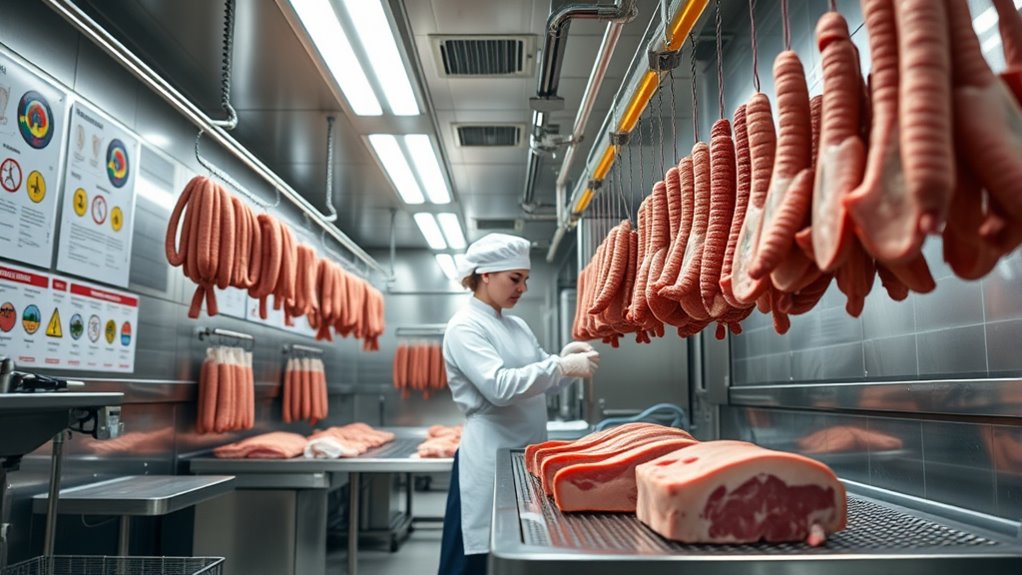
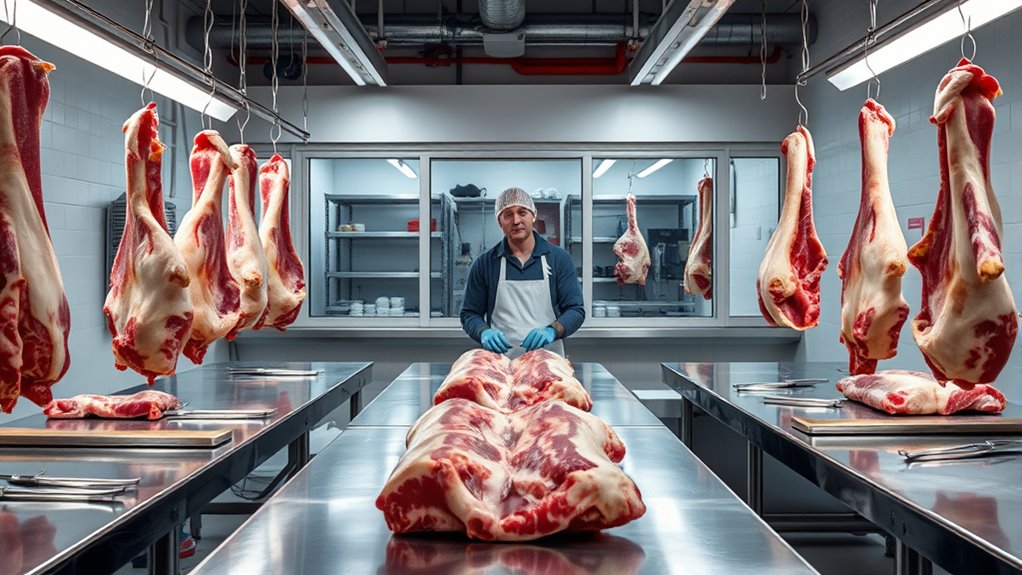
If you run a small farm and want to process meat for your customers, understanding the regulations is essential. One of the first steps is confirming your processing plant meets licensing requirements. Processing plant licensing isn’t just a formality; it’s a way to guarantee your facility complies with federal, state, or local laws designed to protect public health. The licensing process typically involves inspections and documentation to verify your plant’s cleanliness, safety measures, and operational procedures. Without proper licensing, you risk legal penalties, product recalls, or even being shut down. So, before you start processing, check with your state’s agriculture or health department to understand the specific licensing requirements for your operation.
In addition to licensing, you must adhere to animal slaughter standards. These standards set the guidelines for humane treatment and proper processing of animals. They cover everything from how animals are handled on-site to the methods used during slaughter. Following animal slaughter standards isn’t just about legality; it’s about ethical practices that ensure the meat you produce is safe and of high quality. Many regulations require that slaughtering occurs in a manner that minimizes suffering and complies with humane standards. Failing to follow these rules can lead to legal consequences and damage your reputation among customers who value ethically sourced meat.
It’s also important to recognize that these regulations aren’t static—they evolve over time. Staying current means regularly checking updates from regulatory agencies and participating in training programs. Many agencies offer resources or workshops to help small farm operators understand and meet requirements, which can be invaluable in avoiding costly mistakes. Furthermore, maintaining detailed records of your processing activities, including slaughter dates, inspection reports, and sanitation practices, can help demonstrate compliance if inspected.
You should also consider zoning laws and local ordinances that might impact your processing operations. Some areas have restrictions on on-site slaughter or processing, requiring you to use a licensed facility elsewhere. Understanding these local rules ensures you remain compliant and avoid disruptions. Building relationships with inspectors and regulatory officials can also make the process smoother, as they can provide guidance and clarify expectations.
Frequently Asked Questions
Are There Specific Exemptions for Small-Scale Meat Processing Facilities?
Yes, small farm exemptions often apply to certain processing facility criteria, allowing you to process meat without full regulatory compliance. If your farm qualifies as a small-scale operation, you might be eligible for these exemptions, which reduce licensing and inspection requirements. To benefit, verify your processing facility meets the specific small farm exemption criteria set by local or federal regulations, helping you save time and costs while selling your meat products.
How Often Are Inspections Required for Small Farm Meat Plants?
Think of your small farm meat plant like a garden that needs regular watering. Inspections typically occur annually, helping guarantee you stay compliant with safety standards. You’ll want to keep track of inspection frequency and meet compliance deadlines, just like tending to your plants. Staying proactive prevents surprises and keeps your operation running smoothly. Regular inspections aren’t just rules—they’re your way of nurturing a safe, successful business.
What Are the Labeling Requirements for Meat Products From Small Farms?
You need to guarantee your meat product labels include clear package labeling and ingredient disclosure. Your labels must list all ingredients honestly, using common names, and include your farm’s name and address. Additionally, you should specify the net weight and any required nutritional info. Proper labeling helps consumers make informed choices, complies with regulations, and builds trust in your small farm’s products.
Can Small Farms Process Multiple Species in One Facility?
Yes, small farms can process multiple species in one facility, but you must carefully oversee species mixing and cross contamination prevention. You need to establish strict cleaning procedures between different species and designate separate equipment or areas if possible. Follow your local regulations closely, as they often specify requirements for handling multiple species safely. Proper planning helps ensure food safety and compliance, protecting your consumers and your farm’s reputation.
What Training or Certifications Are Needed for Small Farm Meat Processors?
You need to complete specific training and obtain processing licenses to guarantee meat safety on your small farm. Typically, you’ll require a state or federal meat processing certification, depending on your location and the type of meat you process. These certifications teach safe handling, sanitation, and processing practices essential for compliance. Staying current with regulations helps you operate legally and produces safe, high-quality meat products for your customers.
Conclusion
Steering meat processing regulations may seem daunting, but think of it like tending a garden—you’ll see the benefits grow over time. By understanding and following these rules, you ensure your small farm’s products are safe and legal, helping your business thrive. Staying compliant is like planting seeds for future success. Keep learning, stay organized, and you’ll find that doing right by regulations becomes second nature—just like riding a bike.