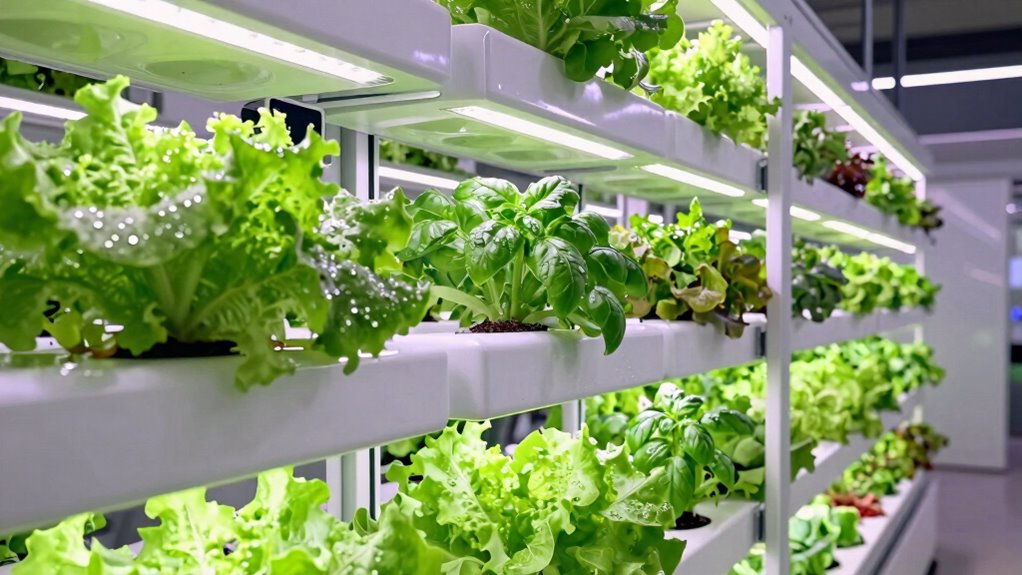
In indoor vertical farming, you’ll find that leafy greens like lettuce, spinach, and herbs such as basil and mint thrive best because they grow quickly, need minimal soil, and tolerate controlled environments. Fruits like strawberries and small tomatoes can also do well with proper pollination and lighting. Root vegetables like carrots and radishes require deep containers and precise moisture control. If you want to discover which crops suit your space and goals, keep exploring for more expert tips.

Get garden gear delivered free with Prime
- Fast, free delivery on millions of items
- Prime Video, Amazon Music and more included
- Member-only deals all year
Key Takeaways
- Leafy greens, herbs, and microgreens are ideal due to their quick growth and adaptability to controlled environments.
- Fruit crops like strawberries and cherry tomatoes thrive with proper pollination and higher light levels.
- Choose crops compatible with indoor conditions, focusing on fast harvest cycles and high market demand.
- Proper environmental control (light, temperature, humidity) is essential for successful crop growth indoors.
- Avoid crops with complex pollination needs or those susceptible to pests that are hard to manage indoors.
indoor vertical farming grow lights
As an affiliate, we earn on qualifying purchases.
As an affiliate, we earn on qualifying purchases.
What You Need to Know About Vertical Farming and Crop Requirements
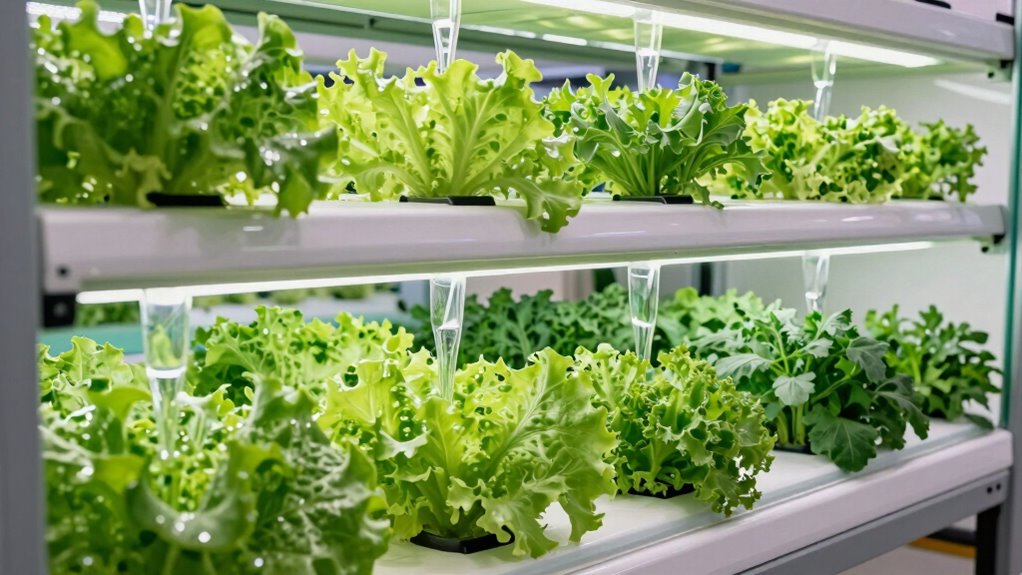
Understanding the specific needs of crops is essential when setting up a vertical farm. You must consider how soil amendments can improve soil quality or substitute traditional soil, such as using compost or organic matter, to support healthy plant growth. Proper soil amendments help optimize nutrient availability, which is crucial for crop development. Additionally, pest management is vital in an indoor environment. Without natural predators, pests can spread quickly and threaten your crops. Implement integrated pest management strategies, including biological controls and cleanliness, to keep pests in check without harmful chemicals. Soil quality is a fundamental factor that influences plant health and yield in vertical farming. Ensuring the use of sustainable soil amendments can also enhance the overall environmental benefits of your farm. Maintaining optimal growing conditions is essential for crop success, especially indoors where environmental variables are tightly controlled. To achieve this, monitoring temperature and humidity closely helps in maintaining ideal conditions for plant growth. By focusing on these factors, you create an optimal growing environment tailored to your crops’ needs, ensuring healthy yields and reducing risks associated with pest infestations and poor soil conditions.
Which Crops Thrive Best in Indoor Vertical Farms?
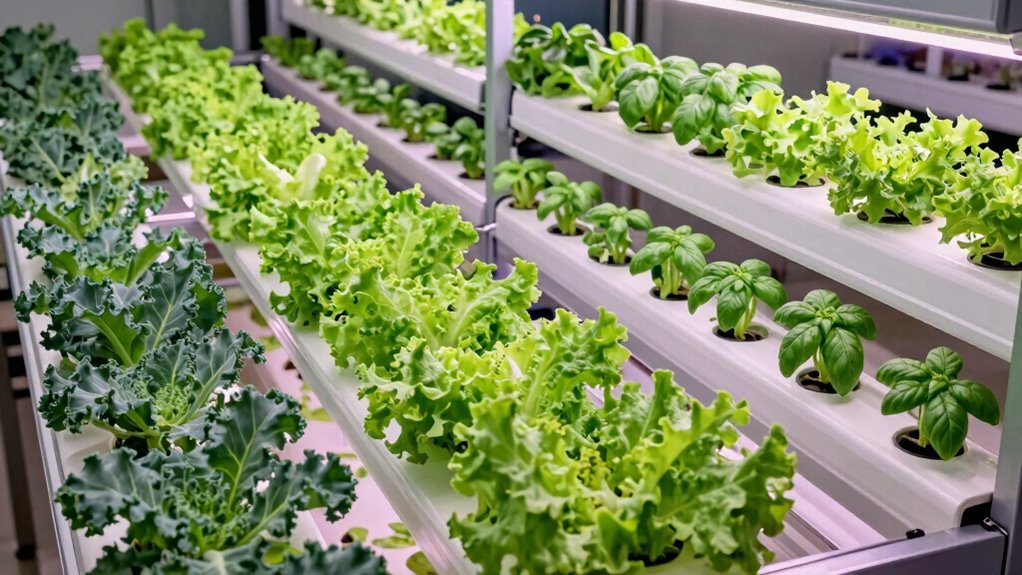
Ever wonder which crops excel in indoor vertical farms? Crops like leafy greens, herbs, and microgreens thrive because they adapt well to controlled environments. These plants often require minimal soil amendments, making them easy to manage indoors. Pest management is essential; since you’re controlling the environment, you can prevent most pests without heavy pesticides. Crops with fast growth cycles, such as lettuce and basil, are ideal because they produce quick yields. They also flourish with consistent light, temperature, and humidity, which are easier to maintain indoors. Additionally, choosing crops that are well-suited for indoor cultivation helps maximize space and productivity while reducing the need for complex soil amendments and extensive pest control measures. Selecting crops that are adaptable to controlled environment agriculture can further enhance success. For optimal results, understanding the growth requirements of each crop ensures a thriving vertical farm. This strategic crop choice guarantees a thriving vertical farm.
Easy Indoor Crops: Leafy Greens and Herbs That Grow Well
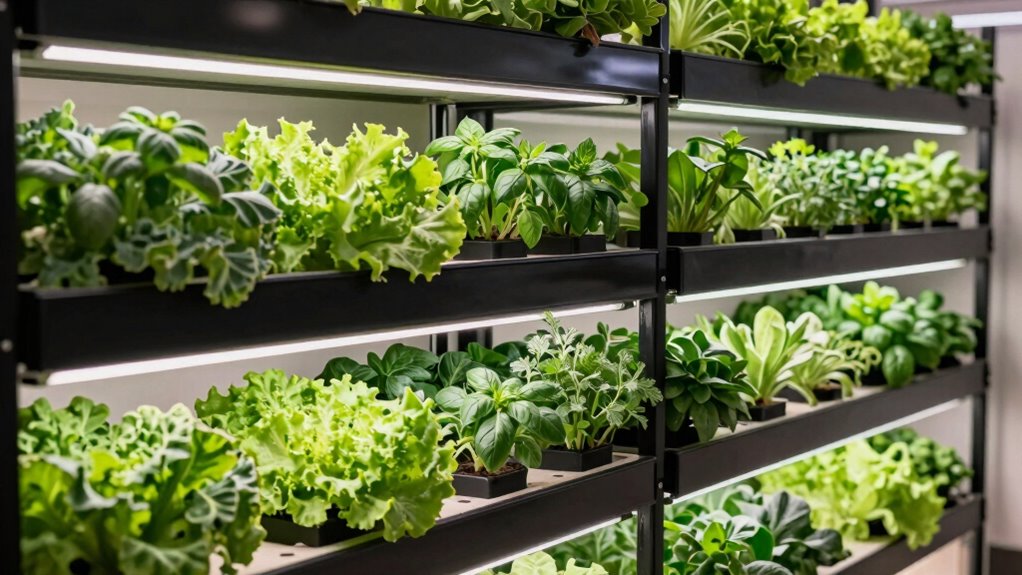
Indoor vertical farms are perfect for growing easy-to-manage crops like leafy greens and herbs. These plants thrive under controlled conditions, making them ideal for beginners and seasoned growers alike. You can maximize yields by practicing companion planting, pairing herbs like basil with leafy greens such as lettuce to improve growth and pest control. Additionally, implementing crop rotation helps prevent soil depletion and reduces disease buildup, even indoors. Proper lighting conditions and color accuracy are crucial for optimal growth, ensuring healthy plants and high yields year-round. Maintaining consistent environmental parameters also supports plant resilience and productivity. Adjusting humidity levels appropriately can further enhance plant health and reduce issues like mold or pests indoors. Understanding soil health is also essential, as nutrient-rich substrates contribute to stronger, more productive plants indoors.
Fruit Crops Suitable for Indoor Vertical Cultivation
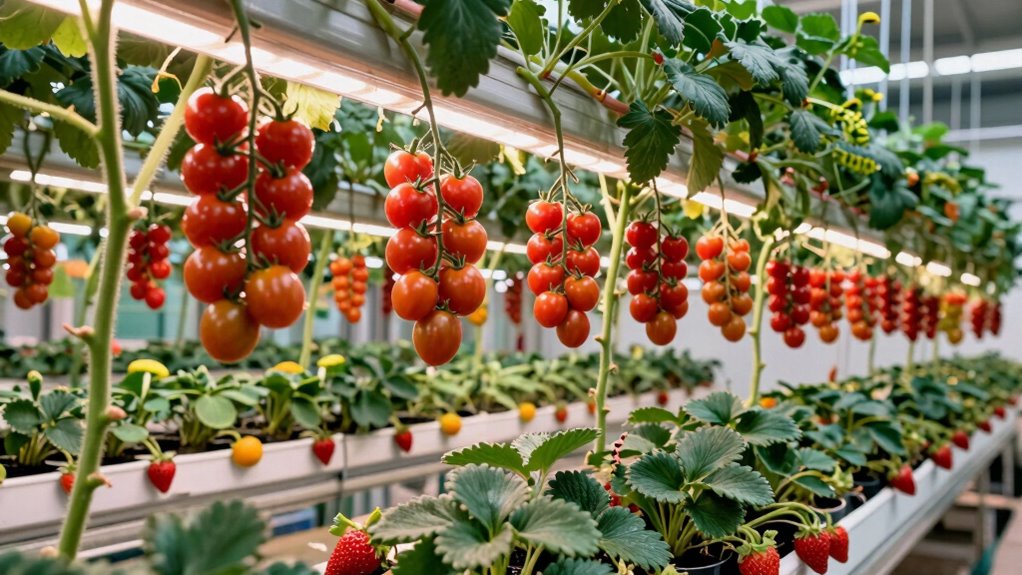
Are fruit crops suitable for indoor vertical farming? Yes, with the right approach. Some fruits like strawberries, dwarf citrus, and tomatoes thrive indoors. To guarantee fruit production, you’ll need effective pollination techniques, such as hand pollination or using gentle airflow to mimic natural pollinators. Pest management is vital since indoor crops are vulnerable to pests like aphids and spider mites. Regular monitoring, integrated pest management, and organic controls help keep pests at bay without harming your plants. Keep in mind that fruit crops often require more light and consistent conditions, but their high yield makes them ideal for vertical setups. Understanding pollination techniques is essential for successful fruiting indoors. For example, knowing the history of indoor cultivation can provide insights into optimizing growth conditions. Additionally, employing climate control strategies ensures the necessary temperature and humidity levels for fruit development. Recognizing the importance of plant health can help prevent issues before they become severe. Proper soil quality and nutrient management are also crucial for healthy fruit development indoors. With proper pollination methods and pest control, you can successfully grow a variety of fruit crops indoors.
Troubleshooting Root Vegetables: Growing Them Indoors Successfully
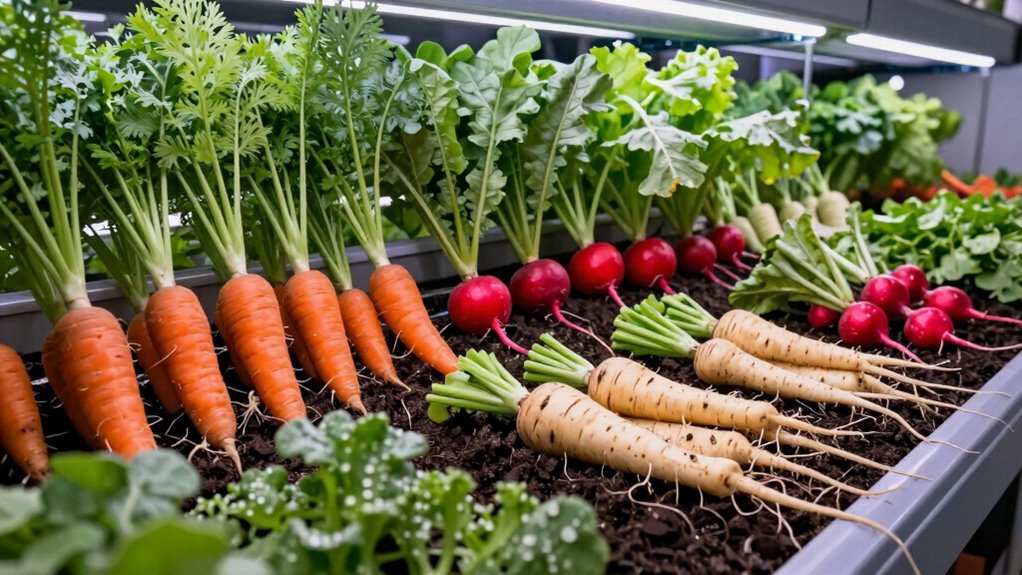
To grow root vegetables successfully indoors, you need the right soil and containers that provide good drainage and enough space for growth. Managing humidity levels is also essential to prevent rot and guarantee healthy development. Paying attention to these factors helps you troubleshoot common issues and produce better harvests. Incorporating art care principles can also help maintain a healthy environment for your indoor crops.
Soil and Container Needs
Choosing the right soil and containers is essential for successfully growing root vegetables indoors. You want soil with good soil composition—light, loose, and well-draining—to prevent waterlogging and promote healthy root development. A mix of compost, perlite, and peat moss works well to keep the soil airy. Container drainage is equally important; make sure your containers have drainage holes to allow excess water to escape, reducing the risk of rot. Use deep pots or large buckets to give roots ample space to grow downward. Avoid containers that are too shallow or made of non-porous materials, which can trap moisture. Proper soil and container choices help prevent common problems like root rot and ensure your indoor root vegetables thrive. Soil quality plays a crucial role in creating the optimal environment for healthy root growth. Additionally, understanding auditory processing can help in troubleshooting issues related to plant care, such as recognizing signs of distress or disease.
Managing Humidity Levels
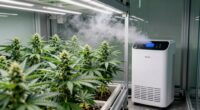
Maintaining proper humidity levels is essential for healthy root vegetable growth indoors, as too much moisture can lead to rot and fungal issues, while too little causes dehydration and stunted development. Effective humidity management involves monitoring your grow environment regularly and adjusting humidity levels accordingly. Use a hygrometer to track moisture levels and aim for 85-95% humidity during root development. To improve moisture control, ensure proper ventilation and avoid overly damp conditions that promote mold. If humidity is too high, increase airflow with fans or dehumidifiers. Conversely, if it’s too low, mist plants lightly or use a humidifier. Consistent moisture control promotes strong roots and healthy growth, minimizing issues related to improper humidity. Regular adjustments keep your root vegetables thriving indoors. Understanding air-based cooking fundamentals can also help optimize your indoor gardening setup for better airflow and moisture regulation. Additionally, incorporating proper airflow techniques can further enhance humidity control and prevent mold growth. Using climate control devices like humidifiers and dehumidifiers can also help maintain optimal conditions consistently. Recognizing the importance of environmental monitoring ensures your crops receive the ideal conditions for vigorous development.
How to Optimize Light and Climate for Indoor Crop Success
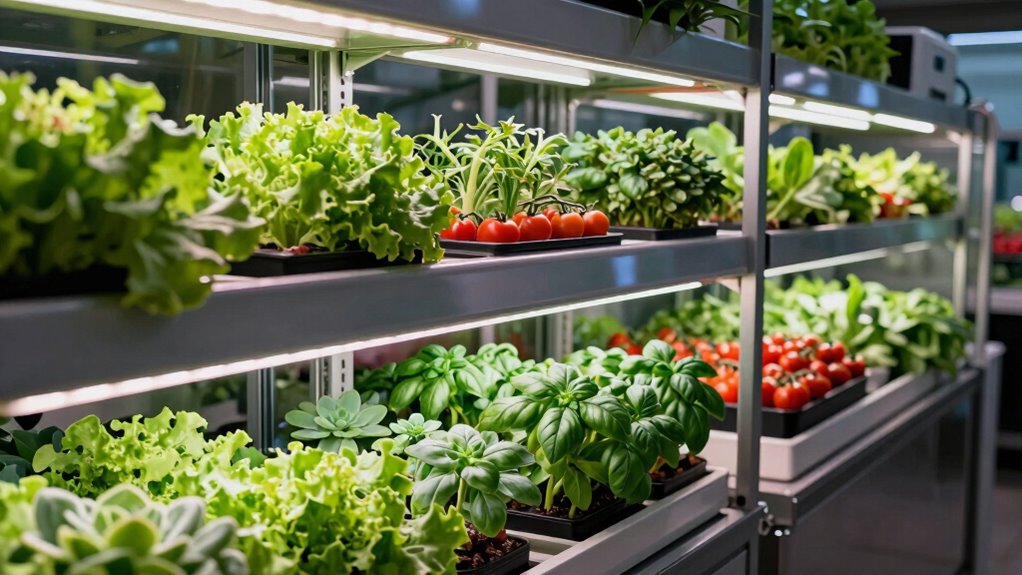
To guarantee your indoor crops thrive, you need to optimize both light and climate conditions. Understanding the light intensity your plants require and implementing effective climate control strategies are key steps. By creating the right environment, you’ll promote healthy growth and maximize your crop yields. Incorporating reliable power solutions can ensure consistent operation of your climate control equipment and lighting systems, preventing disruptions that could jeopardize your crops. Additionally, understanding home energy integration options can help you manage energy use efficiently and ensure your systems remain operational during peak demand times.
Light Intensity Requirements
Adjusting light intensity is essential for maximizing crop yields in vertical farming. Proper light levels boost photosynthesis efficiency, directly impacting plant growth and quality. Too little light stunts development, while too much can cause stress or damage. To get it right:
- Use adjustable LED lighting to tailor light levels for each crop
- Monitor light intensity with light meters for precise control
- Understand specific crop requirements for ideal photosynthesis
- Avoid excessive light that leads to energy waste and heat stress
- Incorporate light diffusers to ensure even distribution across plants
Climate Control Strategies
Adjusting light intensity alone isn’t enough; controlling other climate factors like temperature, humidity, and airflow is vital for indoor crop success. Proper climate control helps prevent pest management issues by reducing stress on plants, making them less vulnerable to pests. Maintaining suitable humidity levels minimizes mold and fungal growth, safeguarding your crops’ health. Consistent airflow ensures even temperature distribution and reduces stagnant air pockets, which can harbor pests and disease. Additionally, managing temperature fluctuations supports efficient nutrient uptake, especially when using precise nutrient solutions. A stable environment helps crops develop strong roots and vibrant growth, reducing the need for chemical interventions. By fine-tuning these climate factors, you create an ideal setting for healthy, resilient plants that thrive indoors.
Optimal Growth Conditions
Ever wonder how to create the perfect environment for your indoor crops? Achieving ideal growth conditions involves fine-tuning light, temperature, humidity, soil health, and pest management. Proper lighting ensures plants photosynthesize efficiently, while maintaining the right climate prevents stress and disease. Soil health is vital; use quality substrates to promote strong roots and nutrient uptake. Regular pest management keeps pests at bay without harming your crops. Here are key tips:
- Adjust LED lights for the specific crop’s needs
- Maintain stable temperature and humidity levels
- Use sterilized, nutrient-rich soil or growing medium
- Monitor for pests regularly and implement integrated pest management
- Guarantee good air circulation to reduce mold and pests
Choosing Crops Based on Space, Yield, and Market Demand
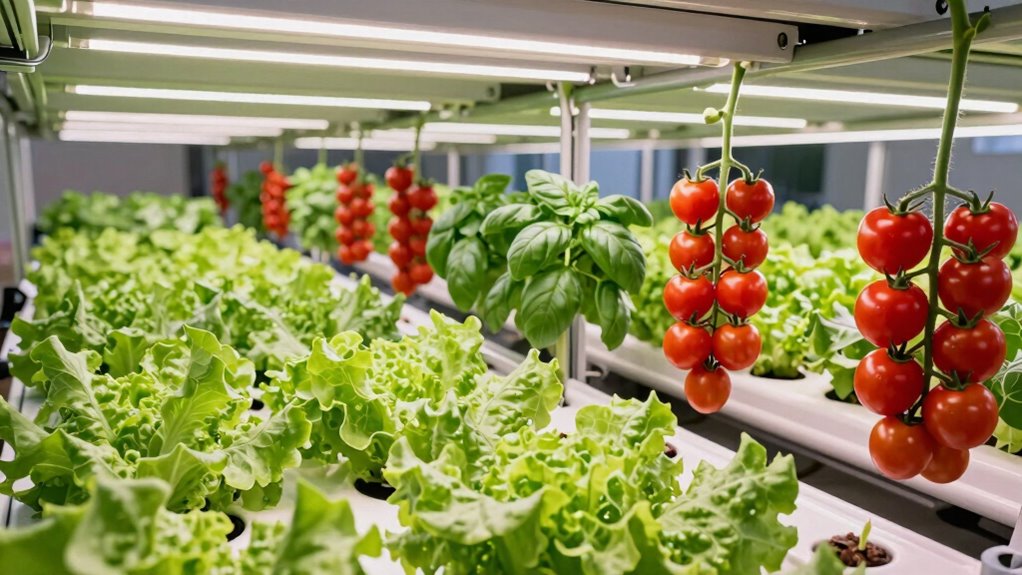
When selecting crops for vertical farming, it’s crucial to think about how much space each plant requires, how much yield it produces, and whether there’s strong market demand for it. Efficient pest management is essential to keep plants healthy without relying heavily on chemicals, which can affect crop quality. Choose crops that fit well in your space and can be harvested quickly to maximize turnover. Consider crop rotation to maintain soil health and prevent pest buildup, even indoors. High-yield plants like leafy greens or herbs often meet market demand and generate steady income. Balancing space, yield, and demand helps ensure your vertical farm remains profitable and sustainable, while also reducing the risk of crop failure. Proper planning makes indoor farming efficient and profitable.
Common Mistakes to Avoid When Selecting Indoor Crops
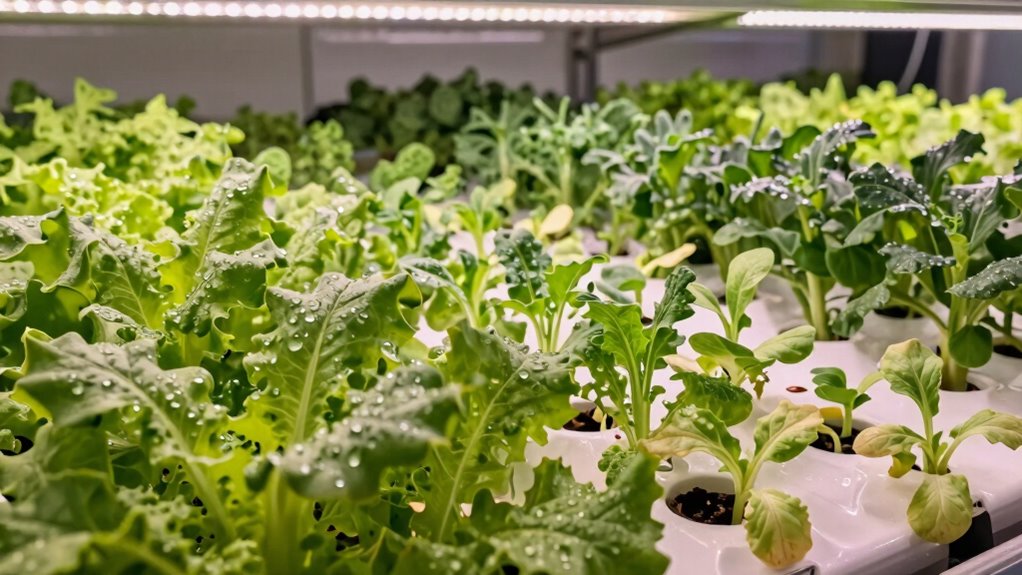
Selecting the right crops for your indoor farm requires careful consideration, but it’s easy to make mistakes that can undermine your efforts. Common errors include choosing crops with pollination challenges that need outdoor conditions, which can lead to poor yields. Overlooking pest management strategies can cause infestations, especially in confined spaces. Picking varieties that don’t suit indoor environments may result in slow growth or low productivity. Ignoring light and climate needs can stunt crop development. Additionally, neglecting crop diversity increases risks of disease spread. Be mindful of these pitfalls to avoid wasting resources and effort. Instead, focus on adaptable plants, understand their pollination and pest control needs, and select crops optimized for indoor conditions to maximize success.
Tips to Maximize Your Vertical Farm’s Crop Success
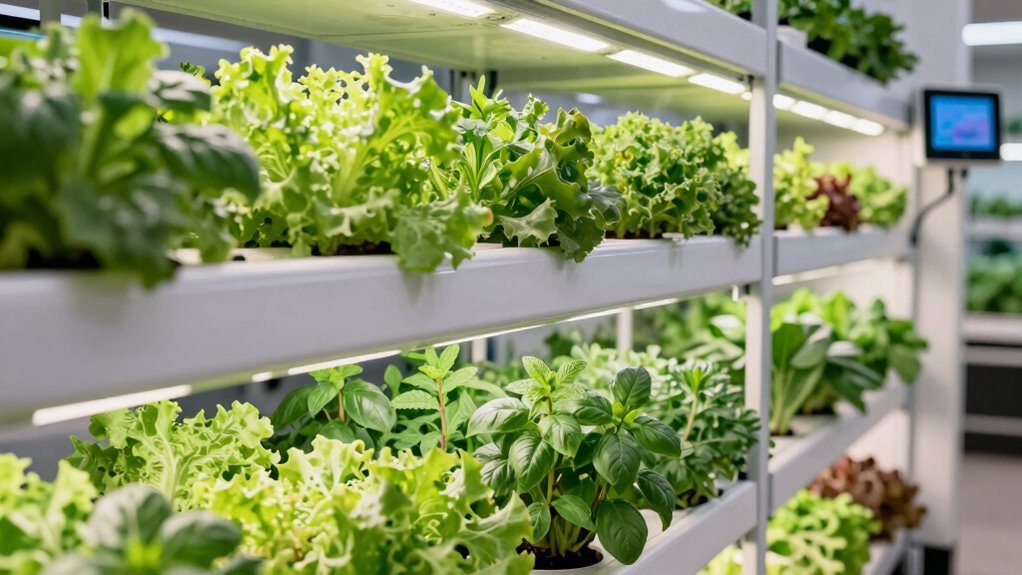
To maximize your vertical farm’s crop success, focus on optimizing environmental conditions and maintaining consistent management practices. Regularly monitor temperature, humidity, and light levels to create ideal growing conditions. Implement effective urban pest management strategies to prevent infestations that can harm crops and reduce yields. Consider crop genetic modification options to develop plants with enhanced resilience, pest resistance, and faster growth. Stay proactive by rotating crops and adjusting nutrient levels based on plant needs. Keep equipment clean and sanitize regularly to prevent disease spread. Maintaining a stable environment and adopting targeted pest control methods will help your crops thrive indoors. By applying these practices, you’ll boost productivity, reduce losses, and ensure healthier, more robust plants in your vertical farm.
Frequently Asked Questions
How Do I Prevent Pests and Diseases in Indoor Vertical Farms?
To prevent pests and diseases in your indoor vertical farm, implement integrated pest management strategies that focus on early detection and eco-friendly controls. Maintain proper sanitation, control humidity, and guarantee good airflow to reduce disease risks. Regularly inspect plants for signs of pests or illness, and remove affected areas promptly. Using disease prevention techniques like crop rotation and resistant varieties also helps keep pests and diseases at bay, ensuring healthy, thriving crops.
What Are the Energy Costs Associated With Indoor Crop Cultivation?
Indoor crop cultivation can be energy-intensive, but you can reduce costs by choosing high-efficiency LED lighting and utilizing renewable energy sources like solar or wind. LED efficiency helps lower electricity consumption while maintaining ideal plant growth. By integrating renewable energy, you cut long-term expenses and environmental impact. Planning your energy use carefully ensures your vertical farm remains sustainable and cost-effective, allowing your crops to thrive without excessive energy bills.
Can I Grow Tropical or Exotic Crops Indoors Successfully?
Like planting a secret garden in your home, yes, you can cultivate tropical fruiting plants and exotic herbs indoors successfully. With the right lighting, humidity, and temperature, you bring the lush rainforest to your space. Focus on species that thrive in controlled environments, such as bananas or passion fruit, and guarantee you mimic their natural conditions. Your indoor jungle will flourish, offering fresh, exotic produce year-round.
How Do I Manage Pollination for Fruiting Crops Indoors?
To manage pollination indoors, you should use targeted pollination methods like hand pollination or gentle brushing of flowers to transfer pollen. Additionally, employ fruit set techniques such as maintaining ideal humidity and temperature, and ensuring proper airflow. These practices encourage healthy pollination, leading to successful fruiting. Regularly monitor your crops, and don’t hesitate to manually assist pollination if natural methods aren’t effective indoors.
What Are the Best Practices for Crop Rotation Indoors?
Imagine you’re rotating lettuce with herbs like basil to boost crop diversity and nutrient cycling. To do this indoors, plan a schedule that switches crops every few weeks, ensuring you replenish nutrients with organic amendments. Keep an eye on pest and disease buildup, and clean your growing area between crops. This practice reduces soil fatigue, promotes healthy growth, and maximizes your indoor farm’s productivity.
Conclusion
Now that you know which crops thrive indoors, imagine your vertical farm bursting with vibrant greens and fragrant herbs, each plant reaching toward the perfect light. But don’t get too comfortable—unexpected challenges could arise, turning your lush oasis into a tangled maze. Stay vigilant, adapt your strategies, and watch your indoor farm flourish beyond expectations. The next harvest could be your most rewarding yet—if you’re ready to master the secrets of indoor crop success.
Fall Picks
fall essentials
As an affiliate, we earn on qualifying purchases.