To succeed in quail and pheasant farming, focus on using well-designed cages that provide ample space, ventilation, and natural elements to keep birds healthy. Feed them a balanced diet rich in grains, seeds, and proteins, and always supply fresh water. Pay attention to market demands by offering high-quality birds with good size, flavor, and appearance. If you want to learn more about optimizing cage setup, nutrition, and market strategies, keep exploring these key practices.
Key Takeaways
- Proper cage design ensures adequate space, ventilation, and security for healthy quail and pheasant breeding.
- Balanced nutrition with grains, seeds, and supplements enhances growth, egg production, and meat quality.
- Maintaining high standards in cage setup and feed quality boosts market demand for flavorful, well-sized birds.
- Responsible breeding and genetic diversity support conservation efforts and sustainable farming practices.
- Building strong relationships with local markets and ensuring product consistency increase profitability and reputation.
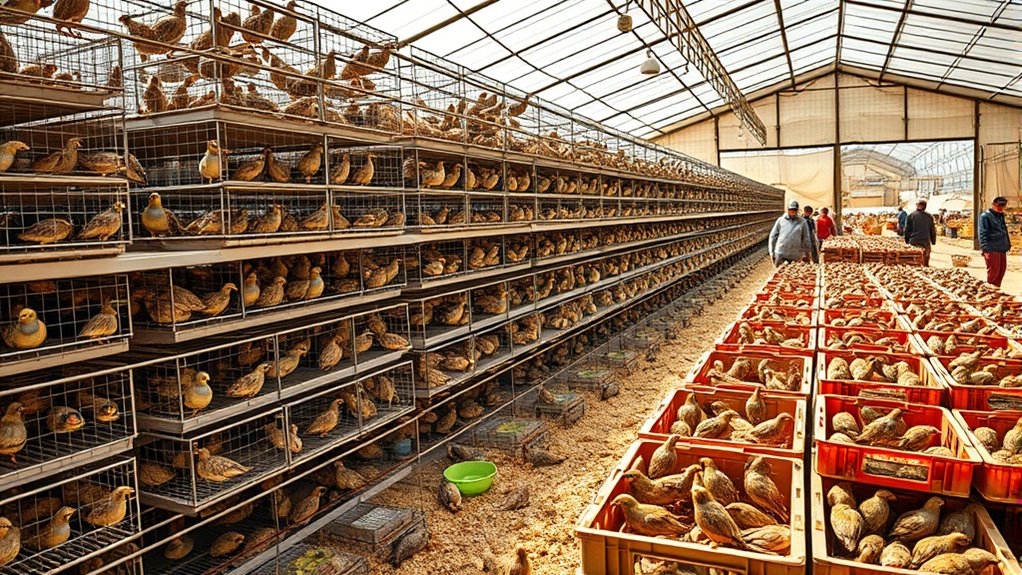
If you’re interested in diversifying your poultry farming, quail and pheasant farming offer promising opportunities. These birds are not only valued for their meat and game bird qualities but also play a significant role in wildlife conservation efforts. By raising quail and pheasants, you can contribute to preserving native species and supporting biodiversity, especially if you focus on responsible breeding genetics that maintain healthy, resilient populations. This approach guarantees you’re minimizing the risk of genetic bottlenecks and promoting the sustainability of these species in both captivity and the wild.
Raising quail and pheasants supports biodiversity and conservation through responsible breeding and sustainable practices.
When setting up cages for quail and pheasants, you’ll want to prioritize adequate space and ventilation. Proper cage design helps reduce stress and disease, which are common issues in confined environments. For quail, smaller cages with wire floors work well, allowing waste to fall through and keeping the birds clean. Pheasants, being larger, require sturdier cages with more space to flap and move around comfortably. Incorporate natural elements like perches and hiding spots to mimic their natural habitat, which can improve their overall health and breeding success. Guaranteeing security from predators is essential, especially if you plan to breed for conservation or market purposes.
Feeding these birds correctly is vital for maintaining their health and optimizing production. Quail and pheasants thrive on a balanced diet rich in grains, seeds, and proteins. For breeding purposes, supplement their feed with additional nutrients to support egg production and chick development. Fresh water should always be available to prevent dehydration and promote digestion. The quality of feed influences not only growth but also the quality of meat and eggs, which impacts your marketability. Additionally, consider incorporating natural foraging options or specialized feeds designed to enhance breeding genetics, guaranteeing the birds produce healthy offspring with desirable traits.
Market demand for quail and pheasant products continues to grow, driven by the culinary industry, game hunting, and wildlife enthusiasts. To succeed, you need to focus on producing high-quality birds and products. Proper cage management, nutrition, and breeding practices directly influence the size, flavor, and appearance of your birds, which are key selling points. Also, developing relationships with local markets or specialty stores can help you establish a steady customer base. Remember, your reputation depends on consistent quality and ethical practices, especially when it comes to wildlife conservation and maintaining healthy breeding genetics. By doing so, you’ll not only create a profitable venture but also support the conservation and sustainability of these beautiful species.
Frequently Asked Questions
What Are the Best Practices for Disease Prevention in Quail and Pheasant Farms?
To prevent disease in your quail and pheasant farms, you should implement strict biosecurity measures, such as controlling access and disinfecting equipment regularly. Follow vaccination protocols to protect your birds from common illnesses. Keep your facilities clean, monitor bird health daily, and isolate new or sick birds promptly. These steps help reduce disease spread, ensuring healthier flocks and more successful farming.
How Do Seasonal Changes Affect Quail and Pheasant Breeding Cycles?
You notice that as seasons change unexpectedly, your quail and pheasants adapt their breeding cycles. Seasonal breeding is heavily influenced by temperature regulation, which signals them to start or pause reproduction. Cooler temperatures trigger breeding, while rising heat slows it down. By maintaining ideal temperature regulation, you can align their cycles, ensuring healthy breeding year-round despite seasonal fluctuations, and maximize your farm’s productivity.
What Are the Legal Regulations for Selling Game Birds Commercially?
You need to obtain licensing requirements from local authorities before selling game birds commercially. These licenses guarantee you meet health and safety standards. Additionally, you must comply with import regulations if you plan to source birds internationally, avoiding illegal importation and disease spread. Check with your state’s wildlife or agricultural department to understand specific laws, as regulations can vary depending on your location.
How Can I Reduce Mortality Rates in Young Quails and Pheasants?
To reduce mortality rates in young quails and pheasants, focus on nest management and predator control. Confirm nests are secure and protected from harsh weather, predators, and disturbances. Regularly monitor nests for eggs and chicks, and keep the environment clean to prevent disease. Implement predator-proof fencing and use deterrents to keep threats away. Proper management and vigilance help improve survival rates and promote healthier flock growth.
What Are Effective Marketing Strategies to Expand Sales Locally and Internationally?
To expand your sales locally and internationally, focus on social media marketing to showcase your products and engage potential customers. Build strong export partnerships to reach overseas markets efficiently. You should also attend trade shows and network with distributors. Offering sample products and highlighting your unique qualities can attract buyers. Consistent branding and excellent customer service will help you establish a reputable presence both locally and abroad, boosting your sales effectively.
Conclusion
Now that you’re armed with the secrets of quail and pheasant farming, nothing can stop your success! Imagine your farm booming with vibrant birds, skyrocketing sales, and a reputation that leaves competitors in the dust. With the right cages, perfect feed, and savvy market strategies, you’re not just growing poultry — you’re building an empire! So go ahead, take the leap, and watch your farm become the stuff of legend in the poultry world!