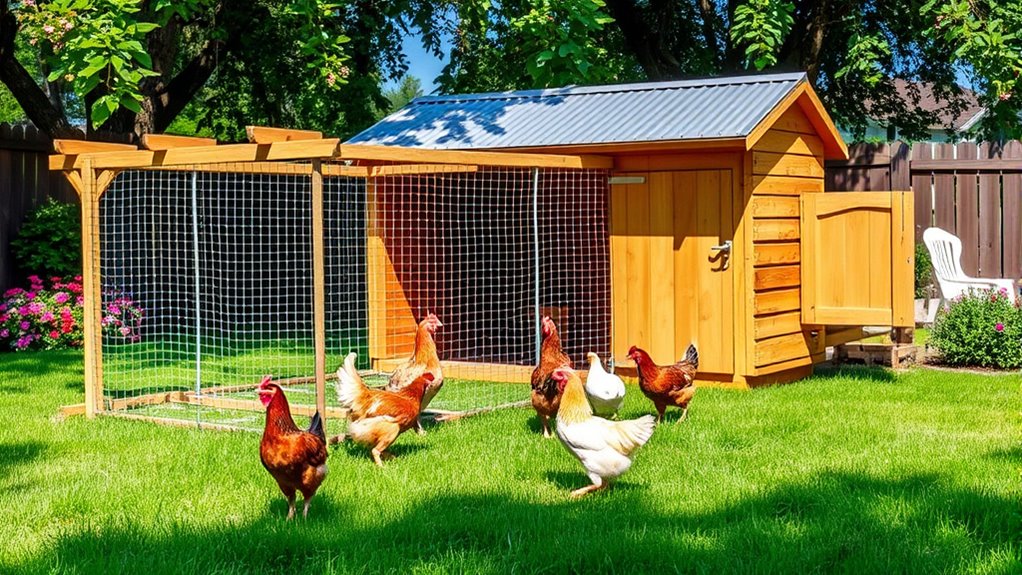

To raise backyard chickens successfully, you need a secure, well-ventilated coop with predator-proof fencing. Provide ample space, clean bedding, and roosting bars for natural behaviors. Guarantee consistent access to fresh water and nutritious feed, avoiding toxic foods. Regularly maintain the coop and fencing to prevent damage and pests. Protect chickens at night by locking the coop. If you keep these basics in mind, you’ll build a healthy environment for your hens and discover more tips as you go.
Key Takeaways
- Provide a spacious, well-ventilated coop with secure, predator-proof fencing to ensure safety.
- Use quality bedding materials and keep the coop clean to promote health and hygiene.
- Ensure chickens have access to fresh water and a balanced diet with grains, proteins, and vitamins.
- Lock the coop at night and utilize predator deterrents like motion lights for protection.
- Regularly inspect and maintain fencing and coop structures to prevent damage and ensure security.
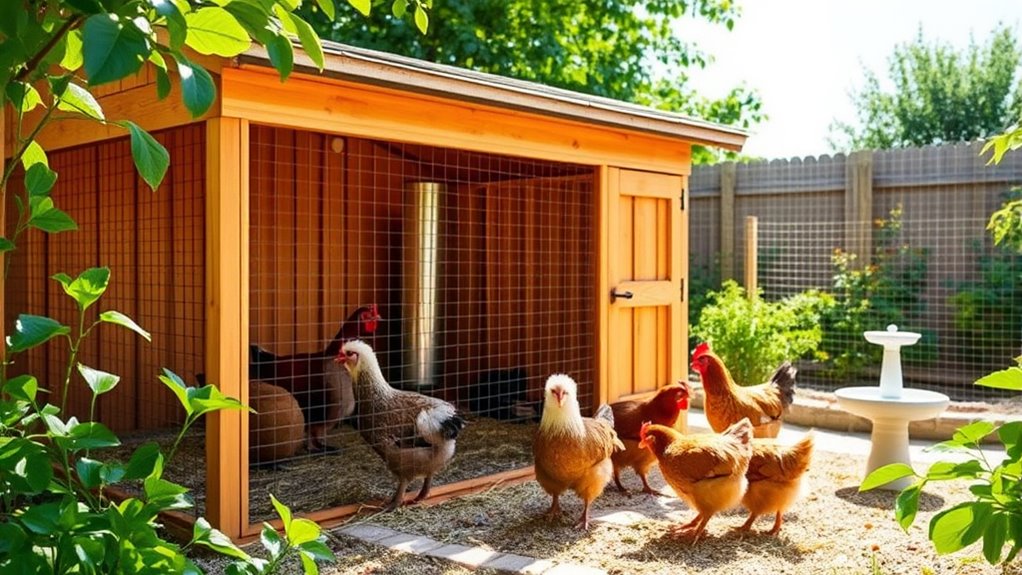
Raising backyard chickens is a rewarding way to enjoy fresh eggs and connect with nature. To make this experience successful, you need to understand the basics of chicken housing and care. One of the first things to contemplate is your chickens’ diet. Providing a balanced chicken diet is essential for their health and productivity. Feed them high-quality poultry feed that includes grains, proteins, and necessary vitamins. Supplement their diet with kitchen scraps like vegetable peelings and grains, but avoid feeding them anything toxic, such as onions, chocolate, or raw potato peels. Fresh water should always be available, as hydration impacts egg production and overall well-being. Proper nutrition promotes strong feathers, healthy growth, and consistent laying, making it easier for you to enjoy fresh eggs regularly.
Equally important is guaranteeing predator protection. Your backyard chickens are vulnerable to predators like raccoons, foxes, hawks, and even neighborhood cats. Building a secure coop is your first defense. Make sure the coop has sturdy walls, a secure door, and a roof that keeps predators out. Use hardware cloth instead of chicken wire, as predators can easily tear through the latter. Elevate the coop slightly off the ground to prevent critters from burrowing underneath. Lock the coop at night, when most predators are active, and consider installing motion-activated lights or alarms around the perimeter for extra security. During the day, ensure your chickens have access to a run or free-range area that’s enclosed with predator-proof fencing. Regularly inspect fences and the coop for any weak spots or damage, repairing them promptly to prevent escapes or intrusions.
When it comes to housing, provide ample space for your chickens to move comfortably. Overcrowding can lead to stress and health issues. The coop should have proper ventilation to prevent moisture buildup and reduce respiratory problems. Bedding materials like straw or wood shavings help keep the coop clean and dry, making it easier to spot signs of illness or pests. Clean the coop regularly to reduce disease risk and maintain a healthy environment. Adequate roosting bars are important so chickens can perch safely at night. Ensure your chickens have access to a dust bath area, which helps them keep parasites at bay naturally.
Frequently Asked Questions
How Do I Prevent Predators From Attacking My Chickens?
To prevent predators from attacking your chickens, you need to predator-proof your coop and run. Use sturdy wire mesh like hardware cloth, bury it underground, and secure all doors and vents. Keep the area clean and avoid leaving feed outside, which attracts predators. Regularly inspect for gaps or weaknesses, and consider installing motion-activated lights or cameras. These predator-proofing techniques help protect your chickens from natural predators effectively.
What Are the Best Chicken Breeds for Beginners?
You should consider beginner-friendly breeds like Rhode Island Reds or Sussex, which are hardy and good layers. Egg laying breeds are great if you want consistent eggs, while dual purpose breeds, like Orpingtons, provide both eggs and meat. These breeds are gentle, adaptable, and easy to care for, making them perfect for newcomers. They’re resilient, friendly, and less likely to cause issues, helping you enjoy raising chickens with confidence.
How Often Should I Clean the Chicken Coop?
You should clean your chicken coop at least once a week to keep it healthy. During cleaning, check the coop ventilation to make certain fresh air circulation and prevent moisture buildup. Scrub out bedding and droppings, and refresh the nesting box setup to keep eggs clean and reduce stress for your hens. Regular cleaning helps prevent diseases and keeps your flock happy and productive.
What Should I Feed My Chickens for Optimal Health?
To keep your chickens healthy, you should feed them a balanced commercial poultry feed as the main diet. Supplement this with occasional treats like kitchen scraps and fruits. Incorporate nutritional supplements such as grit or calcium powder to support digestion and eggshell strength. Always guarantee fresh water is available, and avoid overfeeding treats to prevent health issues. Proper nutrition keeps your chickens happy, productive, and healthy.
How Can I Tell if a Chicken Is Sick?
You can tell if a chicken is sick by watching for signs of illness like lethargy, drooping wings, or irregular breathing. Check for any changes in appetite or unusual droppings. Confirm they’ve received necessary chicken vaccination and monitor for physical issues such as flaky combs or discharges. If you notice these signs of illness, isolate the bird and consult a vet promptly to prevent spreading disease.
Conclusion
Raising backyard chickens is rewarding, offering fresh eggs and natural pest control. Remember, providing proper housing and daily care guarantees healthy, happy hens. Did you know that backyard chickens can reduce food waste by up to 25%? By giving them a safe space and attention, you’ll enjoy the benefits of fresh eggs and a thriving coop. Stay committed to their needs, and you’ll build a rewarding, sustainable backyard flock.