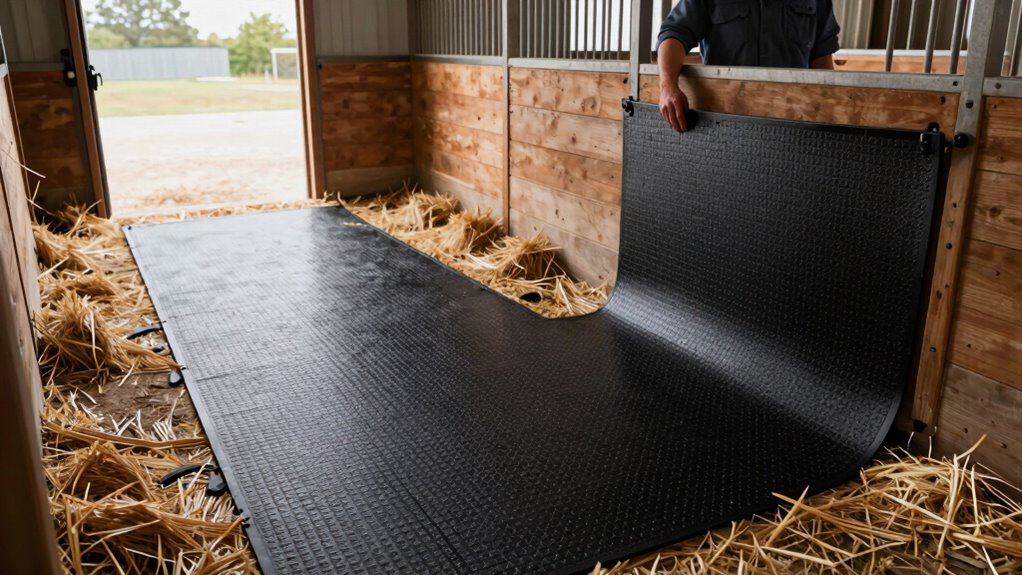

Stall mats greatly improve barn hygiene more than you might expect by providing a cleaner, more durable surface that helps prevent waste buildup and reduces bacteria growth. They keep bedding in place, making cleaning easier and more effective. Ventilated mats improve airflow, reducing moisture and mold risk. Plus, choosing eco-friendly, antimicrobial materials can enhance air quality and animal health. If you want to discover how these factors work together, keep going—you’ll find some surprising benefits.

Get garden gear delivered free — and shop member deals
- Fast, free delivery on millions of items
- Access to Prime Big Deal Days deals on October 6–7
- Prime Video, Amazon Music and more included
Key Takeaways
- High-quality stall mats prevent bedding shifting, reducing waste and making cleaning easier, thus improving barn hygiene.
- Proper mats minimize moisture buildup and promote airflow, decreasing mold and bacteria growth.
- Durable, antimicrobial mats resist bacterial and fungal growth, maintaining a cleaner environment over time.
- Ventilated mats enhance barn airflow, reducing humidity and supporting overall air quality.
- The right material choice ensures long-term cleanliness, odor control, and a healthier barn environment.
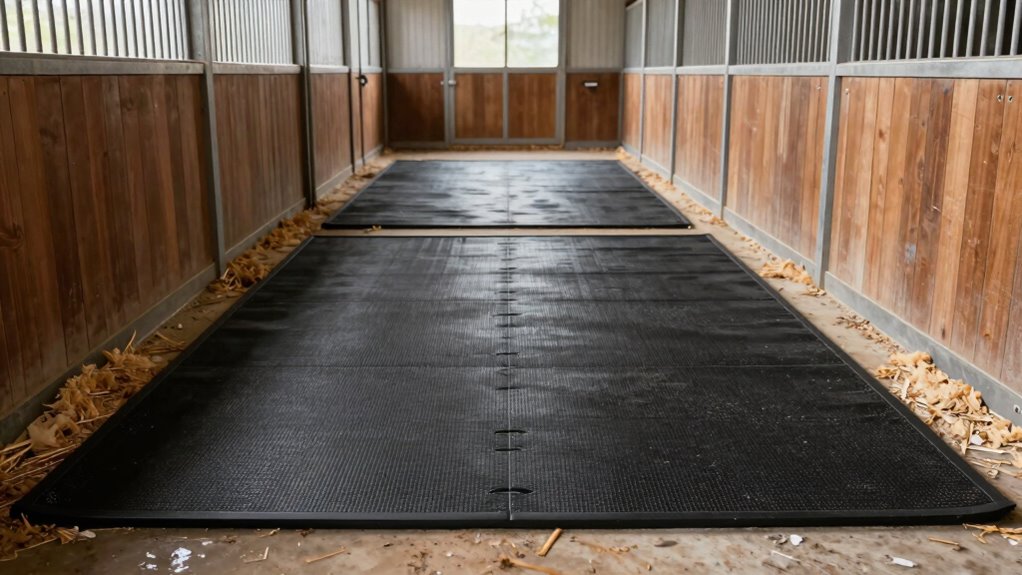
Maintaining a clean barn is essential for your animals’ health, and choosing the right stall mats plays a vital role in that process. The mats you select aren’t just about convenience; they considerably impact animal comfort and the overall hygiene of your barn. When you prioritize quality, you create a more comfortable environment that reduces stress and injury for your animals, which can lead to better health and productivity. Good stall mats provide a cushioned surface that minimizes pressure on joints and bones, encouraging your animals to rest comfortably. They also help in keeping the stall cleaner by preventing bedding from shifting and reducing waste accumulation, making your daily cleaning routines easier and more effective. Additionally, selecting mats with proper ventilation can further improve barn airflow and reduce moisture buildup, enhancing overall indoor air quality. Material durability is a critical factor when selecting stall mats, especially because your barn endures a lot—constant foot traffic, moisture, manure, and bedding. Durable mats resist tears, cracks, and warping over time, which means you won’t have to replace them frequently. This durability ensures that your investment lasts longer, saving you money in the long run. A high-quality mat also prevents bacteria buildup that can occur in fractured or worn-out areas, promoting better barn hygiene. When mats hold up well under heavy use, they maintain a smoother, more even surface for your animals, reducing the risk of slips and injuries. This not only benefits your animals’ safety but also makes cleaning and disinfecting easier, further contributing to a hygienic environment. Proper material selection is crucial because it influences how well the mats perform over time and impacts overall barn cleanliness. Choosing the right material can also help in controlling odors and preventing mold growth, which are common issues in barns with poor ventilation. Incorporating antimicrobial properties into stall mats can further enhance hygiene by reducing bacterial and fungal growth. Additionally, selecting mats with environmentally friendly materials can support sustainable barn practices and reduce ecological impact.
antimicrobial stall mats for barns
As an affiliate, we earn on qualifying purchases.
As an affiliate, we earn on qualifying purchases.
Frequently Asked Questions
How Often Should Stall Mats Be Replaced for Optimal Hygiene?
You should replace stall mats every 3 to 5 years for maximum hygiene, depending on their mats lifespan and usage. Regularly inspect for wear, tears, or deep stains, which can harbor bacteria. Frequent cleaning helps extend their life, but when mats become brittle or excessively stained, it’s time for replacement. Staying on top of the replacement frequency ensures a cleaner, healthier environment for your animals and prevents disease spread.
What Are the Best Cleaning Products for Stall Mats?
Think of your stall mats as the foundation of a well-tuned instrument; the right cleaning products keep everything in harmony. For ideal mat maintenance, use a mixture of mild detergent and warm water, or a dedicated rubber mat cleaner. Avoid harsh chemicals, as they can damage the surface. Regular scrubbing with proper cleaning techniques will keep your mats fresh, hygienic, and prolong their lifespan, ensuring a healthier environment for your animals.
Do Different Bedding Types Affect Barn Hygiene With Stall Mats?
Yes, different bedding materials impact barn hygiene with stall mats. For instance, straw can trap moisture, leading to bacteria buildup, while shavings promote better airflow and cleanliness. Your choice affects stall mat durability because some bedding types can cause more wear or retain moisture that damages mats over time. Selecting appropriate bedding material helps maintain hygiene and prolongs the lifespan of your stall mats, ensuring a healthier environment for your animals.
Can Stall Mats Help Reduce Barn Odor?
Yes, stall mats can help reduce barn odor. Their durability allows them to withstand frequent cleaning, preventing bacteria buildup that causes smells. Additionally, high-quality mats often absorb odors, keeping the barn fresher longer. By maintaining clean, durable mats, you minimize odor sources, improving overall barn hygiene. Regular cleaning combined with odor-absorbing mats creates a healthier environment for your animals and makes barn management easier.
Are There Safety Concerns With Using Certain Stall Mats?
You might think stall mats are just padding, but safety concerns are real. Some mats with poor material durability can crack or break, creating tripping hazards. Look for mats with slip resistance to prevent accidents, especially when wet. Always choose high-quality, durable materials, and check for proper installation. Staying vigilant about these details keeps your barn safe, so you can focus on loving your animals without worry.
Conclusion
You might be surprised to learn that stall mats can reduce barn bacteria by up to 80%. By simply maintaining and regularly cleaning these mats, you’re making a significant impact on barn hygiene—even more than you’d expect. Don’t underestimate their role in keeping your animals healthier and your environment cleaner. Taking this small step can lead to big improvements, so prioritize your stall mats and watch your barn become a cleaner, safer space for everyone involved.
Fall yard work Picks
leaf blowers
As an affiliate, we earn on qualifying purchases.